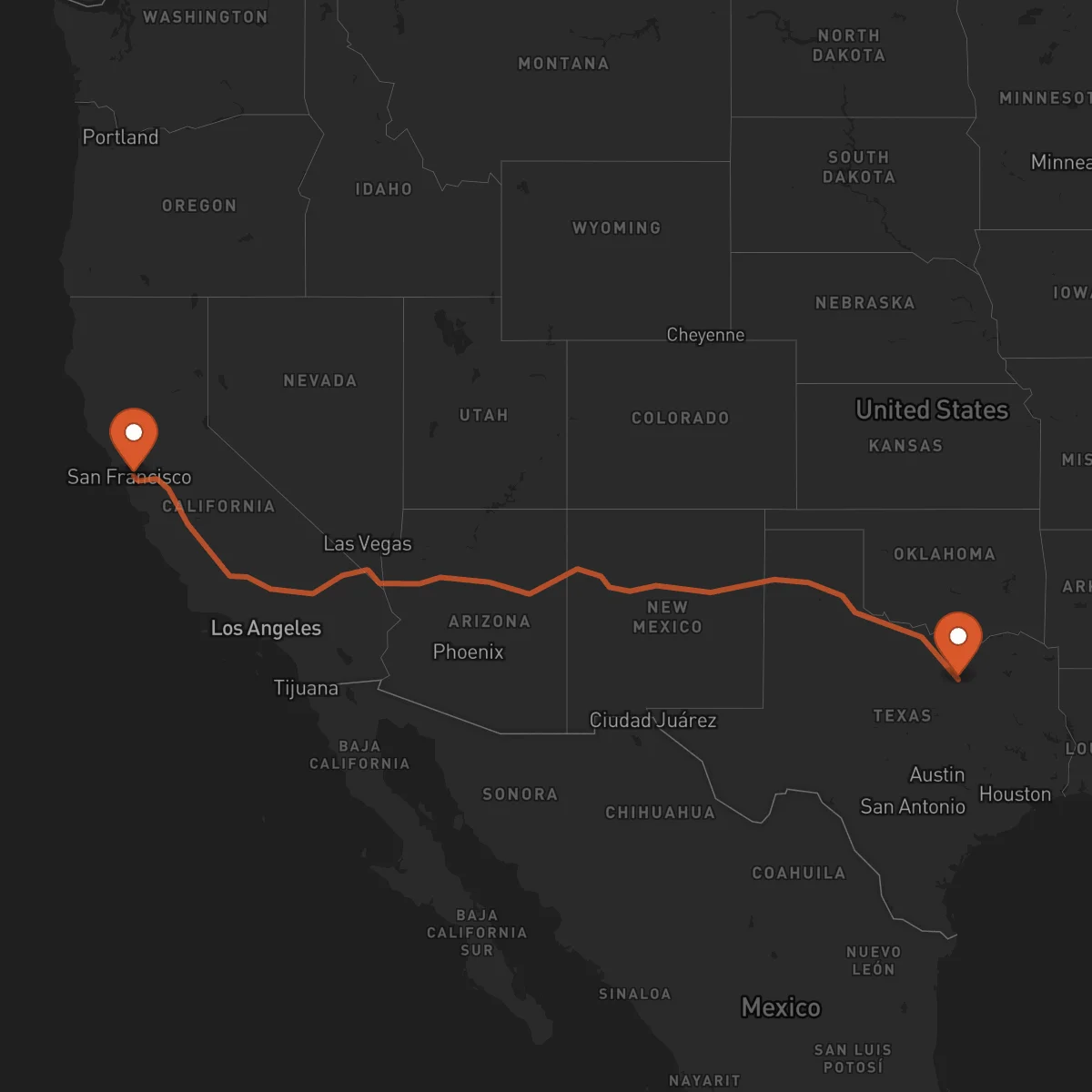
Arlington to Oakland
Oakland → ArlingtonFTL freight transportation service between Arlington and Oakland. Reliable logistics solutions for your business.
Route Description
Everything you need to know about the corridor Arlington - Oakland
The logistics corridor between Arlington, Texas, and Oakland, California, represents a vital transportation route connecting the heart of Texas with the dynamic port city on the West Coast. This approximately 2,345 km route traverses diverse landscapes and economic regions, serving as a critical artery for freight movement across the United States. The corridor links major industrial centers, agricultural regions, and manufacturing hubs, facilitating the efficient flow of goods between the central and western parts of the country.
The economic significance of this route cannot be overstated. Arlington serves as a key logistics hub in the Dallas-Fort Worth metropolitan area, while Oakland functions as a major gateway for international trade through its port. This corridor supports industries such as automotive, technology, agriculture, and consumer goods, enabling businesses to maintain competitive supply chains. The route passes through major transportation corridors including I-20, I-10, and I-80, providing reliable and efficient transportation options for full truckload shipments.
Control Terrestre specializes in optimizing freight operations along this corridor, offering dedicated FTL services that ensure your cargo moves efficiently and securely. Our experienced team understands the unique challenges of this long-haul route, including weather variations, traffic patterns, and regulatory requirements across multiple states. We leverage our extensive network of certified carriers and advanced logistics technology to provide real-time tracking, reliable scheduling, and exceptional customer service, making us the trusted partner for businesses moving freight between Arlington and Oakland.
Services for this Route
Available services for the corridor Arlington - Oakland
 Origin
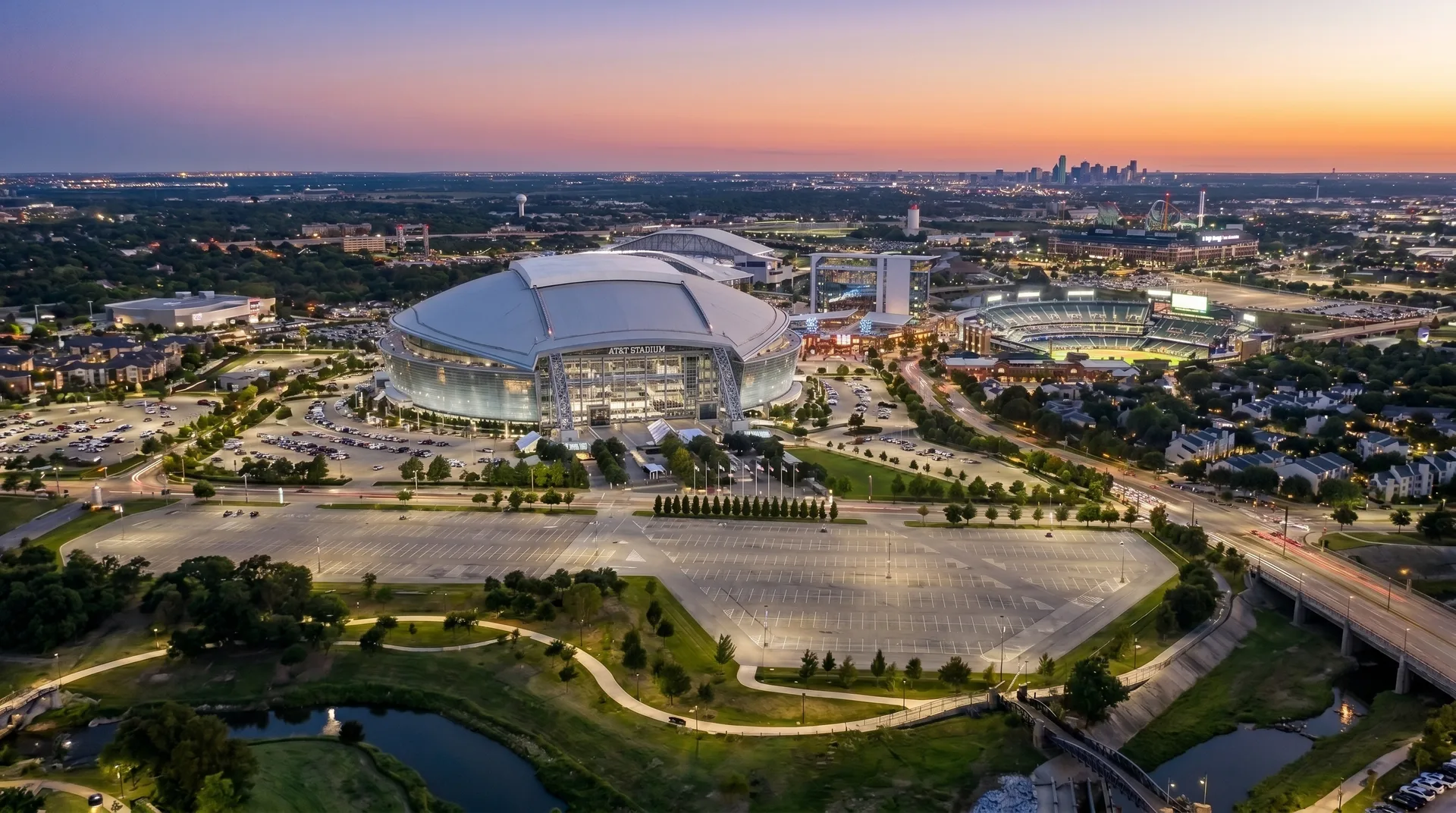
Arlington
Arlington, Texas, strategically located in the Dallas-Fort Worth metropolitan area, serves as a crucial logistics hub in the heart of Texas. The city benefits from its central location within the state and its proximity to major transportation infrastructure, including multiple interstate highways (I-20, I-30, and I-35) that connect to national freight networks. Arlington's economy is diverse, with strong presence in manufacturing, technology, healthcare, and entertainment sectors, creating consistent demand for freight transportation services.
The city's logistics infrastructure includes the Arlington Municipal Airport for air freight, extensive warehousing and distribution facilities, and direct access to the DFW International Airport, one of the busiest cargo airports in the nation. Arlington's position within the larger Dallas-Fort Worth metroplex provides businesses with access to a vast network of suppliers, manufacturers, and distribution centers, making it an ideal origin point for both regional and national freight movements.
 Destination
Oakland
Oakland, California, stands as a critical logistics gateway on the West Coast, anchored by the Port of Oakland, one of the busiest container ports in the United States. The city's strategic location on the San Francisco Bay provides direct access to international shipping routes and serves as a vital link between Pacific Rim trade and the continental United States. Oakland's economy is driven by maritime trade, technology, healthcare, and advanced manufacturing, creating substantial freight transportation needs.
The city boasts excellent transportation infrastructure, including direct access to major highways (I-80, I-880, and I-580), the Oakland International Airport with dedicated cargo facilities, and extensive rail connections through Union Pacific and BNSF rail yards. Oakland's proximity to Silicon Valley and the broader San Francisco Bay Area makes it a crucial distribution point for high-tech products, agricultural goods, and consumer merchandise. The city's logistics ecosystem includes modern warehousing facilities, cold storage capabilities, and specialized handling services for diverse cargo types.










