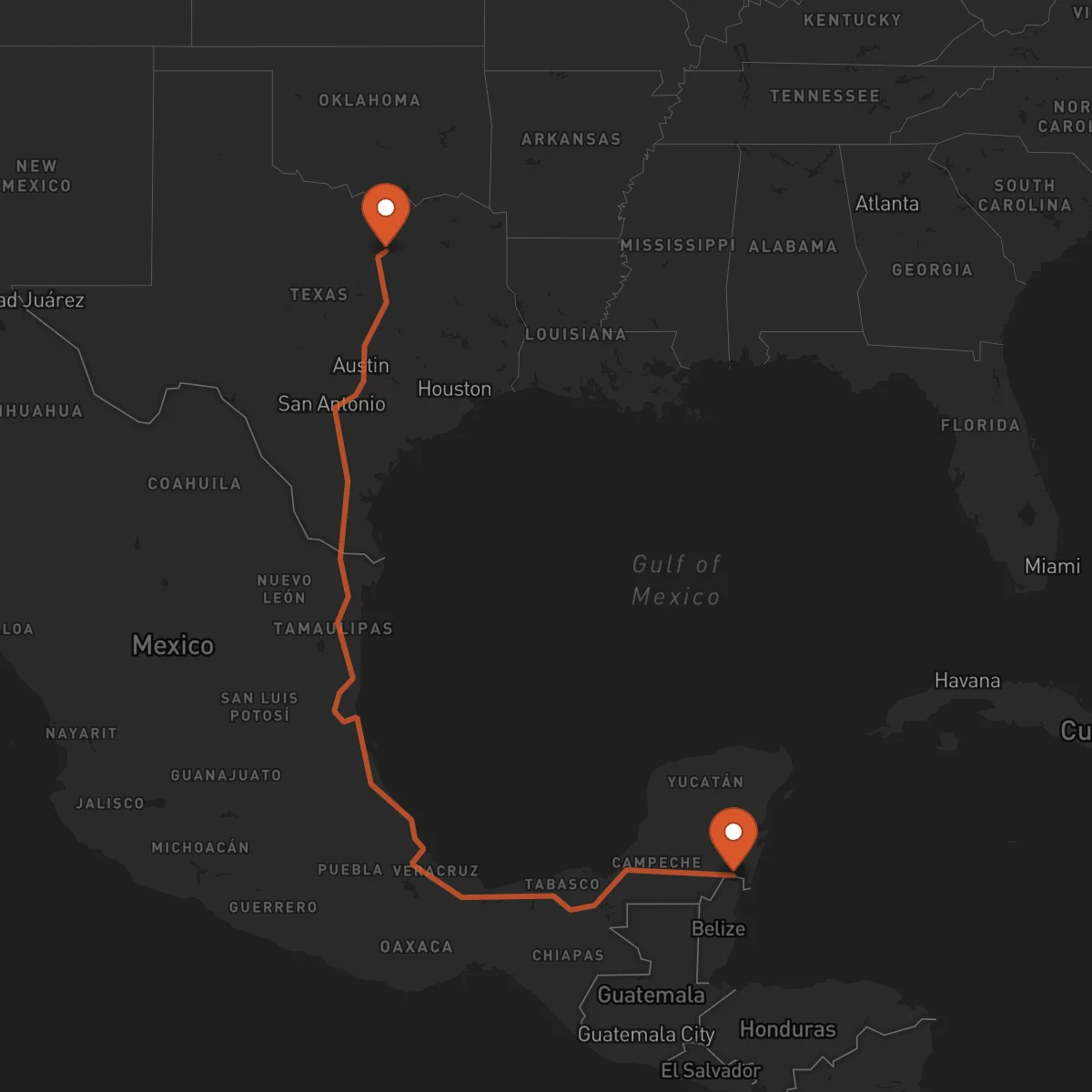
Arlington to Chetumal
Chetumal → ArlingtonFTL freight transportation service between Arlington and Chetumal. Reliable logistics solutions for your business.
Route Description
Everything you need to know about the corridor Arlington - Chetumal
The logistics corridor between Arlington, Texas, and Chetumal, Quintana Roo, represents a vital cross-border connection between the industrial heartland of the United States and the growing economic hub of Mexico's Yucatan Peninsula. This 1,811 km route traverses diverse landscapes and connects major economic regions, facilitating the movement of goods between North America's two largest economies.
The corridor begins in Arlington, a strategic logistics center in the Dallas-Fort Worth metroplex, and extends through key Mexican states including Nuevo León, San Luis Potosí, Querétaro, and Campeche before reaching Chetumal. This route is particularly significant for industries such as automotive, electronics, and agricultural products, which require reliable and efficient transportation solutions.
Major transportation infrastructure along this corridor includes the US Interstate system connecting to Mexican Federal Highways 40D, 45D, and 180D. The primary border crossing is typically used at Laredo/Nuevo Laredo or McAllen/Reynosa, depending on specific routing and customs requirements. Control Terrestre's expertise in cross-border operations ensures seamless navigation through customs procedures, leveraging our C-TPAT and FAST certifications to expedite shipments.
Our dedicated team manages every aspect of this corridor, from initial pickup in Arlington to final delivery in Chetumal. We understand the unique challenges of cross-border transportation, including regulatory compliance, documentation requirements, and the need for specialized equipment. With our network of certified carriers and strategic partnerships, we provide reliable full truckload (FTL) services that keep your supply chain moving efficiently across international borders.
Services for this Route
Available services for the corridor Arlington - Chetumal
 Origin
Arlington
Arlington, Texas, is strategically positioned in the Dallas-Fort Worth metroplex, one of the largest and most dynamic economic regions in the United States. This location offers exceptional logistics advantages, with proximity to major transportation hubs including the Dallas/Fort Worth International Airport and extensive rail networks. Arlington is home to numerous distribution centers and warehouses, serving as a critical node in the North American supply chain.
The city's economy is diverse, with strong presence in automotive manufacturing, aerospace, defense, and technology sectors. Major corporations have established significant operations in the area, creating substantial freight transportation demand. The region's robust infrastructure includes multiple interstate highways (I-20, I-30, I-35), providing excellent connectivity for truckload freight movement. Arlington's central location within the United States makes it an ideal origin point for cross-border shipments to Mexico and beyond.
 Destination
Chetumal
Chetumal, the capital of Quintana Roo, serves as the gateway to Mexico's Yucatan Peninsula and holds strategic importance for logistics operations in southeastern Mexico. Located on the border with Belize, Chetumal is a key commercial and administrative center that connects the Yucatan Peninsula with the rest of Mexico and Central America. The city's port facilities and proximity to major tourist destinations make it a crucial logistics hub for both import and export activities.
The region's economy is driven by tourism, agriculture, fishing, and emerging manufacturing sectors. Chetumal's location provides access to the growing markets of the Yucatan Peninsula, including Cancun, Playa del Carmen, and other tourist destinations. The city is connected by Federal Highway 307 and Highway 186, offering reliable transportation links to the rest of Mexico. The developing infrastructure in Quintana Roo supports increased industrial activity, creating growing demand for efficient freight transportation services to and from the region.










