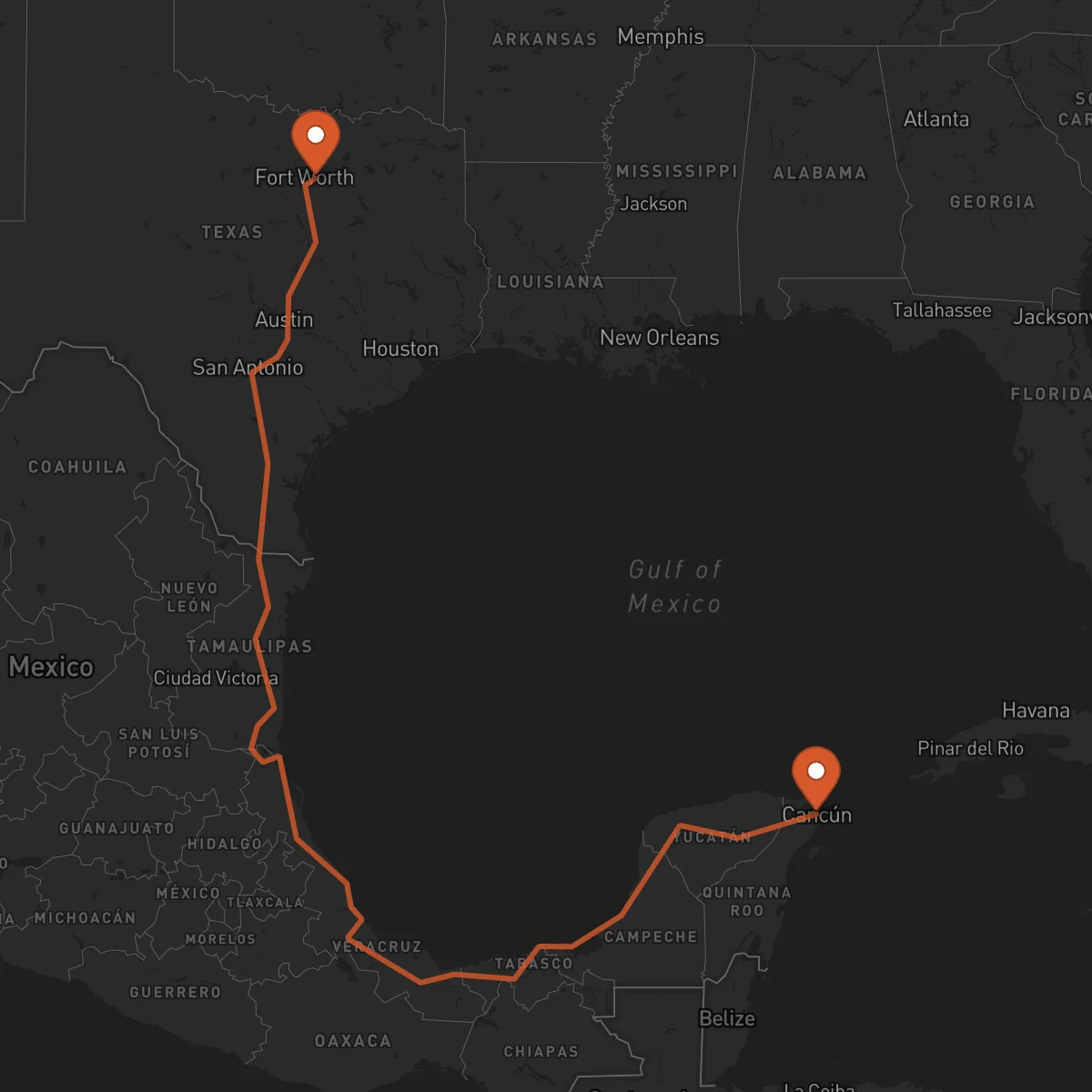
Arlington to Cancún
Cancún → ArlingtonFTL freight transportation service between Arlington and Cancún. Reliable logistics solutions for your business.
Route Description
Everything you need to know about the corridor Arlington - Cancún
The Arlington-Cancún corridor represents a vital logistics connection between the industrial heart of Texas and one of Mexico's most dynamic tourist and commercial destinations. This 1,638 km cross-border route links the manufacturing and distribution centers of the Dallas-Fort Worth metroplex with the growing logistics hub of Quintana Roo. The corridor serves as a crucial artery for companies operating in both countries, facilitating the efficient movement of goods between the United States and Mexico's southeastern region.
The economic significance of this corridor is underscored by the complementary industrial activities in both regions. Arlington's proximity to major manufacturing facilities, automotive plants, and distribution centers creates a steady flow of goods requiring transportation to Mexican markets. Cancún, while renowned for its tourism industry, has developed sophisticated logistics infrastructure to support both the hospitality sector and increasing industrial activities in the region. This creates a balanced trade flow with diverse cargo types moving in both directions.
Transportation along this corridor primarily utilizes Mexico's Federal Highway 180 and connections through key border crossings such as Laredo or Brownsville. The route passes through major industrial cities including Monterrey and Veracruz, offering multiple options for cargo consolidation and distribution. Control Terrestre's expertise in managing cross-border operations ensures seamless coordination through customs procedures, regulatory compliance, and the complex documentation requirements inherent to international freight transportation between these two important economic partners.
Services for this Route
Available services for the corridor Arlington - Cancún
 Origin
Arlington
Arlington, Texas, occupies a strategic position within the Dallas-Fort Worth metroplex, one of the most important industrial and logistics centers in the United States. The city benefits from its proximity to major transportation infrastructure, including the Dallas/Fort Worth International Airport, extensive highway networks (I-20, I-30, and I-35), and rail connections. Arlington's economy is diverse, with significant presence in automotive manufacturing, aerospace, defense contracting, and distribution services. The area hosts numerous warehouses and distribution centers that serve as crucial nodes in the North American supply chain, making it an ideal origin point for freight transportation to Mexico.
 Destination
Cancún
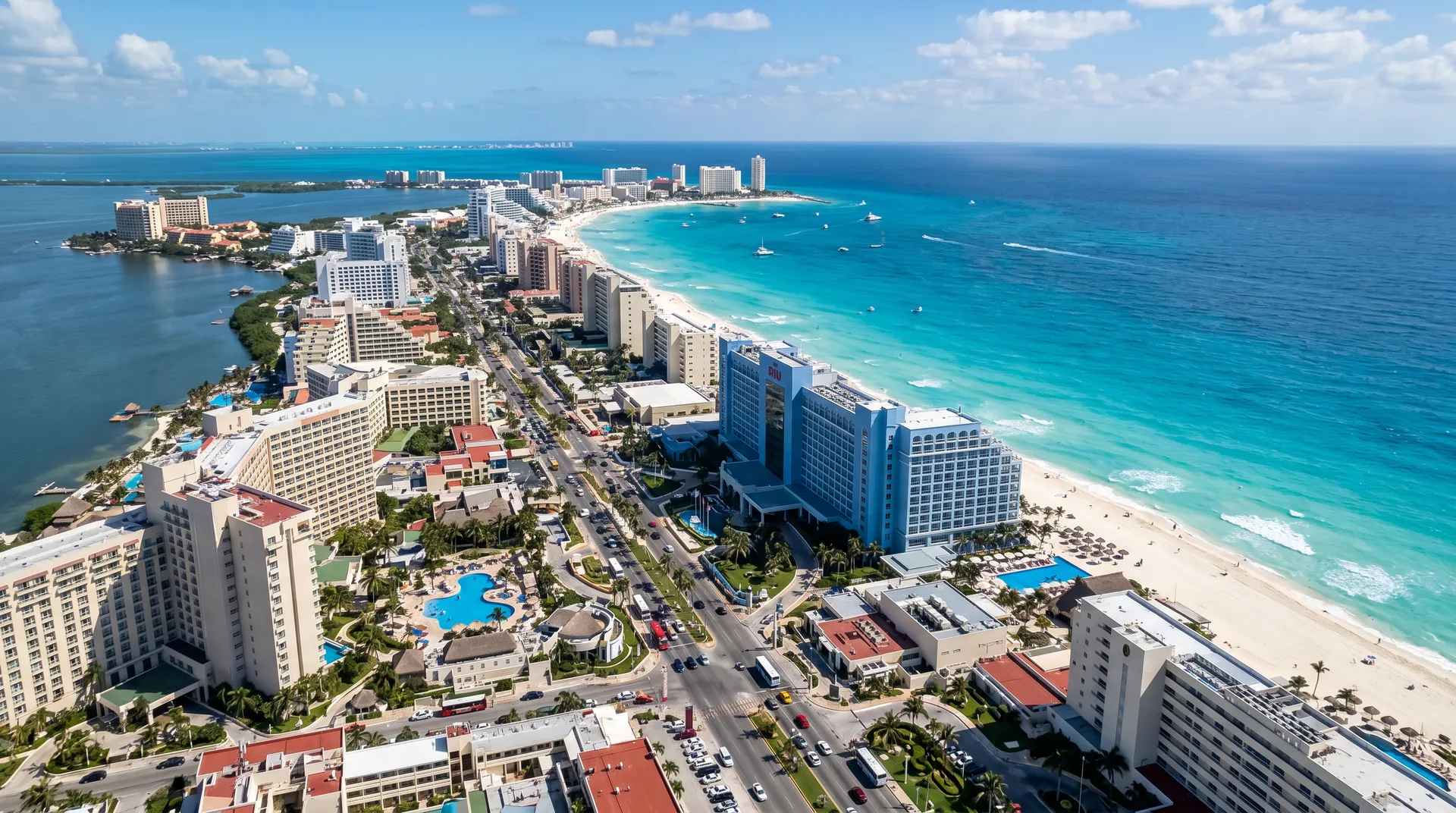
Cancún, Quintana Roo, has evolved beyond its identity as a premier tourist destination to become an important logistics hub for southeastern Mexico. The city's strategic Caribbean location and the development of the Costa Maya Port have enhanced its connectivity to international markets. Cancún International Airport serves as a major cargo gateway, while the recent expansion of industrial parks and free trade zone facilities has attracted manufacturing and distribution operations. The region's infrastructure includes modern highways connecting to Mérida and other key cities, creating efficient inland transportation networks that complement the maritime and air cargo capabilities.










