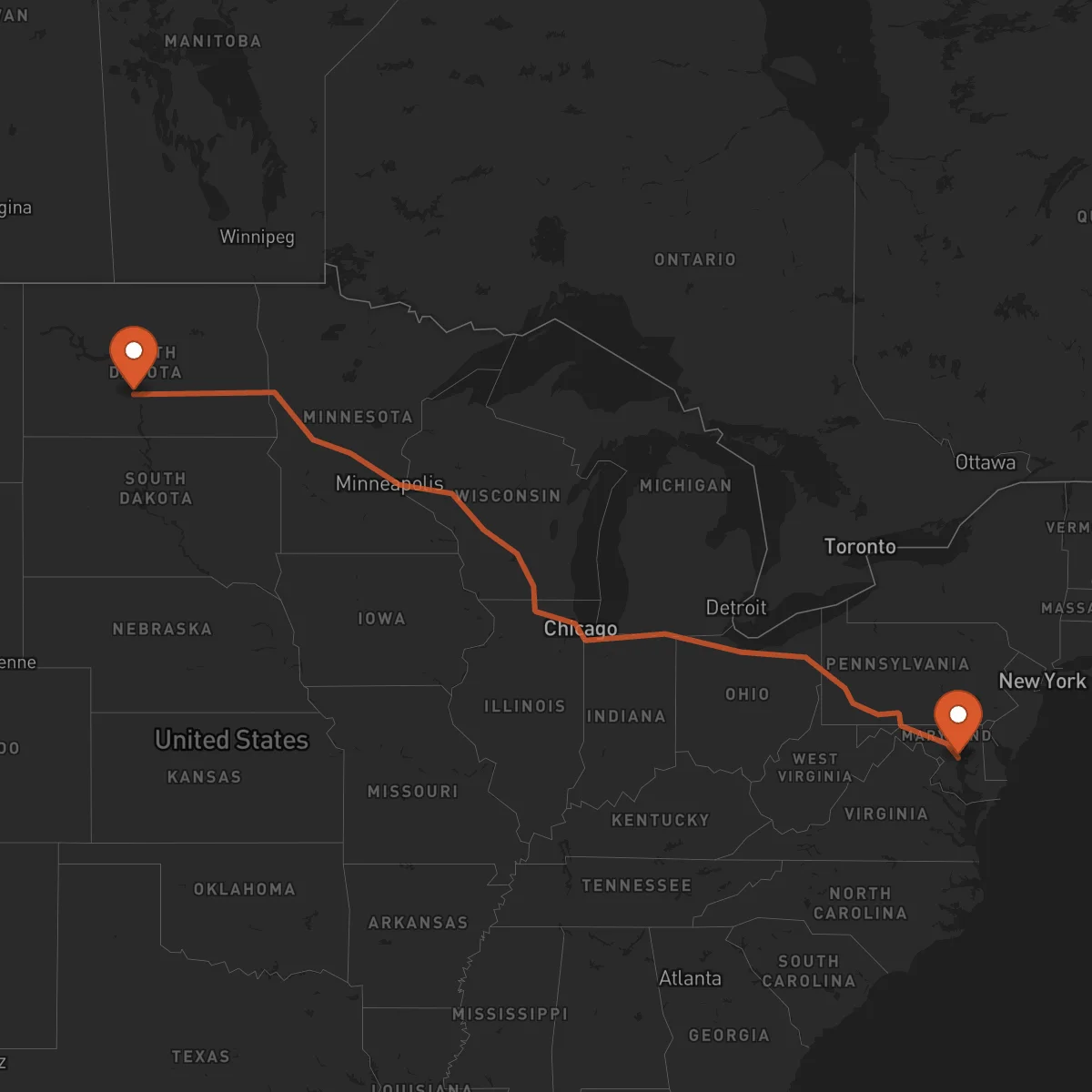
Annapolis to Bismarck
Bismarck → AnnapolisFTL freight transportation service between Annapolis and Bismarck. Reliable logistics solutions for your business.
Route Description
Everything you need to know about the corridor Annapolis - Bismarck
The corridor connecting Annapolis, Maryland to Bismarck, North Dakota represents a vital domestic freight route spanning approximately 2,151 kilometers across the United States. This east-west transportation artery links the Mid-Atlantic region with the Northern Plains, traversing diverse geographic and economic landscapes. The route serves as a critical supply chain link for businesses operating between the densely populated East Coast and the resource-rich Midwest, facilitating the movement of goods essential to both regional and national commerce.
The economic significance of this corridor is substantial, connecting Annapolis's government, healthcare, and maritime industries with Bismarck's energy, agriculture, and government sectors. This freight lane supports the continuous flow of industrial equipment, agricultural products, construction materials, and consumer goods between these regions. The corridor's strategic importance is amplified by the complementary economic profiles of both cities, with Annapolis serving as a hub for specialized manufacturing and professional services, while Bismarck anchors the energy and agricultural supply chains of the Northern Plains.
Key industries utilizing this transportation corridor include government agencies, energy companies, agricultural producers, construction firms, and manufacturers of specialized equipment. The route accommodates a diverse range of freight types, from temperature-sensitive goods to oversized industrial machinery, reflecting the varied economic activities at both endpoints. This corridor particularly serves the needs of businesses requiring reliable, full truckload transportation for high-value or time-sensitive shipments.
Control Terrestre enhances operations along this corridor through our network of certified transportation providers and specialized equipment options. Our dedicated FTL services ensure that shipments move efficiently across the entire route, with options including dry vans for general cargo, refrigerated units for perishable goods, and flatbed trailers for oversized equipment. We provide door-to-door service with real-time tracking capabilities, allowing our clients to maintain visibility over their freight as it travels from the Chesapeake Bay region to the Missouri River Valley.
Services for this Route
Available services for the corridor Annapolis - Bismarck
 Origin
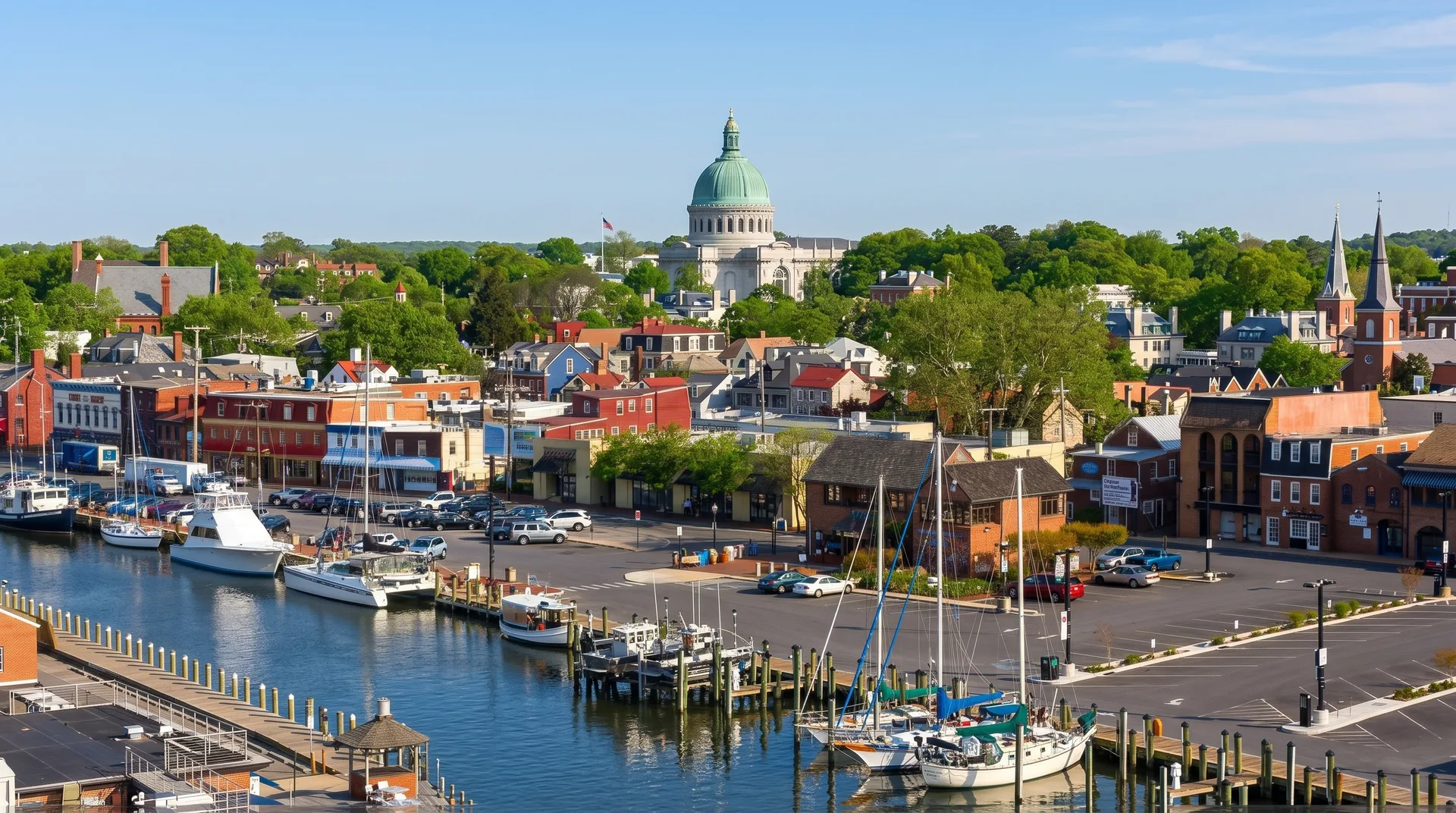
Annapolis
Annapolis, Maryland serves as a strategic origin point for logistics operations, positioned along the Chesapeake Bay with excellent access to major East Coast transportation networks. The city's proximity to Washington D.C. and Baltimore provides seamless connections to national freight corridors, while its maritime infrastructure supports diverse shipping options. Annapolis benefits from its location within Maryland's robust transportation system, including access to I-97, I-695, and I-95, facilitating efficient movement of goods in all directions.
The Annapolis region's economy centers on government services, healthcare, education, and maritime industries, creating consistent demand for specialized freight transportation. The area hosts numerous government facilities, research institutions, and healthcare providers that require reliable logistics support for equipment, supplies, and sensitive materials. Additionally, the presence of the United States Naval Academy and various maritime businesses generates specialized shipping needs for both routine and project-based cargo movements.
 Destination
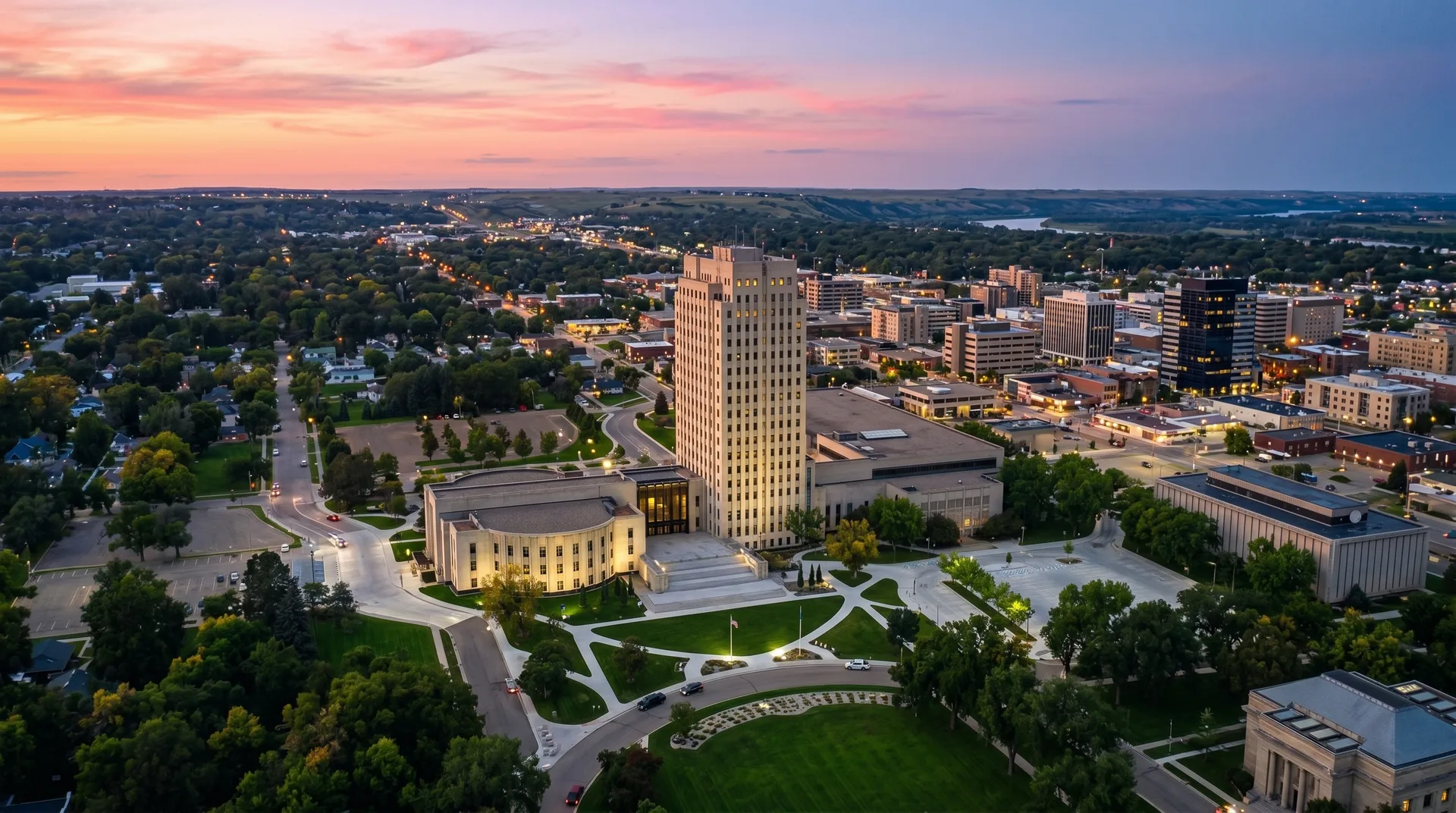
Bismarck
Bismarck, North Dakota stands as a strategic logistics hub in the Northern Plains, serving as the state capital and a center for energy and agricultural commerce. Located along the Missouri River, Bismarck provides access to both river transportation and an extensive network of highways, including I-94, which connects the city to major freight corridors across the Midwest. The city's infrastructure supports efficient distribution throughout the region, with connections to rail networks and proximity to major energy production areas.
The Bismarck economy is anchored by government services, energy production, agriculture, and healthcare sectors, creating diverse freight transportation requirements. As a center for North Dakota's energy industry, the city generates significant demand for specialized equipment, construction materials, and industrial supplies. The surrounding agricultural region requires consistent logistics support for seasonal harvests, equipment movement, and distribution of agricultural inputs. Bismarck's role as a regional distribution center for western North Dakota and eastern Montana further amplifies its importance as a logistics destination.










