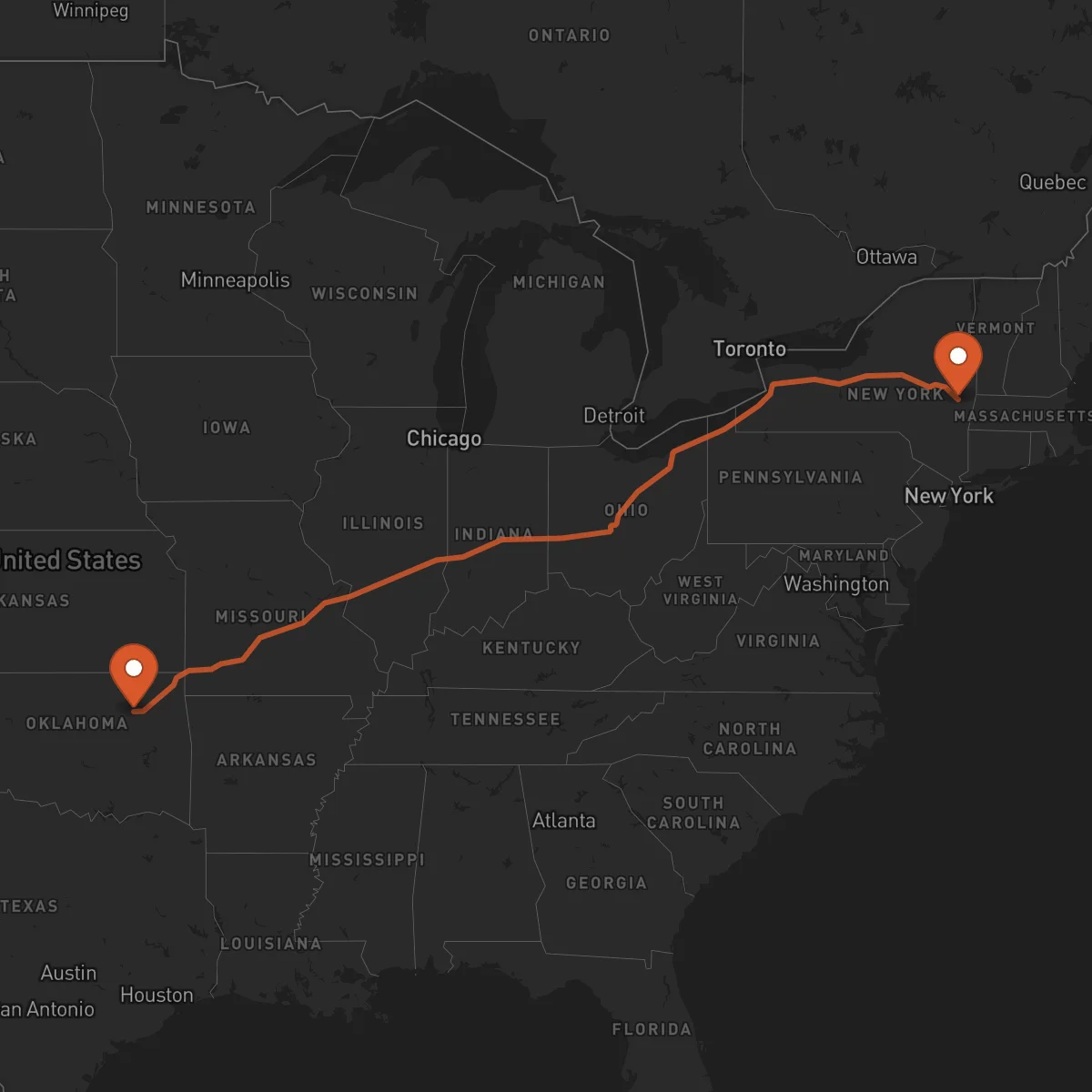
Albany to Tulsa
Tulsa → AlbanyFTL freight transportation service between Albany and Tulsa. Reliable logistics solutions for your business.
Route Description
Everything you need to know about the corridor Albany - Tulsa
The logistics corridor between Albany, New York, and Tulsa, Oklahoma, represents a vital domestic transportation route spanning approximately 2,035 kilometers across the United States. This east-west connection links the northeastern industrial corridor with the central United States, serving as a critical artery for freight movement between major economic regions. The route traverses diverse geographical and economic landscapes, connecting the Hudson Valley's manufacturing base with the energy-rich and industrially diverse Tulsa metropolitan area.
The corridor's strategic importance is underscored by its connection of two distinct economic powerhouses. Albany serves as a gateway to the northeastern United States, with its proximity to major ports and manufacturing centers, while Tulsa represents the heart of Oklahoma's energy sector and a growing hub for aerospace, telecommunications, and logistics industries. This route facilitates the movement of goods between the densely populated northeastern corridor and the central United States, supporting both import-export activities and domestic supply chains.
Control Terrestre specializes in full truckload (FTL) transportation along this corridor, providing dedicated freight solutions that ensure cargo moves efficiently and securely. Our network of certified carriers offers reliable transportation services using 48' and 53' dry vans and refrigerated units, perfect for the diverse cargo needs between these two markets. We understand the specific requirements of industries operating along this route and provide tailored solutions that optimize transit times and reduce supply chain risks.
Services for this Route
Available services for the corridor Albany - Tulsa
 Origin
Albany
Albany, New York, serves as a strategic logistics hub in the northeastern United States, positioned advantageously along the Hudson River and near major transportation arteries. The city's location provides excellent access to the Port of Albany, one of the oldest and most important ports on the eastern seaboard, facilitating efficient distribution to both domestic and international markets. Albany's proximity to major metropolitan areas like New York City, Boston, and Montreal enhances its role as a critical distribution point for goods moving throughout the northeastern corridor.
The region's economy is diverse, with strong presence in government services, education, healthcare, and technology sectors. Albany's industrial base includes advanced manufacturing, nanotechnology research, and renewable energy development. The area also supports significant agricultural production from upstate New York, creating a robust demand for freight transportation services. Albany's well-developed infrastructure includes major highways such as I-90 and I-87, as well as rail connections and air cargo facilities at Albany International Airport, providing multiple transportation options for businesses.
 Destination
Tulsa
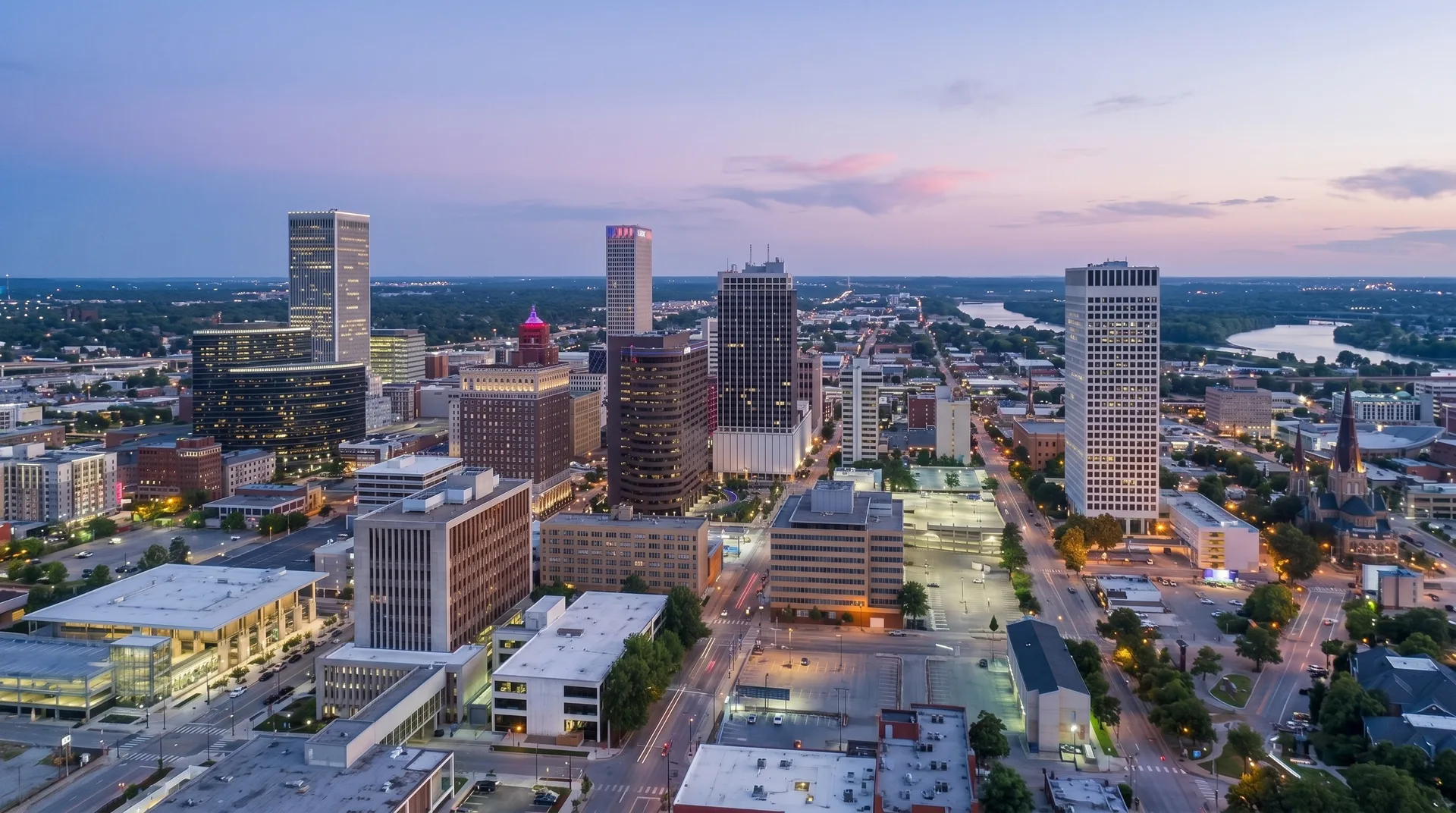
Tulsa, Oklahoma, stands as a strategic logistics center in the central United States, leveraging its location at the crossroads of major transportation networks. The city's position in the heart of the country makes it an ideal distribution point for goods moving to and from all regions of the United States. Tulsa benefits from excellent connectivity through major highways including I-44 and I-244, as well as rail infrastructure operated by Class I railroads, facilitating efficient freight movement throughout the Midwest and beyond.
The Tulsa metropolitan area has evolved from its historical roots in the oil industry to become a diverse economic powerhouse. While energy remains a significant sector, the region has developed strong aerospace, telecommunications, and manufacturing industries. The presence of major corporations and a growing tech sector has increased demand for sophisticated logistics solutions. Tulsa's relatively low cost of doing business, combined with its strategic location, makes it an attractive destination for companies seeking efficient distribution networks. The city's infrastructure supports a wide range of industrial activities, from energy equipment manufacturing to food processing and distribution.










