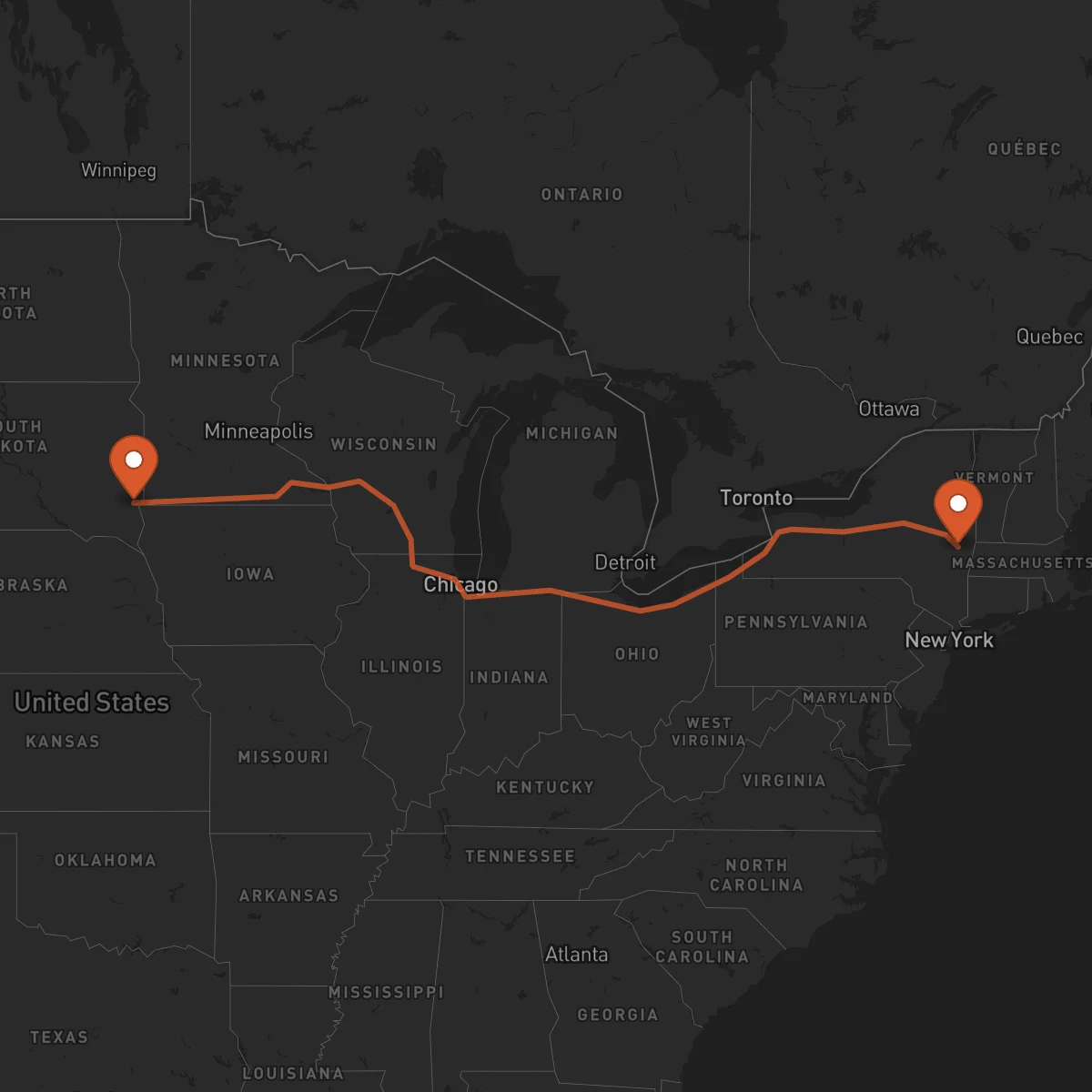
Albany to Sioux Falls
Sioux Falls → AlbanyFTL freight transportation service between Albany and Sioux Falls. Reliable logistics solutions for your business.
Route Description
Everything you need to know about the corridor Albany - Sioux Falls
The Albany to Sioux Falls corridor represents a vital domestic freight transportation route connecting the northeastern United States with the Midwest. This 1,862-kilometer journey traverses diverse geographic and economic regions, facilitating the movement of goods between New York's capital region and South Dakota's largest city. The corridor serves as a crucial link in the national supply chain, enabling businesses to efficiently transport cargo across state lines and time zones.
The economic significance of this route is substantial, connecting the manufacturing, technology, and healthcare sectors of the Albany region with Sioux Falls' growing financial services, healthcare, and agricultural industries. Albany's proximity to major northeastern markets and Sioux Falls' position as a regional hub in the Midwest create complementary economic ecosystems that benefit from efficient freight transportation. The corridor passes through several key states, including New York, Pennsylvania, Ohio, Indiana, Illinois, Wisconsin, and Minnesota, intersecting with numerous industrial centers along the way.
Major interstate highways facilitate transportation along this route, primarily utilizing I-90, which runs from Albany through to Sioux Falls. This well-maintained highway network provides reliable infrastructure for freight movement, with multiple lanes and modern rest areas supporting long-haul trucking operations. The route also intersects with other major highways such as I-87, I-88, I-80, and I-29, offering alternative routing options when needed.
Control Terrestre specializes in full truckload (FTL) transportation services along this corridor, providing dedicated freight solutions that ensure your cargo moves efficiently from origin to destination. Our experienced carrier network and strategic partnerships enable us to offer reliable, timely transportation services that meet the specific needs of businesses operating between Albany and Sioux Falls. We understand the unique requirements of this route and provide the expertise necessary to navigate the complexities of interstate freight movement.
Services for this Route
Available services for the corridor Albany - Sioux Falls
 Origin
Albany
Albany, New York serves as a strategic logistics hub in the northeastern United States, positioned at the intersection of major transportation routes. Located on the west bank of the Hudson River, Albany provides excellent access to both coastal and inland shipping routes. The city's location approximately 240 kilometers north of New York City and its proximity to the Canadian border make it an ideal distribution point for goods moving throughout the northeastern corridor. Albany's transportation infrastructure includes the Port of Albany, which handles cargo shipments via the Hudson River, and multiple interstate highways including I-90, I-87, and I-787 that connect the city to regional and national networks.
The Albany region's economy is diverse, with strong presence in government services, healthcare, education, and technology sectors. Major employers include the State of New York, Albany Medical Center, and various educational institutions. The manufacturing sector, while smaller than in previous decades, still plays a significant role, particularly in nanoelectronics and semiconductor production. The area's logistics sector benefits from these diverse industries, handling everything from medical supplies and electronic components to consumer goods and industrial equipment. Albany's economic diversity creates consistent freight movement opportunities throughout the year.
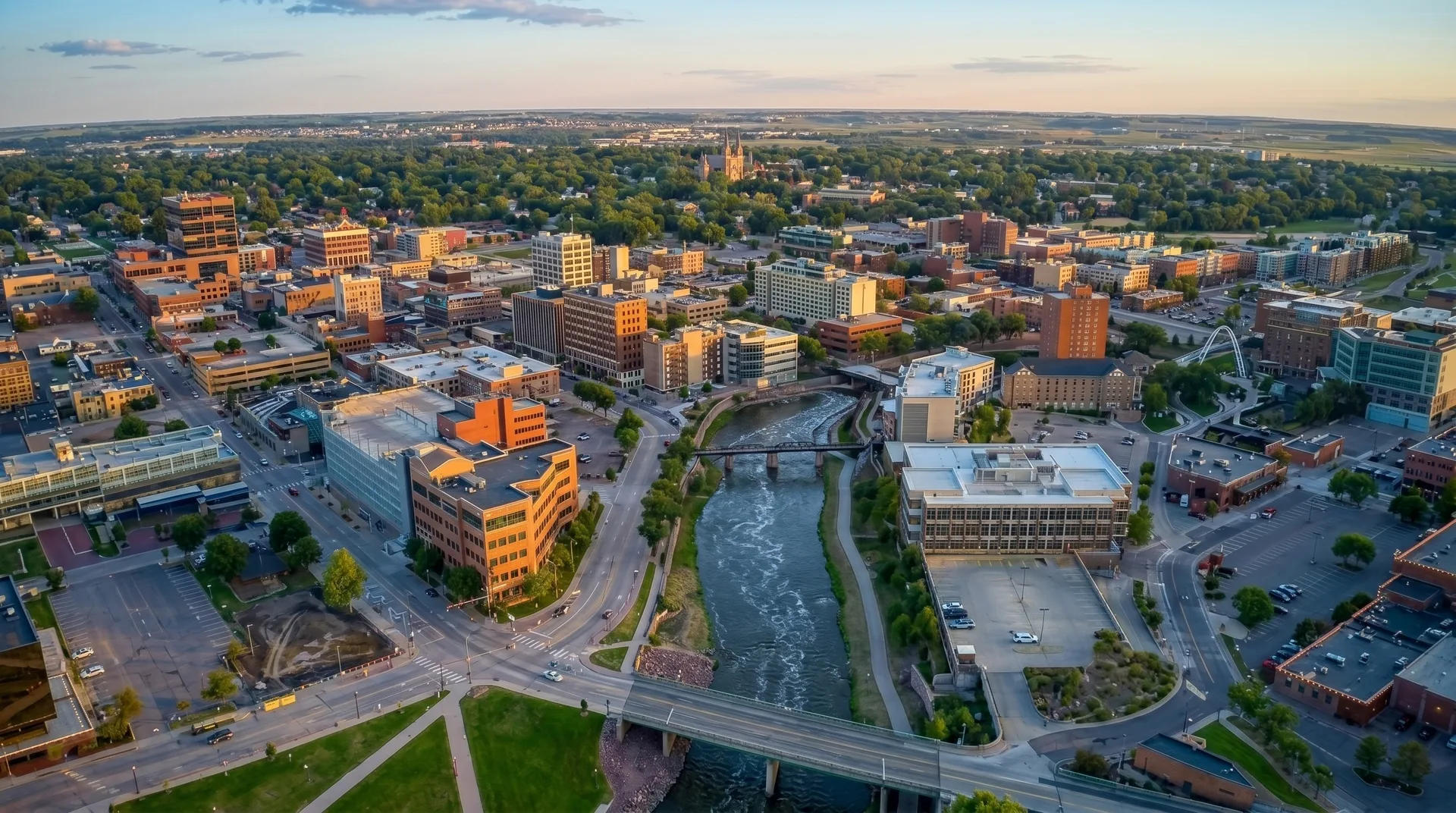 Destination
Sioux Falls
Sioux Falls, South Dakota stands as a strategic logistics center in the Midwest, offering unique advantages for freight transportation and distribution. Located in the southeastern corner of South Dakota, the city serves as a gateway to the northern plains region and provides excellent access to major transportation corridors. Sioux Falls' central location in North America makes it an ideal distribution point, being within an overnight drive of major markets including Minneapolis, Chicago, Denver, and Kansas City. The city's well-developed infrastructure includes Interstate 29, Interstate 90, and multiple rail connections that facilitate efficient movement of goods in all directions.
The Sioux Falls economy has experienced significant growth in recent decades, particularly in the financial services sector, with major credit card processing companies establishing operations in the city. The healthcare industry is another major economic driver, with Sanford Health and Avera Health being among the largest employers. Additionally, Sioux Falls has a strong presence in retail, manufacturing, and agricultural processing. The city's logistics sector benefits from this diverse economic base, handling a wide range of freight including financial documents, medical supplies, agricultural products, and manufactured goods. Sioux Falls' business-friendly environment and lower operational costs compared to coastal cities make it an attractive location for distribution centers and logistics operations.










