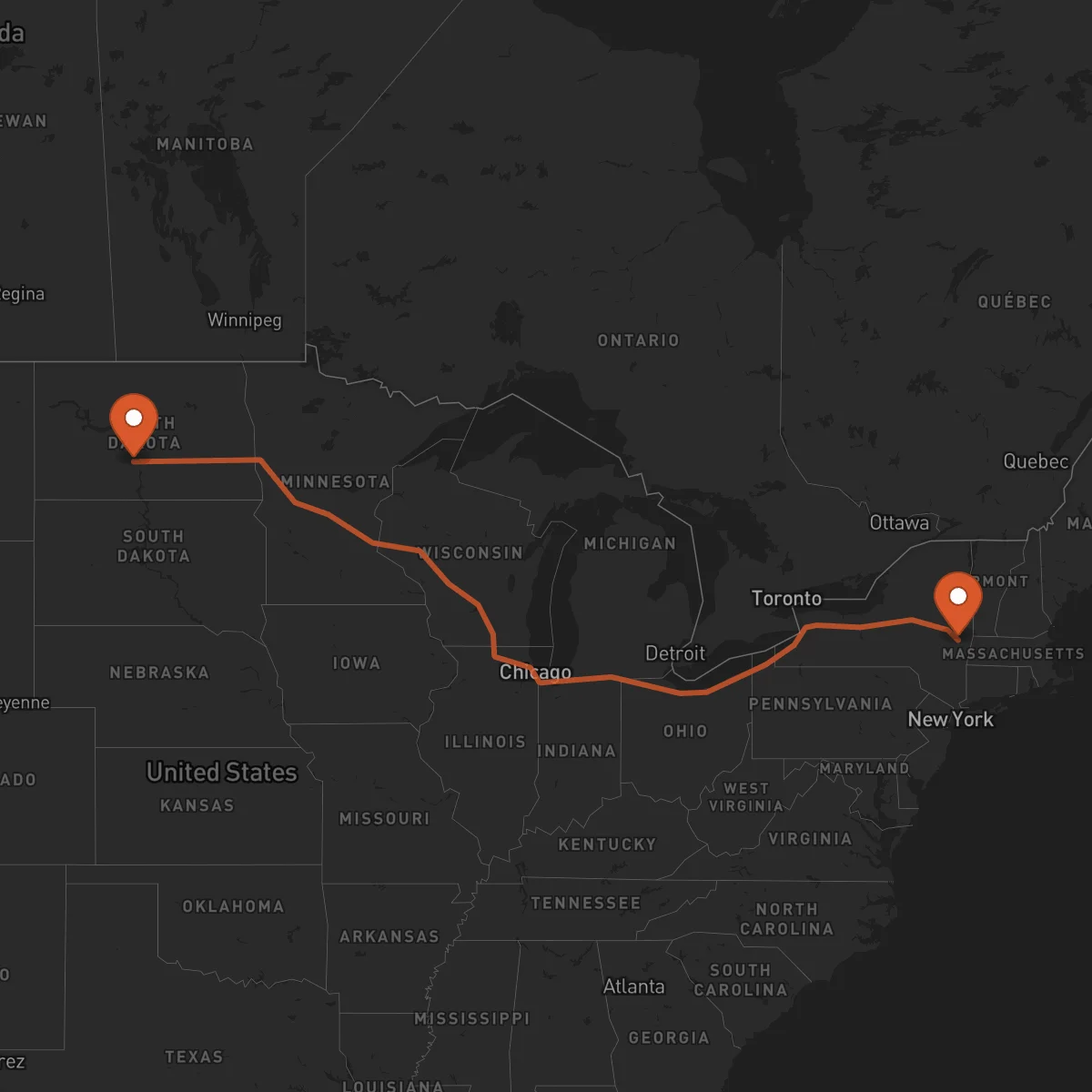
Albany to Bismarck
Bismarck → AlbanyFTL freight transportation service between Albany and Bismarck. Reliable logistics solutions for your business.
Route Description
Everything you need to know about the corridor Albany - Bismarck
The Albany to Bismarck corridor represents a vital domestic freight transportation route connecting the Northeast to the Northern Plains. This 2,173 km journey traverses diverse terrain and crosses multiple state lines, making it an essential link for businesses requiring reliable full truckload (FTL) services across the American heartland. The corridor's strategic importance lies in its ability to bridge major economic centers with emerging industrial hubs, facilitating the movement of goods that power regional economies.
This route serves as a critical artery for industries ranging from manufacturing and energy to agriculture and retail distribution. The Albany region, with its concentration of technology and government-related industries, generates significant outbound freight volumes that require efficient transportation to growing markets in the Midwest and beyond. Meanwhile, Bismarck's role as an energy and agricultural center creates inbound freight demands that necessitate robust logistics solutions. The corridor's infrastructure supports these economic activities through a network of major highways including I-90, I-94, and various state routes that ensure consistent freight movement.
Control Terrestre specializes in optimizing this corridor through our dedicated FTL services, ensuring that your cargo moves efficiently from origin to destination. Our experienced team understands the unique challenges of this route, from weather considerations to regulatory compliance across state lines. We leverage our extensive network of certified carriers to provide reliable, timely transportation solutions that keep your supply chain running smoothly, whether you're shipping from Albany's industrial parks or delivering to Bismarck's growing distribution centers.
Services for this Route
Available services for the corridor Albany - Bismarck
 Origin
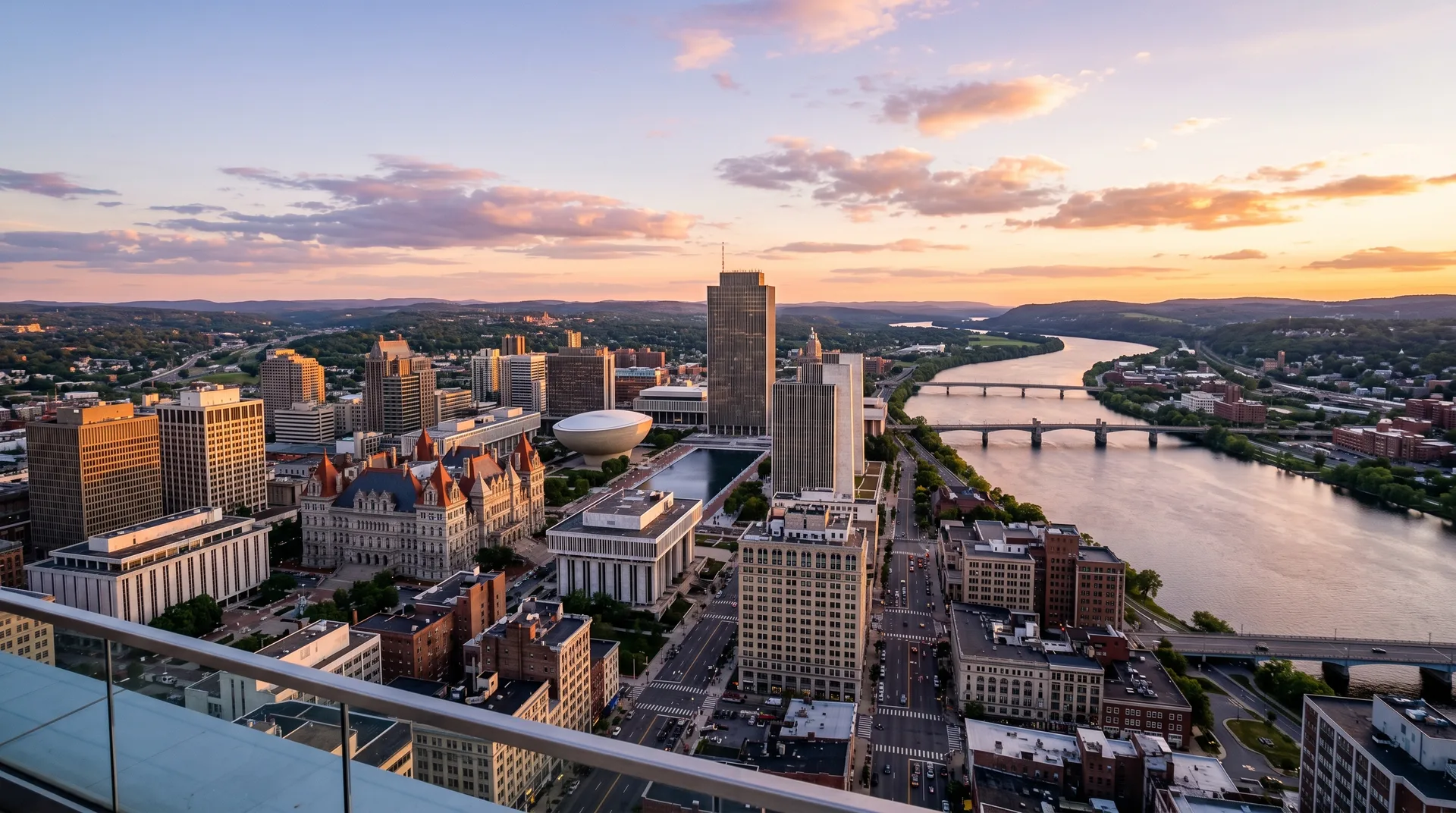
Albany
Albany, New York serves as a strategic gateway for freight movement in the Northeast, offering exceptional logistics advantages for businesses. Located along the Hudson River and positioned at the intersection of major transportation corridors, Albany provides seamless connectivity to both coastal ports and inland destinations. The city's robust infrastructure includes the Port of Albany, multiple interstate highways (I-90, I-787), and proximity to major airports, creating a multimodal transportation hub that facilitates efficient cargo handling and distribution.
The region's economy is diverse, with strong presence in government services, healthcare, education, and technology sectors. Albany's Tech Valley initiative has attracted numerous high-tech manufacturers and research facilities, generating consistent freight volumes requiring reliable transportation. The area also benefits from a concentration of warehouse and distribution centers that serve the broader New York State market. This industrial diversity, combined with Albany's strategic location at the crossroads of the Northeast, makes it an ideal origin point for full truckload shipments heading west across the country.
 Destination
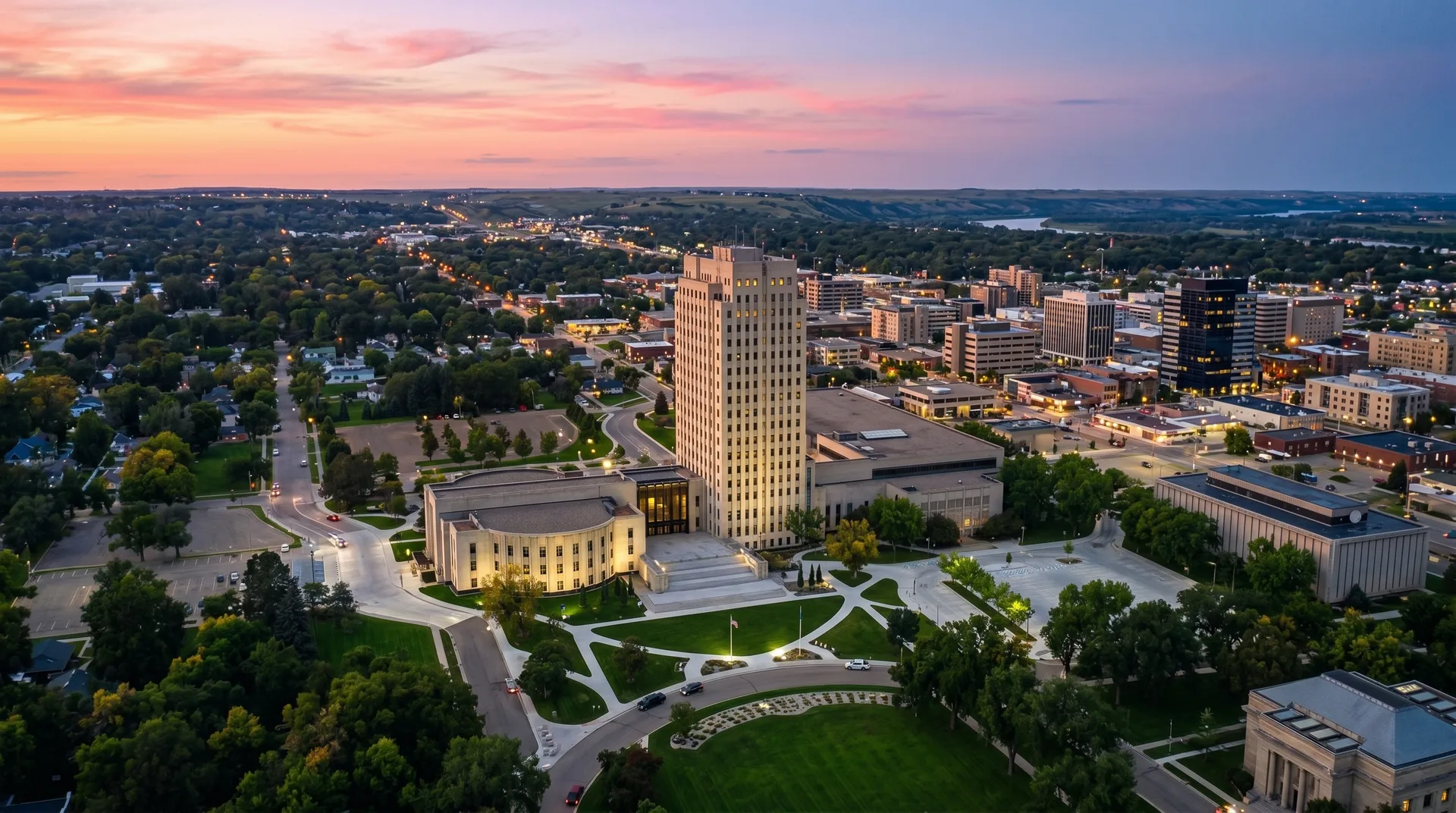
Bismarck
Bismarck, North Dakota stands as a crucial logistics hub in the Northern Plains, offering unique advantages for freight distribution and supply chain operations. Situated along the Missouri River and at the crossroads of major transportation routes, Bismarck provides strategic access to both regional markets and national freight networks. The city's location at the intersection of I-94 and US-83 creates efficient connections to major freight corridors, while the Bismarck Municipal Airport supports air cargo operations for time-sensitive shipments.
The Bismarck economy is anchored by energy production, agriculture, healthcare, and government services, creating diverse freight generation patterns. The region's significant oil and natural gas activities in the Bakken formation generate substantial industrial freight volumes, while the surrounding agricultural areas produce commodities requiring reliable transportation to processing facilities and markets. Bismarck's growing manufacturing sector and expanding retail distribution centers further contribute to the area's freight demands. This economic diversity, combined with Bismarck's position as the state capital and largest city in North Dakota, makes it a critical destination for full truckload freight moving from eastern markets.










