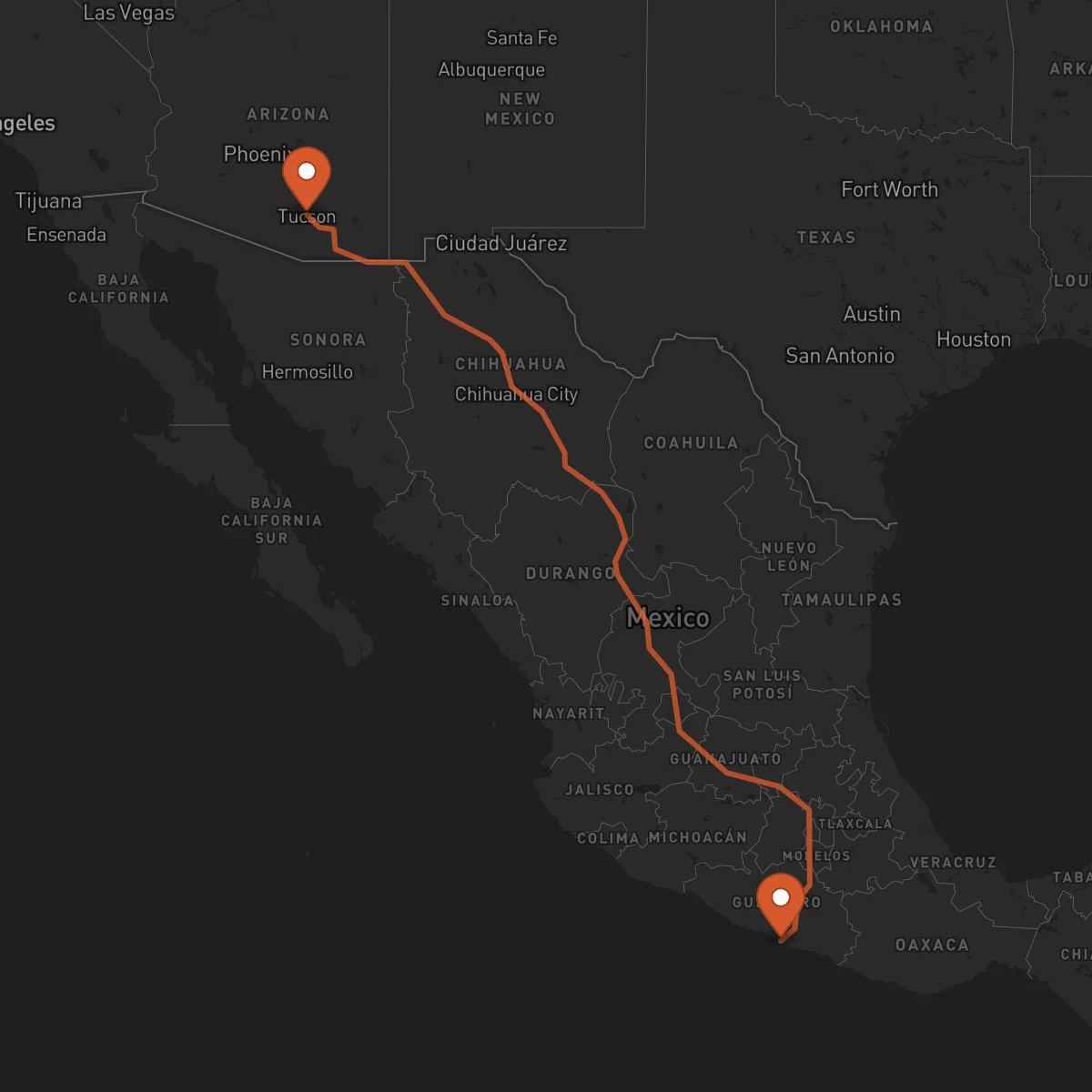
Acapulco to Tucson
Tucson → AcapulcoFTL freight transportation service between Acapulco and Tucson. Reliable logistics solutions for your business.
Route Description
Everything you need to know about the corridor Acapulco - Tucson
The Acapulco-Tucson logistics corridor connects the Pacific port of Acapulco, Guerrero, with the Arizona border city of Tucson, representing a strategic route for international trade between Mexico and the United States. This 2,043 km corridor facilitates the movement of cargo from the Mexican Pacific coast to the southwestern United States, passing through key states including Guerrero, Morelos, Estado de México, Querétaro, Guanajuato, Jalisco, Sinaloa, Sonora, and Arizona.
The corridor's strategic importance lies in its ability to connect the Port of Acapulco with major inland markets and manufacturing centers in central and northern Mexico before crossing into the United States through the Mariposa port of entry near Nogales. This route serves as a vital link for companies seeking efficient access to both Mexican production centers and U.S. consumer markets.
Key industries utilizing this corridor include automotive manufacturing, electronics, agricultural products, and consumer goods. The automotive sector particularly benefits from this route, connecting Acapulco's port facilities with assembly plants in central Mexico and distribution centers in Arizona. Additionally, the corridor supports the movement of fresh produce and perishable goods, taking advantage of refrigerated transportation options available through specialized providers.
Control Terrestre facilitates seamless operations on this corridor through our network of certified carriers and expertise in cross-border logistics. We manage the complexities of customs clearance, regulatory compliance, and coordination between multiple jurisdictions, ensuring reliable full truckload (FTL) transportation from origin to destination.
Services for this Route
Available services for the corridor Acapulco - Tucson
 Origin
Acapulco, located on Mexico's Pacific coast in Guerrero state, serves as a strategic logistics hub with its commercial port facilities. The city's port infrastructure includes specialized terminals capable of handling containerized cargo, breakbulk, and project cargo. Acapulco's position provides direct maritime access to Asian markets and serves as a vital gateway for imports and exports to southern and central Mexico.
The region's economy traditionally centered on tourism has diversified to include manufacturing and industrial activities. Key sectors include food processing, textiles, and light manufacturing. The city's connectivity through Federal Highway 95D (La Venta-Aeropuerto) and proximity to Mexico City enhances its role in national logistics networks. Acapulco's port facilities offer efficient cargo handling capabilities for both domestic redistribution and international shipments, making it an important origin point for freight moving north to the United States.
 Destination
Tucson
Tucson, Arizona, strategically positioned in the southwestern United States, serves as a critical logistics hub for cross-border operations with Mexico. The city's location near the U.S.-Mexico border and its proximity to major transportation corridors make it an ideal distribution center for goods entering the southwestern states. Tucson benefits from excellent connectivity through Interstate 10, which provides direct access to Phoenix, Los Angeles, and other major U.S. markets.
The region's economy is diverse, with strong presence in aerospace and defense, optics and photonics (earning Tucson the nickname "Optics Valley"), healthcare, and technology sectors. Tucson's industrial base includes numerous manufacturing facilities, distribution centers, and warehousing operations that support both local and international supply chains. The city's Sky Harbor International Airport and rail connections via Union Pacific Railroad complement its robust trucking infrastructure, facilitating efficient multimodal transportation solutions for businesses operating in the cross-border trade environment.










