Price is the first thing you see in a quote. But it's not what determines if your cargo arrives on time, in good condition, and with the correct documentation. That's determined by something that doesn't appear on any rate sheet.
Why it's hard to tell them apart before hiring
All trucking companies say the same thing. Nationwide coverage. Personalized service. Years of experience. Modern units. 24/7 support. The problem is that language is identical between a company with solid processes and one that operates with a borrowed fleet, outdated insurance, and no protocols whatsoever.
The real difference isn't in what they say — it's in how they operate when something goes wrong, when there's time pressure, when the customer calls furious, or when customs holds a shipment due to a documentation error. That's where serious companies separate from those that aren't.
Signs of a serious trucking company
Documentation in order without you having to ask
A serious company doesn't wait for you to request cargo insurance, civil liability policy, stamped bill of lading, or SCT permits. They deliver them proactively because they know these are part of the service, not an inconvenient formality.
If you have to chase down documentation, that tells you something about how they run the rest of their processes.
Prices that are explained, not justified
A serious company can break down their rate for you. They know what fuel costs on that route, what tolls cost, what detention costs if there's a delay, what insurance costs. They don't give you a number and expect you to accept it — they explain what it's made of.
A company that isn't serious gives you the lowest possible price to win the contract, and then charges appear that "weren't included."
Technology you can see, not just hear about
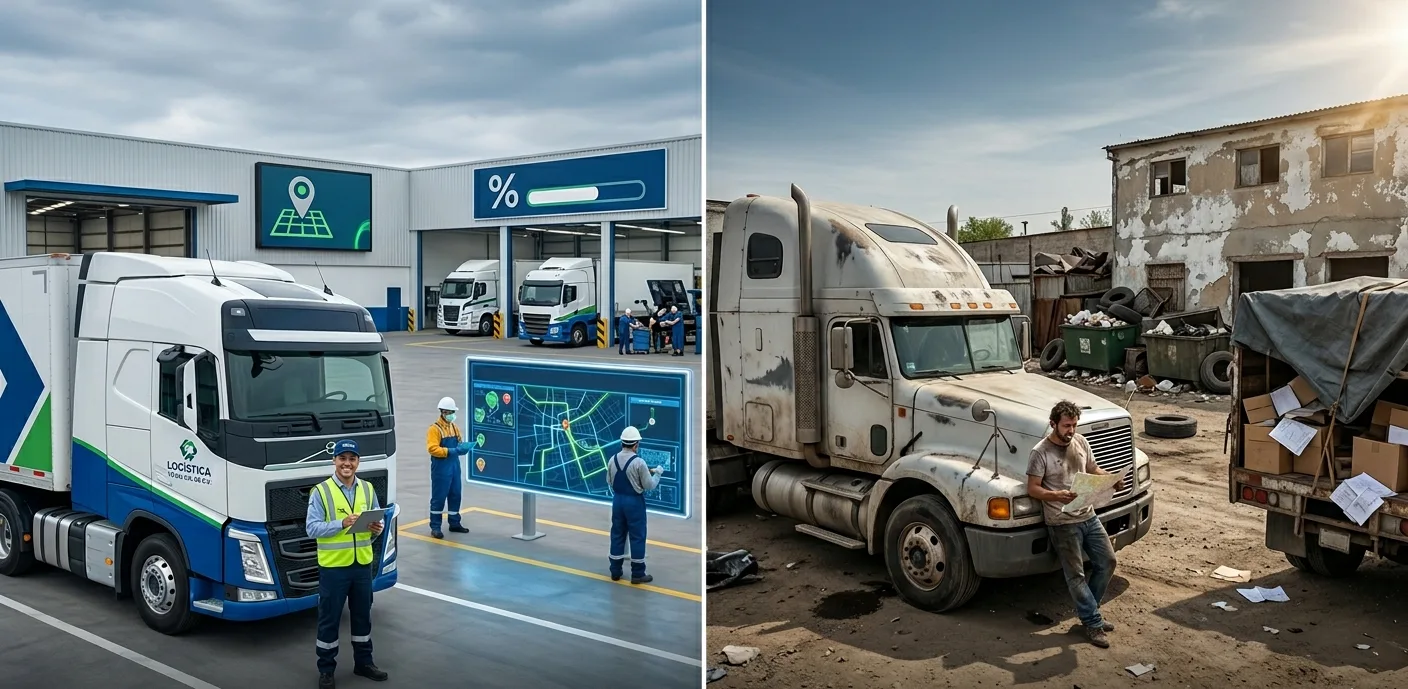
Real-time GPS tracking, a monitoring platform accessible to the client, trip history, automatic alerts. Not "we have cutting-edge technology" — but concrete access to concrete information about your cargo right now.
If the only way to know where your truck is is to call someone, the technology they mention in their presentation isn't working for you.
Clear protocols for when something goes wrong
Incidents in transportation aren't the exception — they're part of the operation. What distinguishes a serious company is that they have a defined protocol for every scenario: accident, theft, customs delay, cargo damage, broken-down unit on the road.
Ask your carrier what happens if the truck breaks down at 2 a.m. on the highway to Nuevo Laredo. If the answer is vague or they've never asked themselves that question, you have your answer.
Drivers who are part of the company, not opaque subcontractors
The driver is the one who has your cargo in their hands for hours or days. A serious company knows their drivers, trains them, certifies them, and takes responsibility for them. A company that isn't serious subcontracts them at the lowest possible cost and doesn't know exactly who is handling your goods right now.
In cross-border operations, where C-TPAT certification and driver background checks are part of the customs process, this stops being a detail and becomes a requirement.
References you can verify, not just names that sound good
A serious company has no problem connecting you with current clients who can speak about their experience. If the only references are logos on a presentation or generic testimonials on their website, real evidence of their performance isn't available — or it isn't favorable.
Warning signs that get ignored because of price
"We adapt to whatever you need"
Sounding flexible isn't bad. But when a trucking company says yes to absolutely everything without asking any questions about the type of cargo, the route, special requirements, or timelines — that's not flexibility, it's a lack of operational judgment. Serious companies ask questions because they understand that not all cargo is the same.
Vague or nonexistent contracts
If the commercial proposal doesn't clearly specify service conditions, committed transit times, potential additional costs, liability limits, and the claims process, you're signing a blank check. That's not a problem until there's an incident — and then it's the only problem.
Communication that depends on a single person
"Talk to Arturo, he handles your account." Arturo gets sick, Arturo quits, Arturo doesn't answer on weekends. A serious company has processes — not irreplaceable people. If your logistics operation depends on one person being available, operational risk is high.
Fleet with no visible maintenance
You don't have to be a mechanic to notice if a unit is in good condition. The state of the tires, brakes, lights, bodywork, and cab says a lot about how the company manages its assets. A unit that's neglected in visible areas is a sign of what's happening in the areas you can't see.
The questions you should ask before hiring
These questions aren't meant to make the carrier uncomfortable — they're to evaluate if they're up to what your operation needs:
Can you show me your current cargo insurance policy? Expiration date, maximum coverage, main exclusions.
How do I track my shipments? Do I have direct access or do I depend on being called?
What protocol do you follow if there's an incident on the road? Concrete steps, response times, who notifies whom.
Are your drivers company employees or subcontracted? Do they have cross-border certification if I need it?
Can you give me contact information for two or three current clients? Not from last year — current.
If the answers are clear, direct, and verifiable, you're talking to a serious company. If they're vague, evasive, or ask you to trust without evidence, the low price they're offering you has a cost you haven't calculated yet.
The carrier you choose is part of your brand
When your cargo arrives late, damaged, or with incorrect documentation, your customer doesn't call the carrier. They call you. The delivery experience — punctuality, condition of the goods, communication during transit — is part of your customer's perception of your company, even though you never touched the truck.
Choosing a carrier is not a purchasing decision. It's a strategic decision.
At Control Terrestre, we operate with documentation in order, accessible tracking technology, certified company drivers, and clear protocols for every scenario. Because being serious isn't a slogan — it's how we work every day. Request a quote or subscribe to our newsletter to receive practical content about ground logistics every week.