Mexico is at the center of a strategic transformation in logistics and international trade. Factors such as digitalization, the rise of nearshoring, the modernization of interoceanic corridors, and multi-million dollar investments in technological infrastructure are redefining its role in the global economy. The country is no longer just a manufacturing hub, but a digital logistics hub with the potential to lead connectivity between the Americas, Europe, and Asia.
In this blog, we will explore how innovation, infrastructure, and trade regulations are shaping Mexico's course, as well as the challenges and opportunities facing logistics companies in this new landscape.
1. Data Centers: The New Backbone of Mexican Logistics
In September 2025, U.S. company CloudHQ announced a $4.8 billion investment in Querétaro to build six state-of-the-art data centers. These will feature “waterless” cooling systems, reducing water consumption in a country where sustainability is a key challenge.
Why does this matter for logistics?
Data centers enable the handling of massive amounts of information, crucial for real-time cargo tracking.
They facilitate the use of artificial intelligence to predict delays, redesign routes, and reduce costs.
They offer a competitive advantage over countries with lower digital connectivity.
In parallel, MercadoLibre announced that it will invest $3.4 billion in Mexico during 2025, strengthening its logistics network and technological infrastructure. These investments consolidate Mexico as fertile ground for smart warehouses, e-commerce, and more agile supply chains.
2. Nearshoring and Tariff Risks: Opportunity or Threat?
Nearshoring has been one of Mexico's main advantages over other countries. Proximity to the United States, coupled with competitive costs and agreements such as the T-MEC, has led many companies to move their production chains from Asia to Mexico.
However, the scenario is not without risks:
The Mexican government proposed new import taxes on more than 1,400 products from countries without free trade agreements, especially Asian ones.
China responded with trade investigations, increasing uncertainty.
Global companies like DSV have paused border investments, while XPO expanded its cross-border service with XPO Mexico+, betting on the potential of nearshoring.
The message is clear: opportunities exist, but logistics companies must prepare for changing regulatory scenarios.
3. The Interoceanic Corridor of the Isthmus of Tehuantepec: A Strategic Play
The Interoceanic Corridor of the Isthmus of Tehuantepec (CIIT) connects the Pacific and Atlantic through modernized rail routes between Salina Cruz (Oaxaca) and Coatzacoalcos (Veracruz).
This project represents:
An alternative to the Panama Canal, avoiding saturations and delays.
A significant reduction in transit times for goods between Asia and the U.S. East Coast.
Potential for integration with industrial parks and smart ports that could trigger logistics clusters in southeastern Mexico.
If accompanied by digital innovation (IoT, tracking platforms, digital twins), this corridor can transform Mexico into a center for intercontinental trade.
4. Digital Logistics: Sensors, AI, and Digital Twins
The modernization of logistics does not depend only on physical infrastructure. Mexico is already adopting technological tools that are transforming the sector:
IoT sensors: allow real-time monitoring of the location, temperature, and security of cargo.
Artificial intelligence: predicts consumption patterns and optimizes inventories.
Digital twins: simulate logistics routes to anticipate risks and improve efficiency.
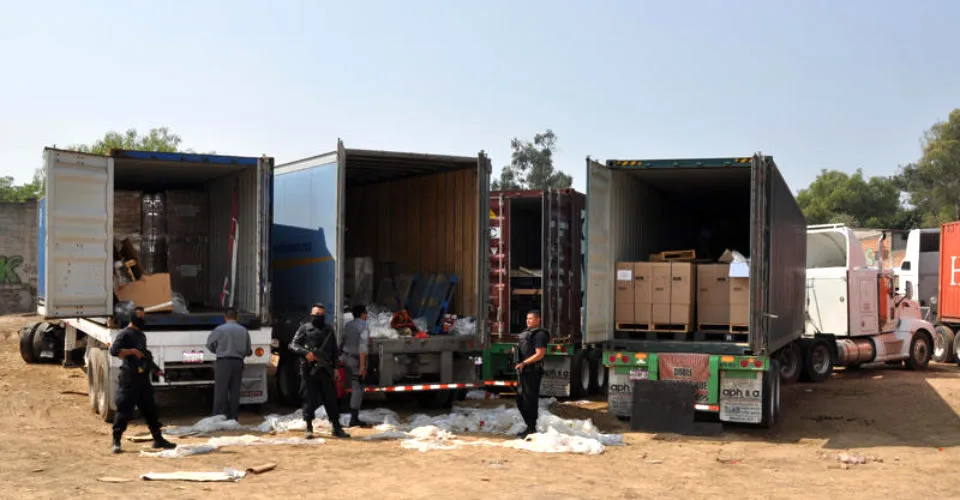
However, cargo theft remains a major challenge. Here, the combination of satellite technology, 24/7 monitoring, and collaborative platforms between logistics operators is essential to reduce losses and build trust in the chain.
5. Challenges and Opportunities for Mexico as a Global Logistics Hub
To consolidate its strategic role, Mexico must face the following challenges:
Regulatory stability: avoid abrupt changes in tariffs and taxes that affect competitiveness.
Logistics security: invest in cargo theft prevention through technology and insurance.
Specialized talent: train professionals in AI, big data, and logistics design.
Customs interoperability: digitize processes to reduce costs and times at borders.
Resilience: create chains capable of adapting to global crises, from geopolitical conflicts to natural phenomena.
In this environment, companies that integrate technology, sustainability, and flexibility will be the ones that dominate the market.
Mexico is no longer just competing to be a cheap manufacturing hub, but is emerging as a smart and technological logistics player. The combination of data centers, investments in e-commerce, interoceanic projects, and the rise of nearshoring place the country in a privileged position within international trade.
The key will be maintaining a balance between innovation, security, and commercial stability. Those who invest in digitalization, efficiency, and resilience will be prepared to excel in an increasingly complex global environment.
In this landscape, Control Terrestre (CT) positions itself as a strategic ally for companies seeking reliable, innovative, and customized logistics solutions for the challenges of modern international trade. CT is ready to take your supply chain to the next level in this new era of logistics.
📩 Want to stay up-to-date with the latest trends in logistics, trade, and transportation? Subscribe to the Control Terrestre newsletter and don't miss any updates.