Protected Content
This whitepaper is protected against direct printing.
To get the official PDF:
- Visit: controlterrestre.com/whitepapers
- Select the whitepaper of your interest
- Complete the form with your information
- Download the professional PDF with optimized format
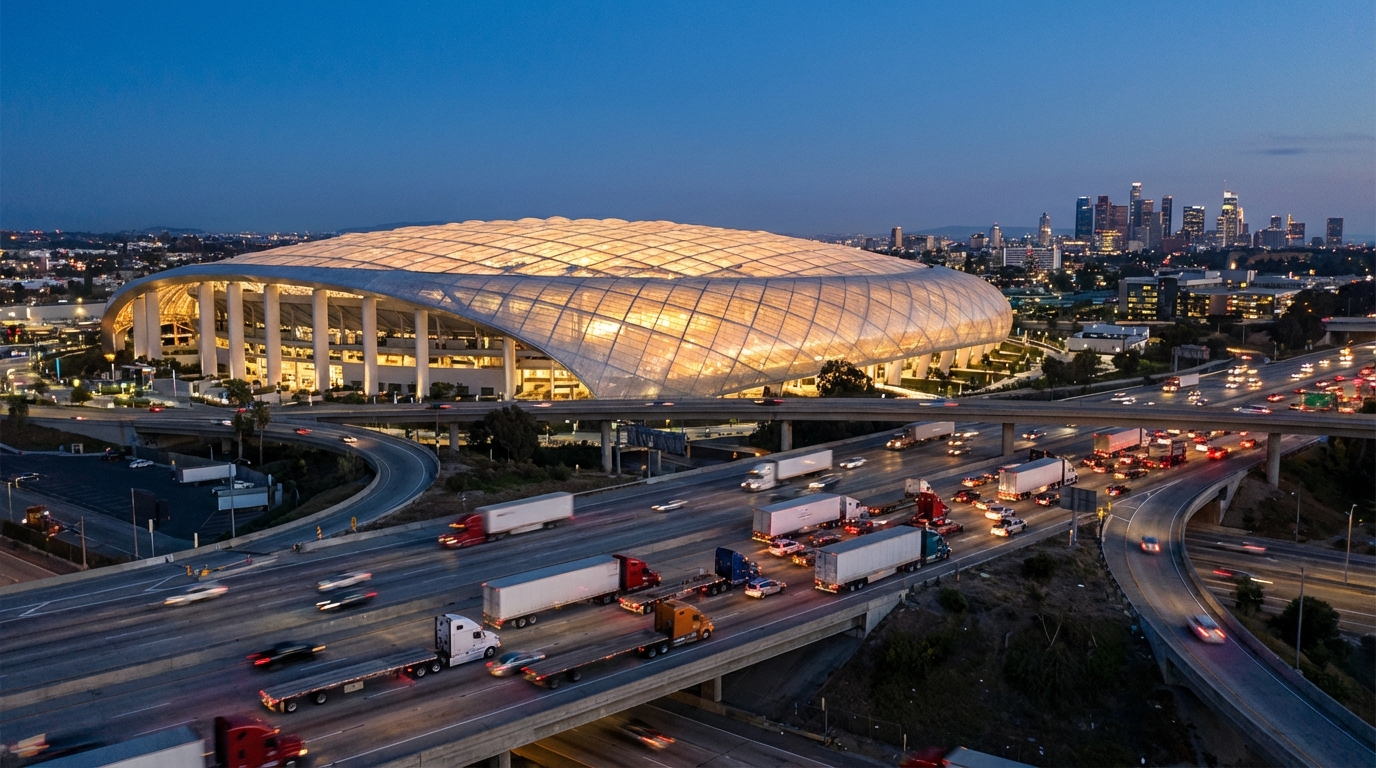
The 2026 FIFA World Cup and the Supply Chain
Contents
- Introduction: A Paradigm Shift
- Evolution of Economic and Logistics Impact: A Historical Perspective
- The Tri-National Regulatory Framework of World Cup 2026
- Ground Transportation Logistics: Trends and Transformations
- The Rail Revolution and the CPKC Corridor
- Last Mile Logistics and Urban Mobility
- Digital Transformation and Emerging Technologies
- Impact on Retail, Merchandising and Consumption
- Risk Management and Logistics Security
- Conclusion: The World Cup as Modern Trade Catalyst
- Sources and References
Introduction: A Paradigm Shift
The organization of the 2026 FIFA World Cup represents a paradigm shift in mega-sporting event management, being the first edition to be held in a tri-national format involving the United States, Mexico, and Canada. This event should not be interpreted solely as a global athletic competition, but as a restructuring engine for supply chains and regulatory frameworks in North America.
By expanding from thirty-two to forty-eight national teams, and increasing the number of matches to one hundred four distributed across sixteen host cities, the pressure on logistics infrastructure and foreign trade will reach unprecedented levels in the history of modern transportation.
The analysis of economic and operational impacts requires a deep understanding of how the interaction between three distinct customs systems, saturation of land corridors, and acceleration of digital transformation converge to redefine the USMCA trade bloc.
Evolution of Economic and Logistics Impact: A Historical Perspective
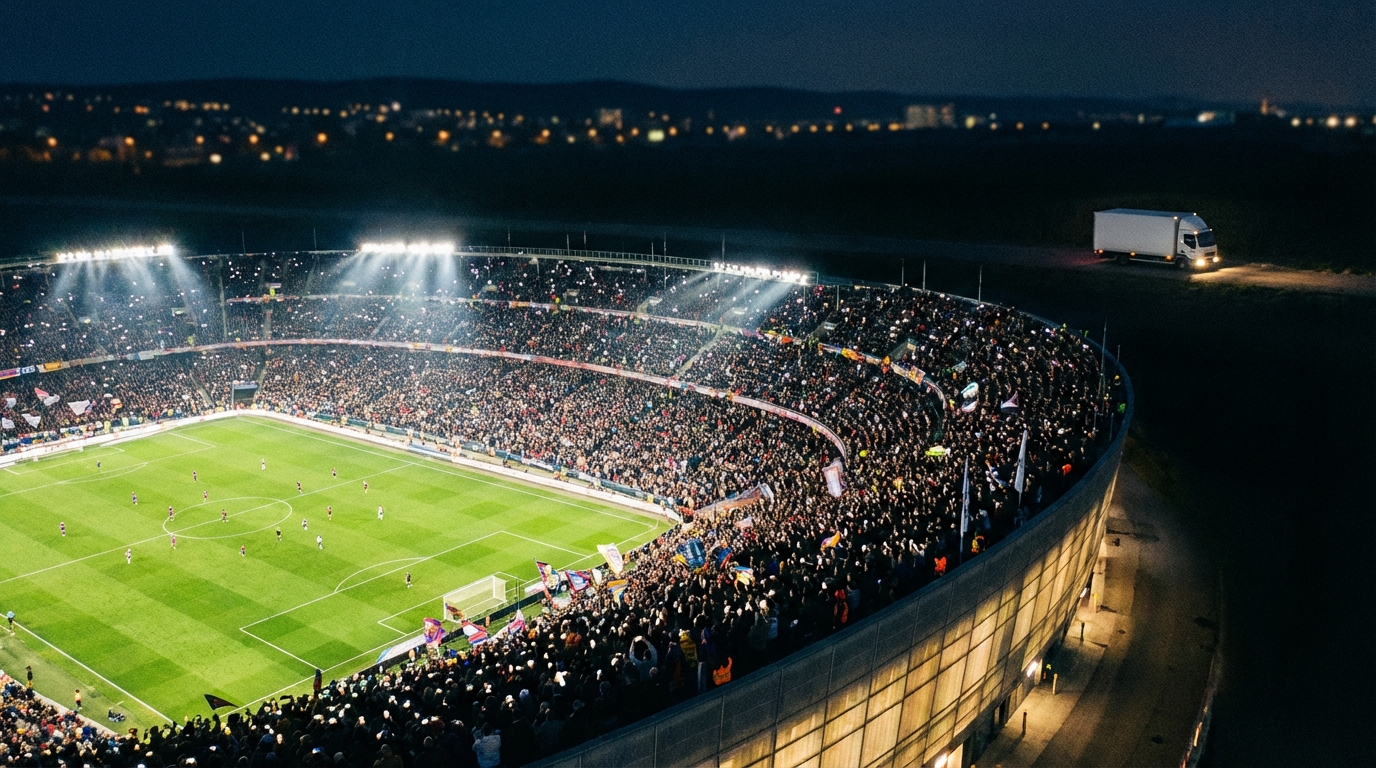
The study of previous World Cup impacts reveals a trajectory of increasing investment that has transformed logistics from a support function into a central axis of national success. While the United States 1994 edition was characterized by minimal investment in dedicated infrastructure (approximately thirty million dollars), 21st century editions have used the tournament as a catalyst for massive urban development projects.
Infrastructure Challenges in Emerging Markets
Brazil 2014 faced significant challenges related to deadline compliance and cost overruns. Originally projected at one billion one hundred million dollars, the final stadium spending rose to three billion six hundred million dollars, evidencing a lack of control in the construction supply chain. This increase forced the exclusion of certain land transportation plans, resulting in incomplete mobility infrastructure. Nevertheless, the event generated approximately three billion dollars in short-term economic activity.
Russia 2018 demonstrated a deeper integration of rail and air logistics. The country invested approximately fourteen billion two hundred million dollars, focusing efforts on modernizing airports, high-speed trains, and highways. This investment injected approximately twelve billion five hundred million euros into the Russian economy, representing more than 1% of its GDP during 2013-2018.
Qatar 2022 set the highest standard for logistics spending, with an estimated figure of two hundred twenty billion dollars. Much of this investment was part of National Vision 2030, where the World Cup functioned as an accelerator for pre-existing projects such as the Doha metro and Hamad International Airport. Qatari logistics was distinguished by smart city management, where a centralized command center integrated data from twenty thousand cameras and IoT sensors to optimize traffic and people flow.
World Cup Investment Comparison
| Parameter | Brazil 2014 | Russia 2018 | Qatar 2022 |
|---|---|---|---|
| Total Estimated Investment (USD) | 11.6 billion | 14.2 billion | 220 billion |
| Cost per stadium seat (USD) | 7,733 | 11,600 | >25,000 |
| National GDP Impact | Volatile / Negative aftermath | +1.1% (2013-2018) | +6.3% (Q2 2022) |
| Jobs Created | ~158,000 temporary | ~315,000 annual | Diversification focus |
The Multiplier Effect on Foreign Trade
Economic literature suggests that participating or hosting a World Cup generates a persistent increase in trade flows. Exports between the host country and participating countries increase significantly during the tournament year and maintain a positive trend in subsequent years.
This phenomenon is attributed to the reduction of information barriers, improvement of national image, and strengthening of international trade networks established during event preparations. For 2026, this effect is projected to be amplified by the pre-existence of USMCA, enabling more fluid integration of value chains between the sixteen host cities.
The Tri-National Regulatory Framework of World Cup 2026
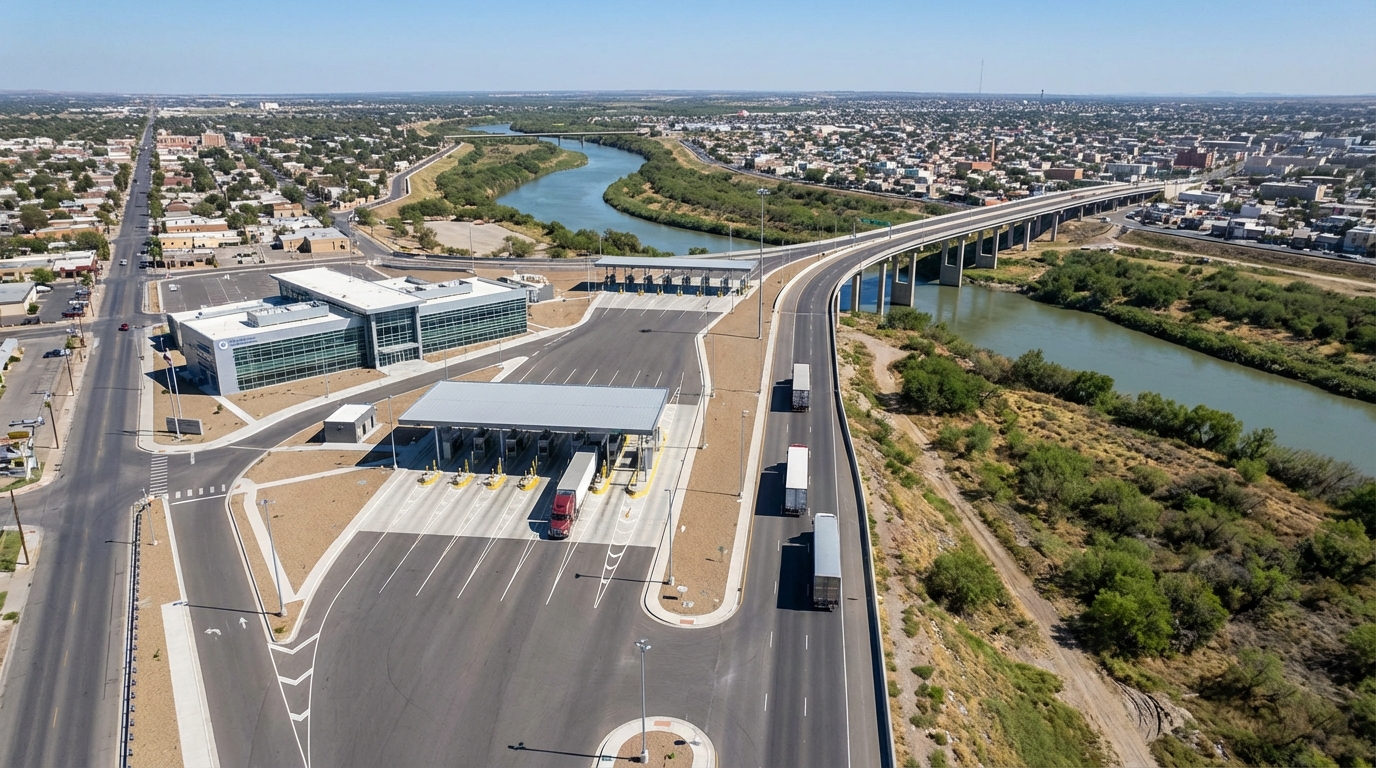
Unlike previous editions operated under single sovereignty, the 2026 World Cup must navigate three distinct customs regulatory systems:
- CBP - U.S. Customs and Border Protection
- CBSA - Canada Border Services Agency
- ANAM - Mexico National Customs Agency
This regulatory fragmentation introduces operational complexity requiring unprecedented harmonization in manifest management, temporary import permits, and security protocols.
Customs Challenges and Trade Facilitation
Global companies supplying equipment, apparel, and retail products must deal with different tariffs, compliance requirements, and security frameworks at each border crossing. Authorities are expected to strengthen security protocols during the tournament, resulting in increased documentary inspections, additional cargo scans, and longer verification times.
To mitigate these risks, FIFA has designated Rock-it Cargo as the official logistics provider, tasked with centralizing customs management and international shipment of critical cargo.
The implementation of a Single Window system or coordination of unified manifests between CBP, CBSA, and ANAM is a strategic objective for 2026. This approach aims to allow importers to process multiple regulatory submissions on a single platform, reducing redundancy and improving real-time shipment visibility.
Trusted Traveler and Cargo Programs
| Program | Main Function | 2026 Logistics Impact |
|---|---|---|
| ESTA / Visa Waiver | Electronic travel authorization | Reduced consular burden; fast technical personnel flow |
| Global Entry / NEXUS | Expedited processing for low-risk travelers | Streamlined VIP personnel and team delegation movement |
| C-TPAT / FAST | Cargo security certification | Priority customs clearance and reduced physical inspections |
| Simplified Customs Procedure | Mechanism for FIFA constituent groups | Temporary exemptions and streamlined processes for tournament equipment |
During the first quarter of fiscal year 2026, CBP already reported approval of more than one million ESTA authorizations for travelers from qualified nations. Additionally, joint enrollment events for the NEXUS program between the U.S. and Canada aim to reduce wait times at key land crossings and airports such as Seattle and Toronto.
Ground Transportation Logistics: Trends and Transformations

Trucking will be the most affected transportation mode by the 2026 World Cup, as much of the supplies for stadiums, fan zones, and hotels will move by road. The sector faces a perfect storm of factors:
- Soaring volume demand
- Tight fleet capacity from small operator exits in 2025
- Persistent shortage of qualified drivers
North American Freight Market Dynamics
Projections for 2026 indicate a stabilization of freight rates following the volatility of previous years, although single-digit increases driven by World Cup demand are expected. These increases will be most noticeable in cross-border corridors such as Laredo, El Paso, and Nogales, where congestion and detention times will be explicitly incorporated into contract prices.
A critical factor is pull-forward or inventory advancement. Retail and consumer goods companies are expected to begin stocking their regional warehouses up to four months before the tournament start in June 2026 to ensure availability amid potential traffic restrictions and truck shortages during competition months.
Impact on Heavy Vehicle Industry
Despite logistics growth expectations, Mexico truck manufacturing industry has faced a complicated start to 2026. INEGI data shows dramatic drops in heavy vehicle production and exports (over 50% in January 2026), attributed to trade uncertainty with the United States and the entry of used units pressuring the domestic market.
This situation jeopardizes the fleet renewal necessary to handle World Cup cargo volume, underscoring the interconnection between foreign trade policies and national logistics capacity.
To counter this, highway infrastructure investments are being promoted:
- World Trade Bridge in Laredo - expansion for massive cross-border traffic
- Otay Mesa East Crossing - opening in 2026
- Nichupte Vehicular Bridge - Cancun
- Airport access improvements in Cancun and Monterrey
The Rail Revolution and the CPKC Corridor
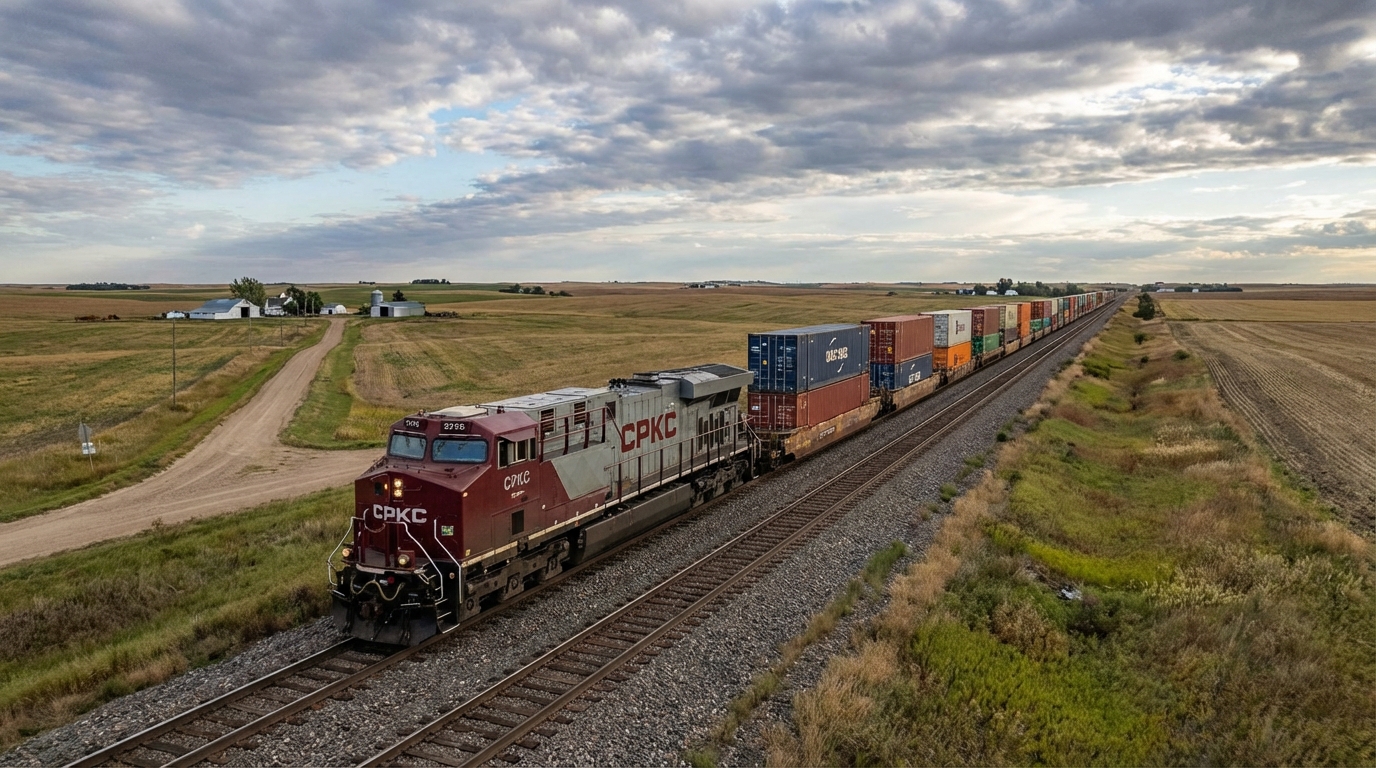
In the context of seeking greater efficiency and sustainability, rail is emerging as a formidable competitor to long-distance trucking in North America. The creation of Canadian Pacific Kansas City (CPKC) has established the first single-line rail network connecting all three host countries, offering a unique strategic advantage for the movement of massive World Cup-related cargo.
De-trucking and Continental Connectivity
The CPKC network allows products such as grains, construction materials, and consumer goods to travel from Canada to Mexico without delays associated with locomotive or carrier exchanges at the U.S. border. This logistics bypass capability has gained special relevance amid tariff tensions, allowing trade flow between Canada and Mexico to partially decouple from the bureaucratic bottlenecks of U.S. ports.
For 2026, CPKC has invested eight hundred million dollars in acquiring highly efficient Tier 4 locomotives, reinforcing its commitment to fleet renewal and carbon footprint reduction. Additionally, the alliance with CSX to operate the Meridian-Myrtlewood corridor will facilitate intermodal cargo flow between Mexico, Texas, and the southeastern United States.
Key Infrastructure for Trade
| Infrastructure Element | Location | Trade Flow Impact |
|---|---|---|
| CPKC-CSX Corridor | Mississippi to Alabama (USA) | Connects Laredo and Texas to southeast consumer centers |
| World Trade Bridge | Laredo, TX (US-MEX Border) | Expansion for massive cross-border truck traffic |
| Port of Lazaro Cardenas | Michoacan, Mexico | Strategic rail entry point for Asian cargo |
| Gordie Howe Bridge | Detroit-Windsor (US-CAN Border) | 2026 opening to improve northeast corridor flow |
Implications for Intermodal Supply Chain
Rail integration offers shippers a resilient alternative to truck market volatility. By consolidating cargo on high-speed trains, companies can reduce their dependence on driver hiring, a scarce resource for 2026 due to FMCSA regulatory changes regarding competency and compliance requirements.
Rail is projected as the preferred mode for transporting high-volume goods that dont require immediate last-mile deliveries, freeing highway capacity for critical tournament supplies.
Last Mile Logistics and Urban Mobility
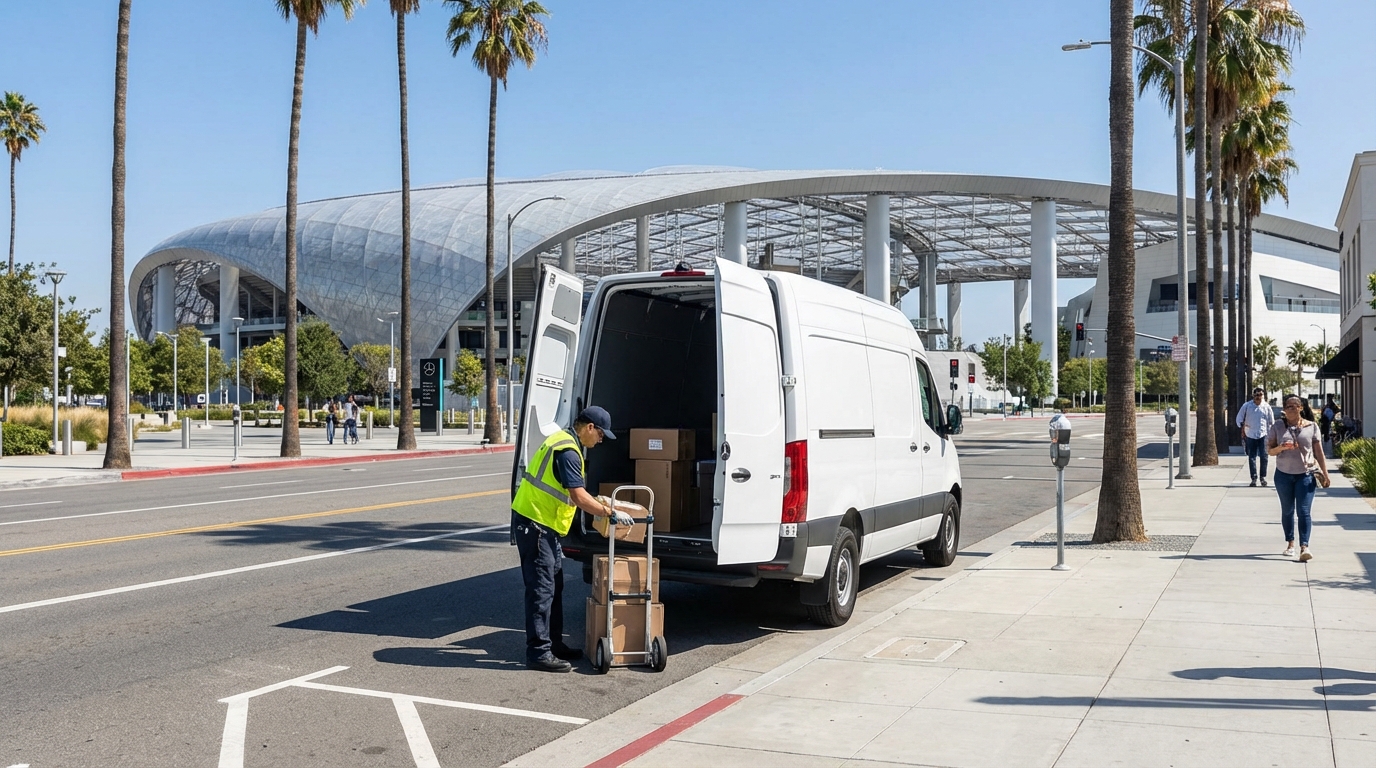
The greatest operational challenge of World Cup 2026 lies not in transcontinental movement, but in the last mile within congested urban zones of host cities. Metropolises like Los Angeles, New York/New Jersey, and Mexico City will face potential paralysis if surgical traffic management strategies are not implemented.
Dynamic Traffic Management and Micro-mobility
Cities are developing Transportation Management Plans (TMP) that include:
- Vehicle access zoning
- Exclusive lanes for official FIFA transport
- Deployment of dedicated traffic officers at critical points
In Los Angeles, the focus is on SoFi Stadium connectivity through mass transit systems like the Crenshaw/LAX line and temporary shuttle services. Micro-mobility use —electric bicycles and scooters— is encouraged in festival zones to reduce the burden on heavy transport networks.
Supply delivery logistics for hotels, restaurants, and stadiums will be forced to operate in unconventional hours. Implementation of night deliveries and use of urban micro-fulfillment centers will be essential to prevent delivery trucks from getting trapped in visitor flows.
Sustainability and Green Logistics
World Cup 2026 has committed to being a sustainability model. This translates into pressure for logistics providers to use electric fleets for short-range transport. In California and other venues, electric vehicle charging networks are being expanded to support both official fleets and rideshare services operating during the event.
This commitment not only seeks to meet FIFA emissions reduction goals but also aims to leave permanent clean transport infrastructure in host cities.
Digital Transformation and Emerging Technologies
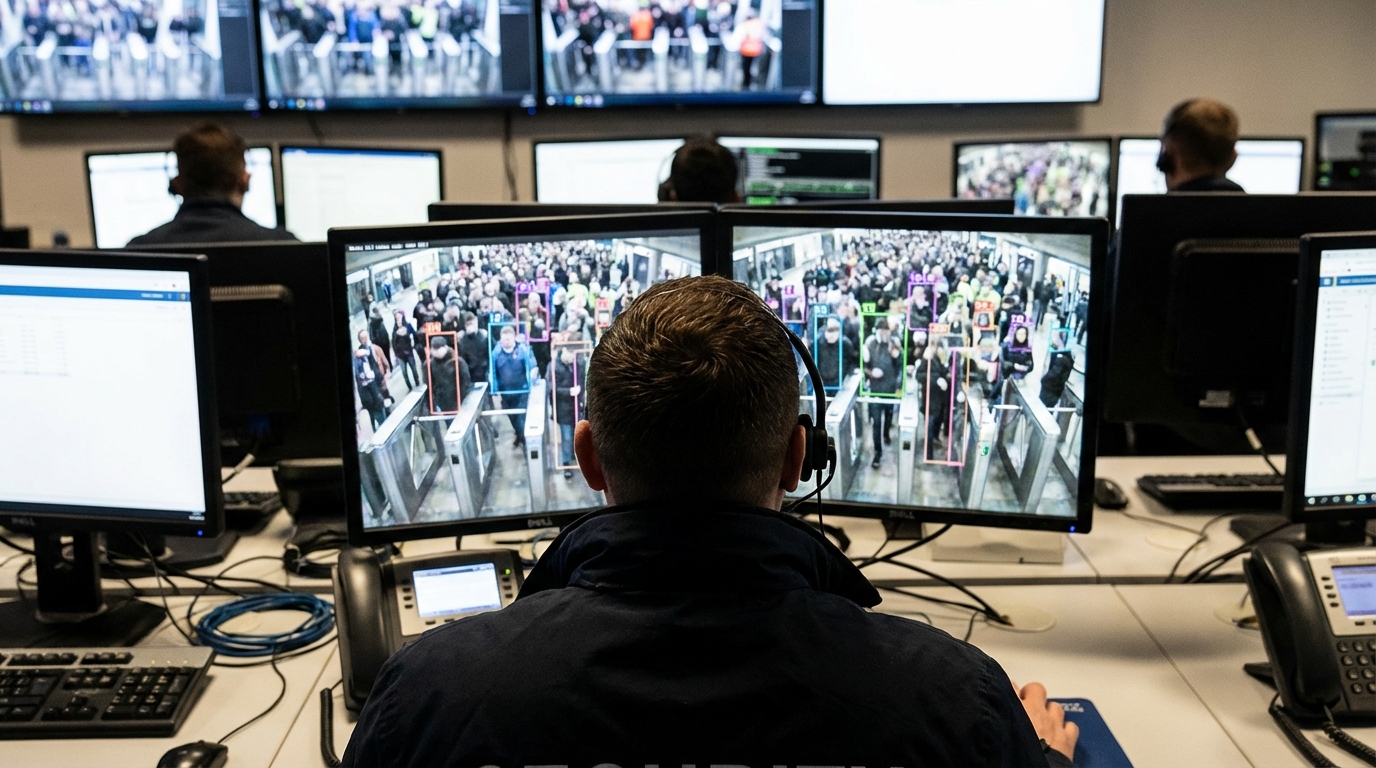
The massive scale of World Cup 2026 acts as an accelerator for technology adoption that improves logistics efficiency. The integration of Artificial Intelligence (AI), Internet of Things (IoT), and Blockchain is redefining how assets and data are managed in real time.
The Rise of Smart Cities and Control Centers
Host cities are evolving toward smart city models where physical infrastructure is digitally interconnected. The Qatar 2022 experience with the Aspire Command Center, which used AI to analyze crowd and traffic flows, serves as a foundation for control centers being established in Mexico and the United States.
In Monterrey and Mexico City, the World Cup is driving the transition to data-based urban management systems, allowing authorities to anticipate mobility incidents and optimize response times.
Supply Chain and Customs Digitalization
Modern logistics for large events depends on end-to-end visibility. In 2026, the use of Blockchain in bills of lading and digital certificates of origin is expected to become more common to prevent fraud and accelerate cargo release at ports.
Customs clearance systems are integrating AI-based risk analysis tools to identify irregularities in goods valuation without requiring intrusive physical inspections on all containers.
For rail transport, the adoption of predictive maintenance through onboard sensors and machine vision systems enables real-time monitoring of track and locomotive conditions, reducing unplanned stops and improving transcontinental network reliability.
Impact on Retail, Merchandising and Consumption
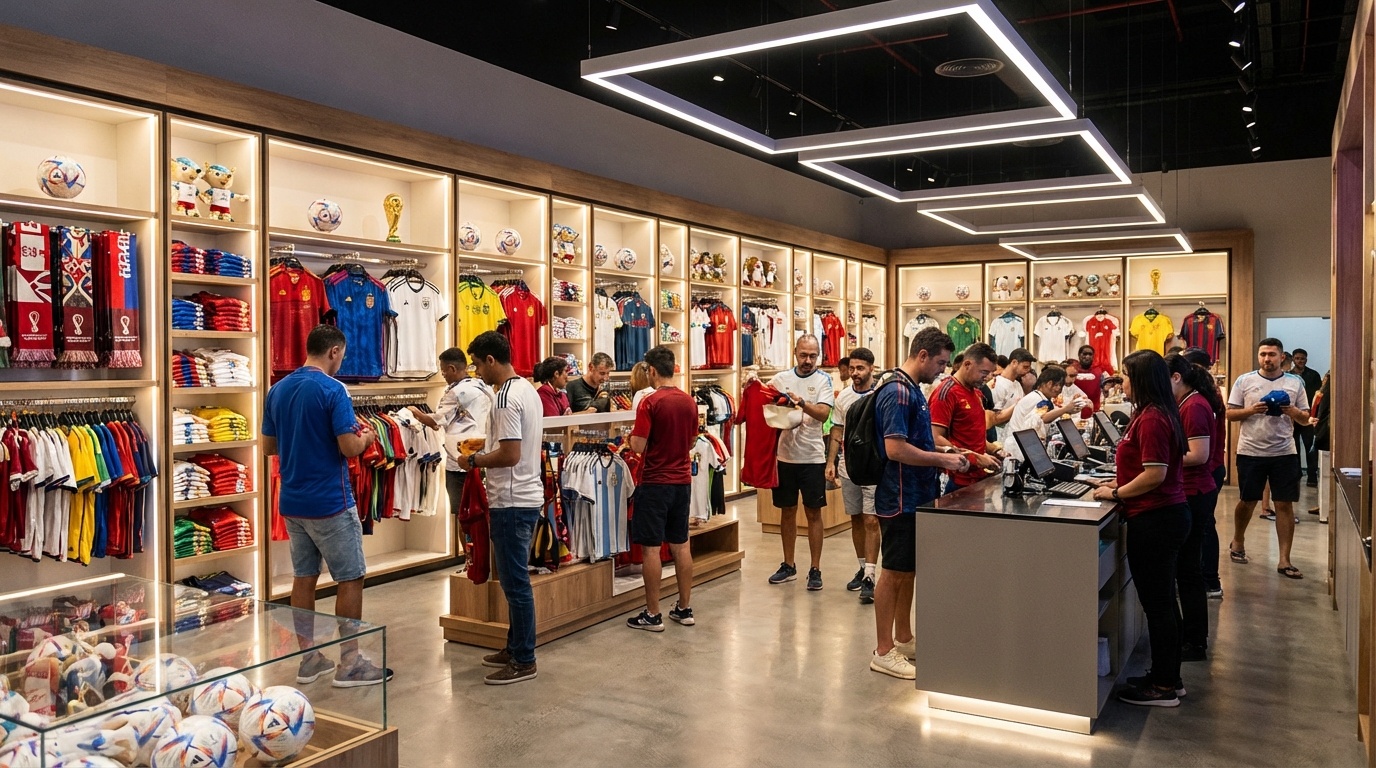
Retail experiences an unprecedented boom during the months before and during the World Cup. For 2026, the global licensed merchandise market is expected to be driven not only by physical sales at stadiums but by massive e-commerce penetration in North America.
Sports Product Demand Dynamics
The apparel segment dominates the market with a 42% share, followed by footwear and collectibles. Companies like Adidas, Nike, and Puma must manage extremely agile supply chains to respond to demand fluctuations based on team performance in the tournament.
Limited edition products often sell out within hours, requiring perfect coordination between manufacturers in Asia or Latin America and distribution centers in host cities.
In the food and beverage sector, the impact is equally significant. In Mexico, restaurant spending is projected to be among the most stable, with significant increases in demand for craft beer, snacks, and catering for World Cup-related corporate events.
Economic Projections and Social Benefits
| Economic Sector | Projected Benefit (USD) | Growth Source |
|---|---|---|
| Gross Domestic Product (Global) | 40.9 billion | Aggregate spending on construction, tourism, and retail |
| Tourism and Hospitality (USA) | 2.4 billion | Accommodation, local transport, and food |
| Merchandise Sales (2035) | 29.1 billion | Long-term growth of fan culture and e-commerce |
| Social Benefits | 8.28 billion | Investments in health, wellness, and community development |
An OpenEconomics study for FIFA estimates that the 2026 World Cup and 2025 Club World Cup will add sixty-two billion dollars to global GDP. Specifically for the United States, the creation of one hundred eighty-five thousand full-time jobs and gross output of thirty billion five hundred million dollars is forecast.
In Mexico, the expected economic impact in cities like Monterrey exceeds five billion pesos, directly benefiting hotels, restaurants, and local small businesses.
Risk Management and Logistics Security
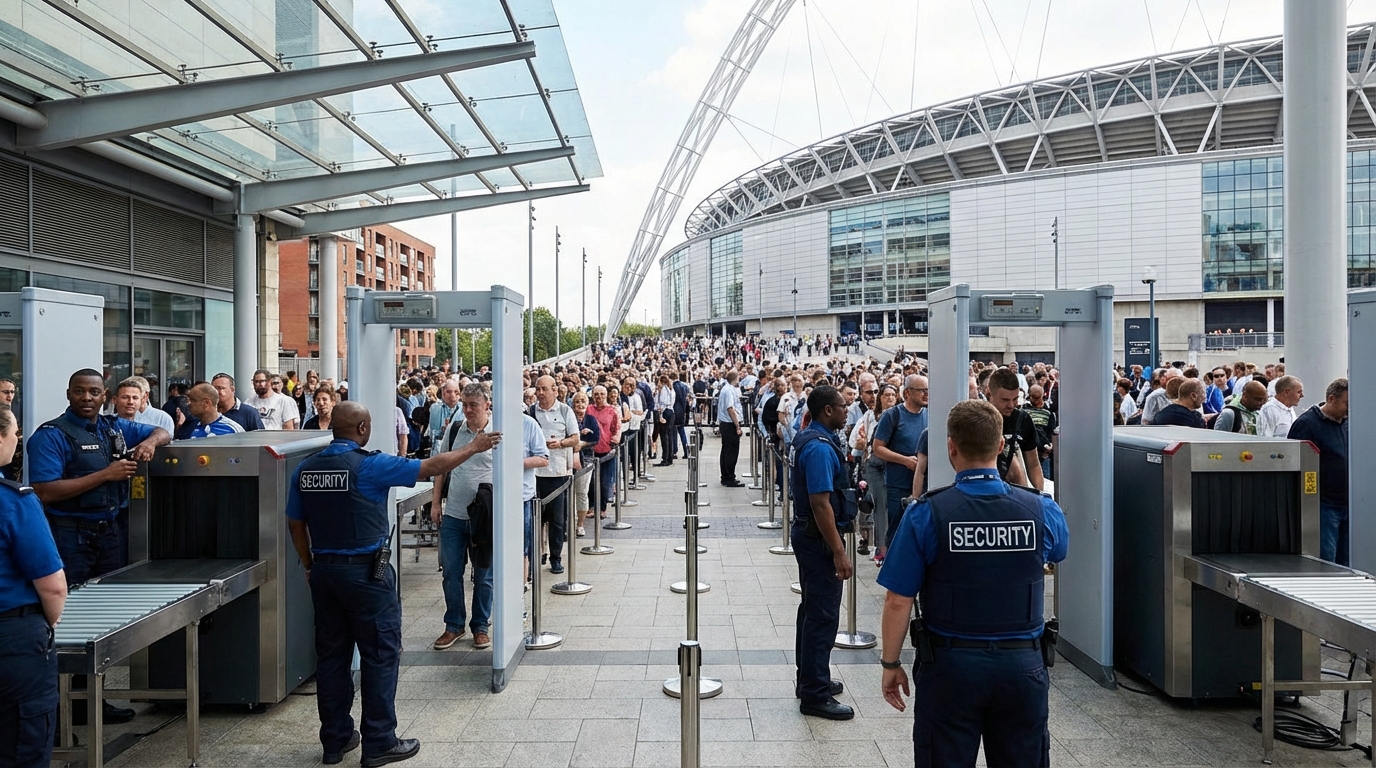
The complexity of World Cup 2026 demands a risk management strategy that transcends operational matters to encompass cybersecurity and physical security of assets. Coordination between the FBI, DHS, and international police agencies is fundamental to protecting stadiums, fan zones, and transportation corridors.
Operational Risks and Mitigation Strategies
The main logistics risk is supply chain disruption from extreme congestion or natural disasters. To mitigate this, FIFA uses a hub and spoke model with dedicated contacts in each regional office (West, Central, East, Canada, and Mexico) overseeing local mobility plan implementation.
Flexibility in transportation mode use —combining air, sea, rail, and road— is the key recommendation for companies supplying goods during the critical tournament period.
Supply Chain Cybersecurity
The increase in digitalization exposes carriers and ports to growing attack risks that could paralyze cargo management systems. Data security protocols aligned with U.S. DOT federal regulations are being implemented to protect the integrity of electronic manifests and real-time tracking systems.
Border Security and Crowd Control
The deployment of federal coordination teams across the eleven U.S. host cities seeks to ensure a unified security approach. This includes:
- Drone monitoring in no-fly zones
- Real-time crowd flow analysis
- Incident prevention at stadium access points
In Mexico, highway security toward the northern border remains a concern for carriers, forcing companies to invest in private escorts and advanced satellite monitoring systems to protect merchandise value during the tournament.
Conclusion: The World Cup as Modern Trade Catalyst
The 2026 FIFA World Cup is not just the largest sporting event in history; it is a trial by fire for North American logistics integration. By facing the challenge of operating in three countries with forty-eight teams and millions of visitors, the USMCA bloc will be forced to permanently modernize its commercial processes.
The World Cup Legacy Will Be Reflected In:
- Interconnected Infrastructure: The consolidation of CPKC single-line rail network and expansion of land border bridges that will facilitate regional trade for decades.
- Digital Customs: The transition to paperless clearance systems and single windows that will reduce transit times and improve trade bloc competitiveness.
- Sustainable Urban Mobility: The adoption of electric fleets and smart traffic management systems that will serve as a model for modern metropolises worldwide.
- Logistics Resilience: A business culture that prioritizes advance planning and route diversification to handle massive demand peaks.
For logistics and foreign trade professionals, 2026 marks the beginning of a new era where operational efficiency is no longer measured solely in costs, but in the ability to respond to a dynamic, digitalized, and deeply interconnected global environment.
The economic history of previous World Cups teaches that benefits do not arrive passively; they must be provoked through strategic planning that transcends the competitions final whistle. The 2026 World Cup will therefore be the engine driving the next great transformation of North American logistics.
Sources and References
The following sources were consulted for the preparation of this whitepaper. Organized by topic for easy reference and verification.
Merchandising and Economic Projections
Last updated: February 2026. All sources were verified at the time of publication.
Download the whitepaper
Enter your details and we'll send the download link to your email.









