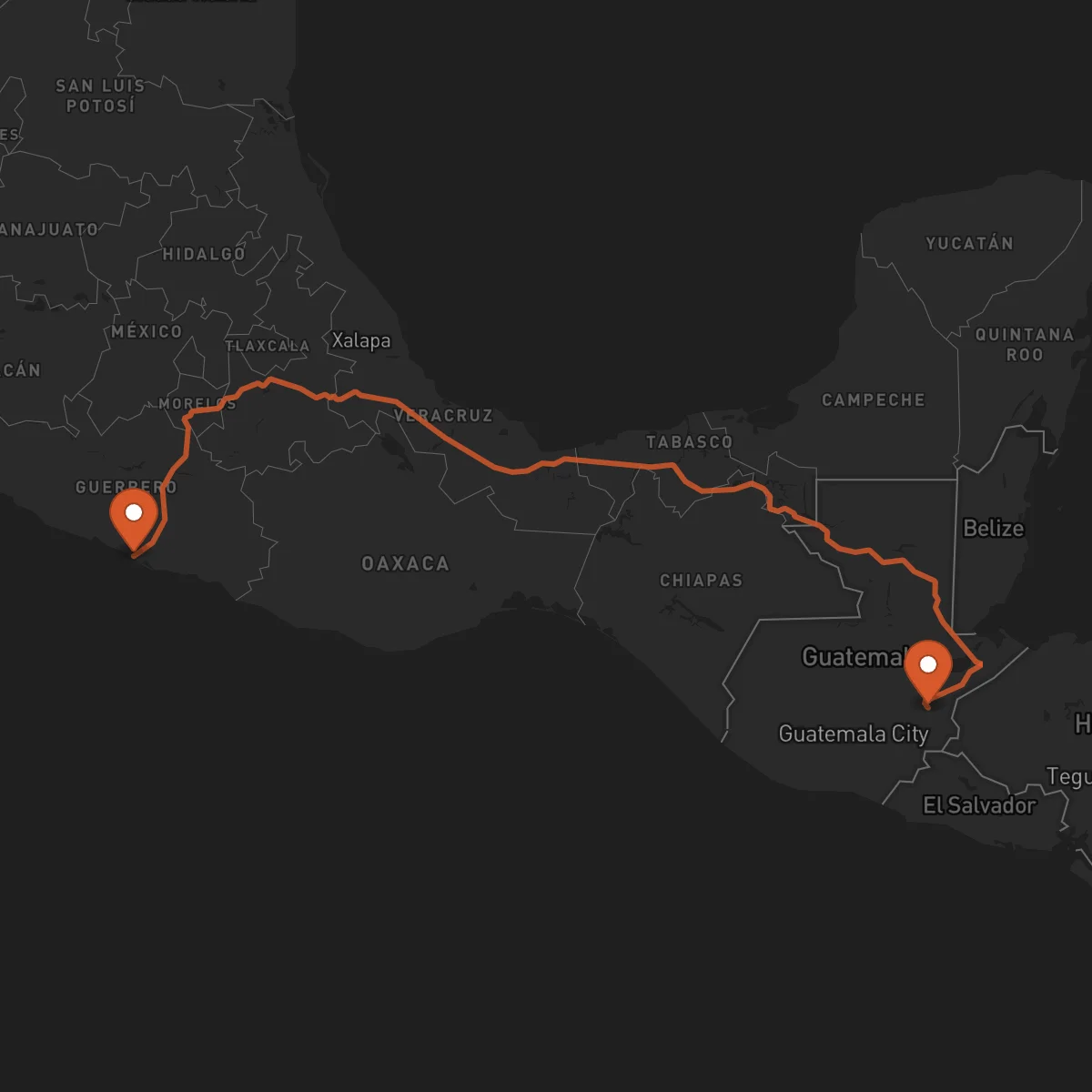
Zacapa to Acapulco
Acapulco → ZacapaFTL freight transportation service between Zacapa and Acapulco. Reliable logistics solutions for your business.
Route Description
Everything you need to know about the corridor Zacapa - Acapulco
The Zacapa to Acapulco corridor is a critical cross-border artery connecting eastern Guatemala with Mexico’s Pacific coast, facilitating essential trade flows between Central America and one of Mexico’s key maritime gateways. Strategically, this route bypasses more congested northern corridors, offering a direct link from Guatemala’s agricultural and manufacturing heartlands to the port of Acapulco, which serves as a vital hub for Pacific shipping lanes. Economically, the corridor supports the exchange of diverse goods, from Guatemalan agricultural exports like coffee, bananas, and sugar to Mexican manufactured products and imported goods destined for Central America. The region’s industrial landscape is defined by agro-industry in Guatemala and light manufacturing along the route, with Acapulco’s port handling significant container and bulk cargo volumes.
Main industries leveraging this corridor include agriculture (coffee, tropical fruits, sugarcane), food and beverage processing, textiles, and building materials. Transportation infrastructure relies primarily on Guatemala’s CA-1 highway, which runs east-west through the country, transitioning to Mexican Federal Highways 200 and 190 as it approaches the border. The principal crossing is at Tecún Umán (Guatemala) / Ciudad Hidalgo (Mexico), a major port of entry equipped for commercial freight. Customs considerations involve compliance with both Guatemalan and Mexican regulations, including documentation for import/export, phytosanitary certificates for agricultural goods, and adherence to security programs like C-TPAT and FAST, which our provider network maintains.
Control Terrestre streamlines operations on this corridor through our alliance of certified transportation partners. We offer dedicated full truckload (FTL) solutions, ensuring exclusive use of 48' or 53' dry vans, refrigerated units, or specialized equipment like flatbeds for oversized cargo. Our team manages cross-border complexities—from customs brokerage coordination to compliance with Mexican and Guatemalan requirements—providing door-to-door service with a focus on reliability. By leveraging providers with certifications such as BASC and Responsible Care, we ensure secure and efficient transport for standard, hazardous, or temperature-sensitive shipments, optimizing your supply chain across this strategic route.
Services for this Route
Available services for the corridor Zacapa - Acapulco
 Origin
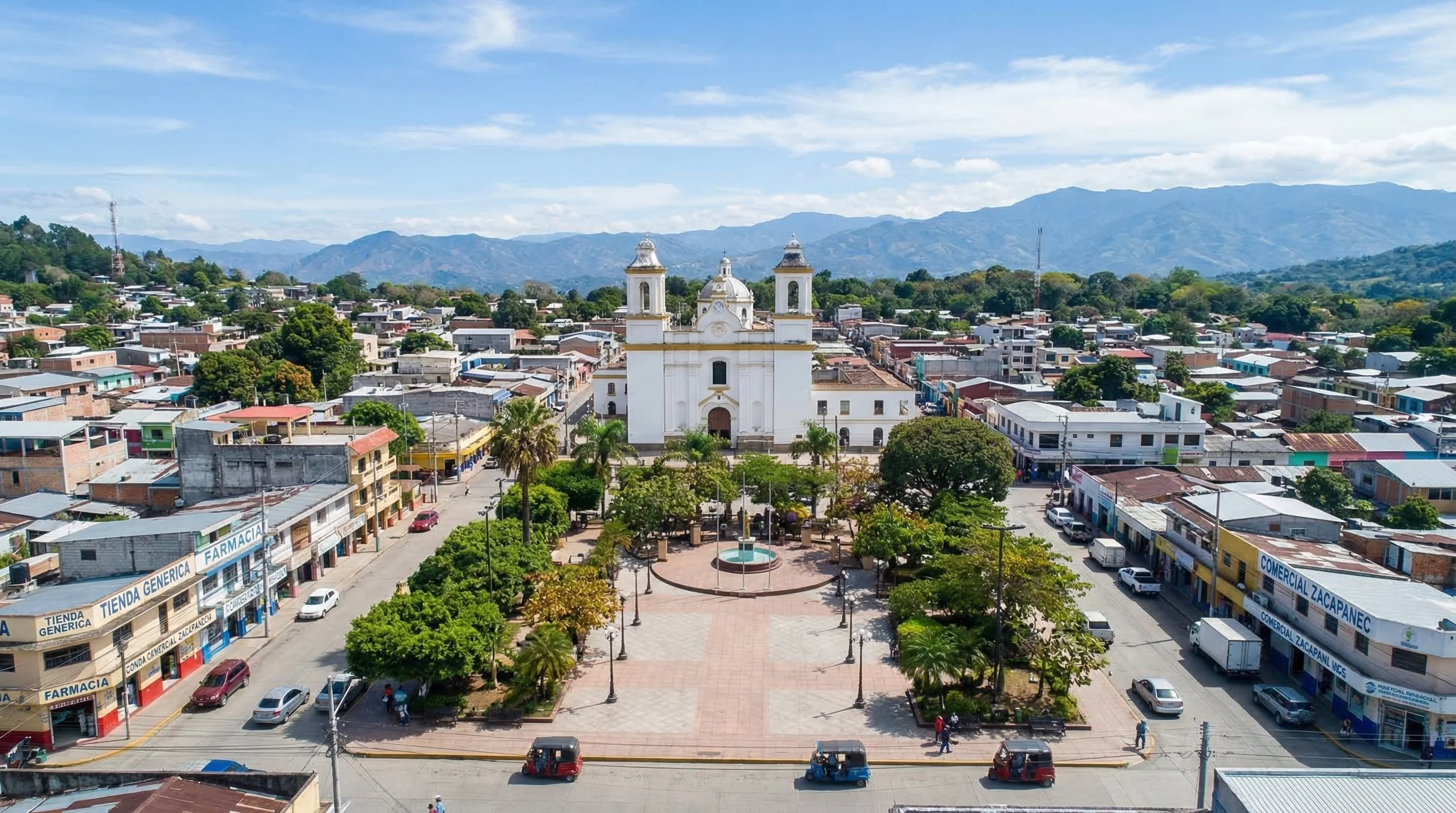
Zacapa, the capital of Guatemala’s Zacapa department, holds a strategic position in the country’s eastern region, serving as a pivotal logistics node for cargo moving toward Mexico’s Pacific coast. Its location along the CA-1 highway provides direct access to the Tecún Umán border crossing, making it an essential collection and distribution point for exports from eastern Guatemala. The local economy is dominated by agriculture, particularly sugarcane production, coffee, and livestock, supported by numerous agro-industrial processing plants. Additional economic sectors include textiles and light manufacturing. Transportation infrastructure is robust, featuring the CA-1 as the main arterial route connecting to Guatemala City and the Mexican border, alongside a network of secondary roads that link rural production zones to the highway. The city also offers warehousing and logistics services, facilitating consolidation of full truckload shipments destined for cross-border corridors.
 Destination
Acapulco, Guerrero, is a major port city on Mexico’s Pacific coast, strategically positioned as a maritime gateway for international trade and a key destination for logistics corridors from Central America. Its deepwater port, the Port of Acapulco, handles containerized cargo, bulk goods, and cruise traffic, making it a critical node for import and export activities. Economically, the city relies on maritime commerce, tourism, and fishing, with surrounding industrial zones engaged in food processing, beverage production, and manufacturing for regional distribution. Transportation infrastructure includes Federal Highways 95 and 200, which connect Acapulco to Mexico City and other Pacific ports, enabling efficient onward movement of goods. The port’s facilities support container handling and roll-on/roll-off operations, while the city’s road network ensures seamless last-mile delivery to industrial parks and commercial centers in the Guerrero region.










