Wilmington to Regina
Regina → WilmingtonFTL freight transportation service between Wilmington and Regina. Reliable logistics solutions for your business.
Route Description
Everything you need to know about the corridor Wilmington - Regina
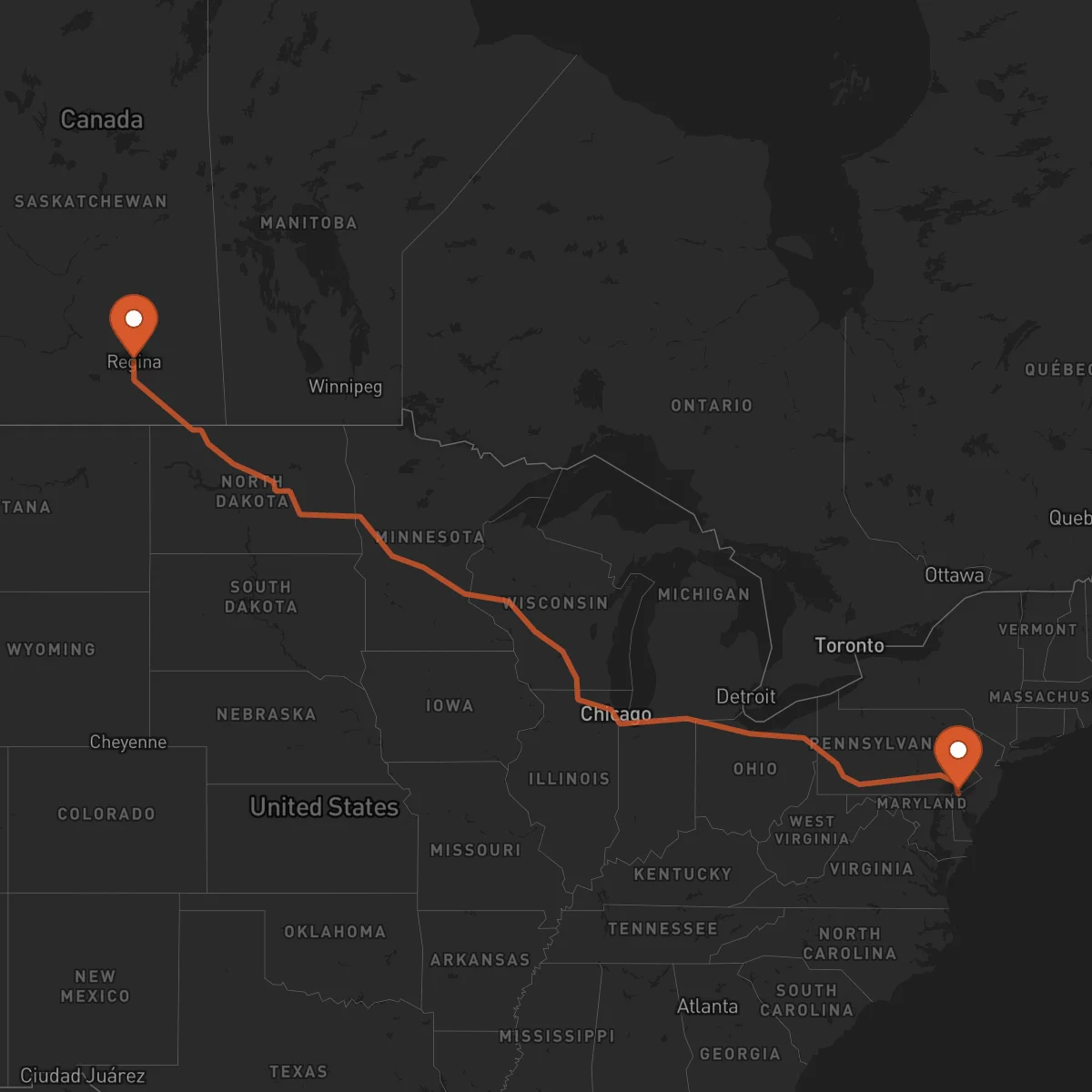
The logistics corridor connecting Wilmington, Delaware, to Regina, Saskatchewan, represents a vital cross-border freight route spanning approximately 2,551 kilometers through the heart of North America. This strategic corridor links the industrial Mid-Atlantic region with the agricultural and energy-rich Canadian Prairies, facilitating essential trade flows between the United States and Canada. The route traverses multiple states and provinces, crossing the international border at key points that connect major transportation networks on both sides.
The corridor serves diverse industries including manufacturing, agriculture, energy, and retail distribution. Wilmington's proximity to major East Coast ports and industrial centers complements Regina's role as a distribution hub for Saskatchewan's agricultural output and natural resources. This creates significant freight movement in both directions, supporting just-in-time supply chains and bulk commodity transport. The route accommodates various cargo types, from specialized equipment and hazardous materials to temperature-controlled goods and oversized freight.
Transportation infrastructure along this corridor includes major interstate highways in the United States (I-80, I-94) and provincial highways in Canada (Trans-Canada Highway, Saskatchewan Highway 1). The cross-border movement requires coordination through designated ports of entry, with customs clearance procedures that Control Terrestre expertly manages. Our comprehensive understanding of both US and Canadian regulations, combined with our certified carrier network, ensures seamless freight movement across this extensive corridor while maintaining compliance and efficiency.
Services for this Route
Available services for the corridor Wilmington - Regina
 Origin
Wilmington
Wilmington, Delaware, serves as a strategic gateway for freight movement on the East Coast, offering exceptional logistics advantages. Located just minutes from the Port of Wilmington and within hours of major metropolitan areas including Philadelphia, Baltimore, and New York City, the city provides multimodal transportation access through road, rail, and sea connections. Delaware's business-friendly environment and central East Coast location make Wilmington an ideal origin point for cross-border freight operations.
The region's economy encompasses diverse sectors including chemical manufacturing, healthcare, financial services, and e-commerce distribution. Major corporations and industrial facilities in the area generate consistent freight volumes, particularly in specialized cargo and dedicated truckload movements. Wilmington's transportation infrastructure includes direct access to Interstate 95, extensive warehousing and distribution facilities, and proximity to major airports, creating a comprehensive logistics ecosystem that supports efficient freight consolidation and distribution.
 Destination
Regina
Regina, Saskatchewan, stands as a crucial logistics hub in the Canadian Prairies, strategically positioned to serve as a distribution center for the region's abundant natural resources and agricultural production. Located along the Trans-Canada Highway and with direct rail connections, Regina provides excellent access to major Canadian markets and serves as a gateway to northern resource extraction areas. The city's central location in Saskatchewan makes it an ideal consolidation point for freight moving throughout Western Canada.
The local economy is anchored by agriculture, mining, and energy sectors, with significant activity in potash mining, oil and gas production, and grain cultivation. These industries generate substantial freight demand for both inbound equipment and outbound raw materials and processed goods. Regina's transportation infrastructure includes modern warehousing facilities, intermodal yards, and highway connections that efficiently link to the broader North American freight network, supporting the region's role in international trade and domestic distribution.










