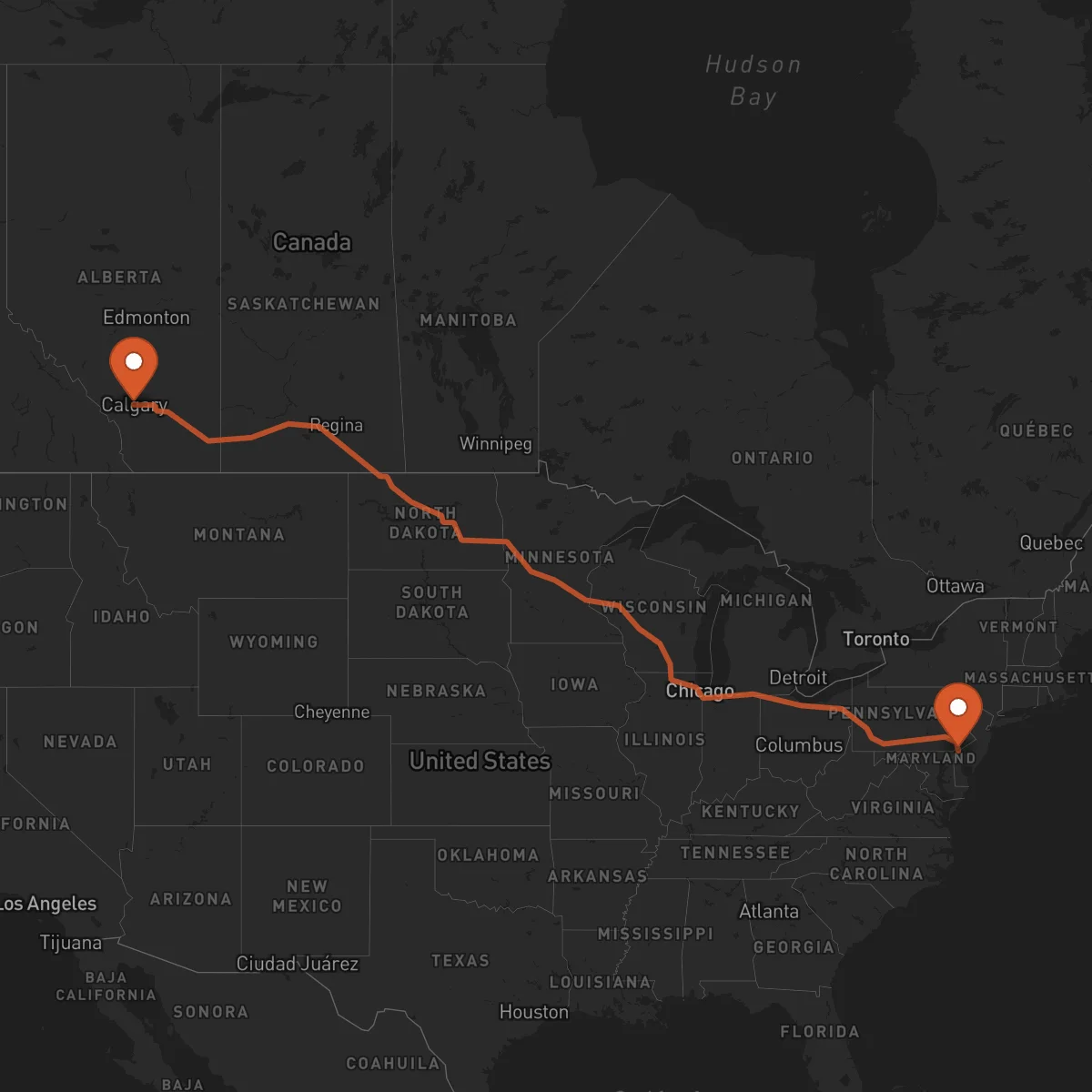
Wilmington to Calgary
Calgary → WilmingtonFTL freight transportation service between Wilmington and Calgary. Reliable logistics solutions for your business.
Route Description
Everything you need to know about the corridor Wilmington - Calgary
The logistics corridor connecting Wilmington, Delaware, to Calgary, Alberta, represents a vital cross-border freight route spanning approximately 3,214 kilometers across the United States and Canada. This strategic corridor links the Mid-Atlantic industrial region with the thriving economic hub of Western Canada, facilitating the movement of goods between two major North American markets. The route traverses diverse geographic and economic regions, connecting coastal ports with inland distribution centers and energy-rich territories.
The corridor's significance is underscored by the complementary economic activities of both regions. Wilmington serves as a key logistics gateway with its proximity to major East Coast ports and industrial centers, while Calgary stands as the center of Canada's energy sector and a growing technology hub. This creates substantial freight demand for specialized equipment and time-sensitive deliveries. The route primarily utilizes major interstate highways including I-80 and I-94 through the United States, transitioning to Canadian highways through Ontario and the Prairie provinces before reaching Alberta.
Control Terrestre provides comprehensive FTL (Full Truckload) services along this corridor, leveraging our extensive network of certified carriers and strategic partnerships. Our expertise in cross-border operations ensures seamless customs clearance and compliance with both US and Canadian regulations. We understand the unique requirements of industries operating along this route, from energy equipment to technology components, and provide specialized solutions including dedicated services, temperature-controlled transportation, and oversized cargo handling. Our commitment to reliable, efficient freight movement makes us the trusted partner for companies requiring consistent supply chain performance between Wilmington and Calgary.
Services for this Route
Available services for the corridor Wilmington - Calgary
 Origin
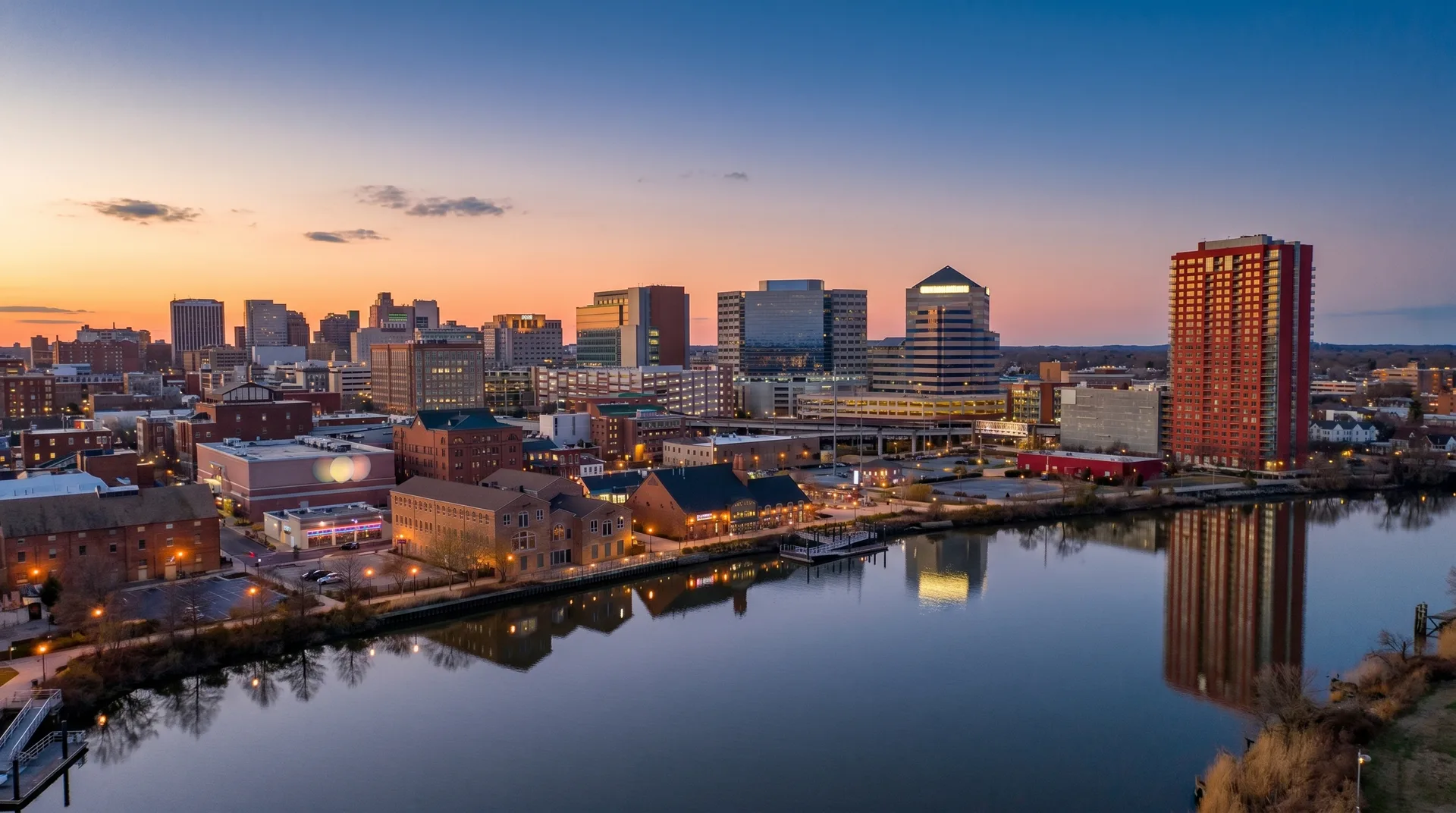
Wilmington
Wilmington, Delaware, serves as a strategic logistics hub on the East Coast, offering exceptional connectivity for freight operations. Located near major ports including the Port of Wilmington and within close proximity to the Port of Philadelphia, the city provides excellent access to international shipping lanes. Wilmington's location along Interstate 95 creates a direct connection to major metropolitan areas including New York, Washington D.C., and Baltimore. The region benefits from Delaware's business-friendly environment, with numerous corporations maintaining operations in the area. Key industries include chemical manufacturing, pharmaceuticals, financial services, and e-commerce distribution. The city's transportation infrastructure includes multiple interstate highways, rail connections through Norfolk Southern and CSX, and proximity to Philadelphia International Airport, creating a multimodal logistics ecosystem that supports efficient freight movement.
 Destination
Calgary, Alberta, stands as a major economic center in Western Canada, strategically positioned for logistics operations serving the Prairie provinces and beyond. Located at the intersection of the Trans-Canada Highway and major north-south routes, Calgary provides excellent connectivity to both coastal ports and interior markets. The city serves as the headquarters for Canada's energy industry, with oil and gas operations driving significant freight demand throughout the region. Calgary's economy also includes technology, agriculture, manufacturing, and logistics sectors, creating diverse freight requirements. The city benefits from Calgary International Airport, extensive rail connections through Canadian Pacific Railway, and a well-developed highway network. Calgary's location approximately 300 kilometers from the Canada-US border at Coutts provides efficient access to cross-border freight routes, while its proximity to the Rocky Mountains positions it as a gateway to British Columbia and Pacific Northwest markets.










