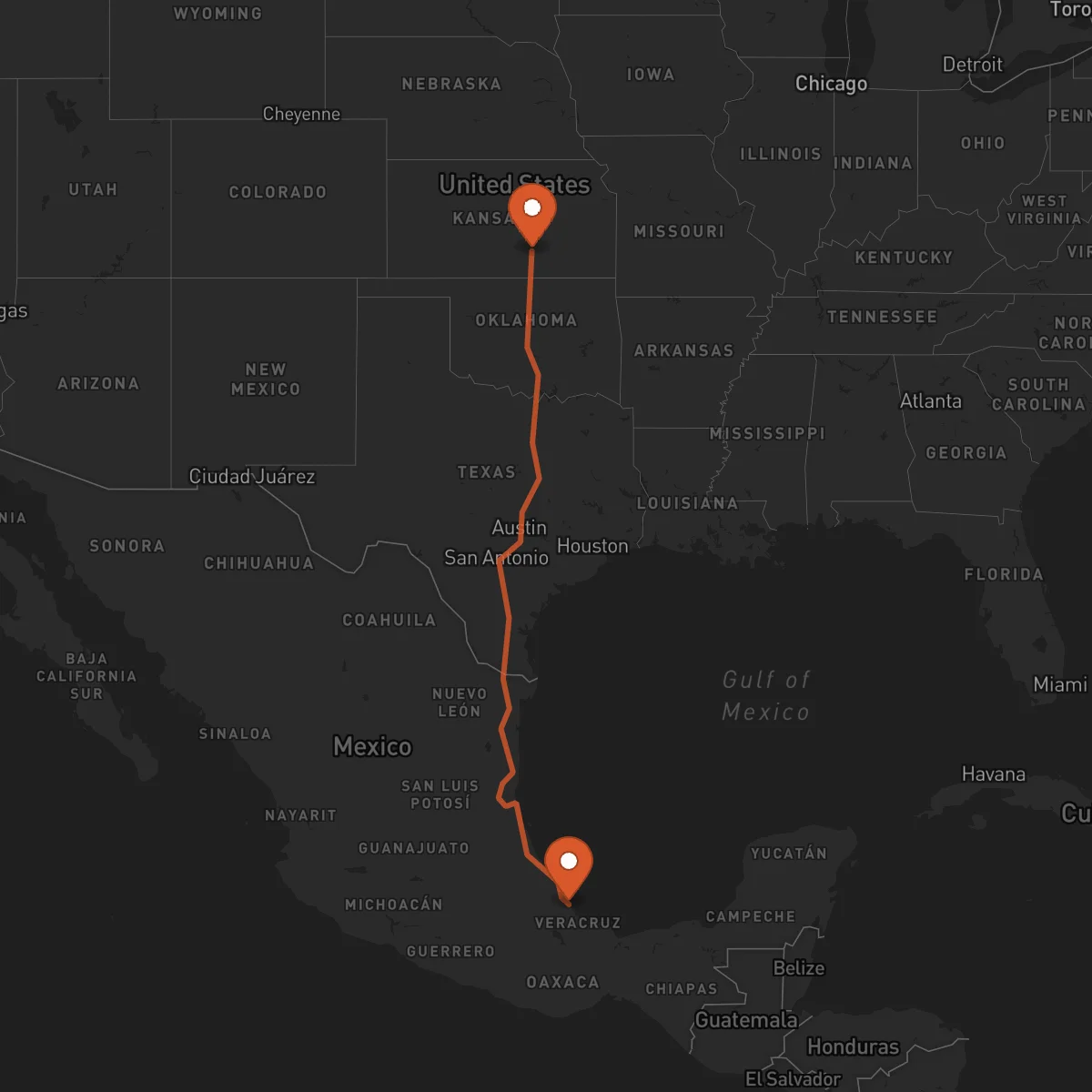
Wichita to Veracruz
Veracruz → WichitaFTL freight transportation service between Wichita and Veracruz. Reliable logistics solutions for your business.
Route Description
Everything you need to know about the corridor Wichita - Veracruz
The logistics corridor between Wichita, Kansas, and Veracruz, Veracruz, represents a vital connection for freight transportation between the United States and Mexico. This 2,063-kilometer cross-border route facilitates the movement of goods between the industrial heartland of the Midwest and one of Mexico's most important Gulf ports. The corridor traverses diverse landscapes and crosses the U.S.-Mexico border, requiring expertise in customs procedures and regulatory compliance.
The economic significance of this route lies in its ability to connect Wichita's manufacturing and agricultural sectors with Veracruz's port facilities and industrial zones. Wichita serves as a hub for aerospace manufacturing, agriculture, and energy production, while Veracruz is a strategic gateway for international trade through its port, which handles a significant portion of Mexico's imports and exports. This complementary economic relationship drives substantial freight traffic along the corridor.
Transportation along this route primarily utilizes major highways including I-35 southbound from Wichita through Oklahoma and Texas, connecting to Mexican Federal Highway 85 at the Laredo-Nuevo Laredo border crossing. From there, freight continues south through Monterrey and towards Veracruz. The Laredo border crossing is one of the busiest commercial crossings on the U.S.-Mexico border, handling millions of commercial trucks annually. Control Terrestre provides specialized cross-border transportation services that navigate the complexities of customs clearance, documentation requirements, and regulatory compliance for this corridor, ensuring seamless freight movement between both countries.
Services for this Route
Available services for the corridor Wichita - Veracruz
 Origin
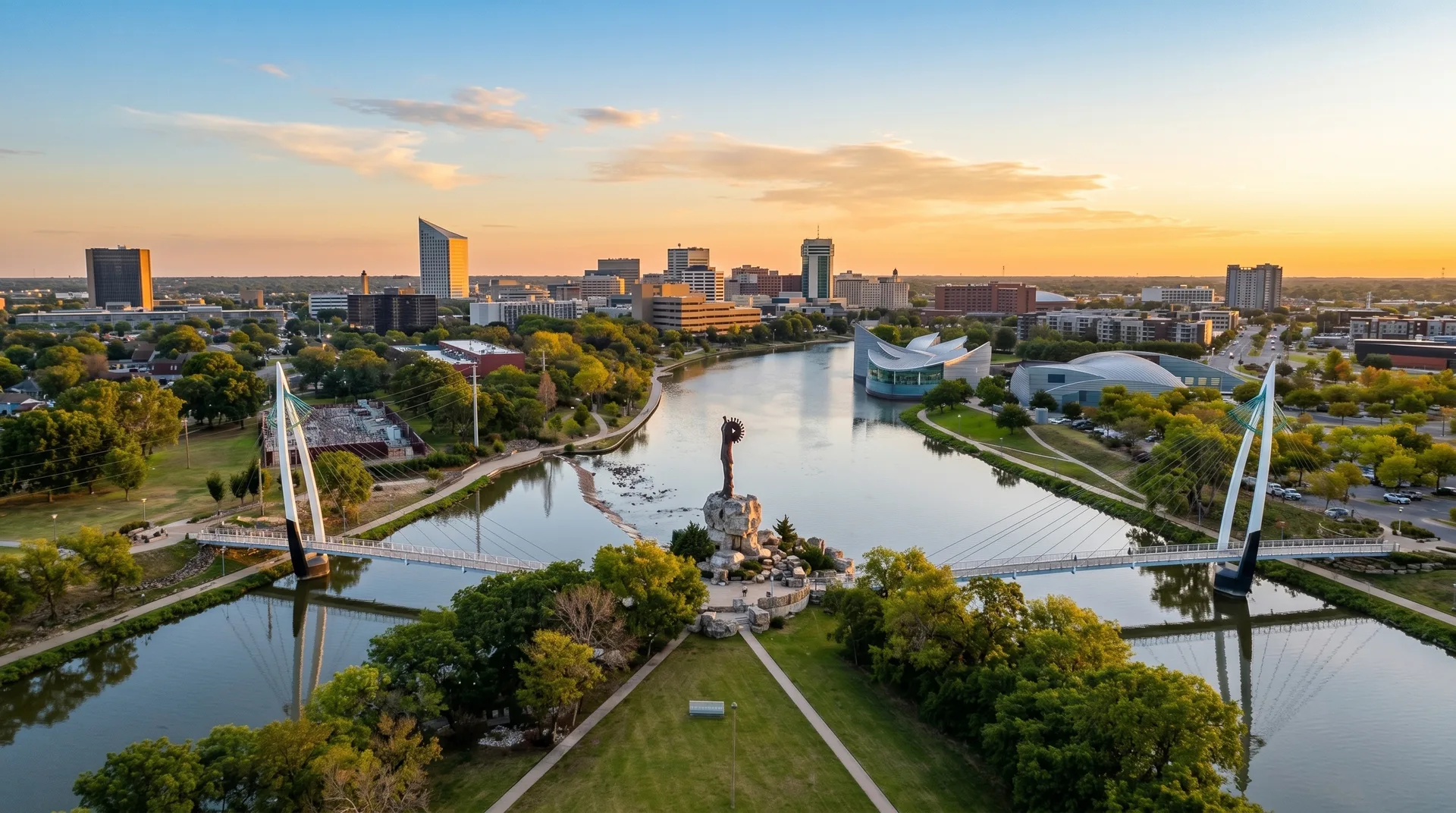
Wichita
Wichita, Kansas, serves as a strategic logistics hub in the American Midwest, positioned at the intersection of major transportation networks. The city's location provides excellent connectivity to national freight corridors, with access to I-35, I-135, and I-235 highways, as well as rail connections through BNSF and Union Pacific railroads. Wichita's Dwight D. Eisenhower National Airport supports air freight operations, complementing the ground transportation infrastructure.
The economic base of Wichita centers on aerospace manufacturing, with major companies like Boeing, Cessna, and Spirit AeroSystems maintaining significant operations. The region also features strong agricultural and food processing industries, energy production, and advanced manufacturing sectors. These industries generate substantial freight volume requiring reliable transportation to both domestic and international markets. Wichita's central U.S. location makes it an ideal origin point for cross-border freight destined for Mexico and beyond, offering efficient routing options and competitive transit times for full truckload shipments.
 Destination
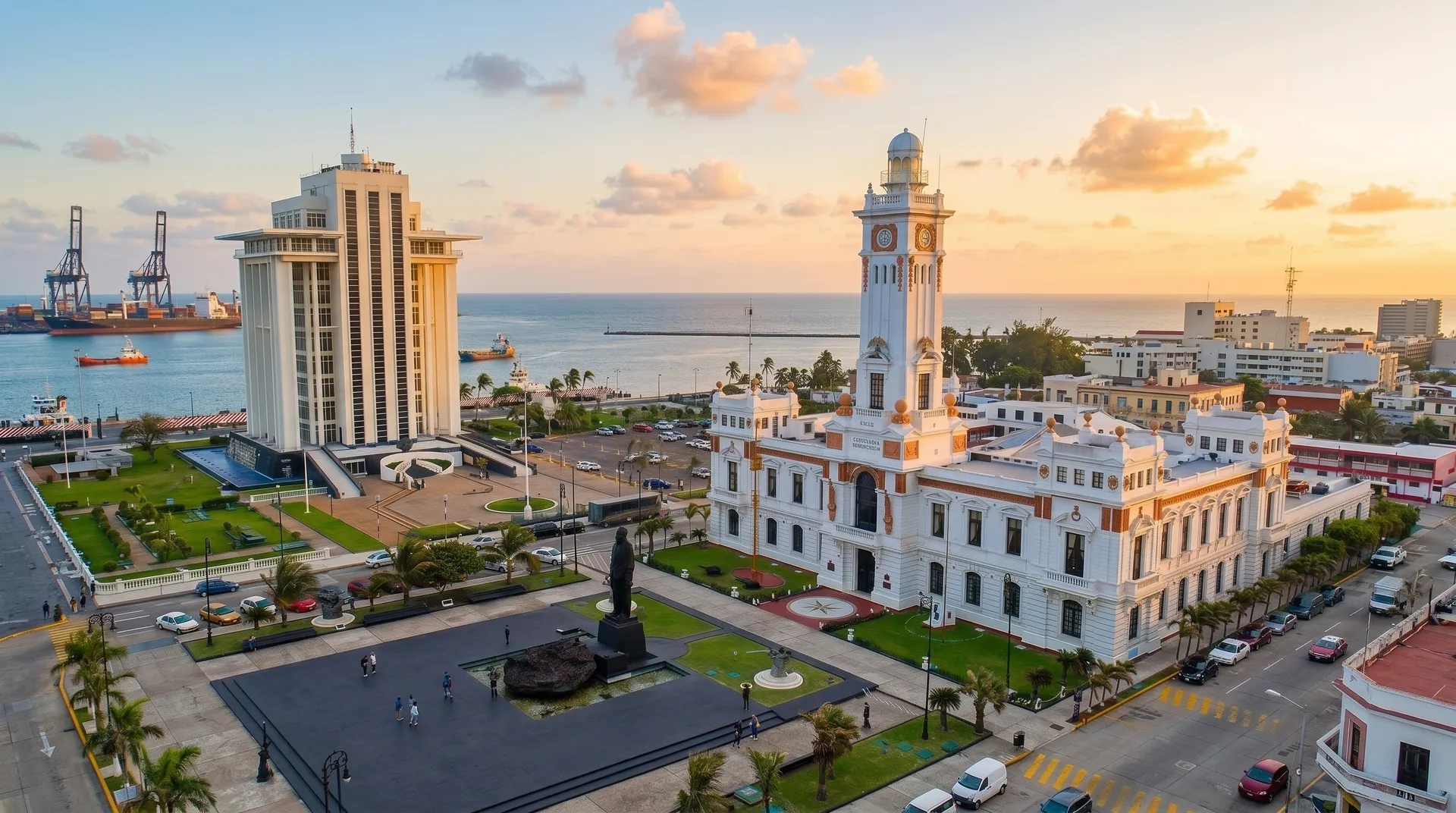
Veracruz, Veracruz, occupies a strategic position on Mexico's Gulf coast, serving as one of the country's most important maritime gateways. The Port of Veracruz, along with the nearby Port of Veracruz ANP, handles a significant volume of international cargo, connecting Mexican industry with global markets. The city's transportation infrastructure includes Federal Highways 180 and 150D, providing connections to Mexico's interior, as well as rail links through Ferromex and Kansas City Southern de México.
The economic landscape of Veracruz encompasses petroleum refining, petrochemicals, food processing, and agricultural exports. The region is a major producer of coffee, vanilla, and tropical fruits, while the port area hosts industrial parks and manufacturing facilities. Veracruz's strategic location makes it a critical node for imports entering Mexico and exports departing for international destinations. The combination of port facilities, industrial zones, and transportation infrastructure creates substantial demand for full truckload freight services connecting Veracruz with manufacturing centers in the United States and other regions of Mexico.










