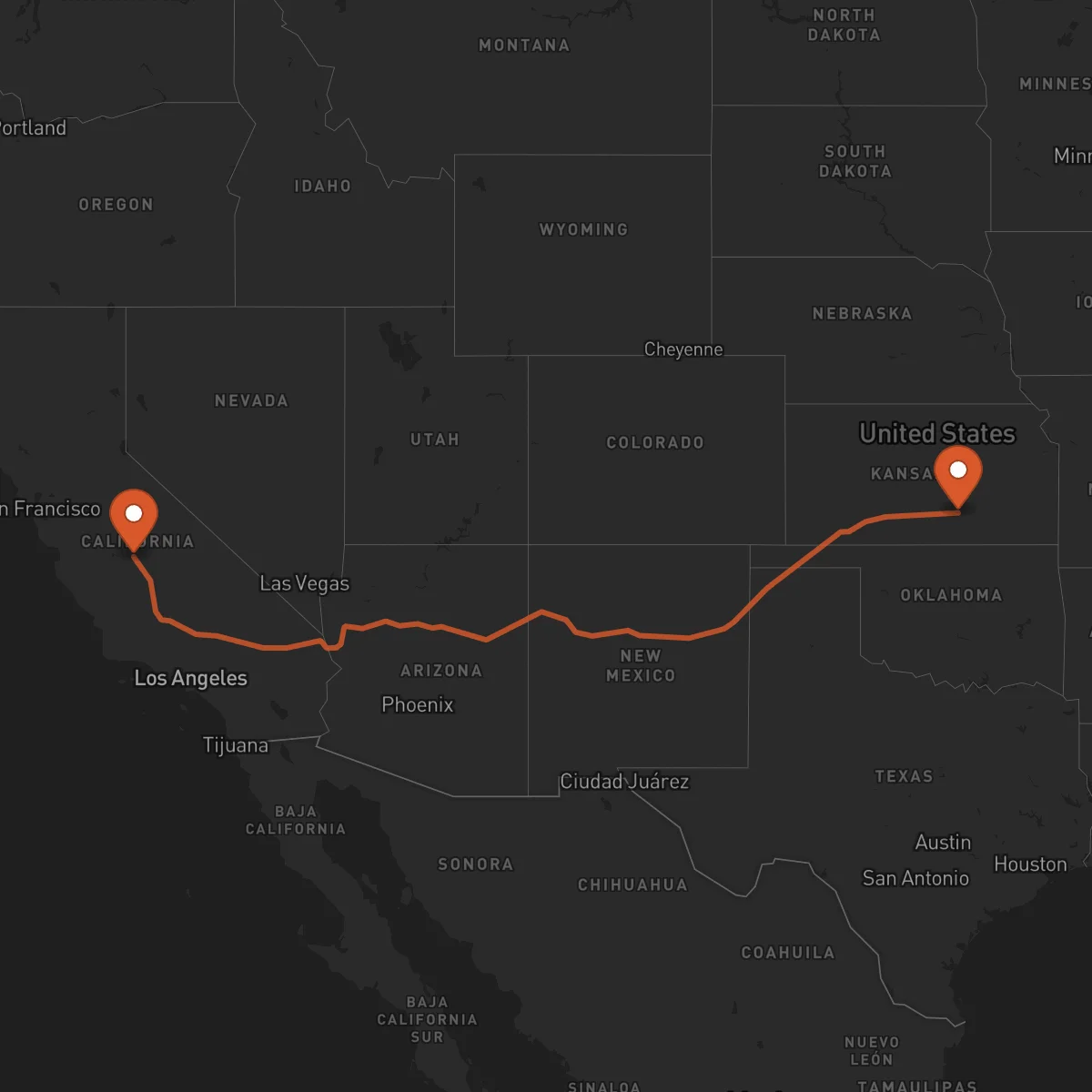
Wichita to Fresno
Fresno → WichitaFTL freight transportation service between Wichita and Fresno. Reliable logistics solutions for your business.
Route Description
Everything you need to know about the corridor Wichita - Fresno
The Wichita to Fresno corridor represents a crucial logistics route connecting the industrial heartland of Kansas with California's Central Valley, a distance of approximately 1986 kilometers. This domestic freight lane serves as a vital link between the manufacturing and agricultural powerhouses of the Midwest and West Coast. The corridor traverses diverse terrain and crosses multiple state lines, making it essential for companies requiring reliable full truckload (FTL) transportation services.
The economic significance of this route extends beyond simple point-to-point shipping. Wichita, known as the "Air Capital of the World," contributes aerospace and manufacturing goods, while Fresno's position in the Central Valley makes it a gateway for agricultural products and food processing. This complementary economic relationship creates consistent freight demand in both directions, benefiting from the robust infrastructure along Interstate 40 and Interstate 5.
Control Terrestre leverages this strategic corridor through our extensive network of certified transportation providers. Our expertise in full truckload services ensures that your cargo moves efficiently across this significant distance, whether you're shipping industrial equipment from Wichita or agricultural products to the Midwest. We understand the unique requirements of cross-country freight, including regulatory compliance, optimal routing, and timely delivery schedules that keep your supply chain running smoothly.
Services for this Route
Available services for the corridor Wichita - Fresno
 Origin
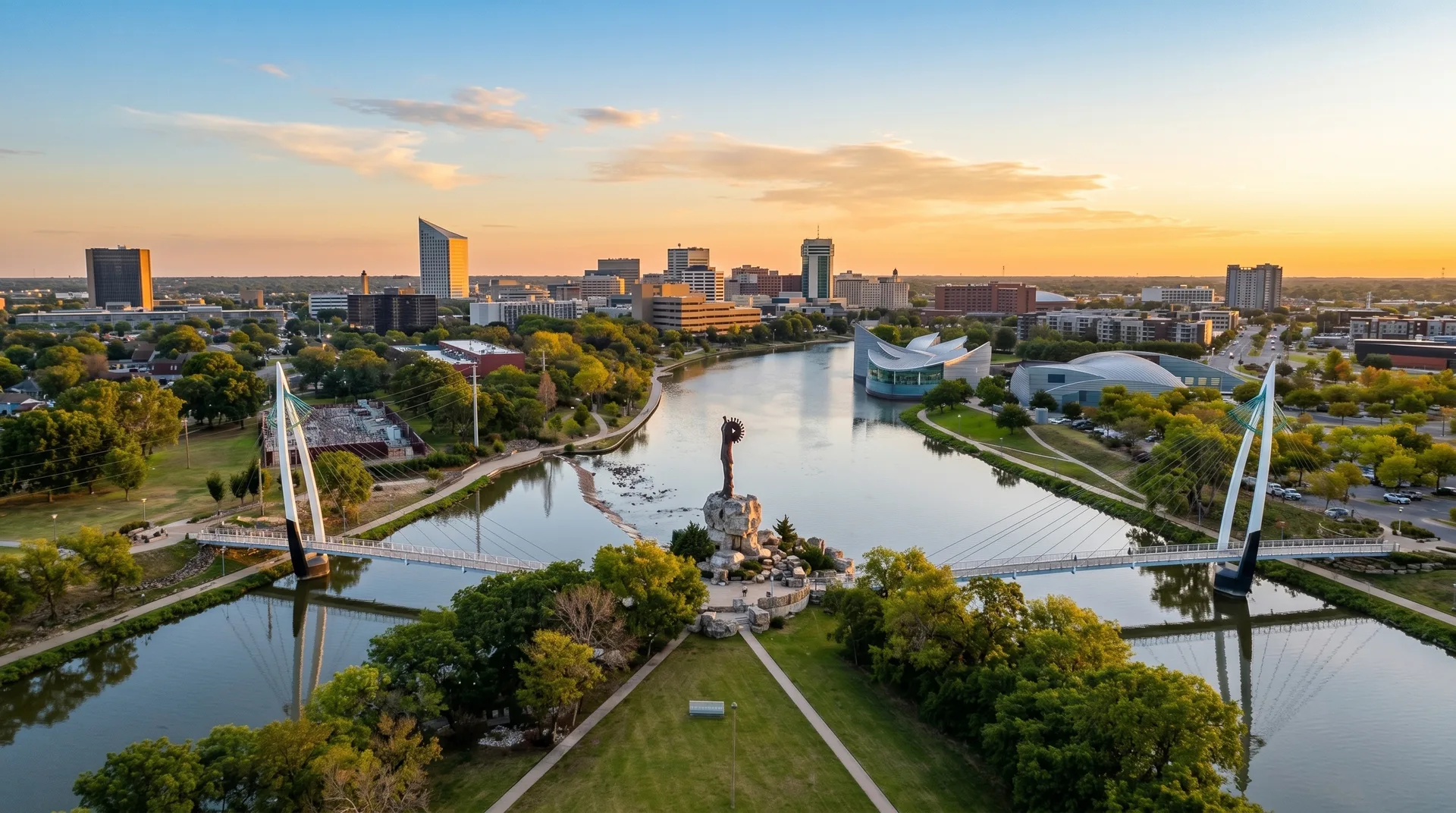
Wichita
Wichita, Kansas serves as a strategic logistics hub in the American Midwest, benefiting from its central geographic location and robust transportation infrastructure. The city's position provides excellent connectivity to major freight corridors and distribution networks across the central United States. Wichita's economy is anchored by the aerospace industry, with major manufacturers and suppliers creating consistent demand for specialized freight services. The manufacturing sector extends beyond aerospace to include industrial equipment, automotive parts, and machinery.
The city offers comprehensive transportation options including Dwight D. Eisenhower National Airport for air cargo, multiple rail connections through BNSF and Union Pacific railroads, and an extensive highway network centered around Interstate 35 and Interstate 135. Wichita's logistics infrastructure includes modern warehousing facilities and distribution centers strategically located near major transportation arteries, making it an ideal origin point for full truckload shipments requiring reliable, long-distance transportation services.
 Destination
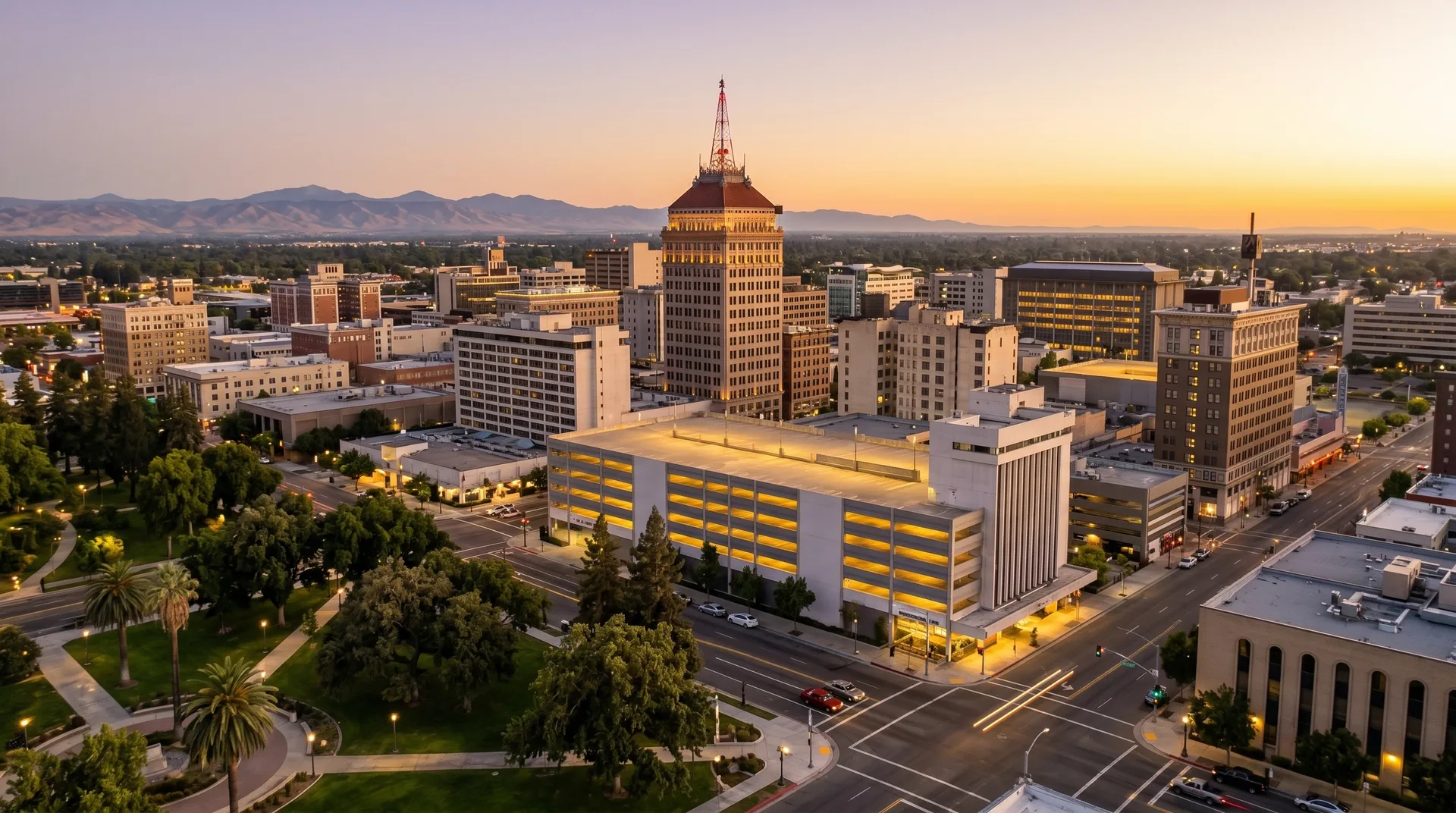
Fresno
Fresno, California occupies a strategic position in the Central Valley, serving as the economic and logistics center of one of America's most productive agricultural regions. The city's location provides direct access to major West Coast markets while maintaining strong connections to inland distribution networks. Fresno's economy is heavily influenced by agriculture, food processing, and manufacturing, creating diverse freight transportation needs throughout the year. The region's agricultural output includes fruits, nuts, and vegetables that require specialized handling and timely delivery to maintain freshness.
The transportation infrastructure in Fresno is exceptionally well-developed, featuring proximity to major highways including State Route 99 and Interstate 5. The city benefits from connections to the national rail network through Union Pacific and Burlington Northern Santa Fe lines. Fresno Yosemite International Airport provides air cargo services for time-sensitive shipments. The region's logistics ecosystem includes numerous warehousing and distribution facilities, cold storage options, and specialized handling capabilities for agricultural and industrial products, making it a critical destination for full truckload freight services connecting the West Coast with the rest of the country.










