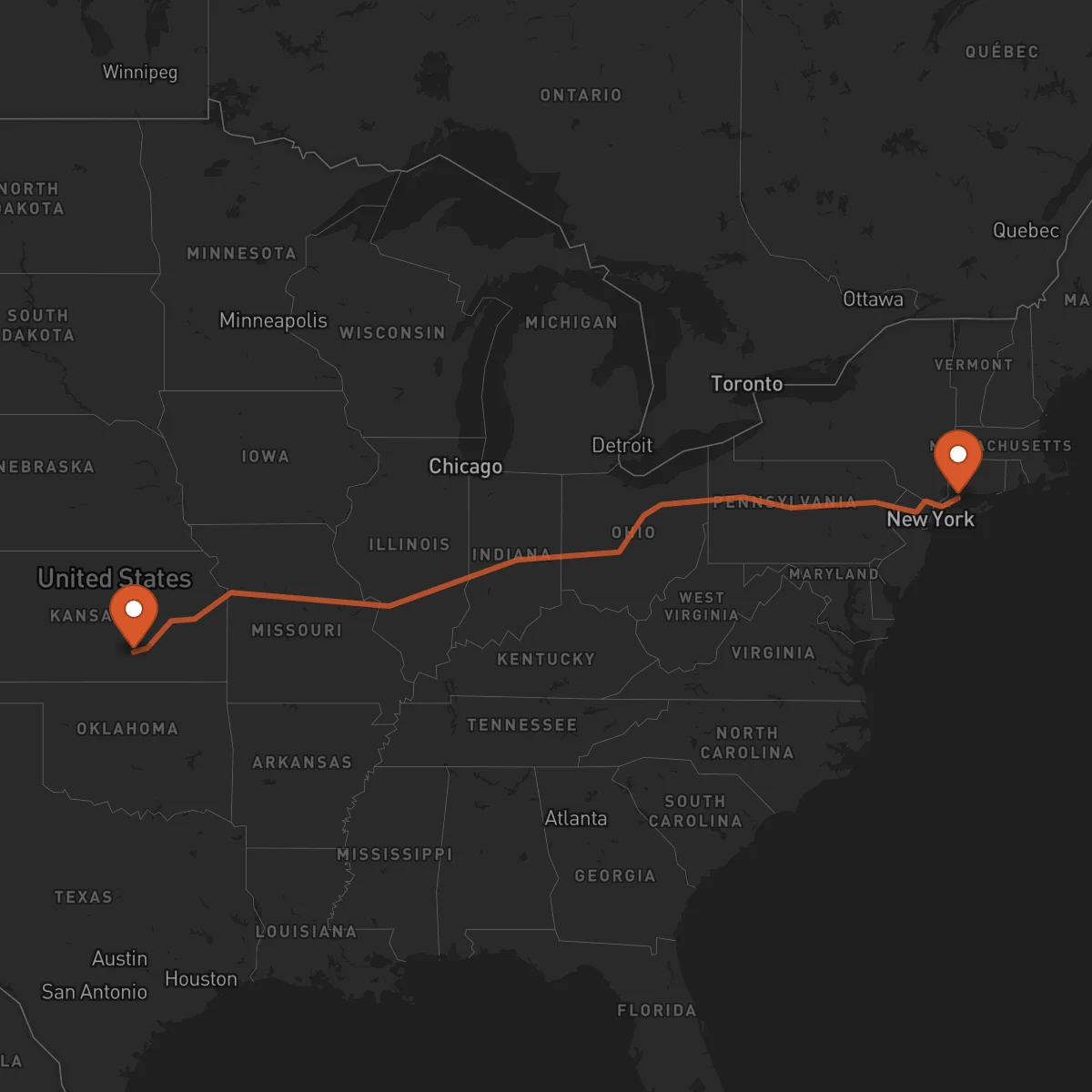
Wichita to Bridgeport
Bridgeport → WichitaFTL freight transportation service between Wichita and Bridgeport. Reliable logistics solutions for your business.
Route Description
Everything you need to know about the corridor Wichita - Bridgeport
The logistics corridor connecting Wichita, Kansas, to Bridgeport, Connecticut, spans approximately 2,102 kilometers and represents a vital link in the North American freight transportation network. This east-west route traverses the heart of the United States, connecting the industrial Midwest with the Northeast's major ports and urban centers. The corridor serves as a crucial artery for goods movement between these two economically significant regions, facilitating trade and commerce across multiple state lines.
The economic importance of this corridor is underscored by the diverse industrial activities it connects. Wichita, known as the "Air Capital of the World," is a major center for aerospace manufacturing, while Bridgeport serves as a key port city with strong ties to international trade. The route passes through numerous industrial hubs, agricultural regions, and manufacturing centers, making it essential for the transportation of a wide variety of goods including aerospace components, agricultural products, manufactured goods, and consumer products.
Control Terrestre leverages this strategic corridor through our extensive network of certified transportation providers. Our full truckload (FTL) services ensure that shipments travel directly from origin to destination without intermediate stops, optimizing transit times and reducing the risk of damage or loss. We utilize the most efficient highway routes, primarily along I-70 East and I-80 East, which offer reliable infrastructure and minimal congestion points. Our providers maintain all necessary certifications including C-TPAT and FAST, ensuring smooth cross-state operations and compliance with all federal transportation regulations.
Services for this Route
Available services for the corridor Wichita - Bridgeport
 Origin
Wichita
Wichita, Kansas, serves as a strategic logistics hub in the American Midwest, positioned at the crossroads of major transportation networks. The city's location provides excellent access to interstate highways, including I-35, I-135, and I-235, facilitating efficient distribution throughout the central United States. Wichita's infrastructure includes the Dwight D. Eisenhower National Airport and multiple rail connections, creating a multimodal transportation environment that supports diverse freight operations.
The economic landscape of Wichita is dominated by the aerospace industry, with major manufacturers like Boeing, Spirit AeroSystems, and Textron Aviation maintaining significant operations in the area. This industrial base creates substantial demand for specialized freight transportation services, particularly for oversized and sensitive aerospace components. Additionally, Wichita's agricultural sector, including food processing and grain storage facilities, contributes to the region's freight volume. The city's manufacturing diversity, including automotive and industrial equipment production, further enhances its role as a key origin point for various freight categories.
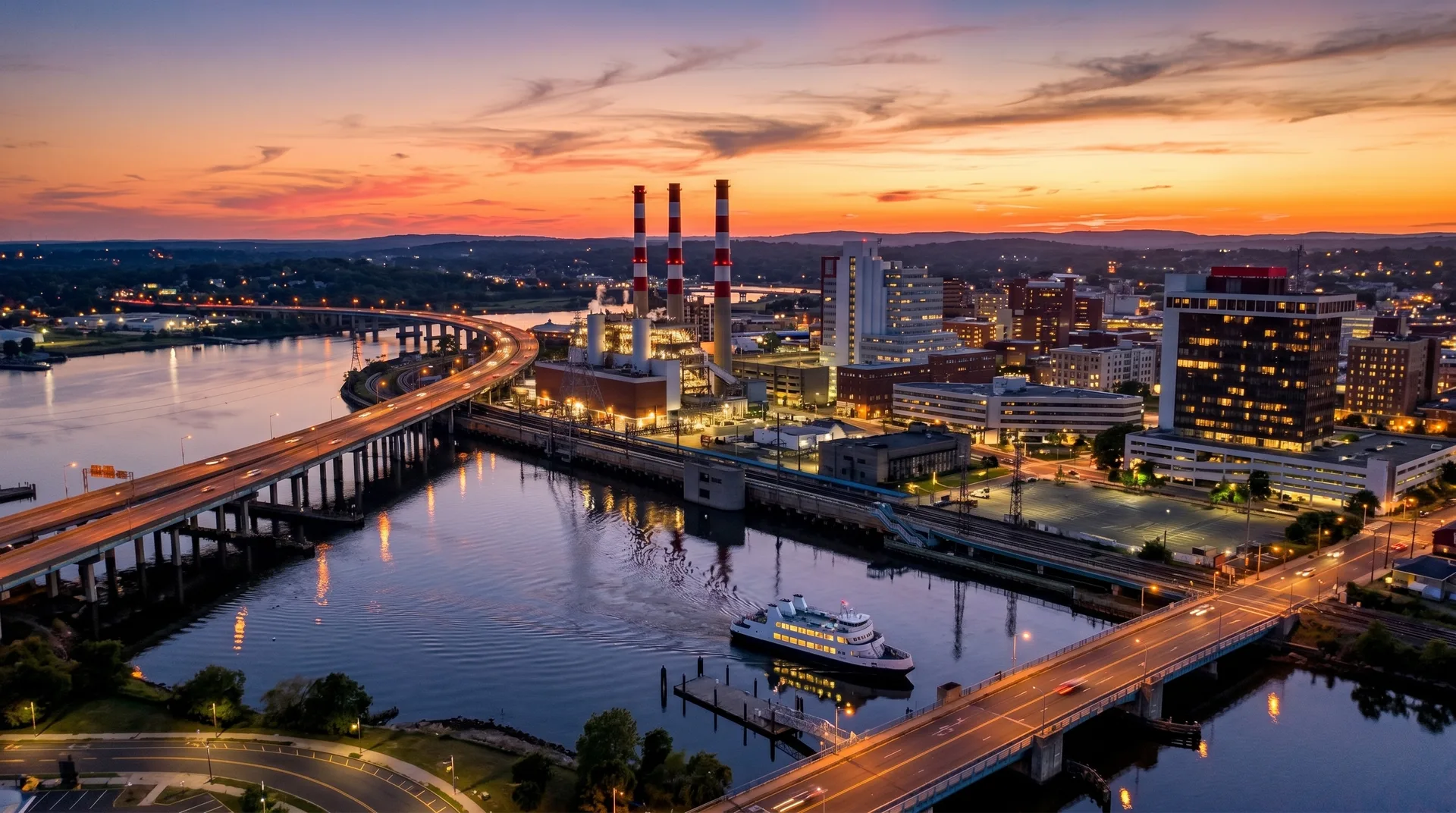 Destination
Bridgeport
Bridgeport, Connecticut, occupies a strategic position on the northeastern seaboard, serving as a critical gateway for freight entering and exiting the New York metropolitan area. The city's proximity to major ports, including the Port of Bridgeport and the nearby Port of New York and New Jersey, makes it an essential node in international trade networks. Bridgeport's transportation infrastructure includes access to I-95, a major north-south corridor, and connections to rail networks that link to the broader Northeast region.
The economic profile of Bridgeport reflects its coastal location and industrial heritage. The city hosts a mix of manufacturing facilities, particularly in the aerospace and industrial equipment sectors, along with significant warehousing and distribution operations. Bridgeport's role as a port city creates demand for specialized freight services, including expedited shipments and temperature-controlled transportation for perishable goods. The surrounding region's concentration of corporate headquarters, research institutions, and high-tech industries generates consistent freight volume, making Bridgeport a key destination for diverse cargo types moving from across the country.










