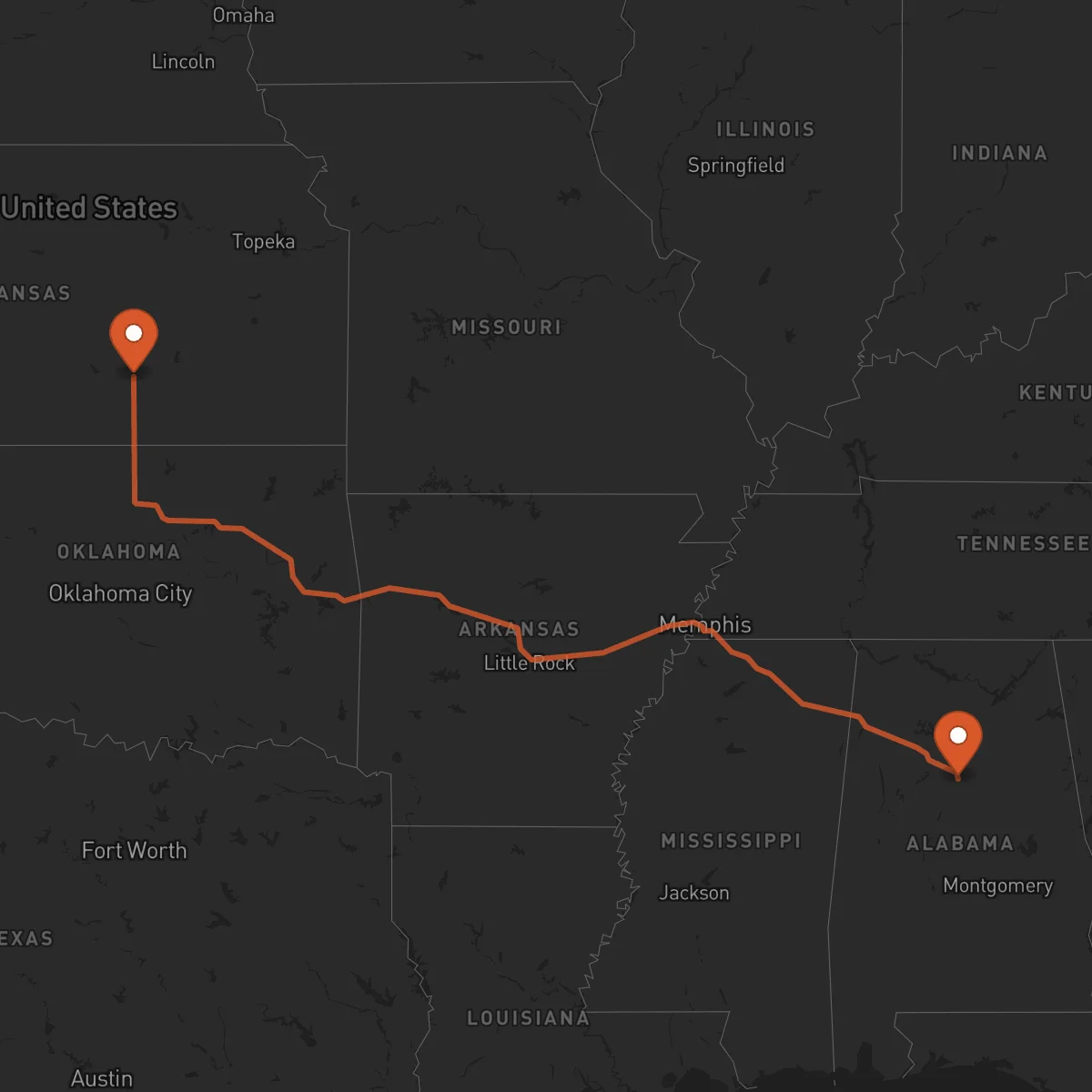
Wichita to Birmingham
Birmingham → WichitaFTL freight transportation service between Wichita and Birmingham. Reliable logistics solutions for your business.
Route Description
Everything you need to know about the corridor Wichita - Birmingham
The Wichita to Birmingham corridor represents a vital freight transportation route connecting the Midwest to the Southeast United States. This 1058 km journey traverses diverse terrain and crosses multiple state lines, linking Kansas, Missouri, Illinois, Kentucky, and Tennessee before reaching Alabama. The corridor serves as a crucial supply chain artery for industries requiring reliable transportation between these economically significant regions.
The route connects two dynamic industrial hubs, facilitating the movement of goods between the manufacturing centers of the Midwest and the automotive and aerospace industries of the Southeast. Major transportation infrastructure includes Interstate 35, I-70, I-64, and I-65, providing efficient connectivity through key logistics nodes. This well-established freight corridor benefits from robust infrastructure supporting both regional and national distribution networks.
Control Terrestre optimizes operations on this corridor through our specialized FTL (Full Truckload) services. Our experienced carriers navigate the route efficiently, ensuring timely delivery of full truckloads between Wichita and Birmingham. We leverage our strategic partnerships and certified transportation providers to maintain consistent service quality across the entire journey, adapting to the specific requirements of each shipment.
Our dedicated FTL solutions on this corridor accommodate diverse cargo types, from standard freight to specialized and oversized loads. With real-time tracking and our commitment to operational excellence, Control Terrestre ensures your freight moves seamlessly between these key industrial centers, supporting your supply chain needs with professional and reliable transportation services.
Services for this Route
Available services for the corridor Wichita - Birmingham
 Origin
Wichita
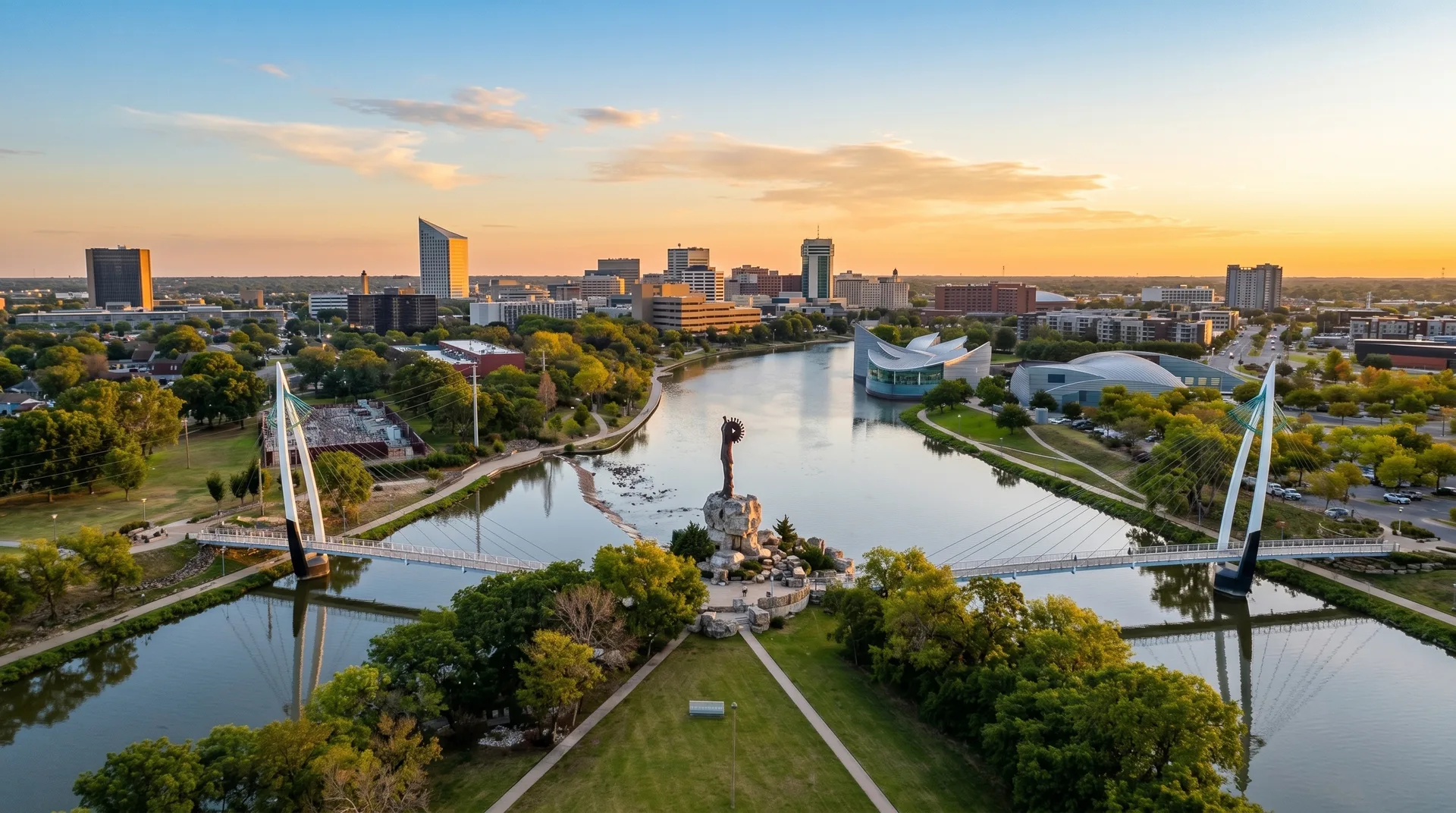
Wichita, Kansas serves as a strategic logistics hub in the American Midwest, positioned at the crossroads of major transportation networks. Known as the Air Capital of the World, Wichita hosts significant aerospace manufacturing operations, with companies like Boeing, Cessna, and Spirit AeroSystems maintaining substantial facilities. The city's central location provides excellent connectivity to both coasts and southern regions, making it an ideal origin point for freight distribution.
The region benefits from comprehensive transportation infrastructure, including Dwight D. Eisenhower National Airport for air cargo, multiple rail connections through BNSF and Union Pacific railroads, and extensive highway access via Interstate 35 and Interstate 135. Wichita's industrial base extends beyond aerospace to include food processing, machinery manufacturing, and energy equipment production. The city's logistics ecosystem is supported by numerous warehousing and distribution facilities strategically located to serve the Midwest region efficiently.
 Destination
Birmingham
Birmingham, Alabama stands as a major logistics and industrial center in the southeastern United States, offering strategic access to the Gulf Coast and Atlantic markets. The city has evolved from its historical steel industry roots to become a diversified economic powerhouse, with strong presence in automotive manufacturing, healthcare, and financial services. Birmingham's location provides excellent connectivity to major southern markets including Atlanta, Nashville, and New Orleans.
The region boasts impressive transportation infrastructure, anchored by the Birmingham-Shuttlesworth International Airport and extensive rail networks operated by Norfolk Southern and CSX. The city's highway system includes Interstate 20, I-59, and I-65, creating a robust multimodal transportation framework. Birmingham's industrial landscape features major automotive suppliers, medical device manufacturers, and distribution centers serving the southeastern United States. The city's central southeastern location makes it an ideal destination for freight consolidation and distribution to surrounding states.










