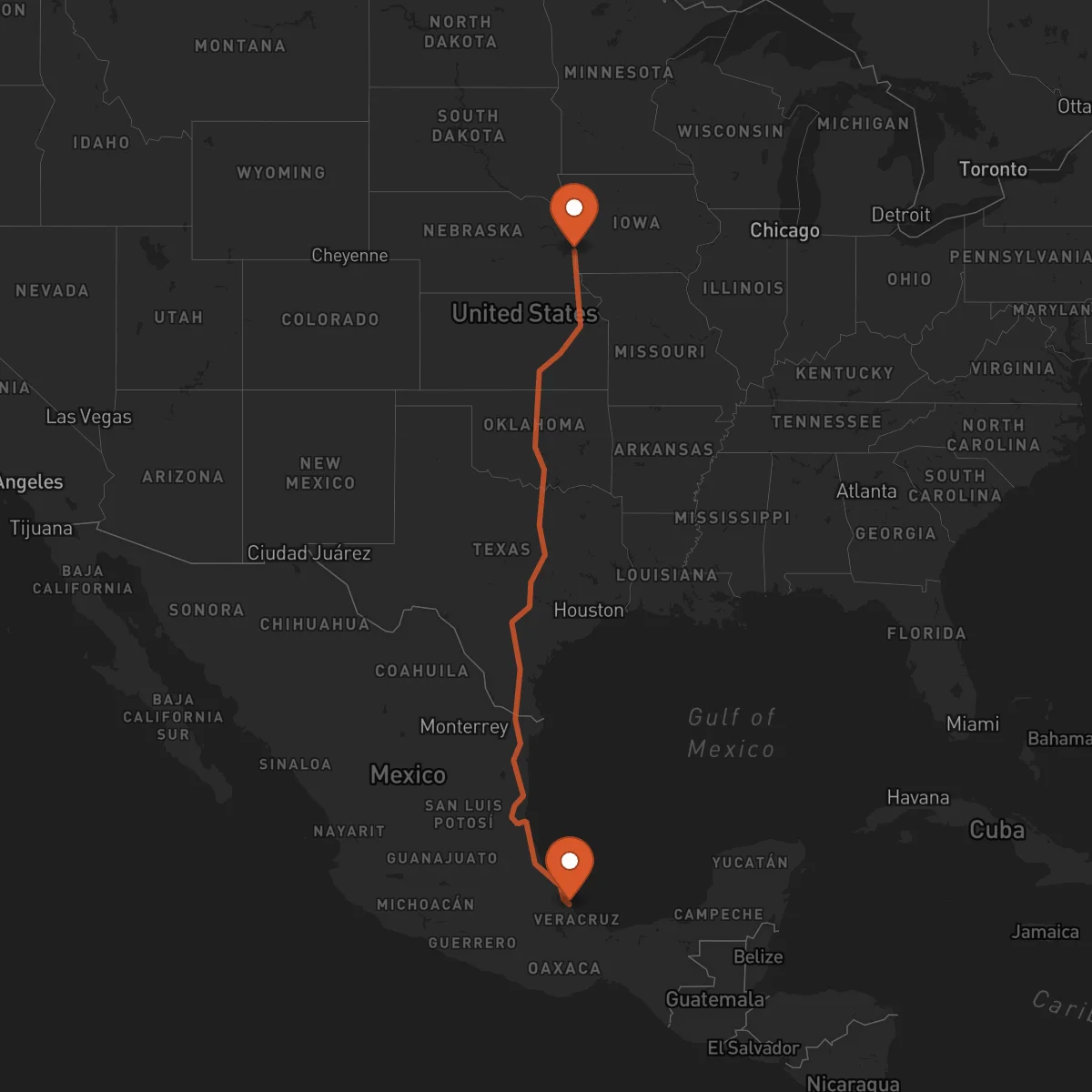
Veracruz to Omaha
Omaha → VeracruzFTL freight transportation service between Veracruz and Omaha. Reliable logistics solutions for your business.
Route Description
Everything you need to know about the corridor Veracruz - Omaha
The Veracruz to Omaha corridor represents a vital logistics connection between Mexico's Gulf Coast and the central United States. This 2,456 km route links one of Mexico's most important port cities with a key distribution hub in the Midwest, facilitating the movement of goods between North American markets. The corridor traverses diverse terrain and crosses multiple states, making it essential for industries requiring efficient cross-border transportation solutions.
The economic significance of this route is substantial, connecting Veracruz's industrial base with Omaha's robust distribution network. Veracruz serves as a gateway for imports and exports through its maritime facilities, while Omaha functions as a crucial logistics center with excellent connectivity to major U.S. markets. This corridor supports industries including automotive, electronics, agricultural products, and manufactured goods, enabling just-in-time inventory management and supply chain optimization.
Transportation along this corridor primarily utilizes Mexico's Federal Highway 140D and Federal Highway 85, connecting to U.S. Interstate 35 and I-80. The main border crossing at Laredo/Nuevo Laredo provides efficient customs processing for commercial freight. Control Terrestre's expertise in cross-border operations ensures seamless documentation, compliance with both Mexican and U.S. regulations, and reliable scheduling. Our strategic partnerships with certified carriers guarantee that shipments move efficiently through this critical North American trade route.
Services for this Route
Available services for the corridor Veracruz - Omaha
 Origin
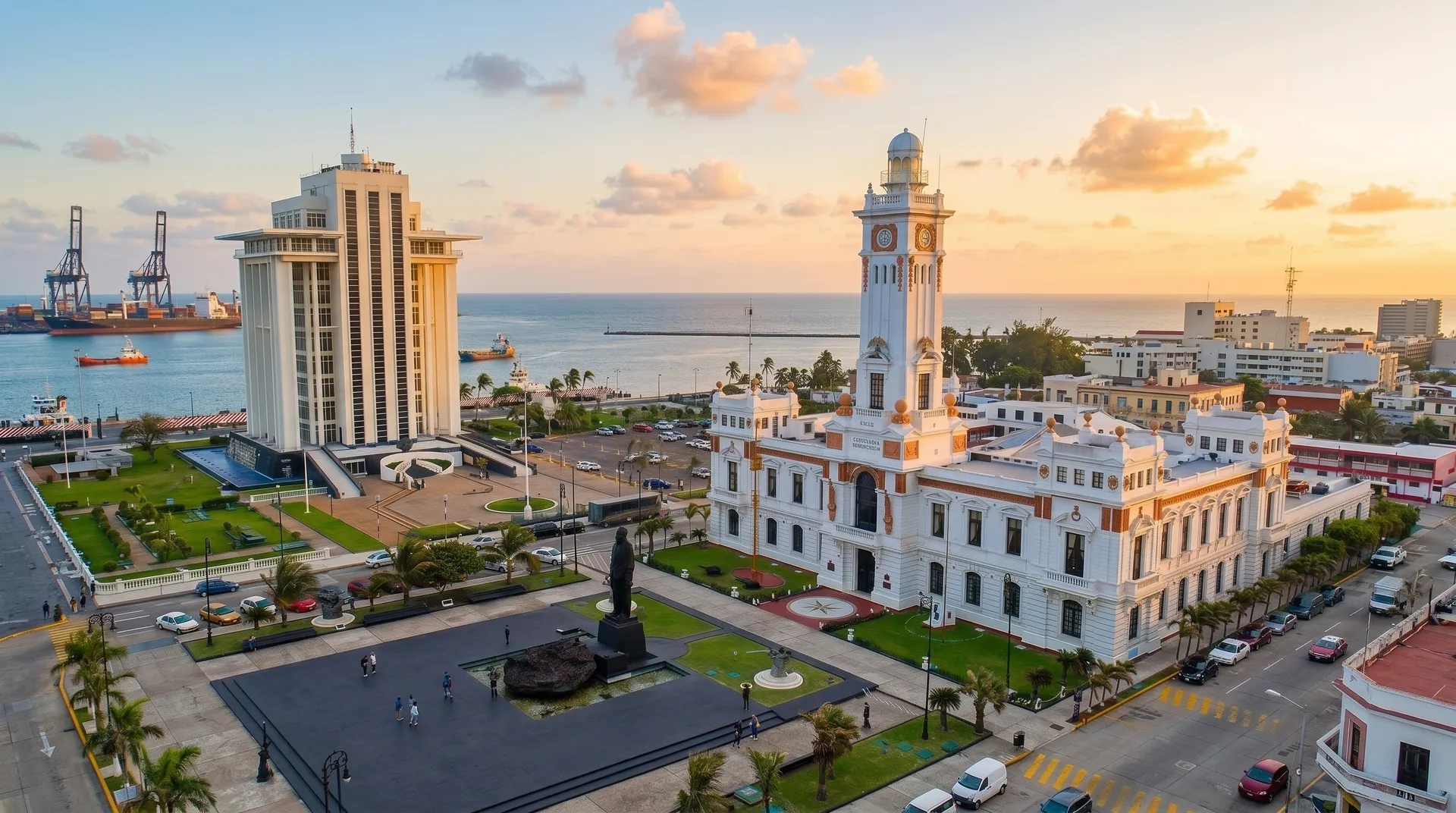
Veracruz stands as a strategic logistics hub on Mexico's Gulf Coast, serving as the country's primary maritime gateway. The Port of Veracruz, along with nearby facilities in Coatzacoalcos and Tuxpan, handles a significant portion of Mexico's international trade volume. The city's location provides direct access to both Atlantic shipping routes and inland transportation networks, making it ideal for companies requiring efficient import/export operations. Veracruz's industrial parks host diverse manufacturing sectors, particularly automotive, chemical, and food processing industries.
The transportation infrastructure in Veracruz is comprehensive, featuring modern highways connecting to Mexico City and the U.S. border, a major railway terminal operated by Ferromex, and extensive port facilities. The city benefits from Mexico's Federal Highway 140D, which provides a direct, toll-based route to the northern border. Veracruz International Airport complements the multimodal transportation options available, while the city's Free Trade Zone status offers additional advantages for international commerce.
 Destination
Omaha
Omaha serves as a strategic logistics powerhouse in the central United States, leveraging its central geographic location to provide exceptional distribution capabilities. The city's position at the intersection of major transportation corridors makes it an ideal hub for companies serving both U.S. coasts and Canadian markets. Omaha's robust infrastructure includes the Union Pacific Railroad's national network, multiple interstate highways (I-80, I-29, I-680), and the nearby Eppley Airfield for air cargo operations. The city's central location translates to reduced transit times for shipments traveling to major U.S. markets.
The Omaha metropolitan area hosts numerous Fortune 500 companies and has developed specialized logistics zones to support its role as a distribution center. Key industries utilizing Omaha's logistics advantages include food processing, financial services, telecommunications, and retail distribution. The city's mild weather patterns and relatively flat terrain contribute to year-round transportation reliability. Omaha's extensive warehousing and cross-docking facilities, combined with its skilled logistics workforce, create an environment optimized for efficient freight handling and distribution operations.










