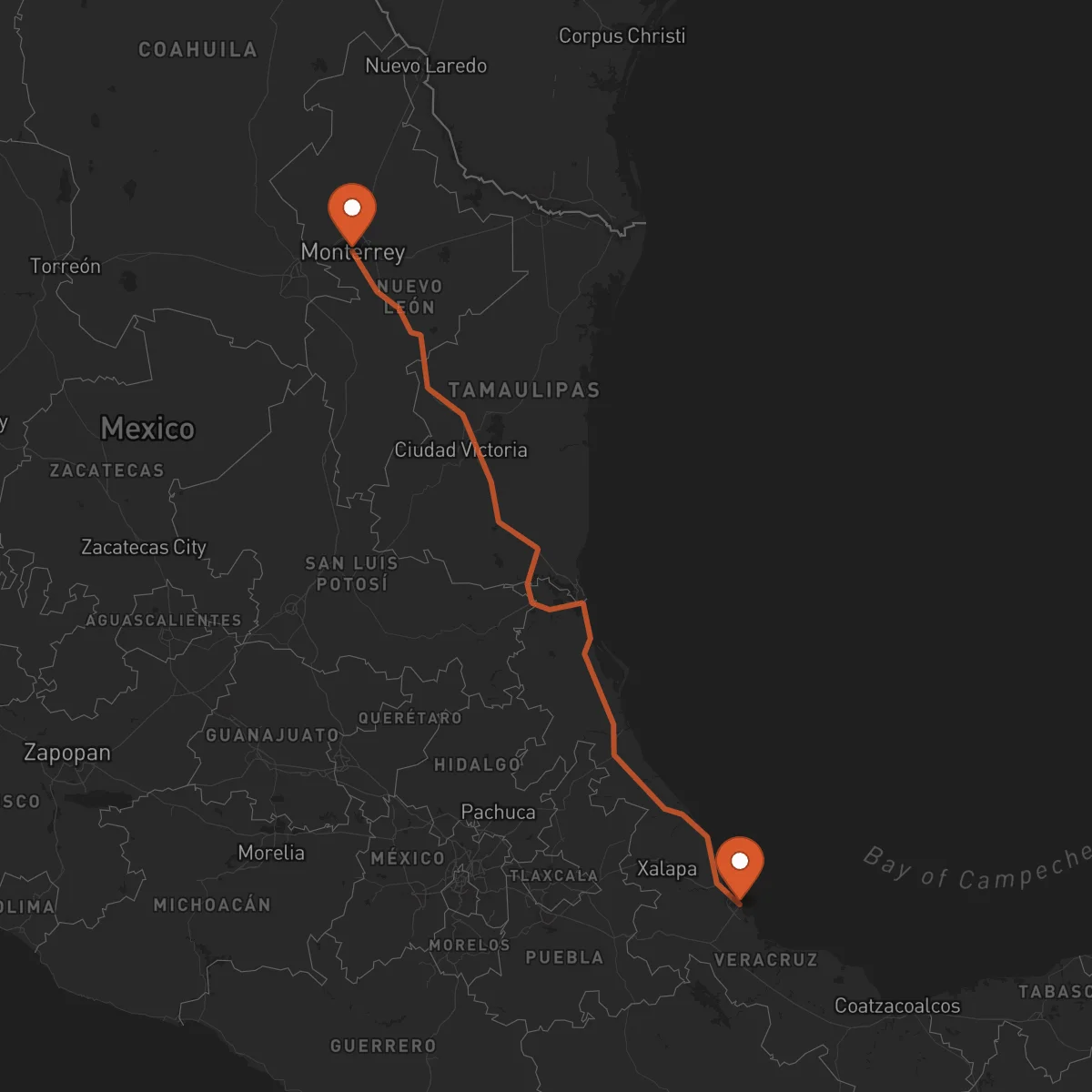
Veracruz to Monterrey
Monterrey → VeracruzFTL freight transportation service between Veracruz and Monterrey. Reliable logistics solutions for your business.
Route Description
Everything you need to know about the corridor Veracruz - Monterrey
The logistics corridor between Veracruz and Monterrey represents one of the most critical freight transportation routes in Mexico, connecting the country's primary Gulf port with the industrial powerhouse of the north. This 842 km route serves as a vital artery for national commerce, enabling the flow of goods between Mexico's eastern coast and its most industrialized region. The corridor links Veracruz's maritime capabilities with Monterrey's manufacturing and industrial strength, creating a seamless supply chain that supports both international trade and domestic distribution.
The economic significance of this corridor cannot be overstated. Veracruz serves as Mexico's primary port for automotive imports and exports, while Monterrey hosts major automotive assembly plants, steel manufacturing facilities, and high-tech industries. This route facilitates the movement of raw materials to Monterrey's factories and finished products to Veracruz for export. Additionally, the corridor supports the agricultural sector, with Veracruz's tropical produce making its way to northern markets, while Monterrey's industrial products reach coastal destinations for international shipment.
Transportation infrastructure along this route includes Mexico's Federal Highways 150D and 85, providing modern, well-maintained roads designed for heavy freight traffic. These highways feature multiple toll stations, rest areas, and weigh stations to ensure safe and efficient cargo movement. The route passes through several key industrial and commercial hubs, including Puebla and San Luis Potosí, further enhancing its strategic importance for national logistics operations.
Control Terrestre leverages this corridor's full potential by offering dedicated FTL services that ensure your cargo moves efficiently between Veracruz and Monterrey. Our specialized fleet and experienced drivers navigate this route with precision, providing real-time tracking and guaranteed delivery schedules. We understand the unique requirements of each cargo type, from temperature-sensitive goods to oversized industrial equipment, ensuring your freight arrives in optimal condition.
Services for this Route
Available services for the corridor Veracruz - Monterrey
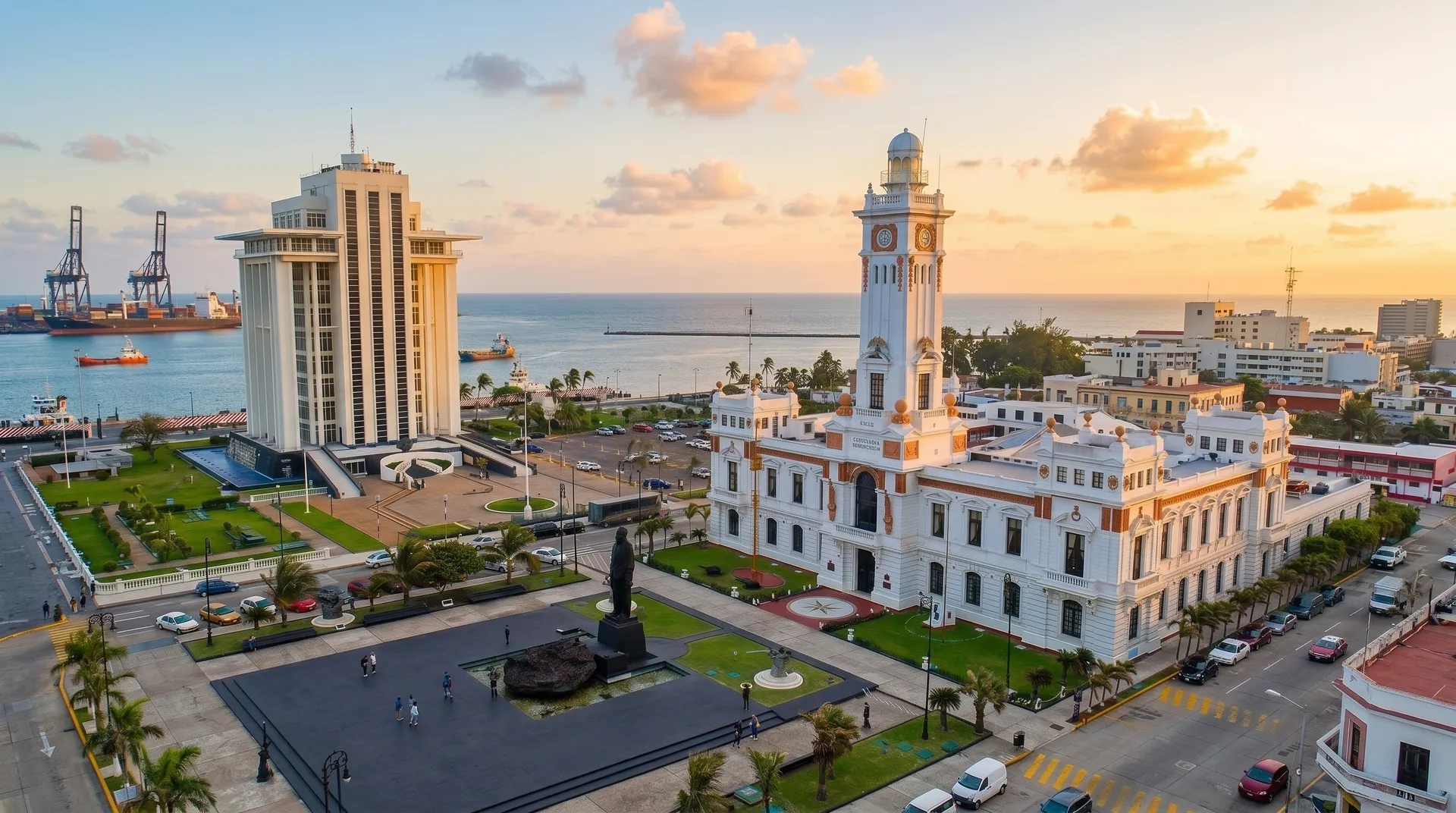 Origin
Veracruz stands as Mexico's most important Gulf port and a strategic gateway for international trade. Located on the eastern coast, this port city provides direct access to global markets through its deep-water facilities capable of handling container ships, bulk carriers, and specialized cargo vessels. The Port of Veracruz serves as a critical entry point for automotive imports, agricultural products, and industrial materials, making it an essential hub for Mexico's import-export operations.
The region's economy extends beyond maritime activities, with Veracruz being a major producer of tropical fruits, coffee, and seafood. The state also hosts significant petroleum operations, with several refineries and petrochemical plants along the coast. Transportation infrastructure in Veracruz includes not only the port facilities but also excellent road connections to Mexico's interior via Federal Highway 150D, rail connections through Ferrocarril del Istmo de Tehuantepec, and proximity to Veracruz International Airport for air freight options.
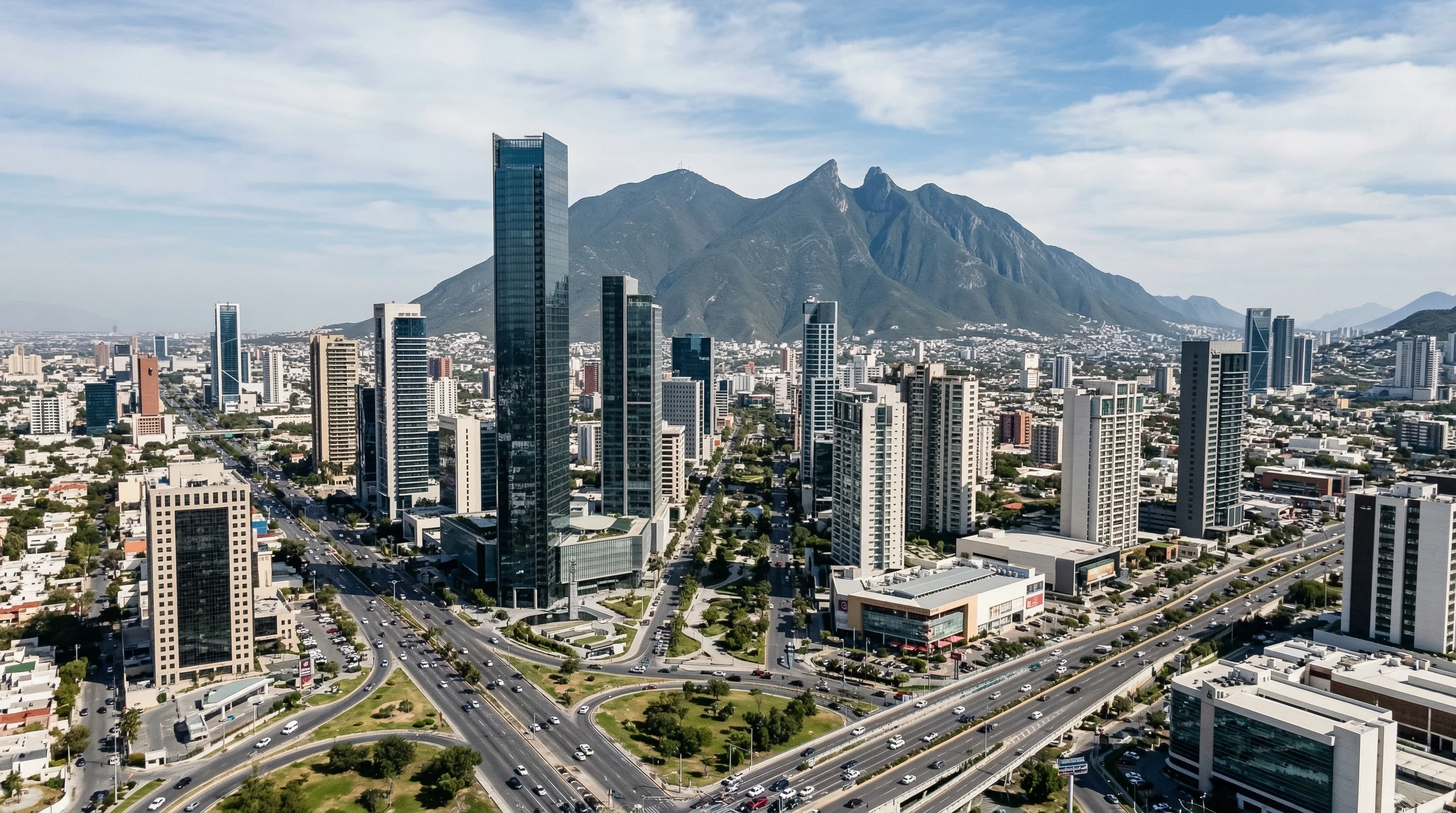 Destination
Monterrey
Monterrey represents the industrial heart of northern Mexico and one of Latin America's most important manufacturing centers. Located in the state of Nuevo León, this metropolitan area hosts headquarters and major operations for multinational corporations in automotive, steel, electronics, and aerospace industries. The city's strategic position near the U.S. border and its robust industrial base make it a crucial destination for freight transportation throughout Mexico.
The region boasts exceptional transportation infrastructure, including Monterrey International Airport for air cargo, extensive rail networks operated by Ferromex and Kansas City Southern de México, and a comprehensive highway system connecting to major U.S. border crossings. Monterrey's industrial parks and manufacturing facilities require reliable, efficient freight services to maintain their just-in-time production schedules. The city's economic importance is further enhanced by its role as a financial center and its concentration of research and development facilities, creating continuous demand for specialized cargo transportation services.










