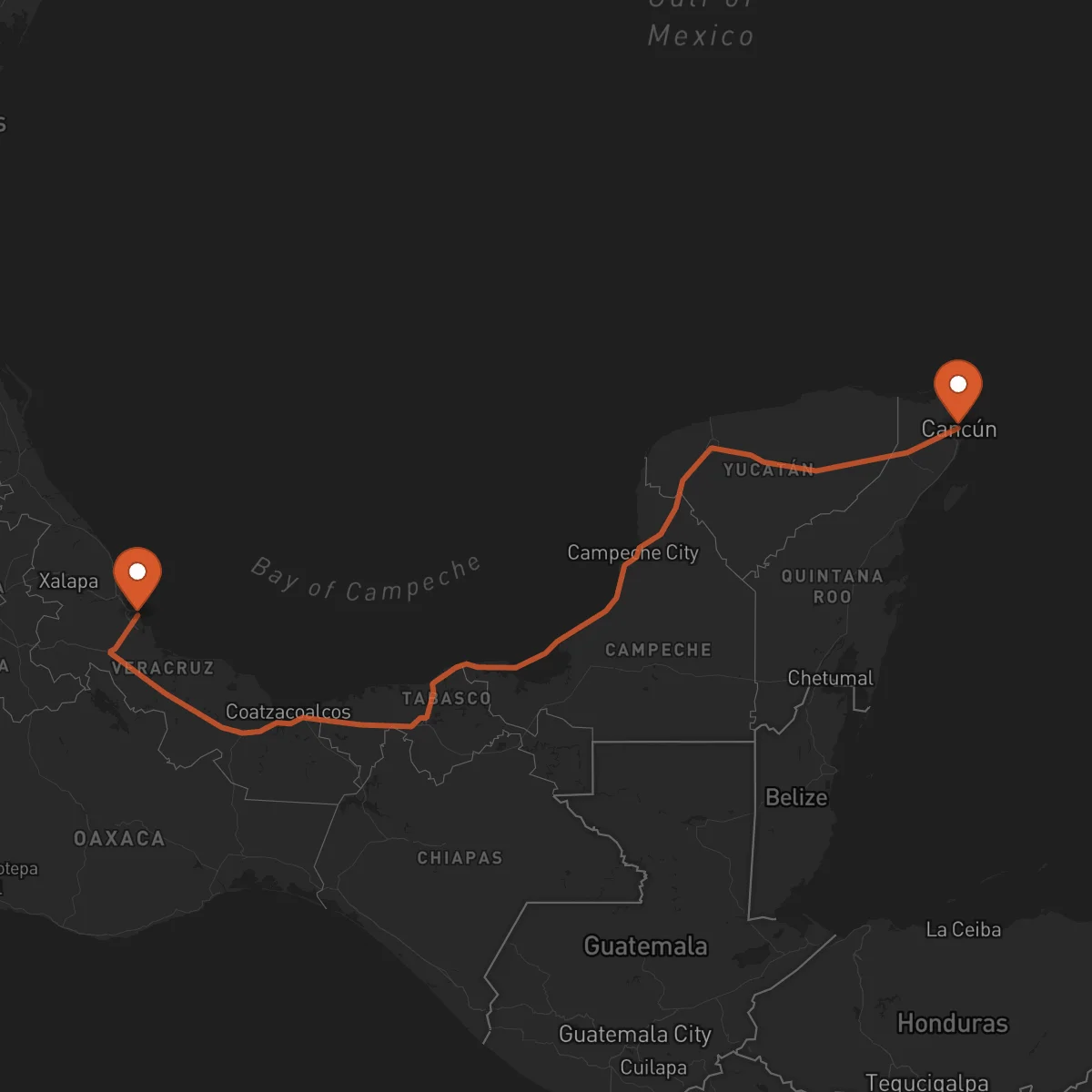
Veracruz to Cancún
Cancún → VeracruzFTL freight transportation service between Veracruz and Cancún. Reliable logistics solutions for your business.
Route Description
Everything you need to know about the corridor Veracruz - Cancún
The logistics corridor between Veracruz and Cancún represents a vital commercial artery in southeastern Mexico, connecting the Gulf of Mexico with the Caribbean coast over approximately 994 kilometers. This route traverses diverse landscapes and serves as a crucial link between two major economic regions of the country. The corridor facilitates the movement of goods between Veracruz's industrial and port activities and Cancún's tourism and service economy, creating a dynamic supply chain that supports both regions' development.
This transportation route passes through several important states including Veracruz, Tabasco, Chiapas, and Quintana Roo, crossing key industrial and commercial zones. The corridor is particularly significant for the automotive, electronics, and agricultural sectors in Veracruz, which require efficient distribution to the tourist destinations and growing urban centers of the Yucatan Peninsula. The route also supports the reverse flow of goods from Cancún's international trade and tourism industry back to Veracruz's industrial centers.
Control Terrestre specializes in optimizing freight transportation along this corridor through our extensive network of certified carriers and strategic logistics planning. Our expertise in full truckload (FTL) services ensures that your cargo moves efficiently and securely between these two important destinations. We understand the unique challenges of this route, including varying terrain, weather conditions, and border-crossing requirements within the region, allowing us to provide reliable transportation solutions that keep your supply chain moving smoothly.
Services for this Route
Available services for the corridor Veracruz - Cancún
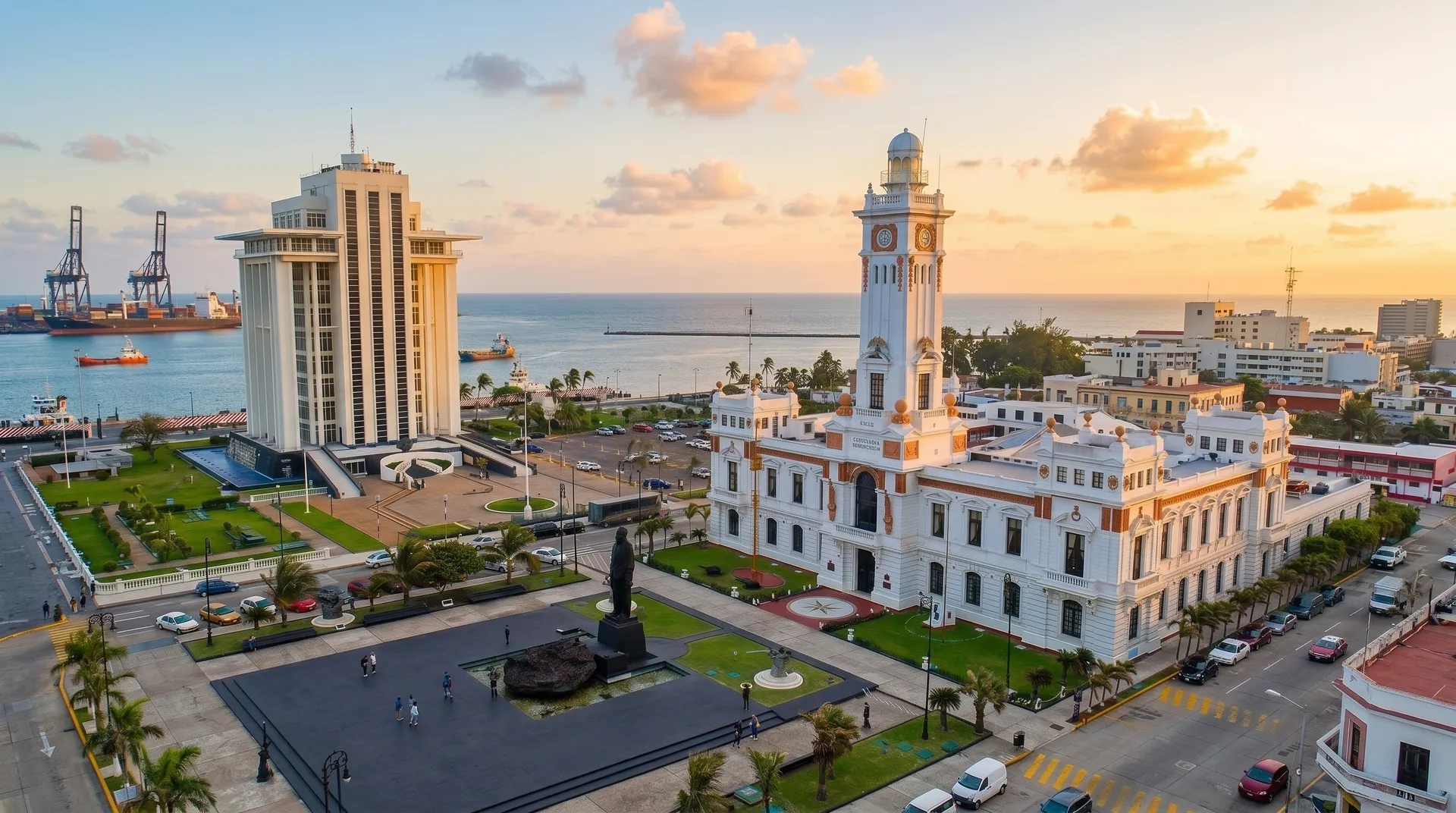 Origin
Veracruz stands as one of Mexico's most important logistics hubs, strategically positioned on the Gulf of Mexico with access to major maritime trade routes. The Port of Veracruz, along with the nearby Port of Coatzacoalcos, forms part of the most important port system in the country, handling millions of tons of cargo annually. This coastal city benefits from excellent ground transportation infrastructure, including the Mexico City-Veracruz highway and connections to the national railway network, making it an ideal origin point for freight distribution throughout the country.
The region's economy is characterized by its industrial diversity, with strong presence in the automotive, chemical, food processing, and electronics sectors. Veracruz hosts numerous manufacturing plants and industrial parks that require efficient transportation solutions to reach both domestic and international markets. The city's strategic location also makes it a key point for imports entering Mexico, with goods needing distribution to various destinations across the national territory.
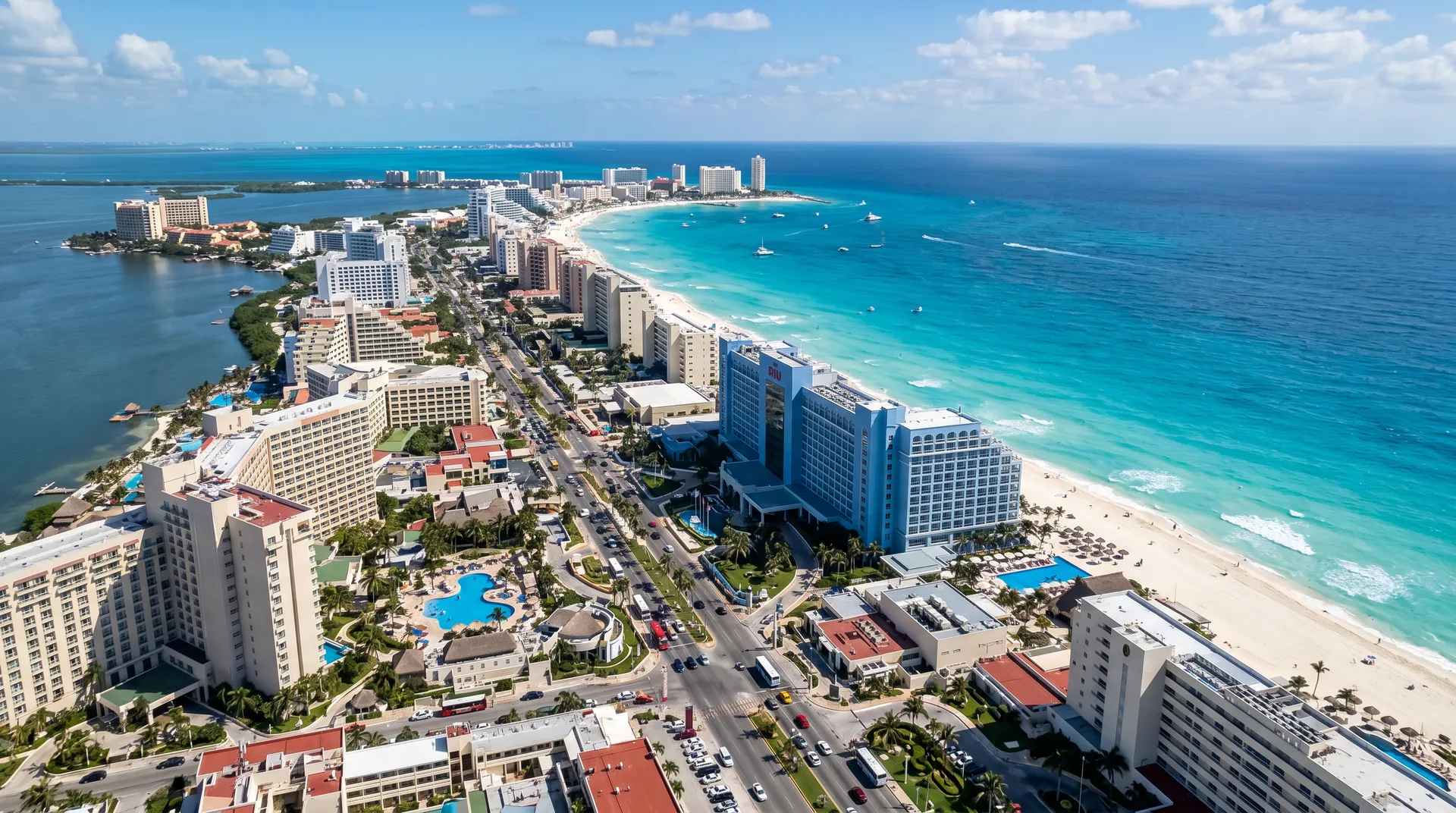 Destination
Cancún
Cancún represents the economic heart of Quintana Roo and serves as the primary gateway to Mexico's Riviera Maya, one of the world's most important tourist destinations. Located on the Caribbean coast, this city has experienced remarkable growth over the past decades, transforming from a small fishing village into a major international tourism center with a modern infrastructure that includes an international airport capable of handling millions of passengers annually. The city's strategic position in the Yucatan Peninsula makes it a crucial point for both tourism-related logistics and growing industrial activities.
The local economy is predominantly driven by tourism, hospitality, and service sectors, but has diversified to include light manufacturing, particularly in areas such as food processing, textiles, and construction materials. Cancún's infrastructure includes modern highways connecting it to other parts of the Yucatan Peninsula, as well as maritime facilities that support both tourism and commercial activities. The city's growing industrial base requires efficient freight transportation to maintain supply chains for both the tourism sector and expanding manufacturing operations.










