Veracruz to Brampton
Brampton → VeracruzFTL freight transportation service between Veracruz and Brampton. Reliable logistics solutions for your business.
Route Description
Everything you need to know about the corridor Veracruz - Brampton
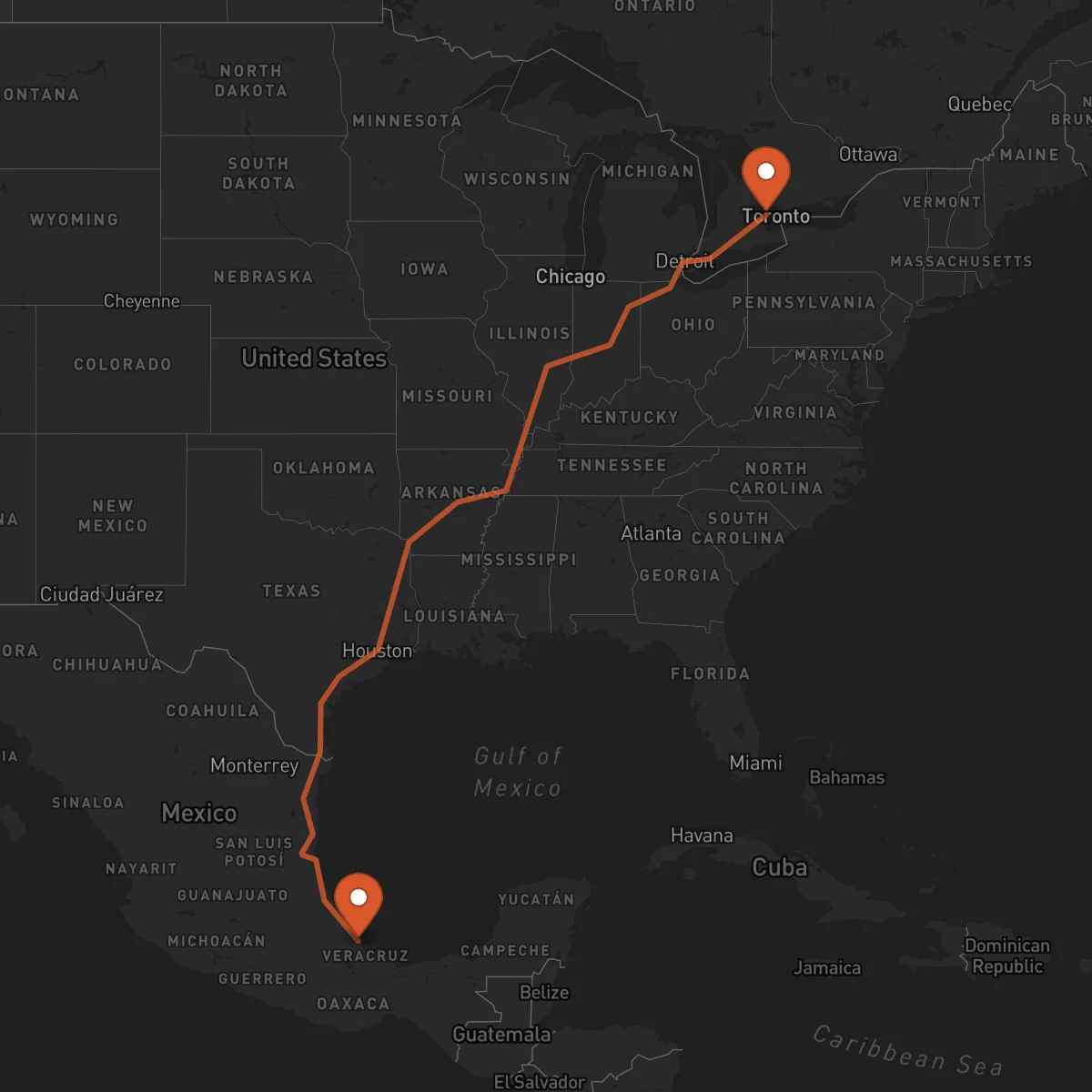
The logistics corridor between Veracruz, Veracruz, México and Brampton, Ontario, Canadá represents a vital cross-border freight transportation route connecting Mexico's Gulf coast with Canada's automotive and manufacturing hub. This 3,124 km corridor traverses three countries, linking Mexico's busiest port with one of Canada's most dynamic industrial centers.
The route's strategic importance stems from its role in facilitating international trade between North American manufacturing ecosystems. Veracruz serves as Mexico's primary gateway for imports and exports, while Brampton hosts major automotive assembly plants, technology companies, and distribution centers. This corridor enables seamless movement of automotive parts, electronics, consumer goods, and industrial equipment between these economic powerhouses.
Transportation infrastructure along this corridor includes Mexico's Federal Highway 190 and 180, connecting to U.S. Interstate 35 and Interstate 69C, then transitioning through Canadian highways 401 and 403. Key border crossings include Laredo/Nuevo Laredo and Detroit/Windsor, with customs procedures optimized for freight forwarders like Control Terrestre who understand the complexities of cross-border documentation and regulations.
Control Terrestre facilitates efficient operations on this corridor through our network of certified carriers, expertise in cross-border logistics, and comprehensive door-to-door services. Our team manages all customs clearance, ensures compliance with C-TPAT and FAST program requirements, and provides real-time tracking to guarantee your freight arrives safely and on schedule.
Services for this Route
Available services for the corridor Veracruz - Brampton
 Origin
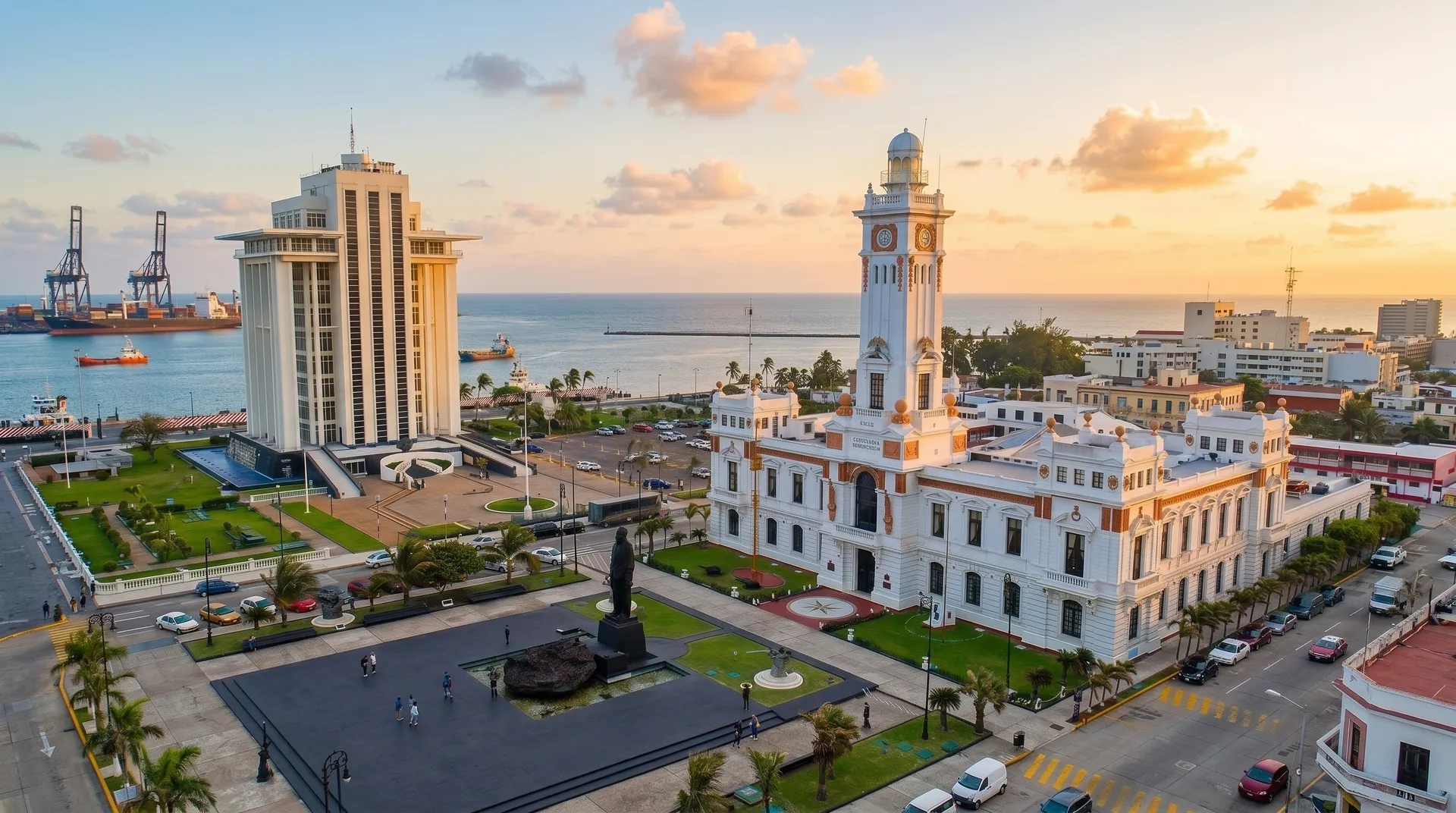
Veracruz stands as Mexico's principal maritime gateway and a strategic logistics hub on the Gulf of Mexico. The Port of Veracruz handles the highest cargo volume in the country, connecting Mexican manufacturers with global markets through its deep-water facilities and extensive rail connections. The city's infrastructure includes modern highways, intermodal terminals, and proximity to Mexico's central industrial corridor.
The region's economy thrives on petroleum refining, food processing, automotive manufacturing, and agricultural exports. Veracruz's strategic location provides access to Mexico's central states and serves as a critical entry point for imports destined for the interior of the country. The area's logistics infrastructure includes the Veracruz International Airport, extensive warehousing facilities, and specialized terminals for handling various cargo types, making it an ideal origin point for cross-border freight operations.
 Destination
Brampton, located in the Greater Toronto Area, serves as one of Canada's most important logistics and manufacturing centers. The city's strategic position provides immediate access to major highways including Highway 401, the busiest in North America, connecting to the U.S. border and eastern Canadian markets. Brampton's infrastructure features modern intermodal facilities, extensive warehousing districts, and proximity to Toronto Pearson International Airport.
The city hosts a diverse industrial base including automotive manufacturing, advanced technology, pharmaceuticals, and food processing. Major companies operate extensive distribution networks from Brampton, taking advantage of its proximity to the U.S. border and access to Canada's most populous markets. The region's robust logistics infrastructure supports just-in-time manufacturing and e-commerce fulfillment, making it a critical destination for cross-border freight from Mexico.










