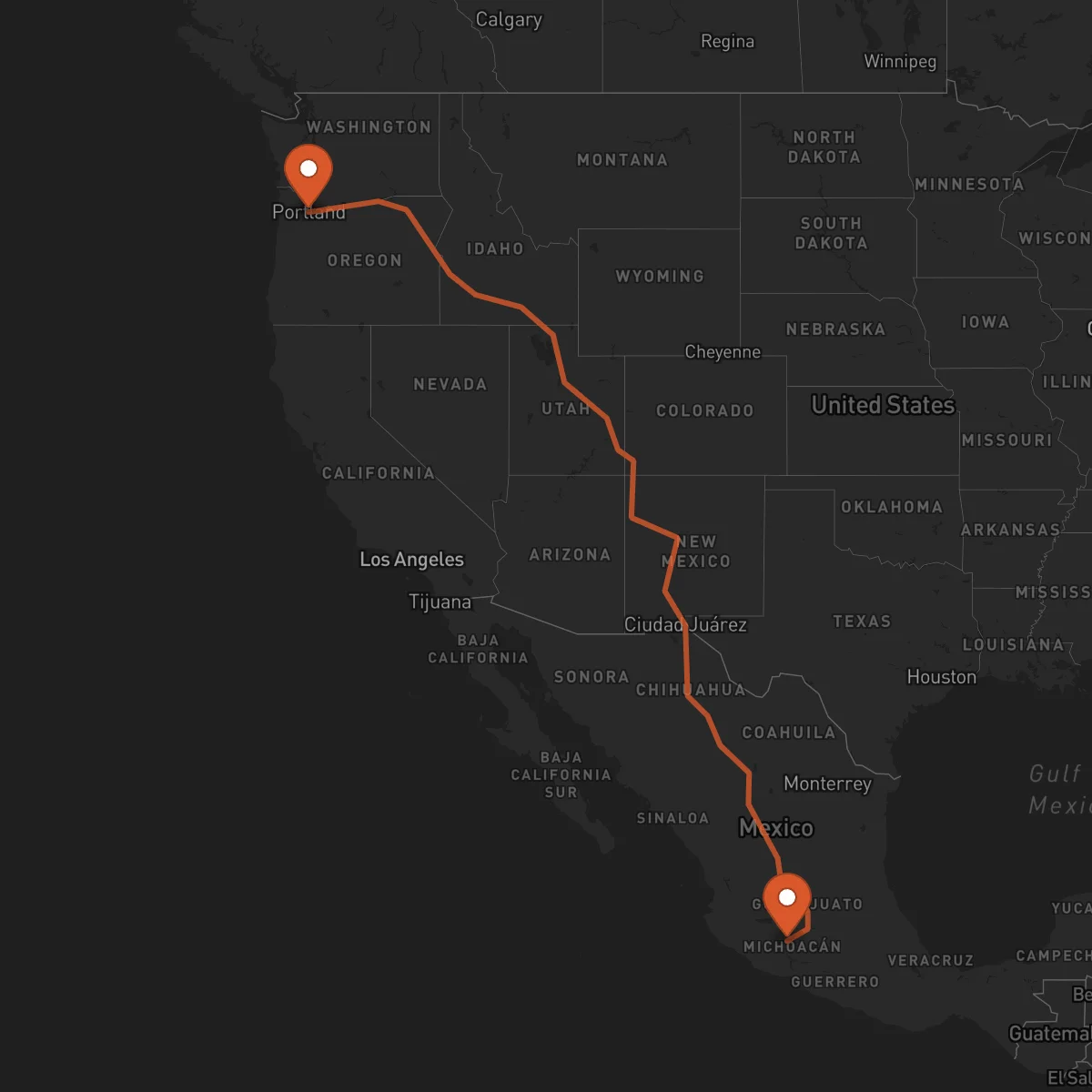
Uruapan to Portland
Portland → UruapanFTL freight transportation service between Uruapan and Portland. Reliable logistics solutions for your business.
Route Description
Everything you need to know about the corridor Uruapan - Portland
The logistics corridor connecting Uruapan, Michoacán with Portland, Oregon represents a vital trade route that spans approximately 3,467 kilometers across Mexico and the United States. This cross-border corridor facilitates the movement of goods between Mexico's agricultural heartland and one of the Pacific Northwest's most important commercial hubs. The route traverses diverse terrain and crosses multiple state lines, requiring expert coordination and knowledge of customs procedures at both borders.
The economic significance of this corridor lies in connecting Uruapan's robust agricultural and manufacturing sectors with Portland's thriving port, technology, and distribution industries. Uruapan serves as a key production center for avocados, berries, and processed foods, while Portland functions as a major gateway for international trade through the Port of Portland and a distribution center for the western United States. This complementary economic relationship drives consistent freight volumes along this north-south route.
Key industries utilizing this corridor include fresh produce and refrigerated goods from Michoacán's agricultural sector, automotive parts and manufacturing components, and consumer goods. The transportation infrastructure relies primarily on major highways including Mexican Federal Highway 15 and U.S. Interstate 5, with critical border crossings at either Tijuana/San Diego or Nogales for efficient cross-border movement. Control Terrestre provides specialized FTL services along this corridor, offering dedicated equipment, customs expertise, and real-time tracking to ensure seamless cross-border freight transportation between Uruapan and Portland.
Services for this Route
Available services for the corridor Uruapan - Portland
 Origin
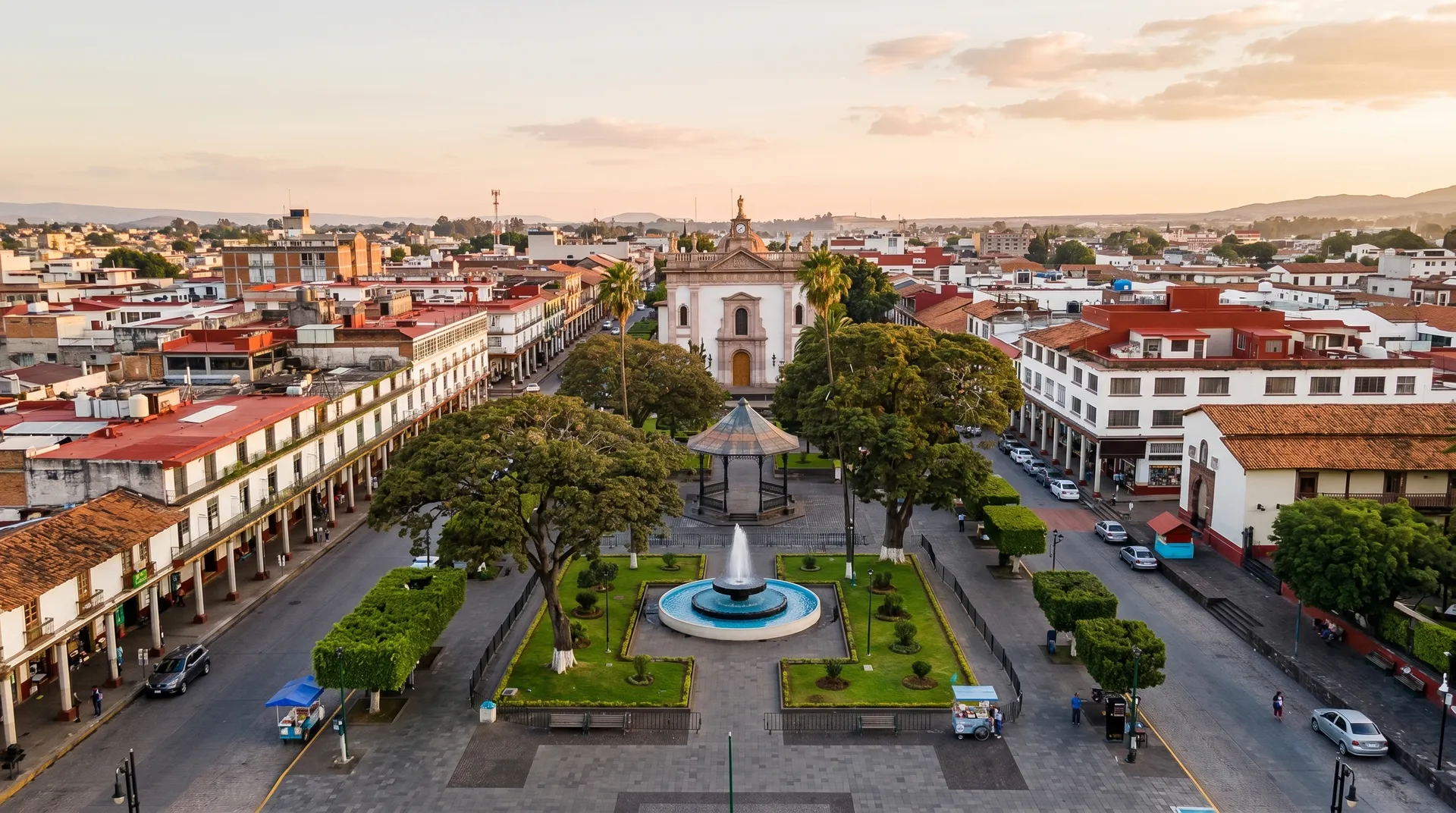
Uruapan, located in the heart of Michoacán, serves as a strategic logistics hub in central-western Mexico. The city's position provides excellent connectivity to major industrial centers and ports, making it an ideal origin point for cross-border freight. Uruapan benefits from its proximity to major transportation routes and its role as a commercial center for the surrounding agricultural region, facilitating efficient distribution of goods to both national and international markets.
The economic base of Uruapan centers on agriculture, particularly avocado production, which has positioned the region as Mexico's leading producer of this commodity. The city also hosts significant food processing industries, automotive parts manufacturing, and furniture production. These diverse industrial sectors create consistent demand for reliable freight transportation services, particularly for temperature-sensitive agricultural products and manufactured goods requiring specialized handling.
Transportation infrastructure in Uruapan includes access to Federal Highway 15, which connects to major north-south corridors, and proximity to the Port of Lázaro Cárdenas for maritime shipping. The city also has rail connections and is served by Uruapan International Airport for air cargo operations. This multimodal transportation network provides flexibility for freight forwarders to optimize shipping routes and delivery times for clients moving goods from Uruapan to destinations across North America.
 Destination
Portland
Portland, Oregon stands as a strategic logistics gateway on the U.S. West Coast, offering unparalleled access to both domestic and international markets. The city's location at the confluence of major rivers and its proximity to the Pacific Ocean make it an ideal destination for freight distribution. Portland's well-developed transportation infrastructure includes extensive highway networks, rail connections, and the Port of Portland, which provides direct access to Asian markets and beyond, making it a crucial node in North American supply chains.
The Portland metropolitan area hosts a diverse economic landscape dominated by technology, manufacturing, and distribution sectors. Major employers include Intel, which operates a large semiconductor facility nearby, and numerous tech startups that have established the region as a growing tech hub. The city is also home to a robust food and beverage industry, including craft breweries and artisanal food producers, as well as a significant healthcare and outdoor equipment manufacturing presence. These industries create consistent demand for specialized freight services, particularly for high-tech equipment and temperature-sensitive goods.
Portland's transportation infrastructure features excellent highway connectivity through Interstates 5 and 84, providing direct routes to major U.S. markets. The city's light rail and bus systems facilitate last-mile delivery within the metropolitan area. The Port of Portland, while having faced recent challenges, still maintains significant container and bulk cargo operations. Additionally, Portland International Airport offers air cargo services for time-sensitive shipments. This comprehensive transportation network enables efficient distribution of goods throughout the Pacific Northwest and beyond, making Portland an ideal destination for cross-border freight from Mexico.










