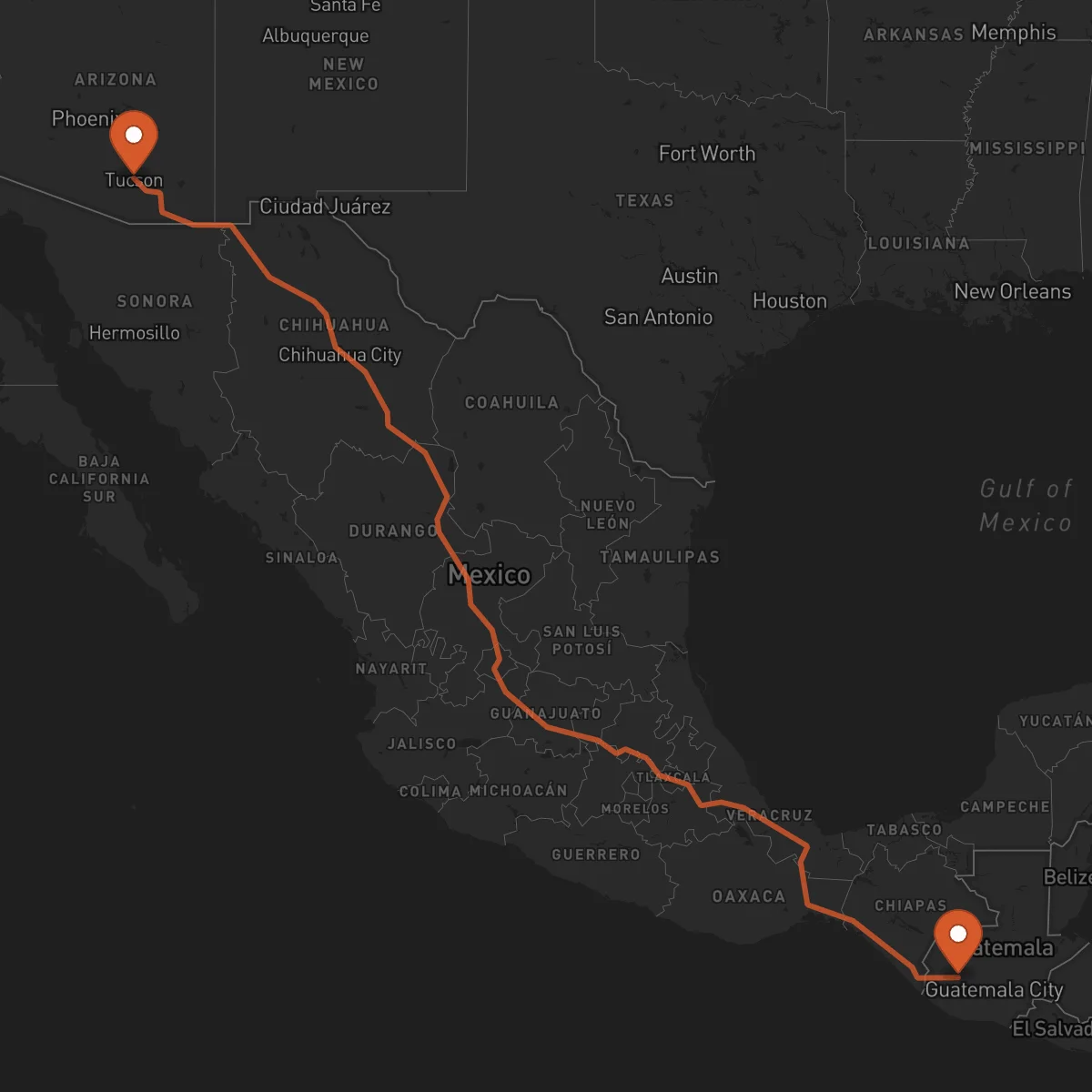
Tucson to Totonicapán
Totonicapán → TucsonFTL freight transportation service between Tucson and Totonicapán. Reliable logistics solutions for your business.
Route Description
Everything you need to know about the corridor Tucson - Totonicapán
The Tucson-Totonicapán logistics corridor represents a vital trade link between the United States and Guatemala, spanning approximately 2,767 kilometers across diverse terrain and multiple jurisdictions. This cross-border route connects Arizona's industrial hub with Guatemala's western highlands, facilitating the movement of goods between North and Central American markets. The corridor traverses key economic regions, passing through major transportation nodes in Mexico before crossing into Guatemala through its northern border.
This strategic route serves industries requiring reliable full truckload (FTL) transportation between the southwestern United States and Guatemala's interior regions. The corridor's economic significance is underscored by the complementary trade relationships between Arizona's manufacturing and distribution sectors and Guatemala's agricultural, textile, and artisanal industries. Companies utilizing this route benefit from the growing trade volume between the United States and Guatemala, particularly in automotive parts, electronics, consumer goods, and agricultural products.
Transportation along this corridor primarily utilizes Mexico's Federal Highway 15 and Highway 45, connecting with Guatemala's CA-1 and internal road networks. The route includes critical border crossings at Douglas/Agua Prieta and Ciudad Hidalgo/Suchiate, where C-TPAT-certified carriers like Control Terrestre ensure efficient customs clearance and compliance with cross-border regulations. Control Terrestre's expertise in managing this complex route includes navigating customs procedures, coordinating with trusted carriers, and providing end-to-end FTL solutions that maintain cargo integrity throughout the journey from Tucson's distribution centers to Totonicapán's industrial zones.
Services for this Route
Available services for the corridor Tucson - Totonicapán
 Origin
Tucson
Tucson, Arizona serves as a strategic logistics hub in the southwestern United States, positioned advantageously for cross-border freight operations. The city's location provides direct access to major transportation corridors connecting to Mexico and beyond, making it an ideal origin point for international freight movements. Tucson's economy is anchored by aerospace and defense industries, with significant presence of technology companies and distribution centers that require reliable transportation solutions. The city benefits from proximity to the Port of Tucson, a Foreign Trade Zone that facilitates efficient cargo handling and customs processing for international shipments.
The transportation infrastructure in Tucson includes Interstate 10, which provides direct connections to major markets in California and Texas, and Interstate 19, linking to Mexico via the Nogales border crossing. The city's freight facilities include multiple warehousing and distribution centers equipped to handle various cargo types, from standard palletized goods to specialized freight requiring specific handling conditions. Tucson International Airport and the Union Pacific Railroad further enhance the multimodal transportation capabilities available to shippers in the region.
 Destination
Totonicapán
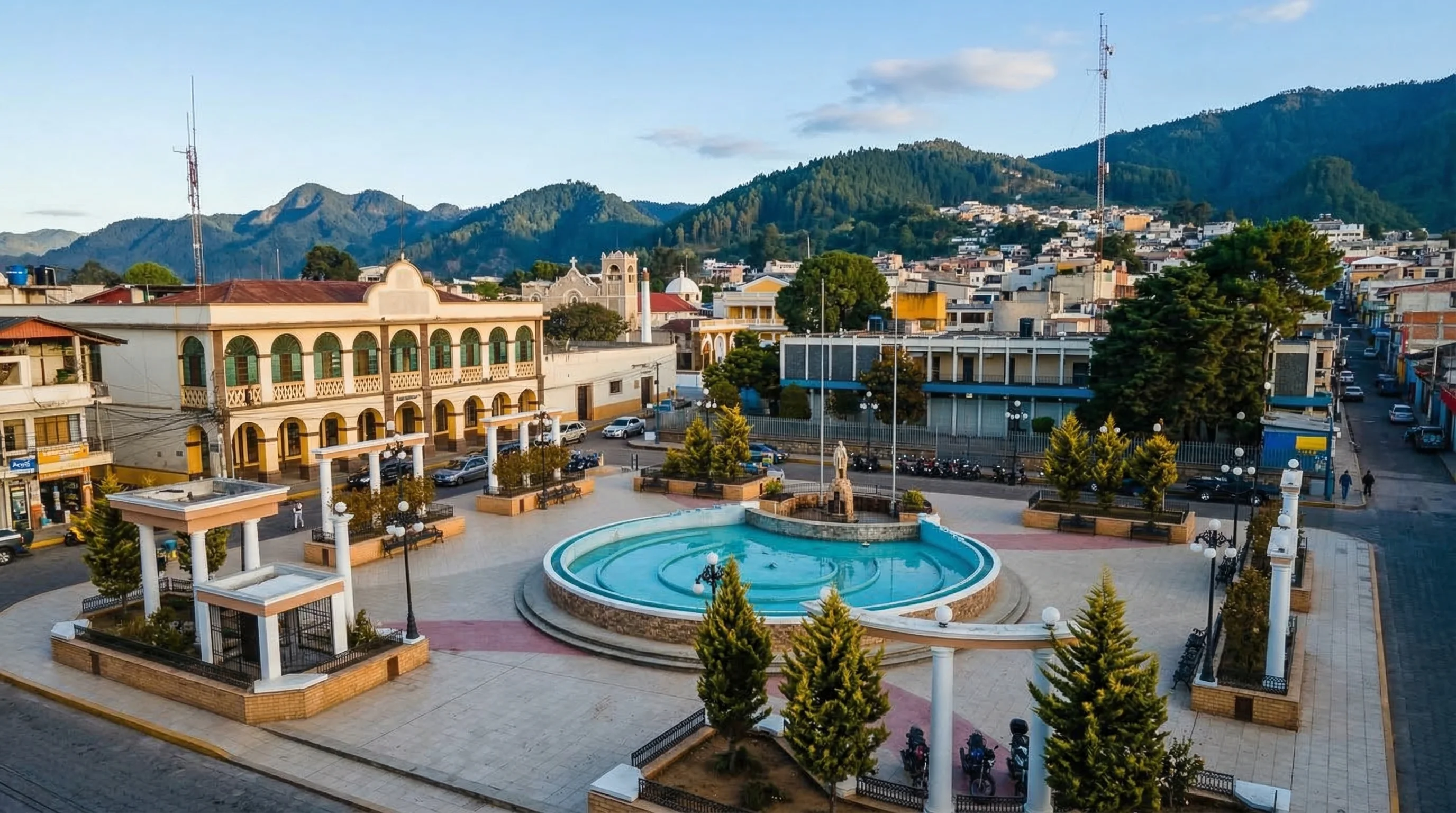
Totonicapán, located in Guatemala's western highlands, represents a strategic destination for freight transportation within Central America's supply chain network. The city serves as a commercial and industrial center for the surrounding region, with particular strength in textile manufacturing, traditional handicrafts, and agricultural product processing. Totonicapán's elevation and climate make it suitable for specific industries that benefit from these geographic conditions, while its central location within Guatemala provides access to both domestic and international markets.
The transportation infrastructure in Totonicapán connects to Guatemala's national highway system through CA-1, the Pan-American Highway, which links to the Mexican border and continues northward. The city's proximity to Quetzaltenango, Guatemala's second-largest city, provides additional logistics support through expanded warehousing and distribution capabilities. While Totonicapán itself is a smaller urban center, its strategic position in the western highlands makes it an important node for companies distributing goods throughout Guatemala's interior regions and for receiving imports from North American markets.










