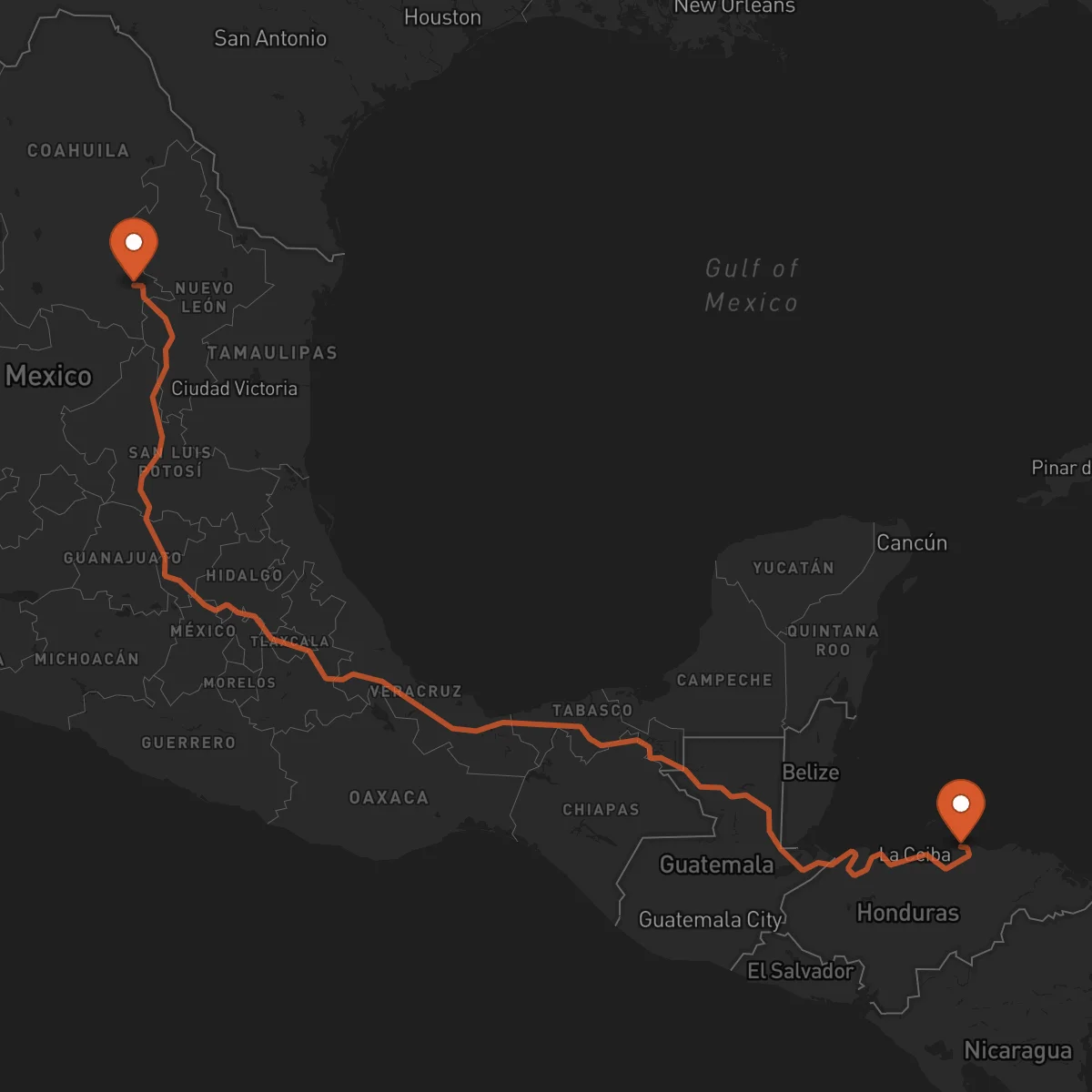
Trujillo to Saltillo
Saltillo → TrujilloFTL freight transportation service between Trujillo and Saltillo. Reliable logistics solutions for your business.
Route Description
Everything you need to know about the corridor Trujillo - Saltillo
The Trujillo, Honduras to Saltillo, Mexico corridor is a vital North American trade artery, connecting Central America's Atlantic gateway with one of Mexico's most significant industrial hubs. This approximately 1,885 km cross-border route facilitates the efficient movement of goods that are fundamental to both regional economies, underpinning supply chains that span from agricultural production to advanced manufacturing. Its strategic importance lies in its role as a direct link for Honduran exports entering the Mexican market and for Mexican manufactured goods accessing Central American ports, creating a seamless flow of commerce across the isthmus.
Economically, this corridor serves a dynamic region. Honduras leverages Trujillo's port for key exports including coffee, bananas, palm oil, and textiles, while also serving as an entry point for imported goods. Saltillo, in the Mexican state of Coahuila, is a powerhouse of industry, central to Mexico's automotive, aerospace, and heavy manufacturing sectors. The corridor therefore handles a diverse cargo profile, from raw agricultural materials and consumer goods to auto parts and specialized industrial equipment, requiring versatile and reliable transportation solutions.
The primary industries utilizing this route are agriculture and agribusiness from Honduras, and automotive manufacturing, aerospace components, and steel production in the Saltillo region. Companies in these sectors require consistent, scheduled, and secure transportation for high-volume or time-sensitive shipments. The main transportation infrastructure relies on a network of federal highways: from Trujillo, the CA-13 connects inland to San Pedro Sula and the Guatemalan border. In Mexico, the critical artery is Mexican Federal Highway 40, a major four-lane toll road that provides a direct and efficient link from the border near Nuevo Laredo/Colombia through Monterrey and directly to Saltillo.
Key border crossings for this corridor are typically the Colombia-Solidarity Bridge (Laredo, TX / Nuevo Laredo, Tamaulipas) or the Hidalgo-Rio Bravo Bridge (Hidalgo, TX / Reynosa, Tamaulipas), depending on the specific origin point in Honduras and the final destination within the Saltillo metro area. Navigating customs and compliance is a critical success factor. Control Terrestre facilitates seamless operations on this corridor through our exclusive focus on full truckload (FTL) services. We leverage our strategic alliance of providers, all equipped with essential certifications like C-TPAT, FAST, and BASC, to ensure accelerated border processing and enhanced security. Our dedicated and cross-border expertise means we manage the entire door-to-door journey, handling documentation and customs brokerage coordination to provide our clients with a single, reliable point of contact for their freight from origin to destination.
Services for this Route
Available services for the corridor Trujillo - Saltillo
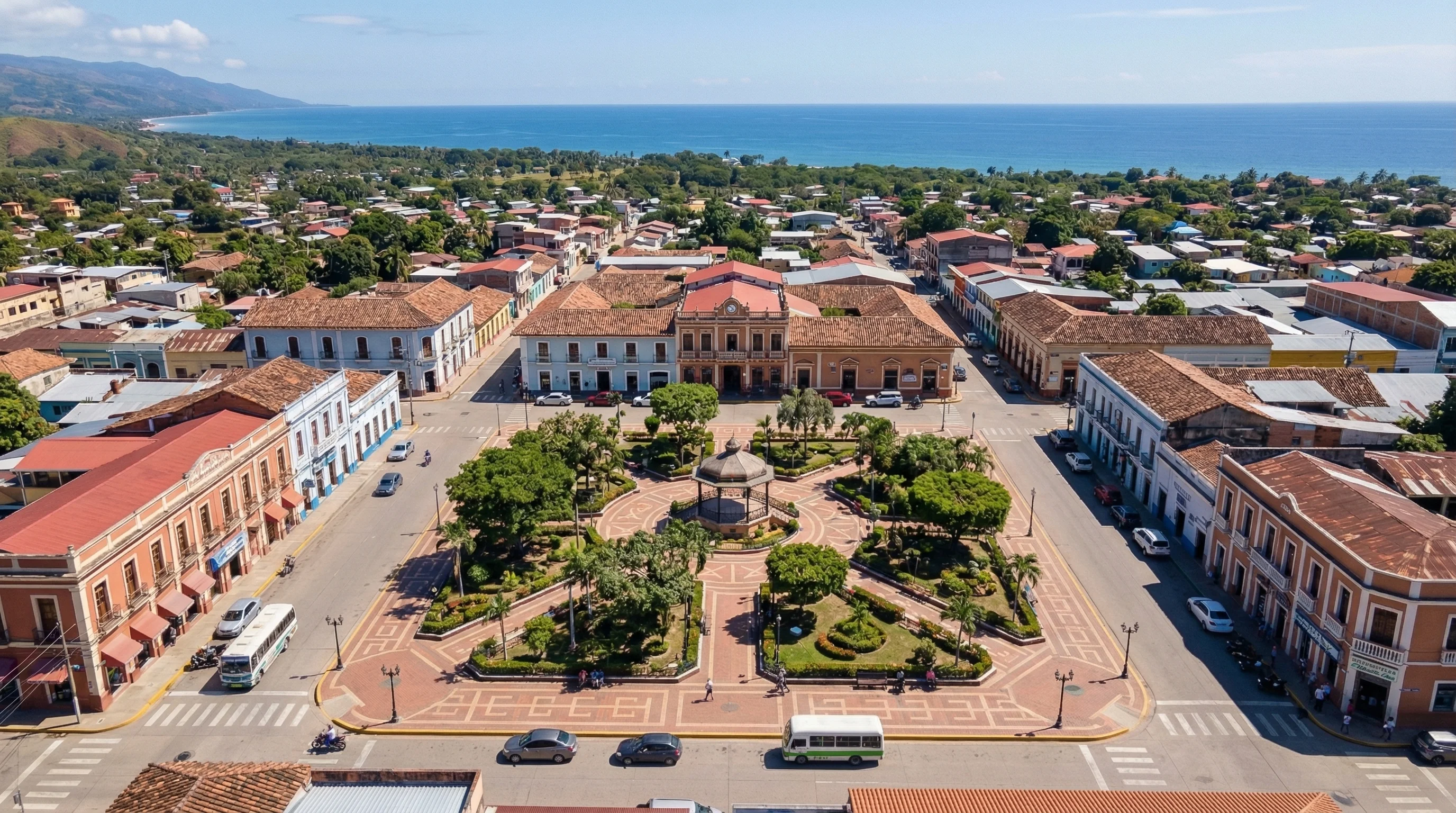 Origin
Trujillo, located on Honduras's northern Caribbean coast in the Colón department, serves as a critical strategic logistics node for Central America. Its primary advantage is the deep-water port of Puerto Cortés, one of the busiest in the region, which functions as a major maritime gateway for international trade. This port connectivity makes Trujillo a natural origin point for exports heading north and a distribution hub for imports entering Honduras and neighboring countries. The city's location provides direct highway access to the interior of Honduras and onward connections to Guatemala and El Salvador via the CA-13 and other major routes.
The local economy is historically tied to the port and its activities, with key industries including agriculture (bananas, palm oil, coffee), tourism, and light manufacturing. The surrounding region is a significant producer of tropical fruits and seafood, generating substantial freight volume for export. Additionally, the area supports textile manufacturing and other import-dependent industries. The available transportation infrastructure is centered on the port facilities, supported by the CA-13 highway that connects Trujillo to San Pedro Sula, Honduras's industrial capital, and ultimately to the Guatemalan border. This creates a vital overland link from the Caribbean coast to the broader Central American road network, making it a pivotal starting point for cross-border freight moving into Mexico.
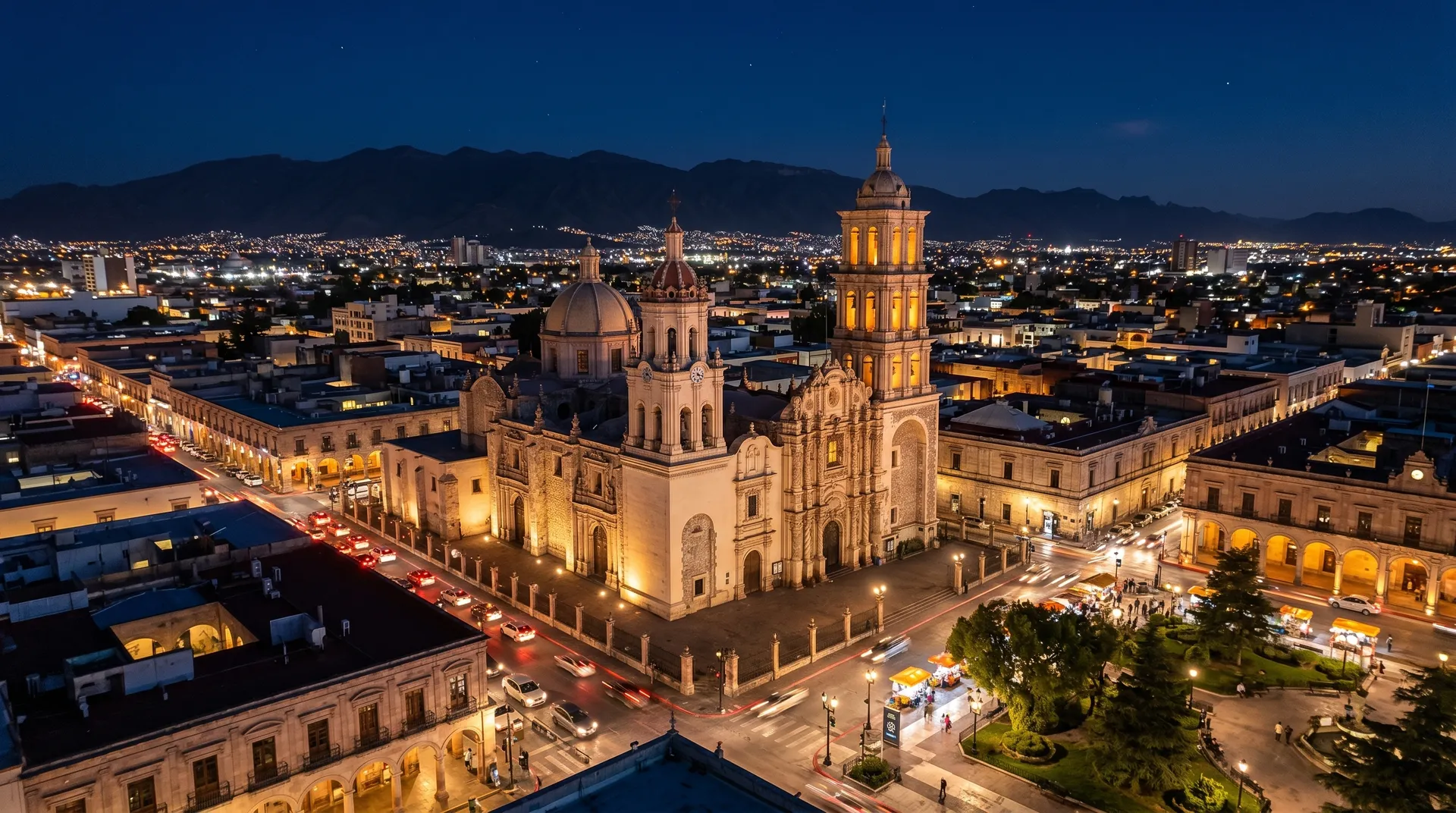 Destination
Saltillo, the capital of Coahuila state in northern Mexico, is a premier strategic logistics and industrial destination due to its central location within Mexico's manufacturing corridor and its proximity to the U.S. border. It sits at the crossroads of major Mexican federal highways, most notably Federal Highway 40, which provides a direct, high-capacity route to the key border crossings at Laredo and Monterrey. This positioning allows for efficient connectivity to the vast consumer and industrial markets of the United States and Canada, while also serving as a hub for domestic Mexican distribution. The city is also well-served by rail lines, adding intermodal capacity for bulk or containerized shipments.
Saltillo's economy is dominated by advanced manufacturing, making it one of Mexico's most important industrial cities. It is a global center for automotive production, hosting major assembly plants for Stellantis (formerly Fiat Chrysler) and General Motors, along with a dense ecosystem of Tier 1, 2, and 3 automotive parts suppliers. The region is also a significant player in aerospace manufacturing, steel production, and appliances. These industries generate high, consistent demand for full truckload (FTL) services to move components, finished vehicles, and raw materials. The robust local infrastructure, including industrial parks with direct highway access, specialized equipment for oversized auto parts, and a skilled workforce, solidifies Saltillo's role as a vital endpoint for sophisticated supply chain operations.










