Trenton to Veracruz
Veracruz → TrentonFTL freight transportation service between Trenton and Veracruz. Reliable logistics solutions for your business.
Route Description
Everything you need to know about the corridor Trenton - Veracruz
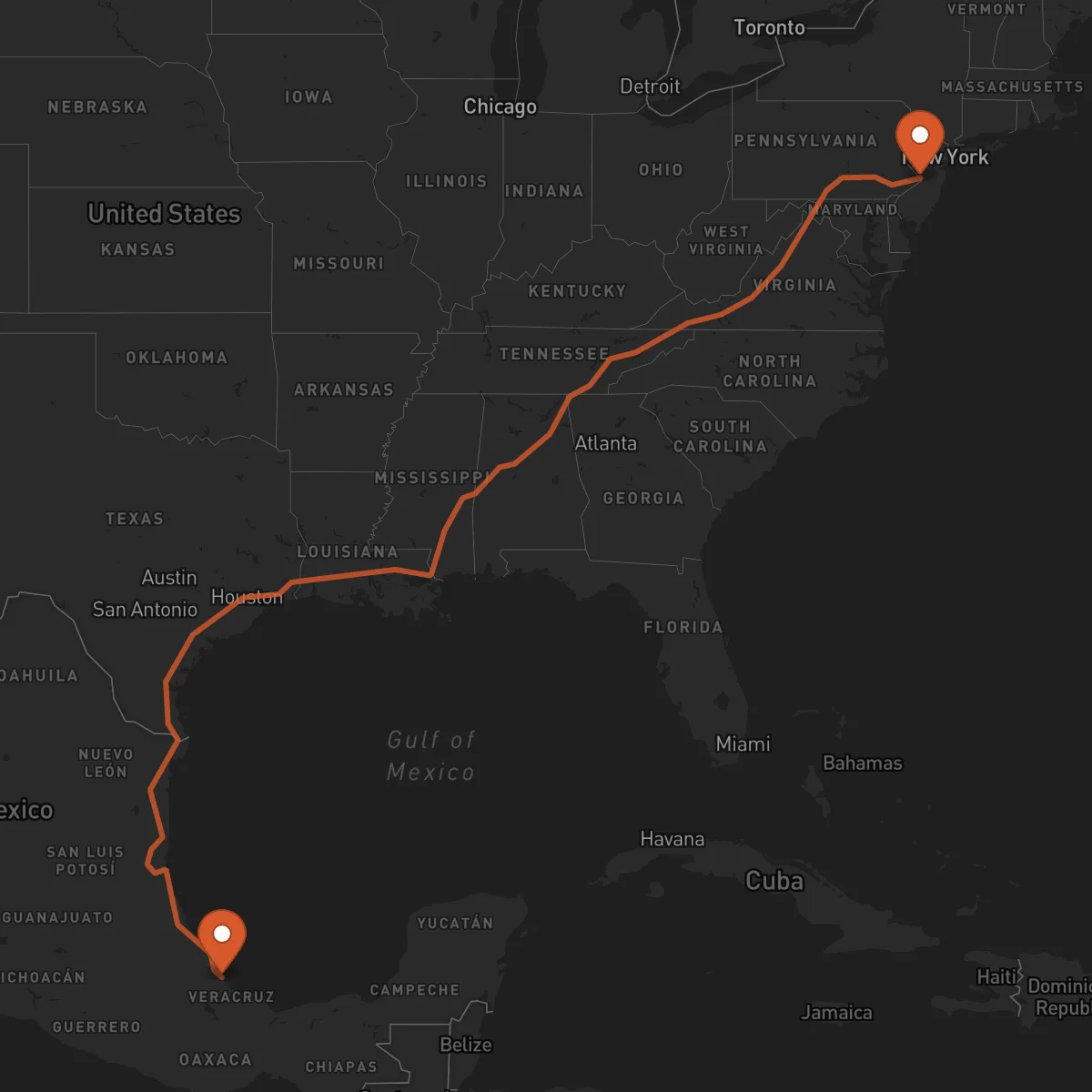
The Trenton-Veracruz corridor represents a vital logistics connection between the northeastern United States and Mexico's strategic Gulf port. This 3,103 km cross-border route facilitates the movement of goods from New Jersey's industrial hubs to Veracruz, Mexico's primary Gulf port and a key gateway for international trade. The corridor serves as a critical link in North American supply chains, connecting manufacturing centers in the northeast with Mexico's export-oriented industries and global maritime shipping routes.
The route traverses diverse economic regions, from Trenton's proximity to major metropolitan areas like New York and Philadelphia to Veracruz's position as a cornerstone of Mexico's Gulf economy. This corridor supports industries including automotive manufacturing, electronics, consumer goods, and agricultural products. The journey crosses through major industrial centers in both countries, enabling efficient distribution of goods across North America.
Transportation infrastructure along this corridor includes major interstate highways in the United States (I-95, I-40) connecting to Mexico's Federal Highway 180 and other key routes. The primary border crossing at Laredo/Nuevo Laredo facilitates the majority of cross-border freight traffic, with alternative crossings available at other points. Control Terrestre provides comprehensive logistics solutions for this corridor, including cross-border coordination, customs clearance expertise, and specialized transportation services for various cargo types, ensuring reliable delivery from origin to destination.
Services for this Route
Available services for the corridor Trenton - Veracruz
 Origin
Trenton
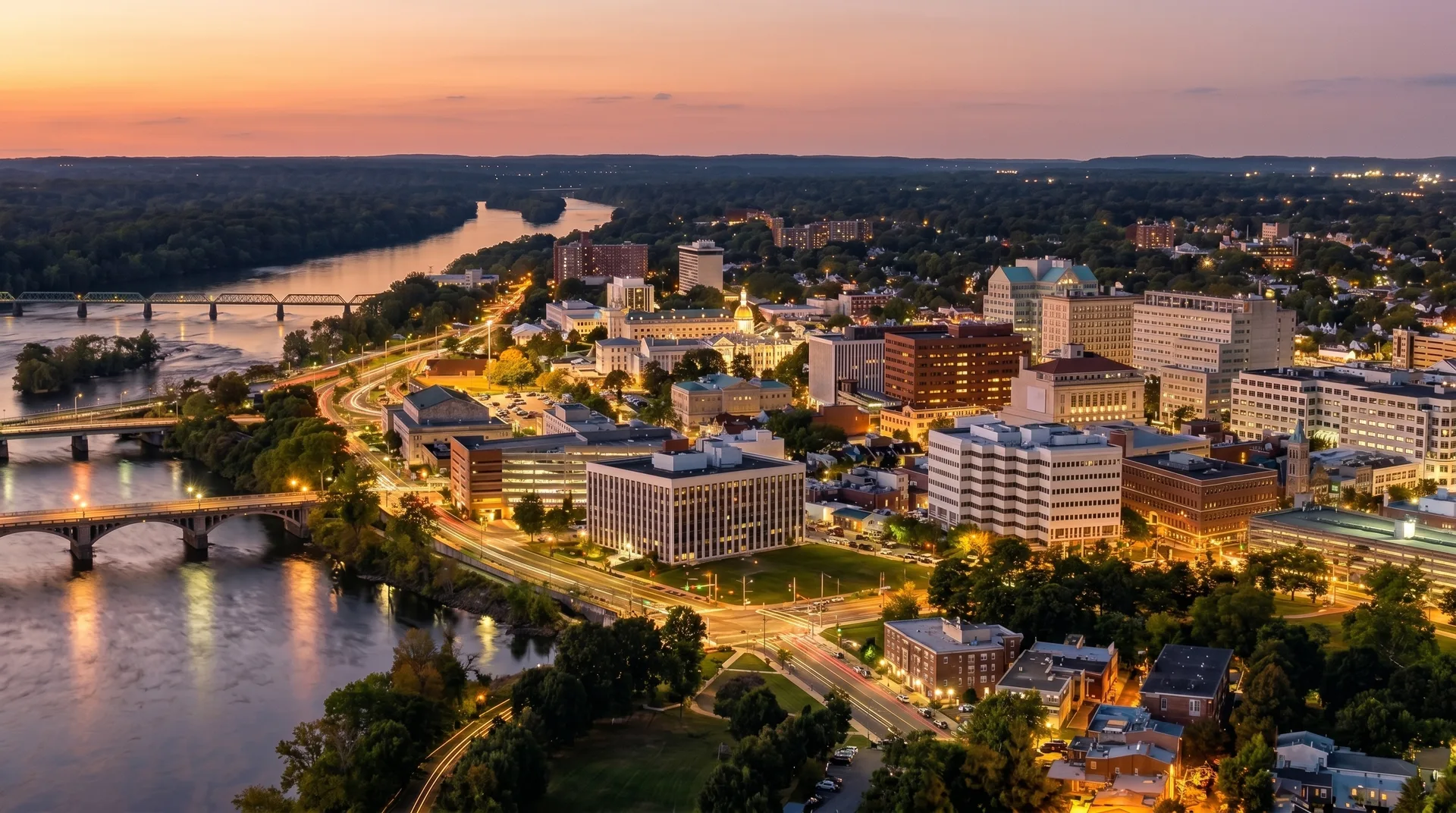
Trenton, New Jersey serves as a strategic logistics hub in the northeastern United States, positioned advantageously near major metropolitan areas including New York, Philadelphia, and Baltimore. The city benefits from excellent transportation infrastructure, including proximity to major interstate highways (I-95, I-295), rail connections, and access to the Port of New York and New Jersey. Trenton's location within the Northeast megalopolis provides immediate access to one of North America's most densely populated and economically active regions.
The region's economy is diverse, with strong presence in manufacturing, pharmaceuticals, telecommunications, and professional services. Trenton and surrounding areas host numerous distribution centers and warehouses serving the tri-state area. The city's industrial heritage continues with modern manufacturing facilities and a robust logistics sector. Available transportation infrastructure includes multiple interstate connections, regional airports, and extensive warehousing facilities, making Trenton an ideal origin point for cross-border freight movements.
 Destination
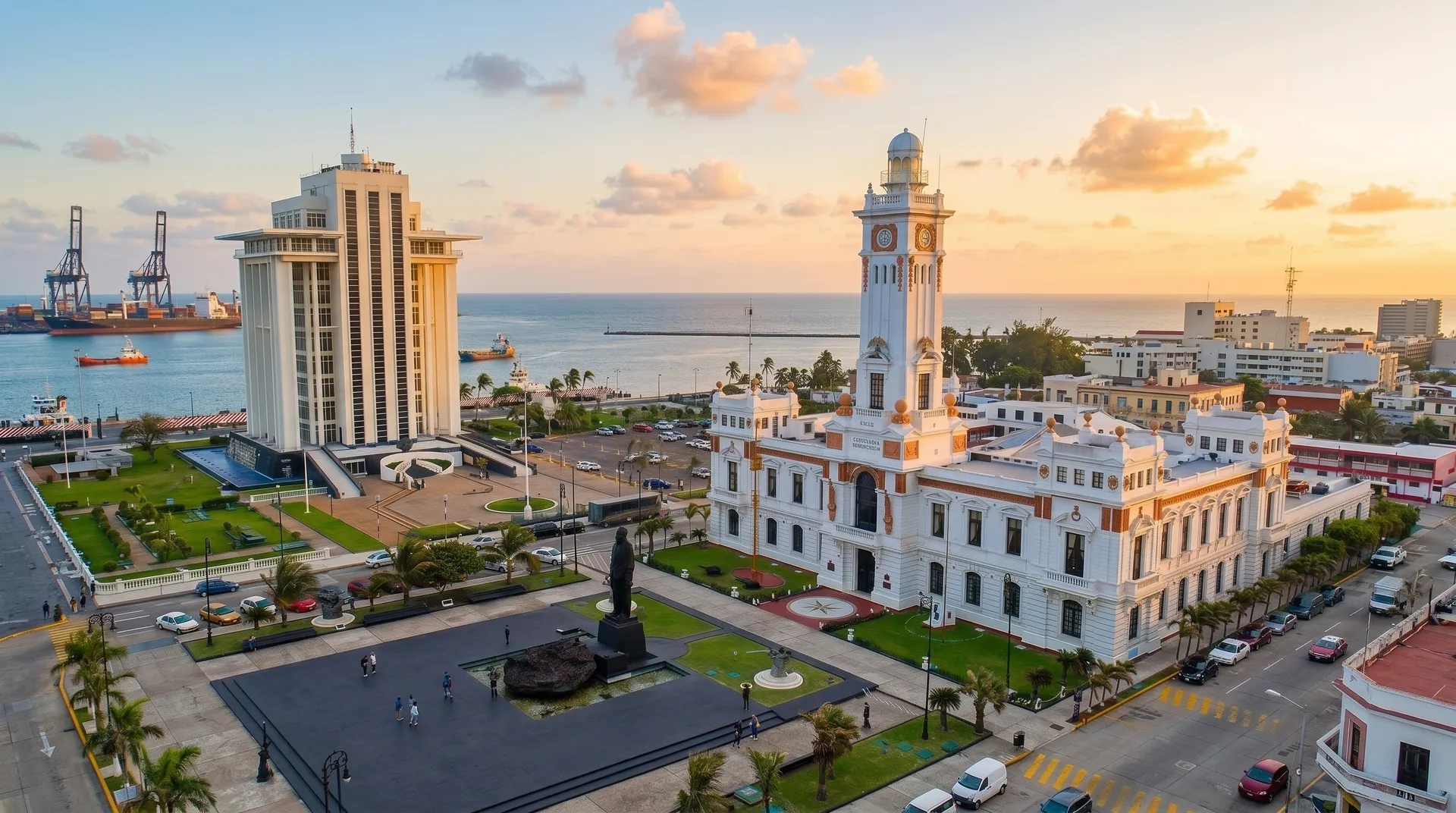
Veracruz, Mexico stands as one of the country's most important port cities and a strategic gateway to Latin American markets. Located on the Gulf of Mexico, Veracruz hosts Mexico's largest and busiest port, handling a significant portion of the country's maritime cargo. The city's strategic position provides direct access to major shipping routes connecting North America with Europe, South America, and global markets. Veracruz serves as a critical node in Mexico's logistics network, with extensive highway connections to the interior of the country and the United States.
The region's economy is anchored by port activities, oil and gas industries, and agricultural exports. Veracruz is a major center for Mexico's petroleum industry, with significant refinery operations and related logistics infrastructure. The surrounding region produces tropical fruits, coffee, and other agricultural products that move through the port. Available transportation infrastructure includes the Port of Veracruz, Federal Highway 180 connecting to the U.S. border, rail connections to Mexico City and other major cities, and a network of regional roads supporting industrial and commercial activities.










