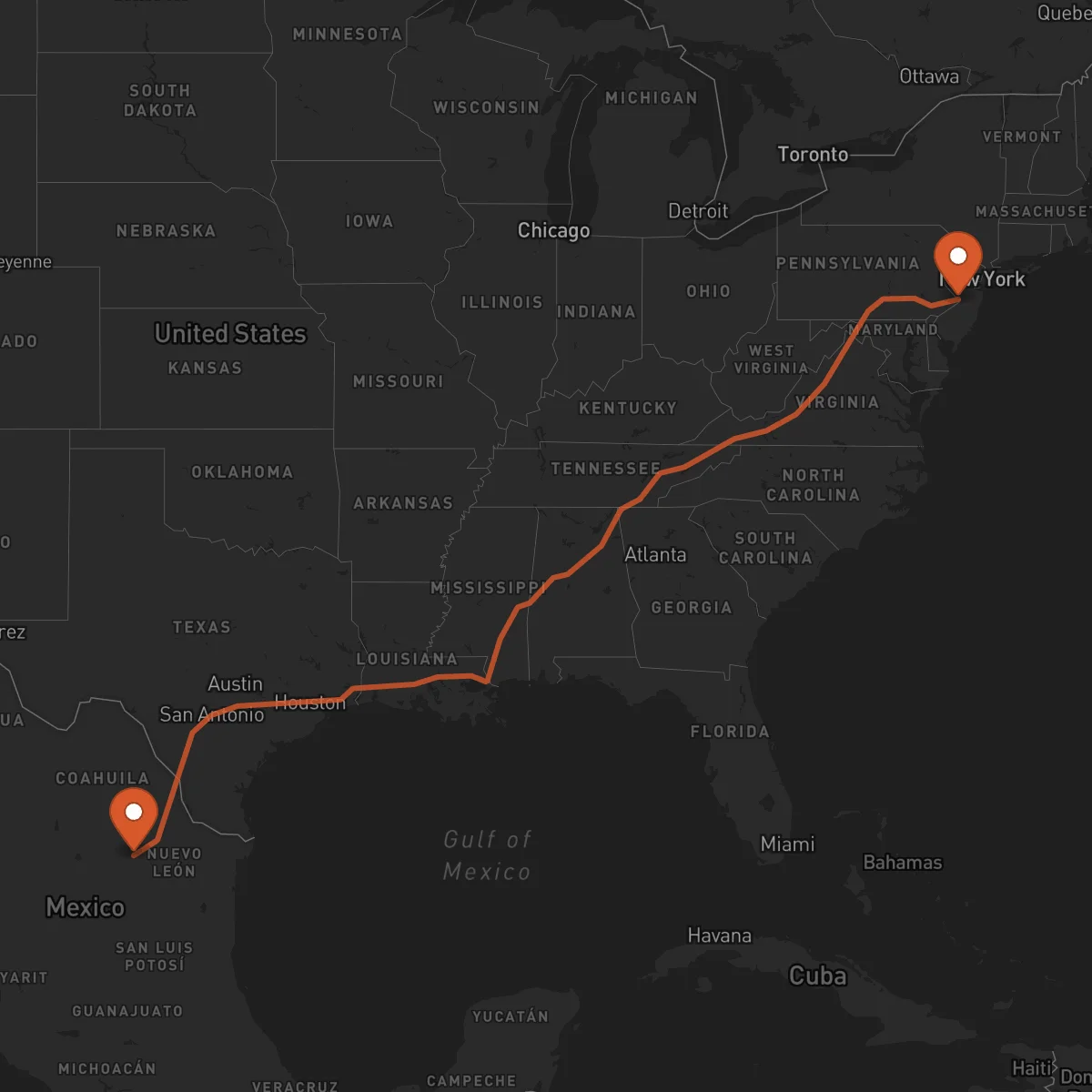
Trenton to Saltillo
Saltillo → TrentonFTL freight transportation service between Trenton and Saltillo. Reliable logistics solutions for your business.
Route Description
Everything you need to know about the corridor Trenton - Saltillo
The logistics corridor connecting Trenton, New Jersey to Saltillo, Coahuila represents a vital trade link between the northeastern United States and northern Mexico. This cross-border route spans approximately 2,931 kilometers, facilitating the movement of goods between two major industrial regions. The corridor serves as a critical artery for North American supply chains, connecting the manufacturing and distribution hubs of the US Northeast with Mexico's growing industrial centers.
The economic significance of this corridor is substantial, linking Trenton's proximity to major East Coast ports and distribution networks with Saltillo's position as a key manufacturing center in Mexico's automotive and aerospace industries. This route enables companies to optimize their supply chains by leveraging the manufacturing capabilities in Mexico while maintaining connections to US markets and suppliers. The corridor particularly benefits industries requiring just-in-time delivery and complex supply chain coordination.
Transportation along this corridor primarily utilizes major interstate highways including I-95, I-40, and Mexican Federal Highways 85 and 57. Key border crossings at Laredo/Nuevo Laredo or El Paso/Juárez provide efficient customs processing for cross-border freight. Control Terrestre facilitates seamless operations on this corridor through our network of certified transportation providers, offering expertise in cross-border documentation, customs compliance, and temperature-controlled transport when needed. Our experience with this specific route ensures reliable transit times and professional handling of all freight types, from automotive components to general manufacturing materials.
Services for this Route
Available services for the corridor Trenton - Saltillo
 Origin
Trenton
Trenton, New Jersey serves as a strategic logistics hub due to its location in the northeastern United States, positioned between major metropolitan areas like New York City and Philadelphia. The city benefits from excellent transportation infrastructure, including proximity to major interstate highways (I-95, I-295), rail connections via Conrail, and access to Port Newark and other East Coast ports within a few hours' drive. Trenton's location provides efficient access to one of the most densely populated and economically active regions in North America.
The region's economy encompasses diverse industries including pharmaceuticals, advanced manufacturing, and food processing. Trenton itself has a strong presence in printing and publishing, while the surrounding area hosts numerous corporate headquarters and distribution centers. The city's industrial heritage and ongoing economic development make it an ideal origin point for freight moving in multiple directions, including cross-border shipments to Mexico and other international destinations.
 Destination
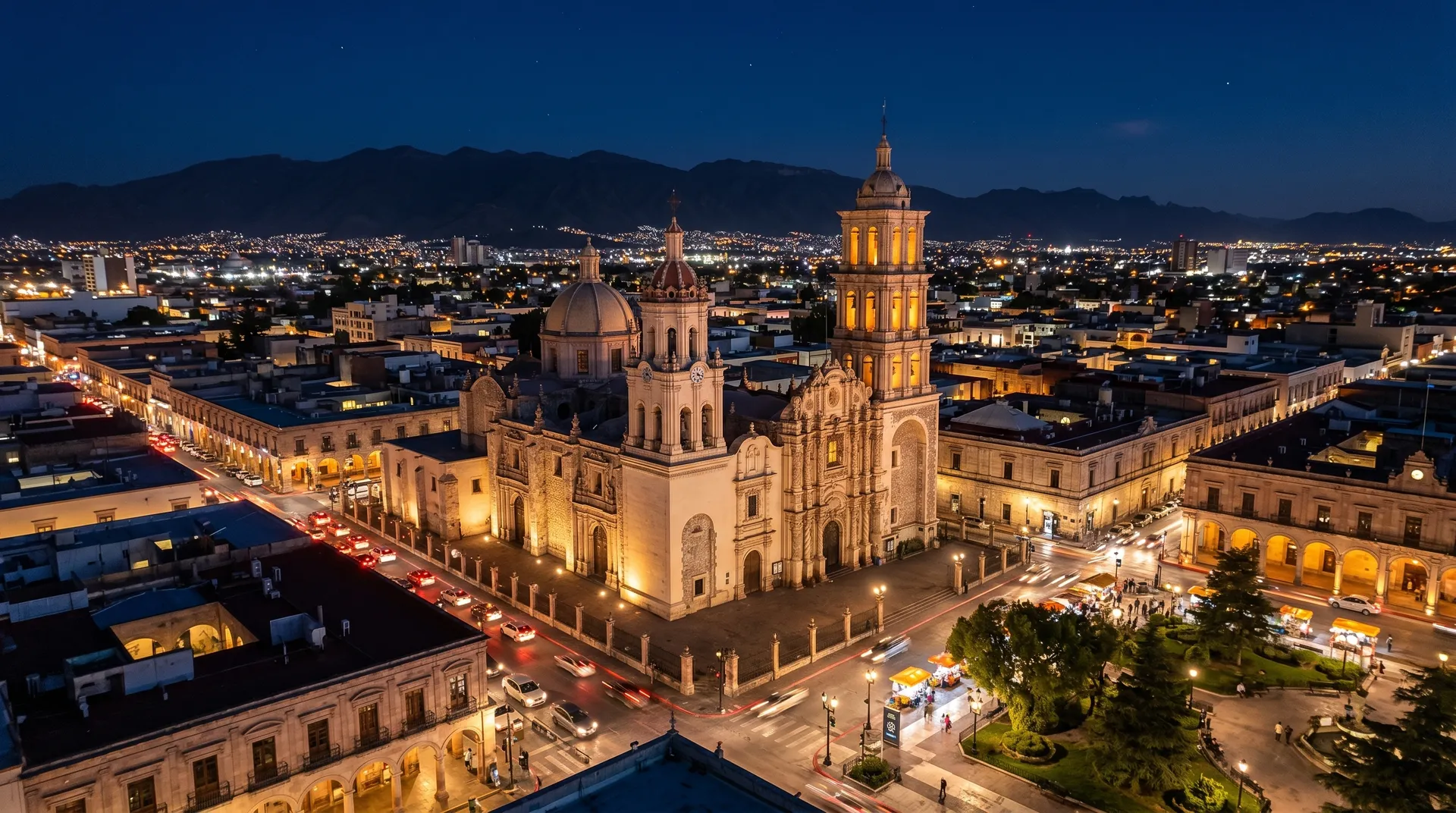
Saltillo, Coahuila stands as a strategic logistics center in northern Mexico, serving as the capital of Coahuila and a major industrial hub. The city's location provides excellent connectivity through Mexican Federal Highway 40, which links it to major border crossings and ports. Saltillo's elevation and climate make it an ideal location for manufacturing, while its proximity to the US border facilitates efficient cross-border trade operations.
The city has developed into a significant manufacturing center, particularly in the automotive industry, hosting facilities for major manufacturers like General Motors and Chrysler. Saltillo's economy also encompasses aerospace manufacturing, iron and steel production, and various industrial supply chains. The presence of these industries creates substantial freight movement both into and out of the city, making it a key destination for cross-border logistics operations. The city's industrial parks and manufacturing facilities are supported by modern logistics infrastructure, including warehouses and distribution centers designed to handle international freight efficiently.










