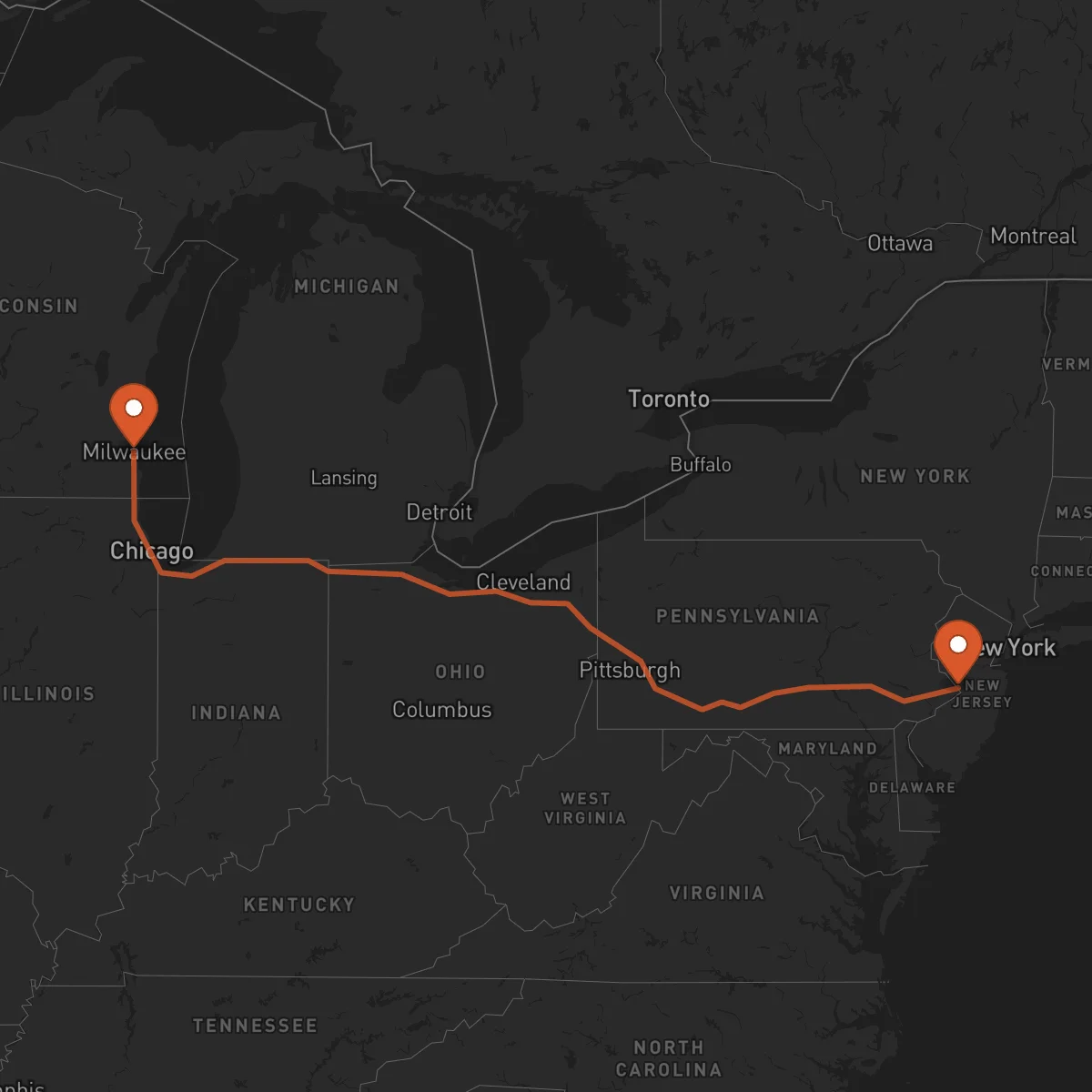
Trenton to Milwaukee
Milwaukee → TrentonFTL freight transportation service between Trenton and Milwaukee. Reliable logistics solutions for your business.
Route Description
Everything you need to know about the corridor Trenton - Milwaukee
The Trenton to Milwaukee corridor represents a vital freight transportation link connecting the industrial Northeast with the Great Lakes manufacturing hub. This 1,135 km domestic route traverses key economic regions of the United States, facilitating the movement of goods between New Jersey's strategic port access and Wisconsin's manufacturing centers. The corridor serves as a critical supply chain artery for companies operating across the Northeast-Midwest axis, supporting just-in-time delivery systems and inventory management strategies.
The economic significance of this corridor extends beyond its geographic span. Trenton, situated near major East Coast ports and distribution centers, provides seamless connectivity to international trade networks. Meanwhile, Milwaukee anchors the corridor with its strong manufacturing base, particularly in machinery, metal fabrication, and food processing industries. This complementary economic relationship drives consistent freight volume along the route, with manufacturers, distributors, and retailers relying on efficient transportation to maintain competitive operations.
Control Terrestre optimizes freight movements along this corridor through our network of certified transportation providers. Our dedicated full truckload services ensure that shipments move directly from origin to destination without intermediate stops, reducing transit risks and maintaining cargo integrity. We leverage our providers' C-TPAT certification and advanced tracking capabilities to deliver reliable, secure transportation solutions that meet the demanding requirements of industries operating between Trenton and Milwaukee.
Services for this Route
Available services for the corridor Trenton - Milwaukee
 Origin
Trenton
Trenton, New Jersey serves as a strategic gateway for freight transportation on the East Coast. Located at the crossroads of major transportation networks, Trenton provides immediate access to Interstate 95, connecting shippers to the Northeast corridor and beyond. The city's proximity to the Port of New York and New Jersey, along with its position near Philadelphia, creates a multimodal logistics hub that facilitates efficient cargo movement. Trenton's industrial heritage continues today with strong presence in manufacturing, healthcare, and government services, generating consistent freight demand for regional and national distribution.
The transportation infrastructure supporting Trenton includes extensive highway networks, rail connections, and proximity to major airports. Companies benefit from the area's dense network of warehousing and distribution centers, which provide staging points for goods destined for Midwest markets. The region's robust logistics ecosystem, combined with its skilled workforce and business-friendly environment, makes Trenton an ideal origin point for freight shipments heading west toward Milwaukee and other Great Lakes destinations.
 Destination
Milwaukee
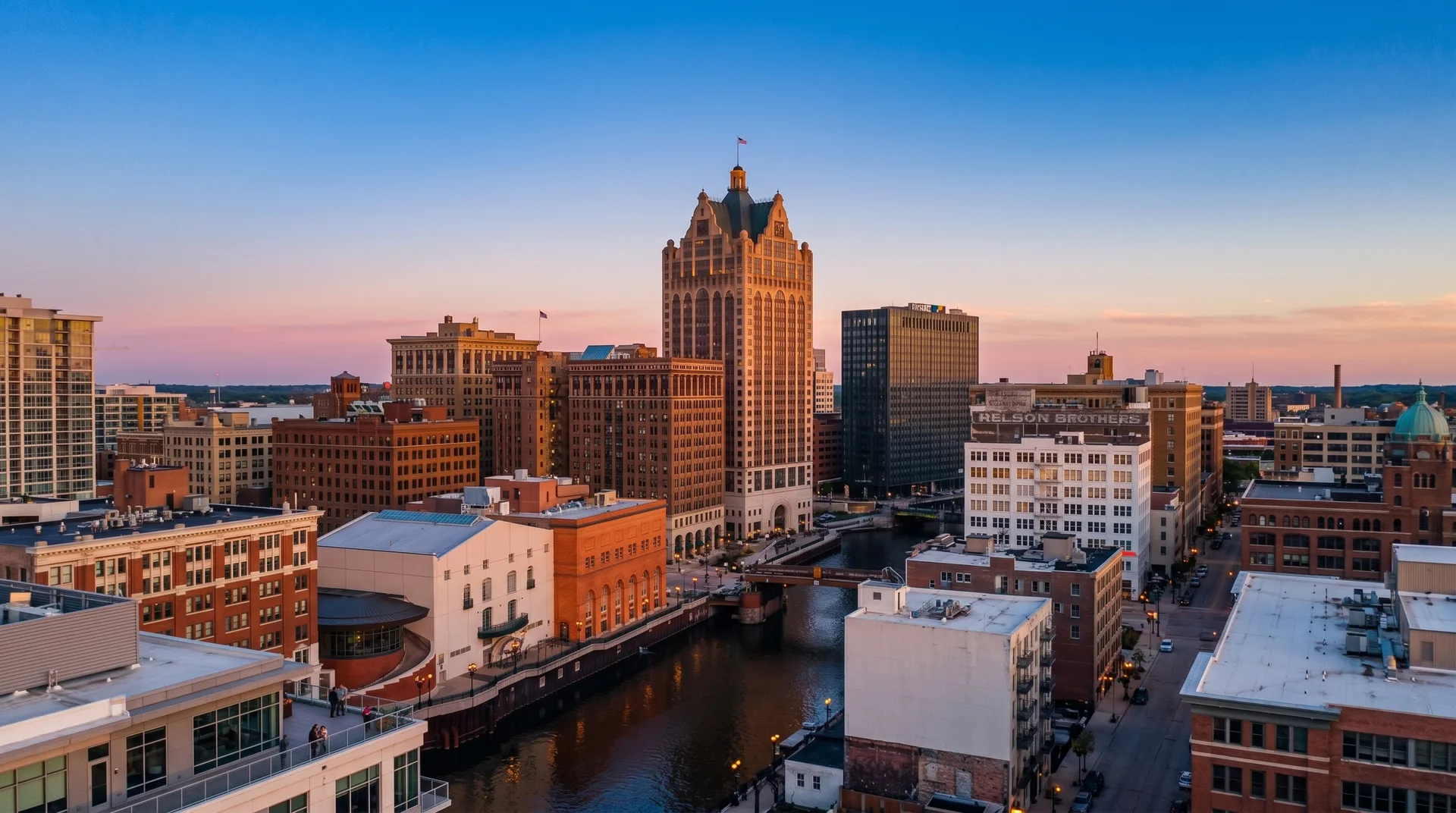
Milwaukee, Wisconsin stands as a crucial logistics hub in the Upper Midwest, offering strategic access to the Great Lakes and extensive rail networks. The city's location on Lake Michigan provides water transportation options, while its position at the intersection of major highways (I-94, I-43, I-894) ensures efficient ground transportation connectivity. Milwaukee's industrial base, particularly strong in manufacturing, brewing, and food processing, creates substantial freight generation that supports a vibrant logistics sector. The city's central location within a day's drive of major Midwest markets makes it an ideal distribution center for regional operations.
The transportation infrastructure in Milwaukee includes the General Mitchell International Airport, extensive rail yards operated by major carriers, and a network of modern warehousing facilities. The city's commitment to logistics development is evident in its intermodal facilities and cold storage capabilities, which support diverse cargo types. Milwaukee's skilled workforce, particularly in manufacturing and logistics, ensures that freight operations run smoothly, while the city's business environment continues to attract companies seeking reliable distribution points for their Midwest and national operations.










