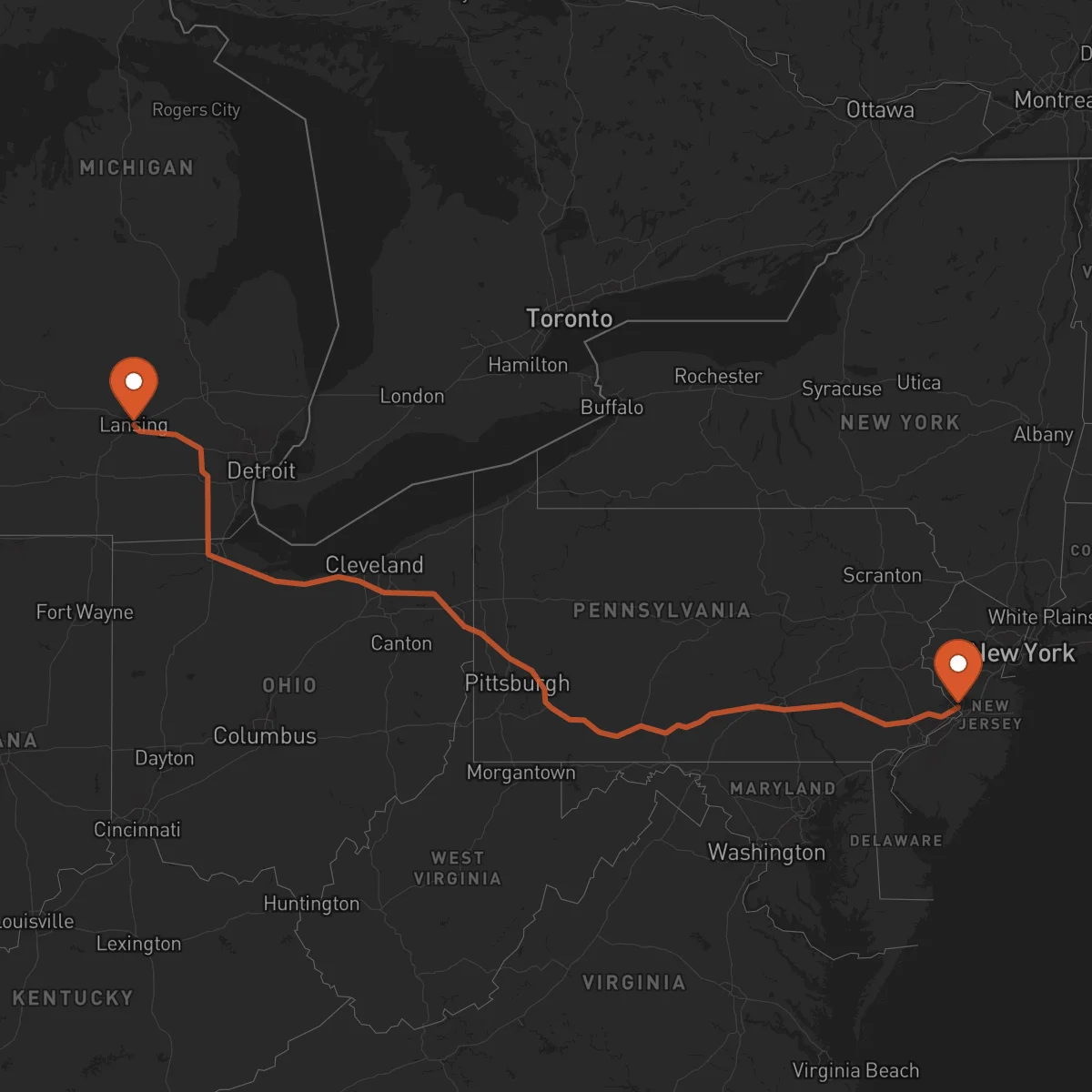
Trenton to Lansing
Lansing → TrentonFTL freight transportation service between Trenton and Lansing. Reliable logistics solutions for your business.
Route Description
Everything you need to know about the corridor Trenton - Lansing
The Trenton to Lansing corridor represents a vital freight transportation link connecting the Northeast with the Midwest. This 862 km domestic route traverses key industrial regions of the United States, facilitating the movement of goods between New Jersey's manufacturing and logistics hubs and Michigan's automotive and technology centers. The corridor strategically bridges the economic powerhouses of the Northeast with the industrial heartland of America, making it essential for supply chain operations across multiple sectors.
The route passes through major economic regions including Pennsylvania's manufacturing belt and Ohio's logistics corridors before reaching Michigan's automotive valley. This northwesterly path connects businesses in the densely populated Northeast with the industrial Midwest, supporting the continuous flow of raw materials, components, and finished goods that drive American manufacturing and commerce. The corridor serves as a critical artery for companies operating across these interconnected industrial ecosystems.
Control Terrestre provides specialized full truckload (FTL) services along this corridor, leveraging our network of certified carriers to ensure reliable, efficient transportation. Our dedicated services are designed to meet the specific needs of businesses moving freight between Trenton and Lansing, offering consistent transit times, professional handling, and real-time tracking capabilities. We understand the unique requirements of this route and provide solutions that support the just-in-time delivery needs of modern supply chains.
Services for this Route
Available services for the corridor Trenton - Lansing
 Origin
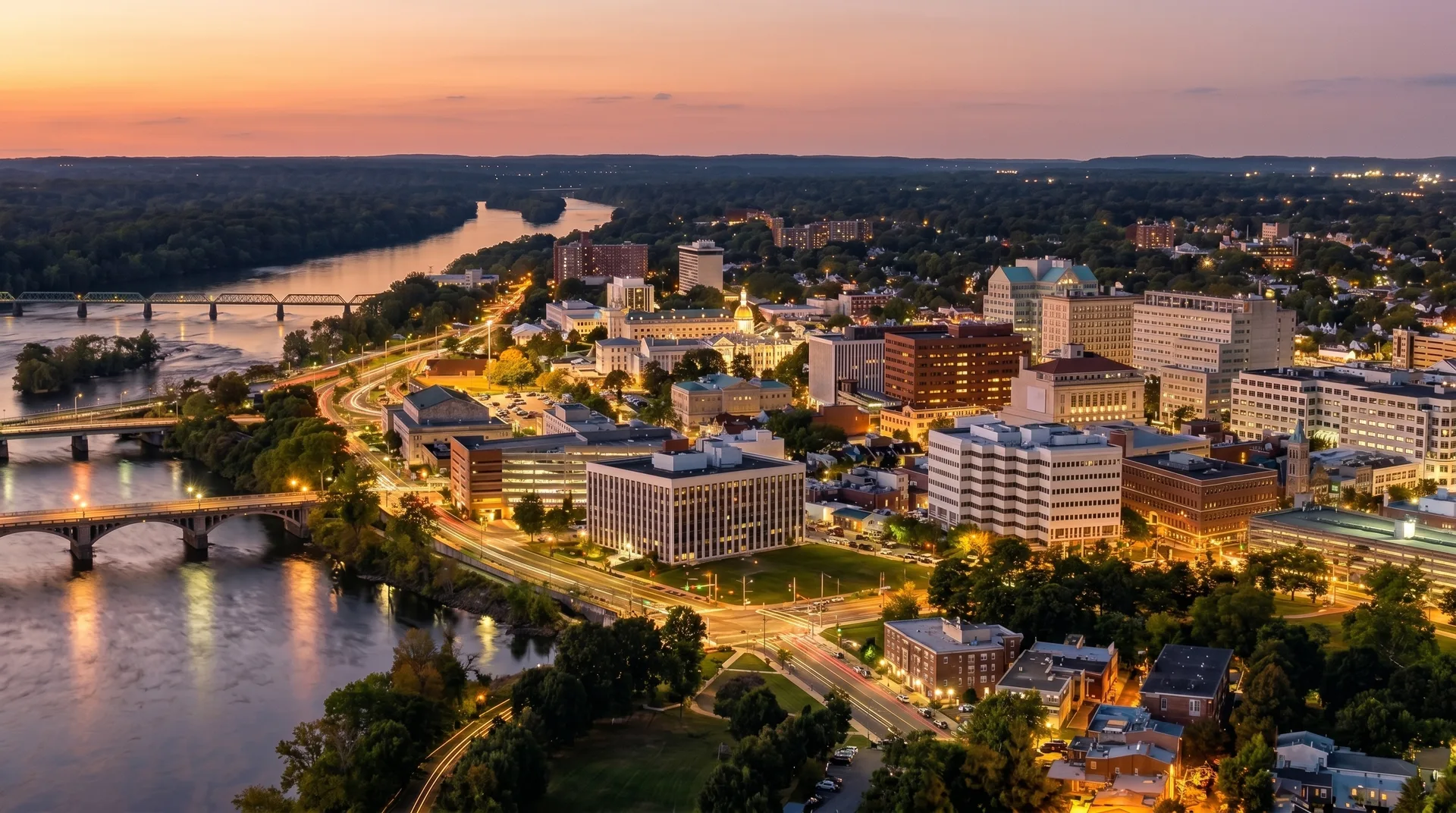
Trenton
Trenton, New Jersey serves as a strategic logistics hub positioned at the heart of the Northeast corridor. Located along the I-95 corridor, Trenton provides immediate access to major markets including New York City, Philadelphia, and the broader Mid-Atlantic region. The city's transportation infrastructure includes multiple interstate highways, rail connections, and proximity to major ports, making it an ideal origin point for freight distribution across the eastern United States. Trenton's industrial base includes manufacturing, warehousing, and distribution facilities that serve as critical nodes in regional supply chains.
The economic landscape of Trenton encompasses diverse sectors including manufacturing, healthcare, education, and government services. The city benefits from its location within New Jersey's extensive logistics network, which includes some of the most advanced warehousing and distribution facilities in the country. Trenton's proximity to major consumer markets and its integration with surrounding industrial areas make it a strategic origin for freight moving to destinations throughout the Midwest and beyond.
 Destination
Lansing
Lansing, Michigan stands as a key logistics destination in the Midwest, strategically positioned to serve Michigan's automotive and manufacturing industries. Located at the intersection of major highways including I-96, I-496, and I-69, Lansing provides excellent connectivity to Detroit, Chicago, and other major Midwest markets. The city's transportation infrastructure includes a robust highway network, rail connections, and proximity to major freight hubs, facilitating efficient distribution throughout the Great Lakes region and beyond.
The economic foundation of Lansing is built on automotive manufacturing, with major facilities operated by General Motors and other suppliers. The region also supports diverse industries including healthcare, education, and technology, creating a dynamic economic environment that drives freight demand. Lansing's position within Michigan's industrial corridor makes it a critical destination for components, raw materials, and finished goods moving from manufacturing centers across the country, particularly from the Northeast's production facilities.










