Torreón to Toronto
Toronto → TorreónFTL freight transportation service between Torreón and Toronto. Reliable logistics solutions for your business.
Route Description
Everything you need to know about the corridor Torreón - Toronto
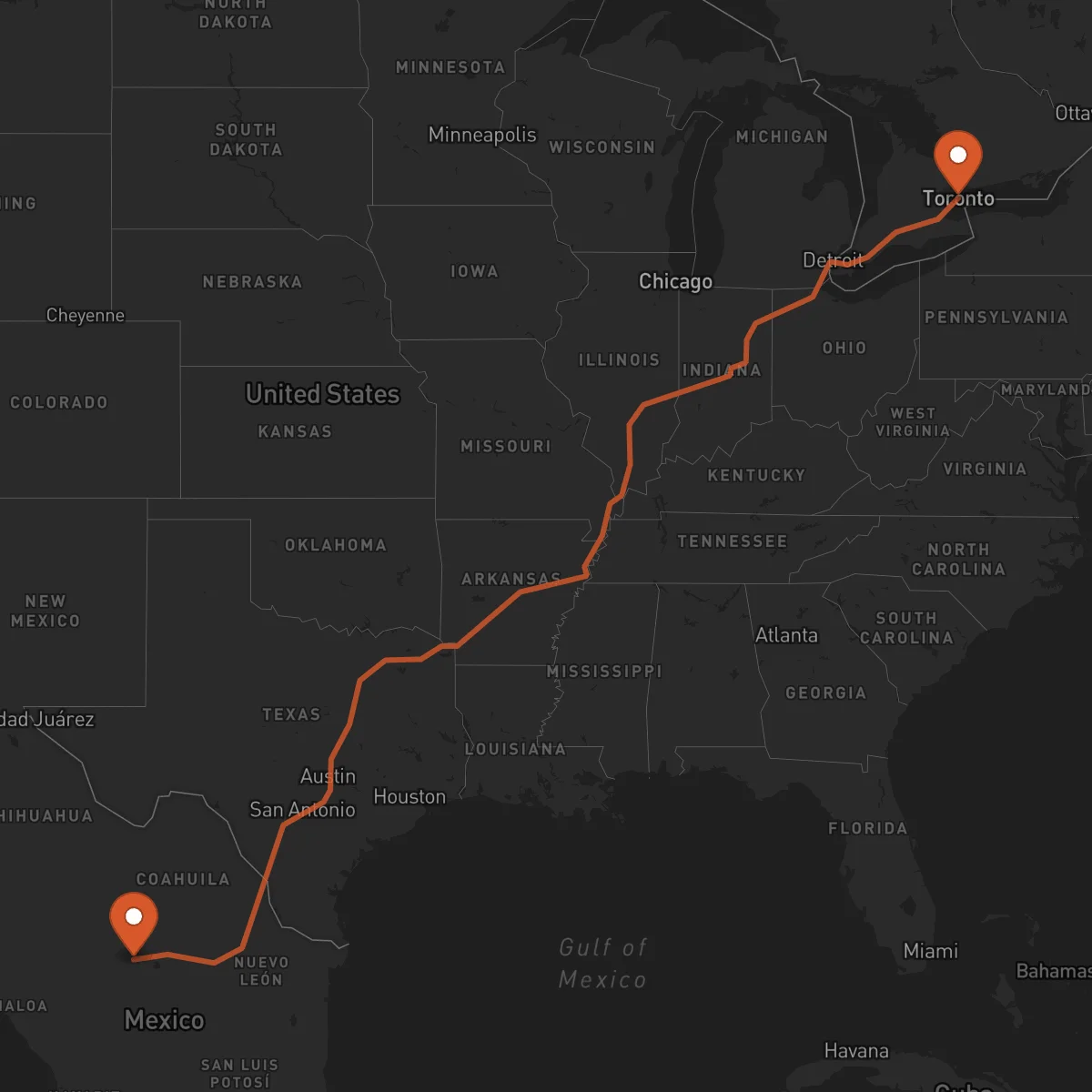
The Torreón-Toronto corridor represents a vital logistics connection between northern Mexico and Canada's economic powerhouse. This 2,961 km route links Coahuila's industrial heartland with Ontario's manufacturing and technology hub, facilitating the movement of goods across three North American countries. The corridor traverses diverse terrain and crosses key border points, making it essential for companies engaged in North American trade.
This route serves as a backbone for industries including automotive, aerospace, electronics, and agricultural products. Companies in Torreón's industrial sector rely on efficient transportation to reach Toronto's sophisticated markets and distribution networks. The corridor supports just-in-time manufacturing processes and supply chain integration across the continent.
Major transportation infrastructure includes Mexico's Federal Highway 40 and Highway 85, connecting to U.S. Interstate systems and Canada's 400-series highways. The corridor typically crosses at Laredo-Nuevo Laredo or other strategic points, with access to major ports of entry equipped with modern customs facilities. Control Terrestre's expertise in cross-border operations ensures seamless freight movement through customs procedures, carrier coordination, and compliance with all regulatory requirements for this international route.
Services for this Route
Available services for the corridor Torreón - Toronto
 Origin
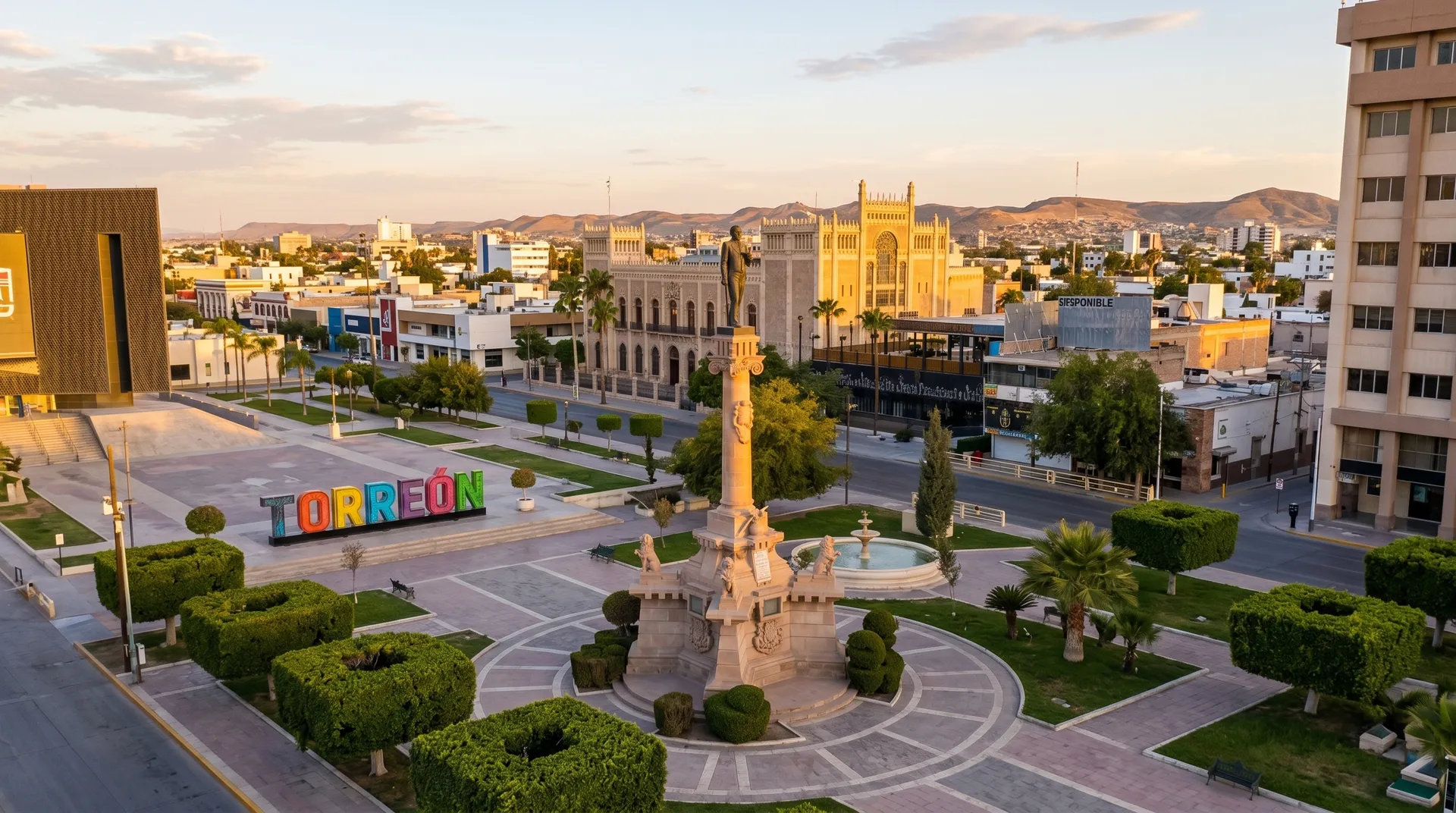
Torreón, located in Coahuila's Lagunera region, serves as a strategic logistics hub in northern Mexico. Its position at the intersection of major industrial corridors provides excellent connectivity to both Mexican and U.S. markets. The city benefits from its proximity to the U.S. border and its integration with Mexico's national transportation network.
The region hosts a diverse industrial base including automotive manufacturing, aerospace components, metal-mechanical industries, and food processing. Torreón's industrial parks and manufacturing centers generate significant freight volume requiring reliable transportation to international markets. The city's infrastructure includes modern highways, a cargo airport, and rail connections that support efficient freight movement.
 Destination
Toronto stands as Canada's premier logistics and commercial center, offering unmatched access to North American and global markets. Ontario's capital benefits from its location near the U.S. border and its integration with Canada's extensive transportation infrastructure. The Greater Toronto Area processes a substantial portion of Canada's international trade.
The region excels in advanced manufacturing, technology, pharmaceuticals, and financial services. Toronto's sophisticated logistics ecosystem includes major intermodal terminals, international airports, and port facilities on Lake Ontario. The city's strategic position makes it an ideal gateway for goods entering the Canadian market and for distribution throughout eastern Canada and the northeastern United States.










