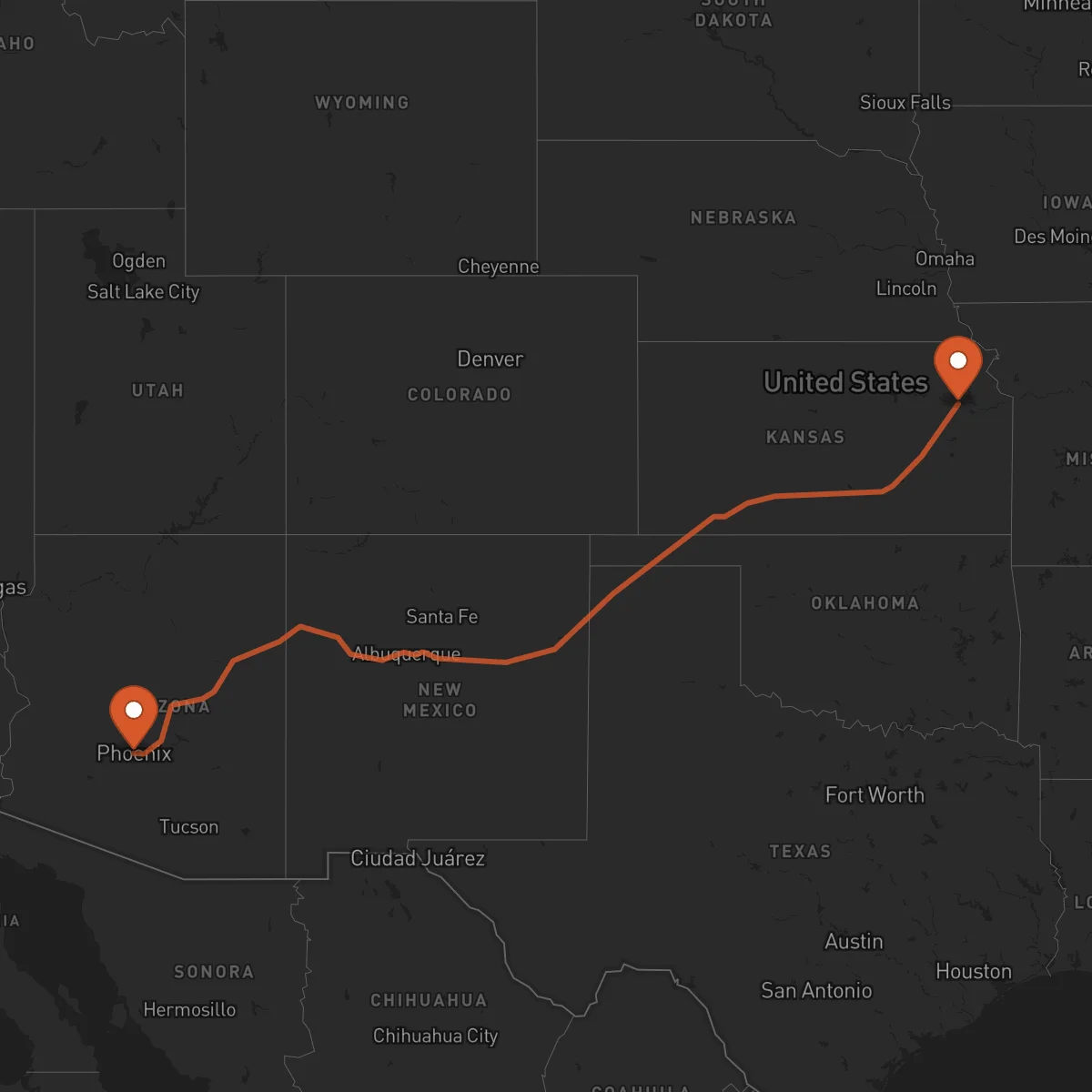
Topeka to Phoenix
Phoenix → TopekaFTL freight transportation service between Topeka and Phoenix. Reliable logistics solutions for your business.
Route Description
Everything you need to know about the corridor Topeka - Phoenix
The logistics corridor between Topeka, Kansas and Phoenix, Arizona represents a vital connection across the American Midwest and Southwest. This 1,594 km route traverses diverse landscapes and industrial zones, serving as a crucial link for businesses operating across the central United States. The corridor connects the agricultural heartland of Kansas with the rapidly growing metropolitan area of Phoenix, facilitating the movement of goods between these two important economic regions.
The route passes through major transportation hubs and industrial centers, following Interstate 70 West and Interstate 40 West. This path connects several key markets including Denver and Albuquerque, providing access to multiple economic zones along the way. The corridor serves a wide range of industries, from agricultural producers in Kansas to manufacturing and technology companies in Arizona, making it one of the most versatile freight routes in the central United States.
Control Terrestre provides comprehensive FTL (Full Truckload) transportation services along this corridor, utilizing our network of certified carriers and specialized equipment. Our strategic partnerships with experienced transportation providers ensure reliable, efficient service for businesses moving freight between Topeka and Phoenix. We understand the unique requirements of this route and offer tailored solutions to meet the specific needs of our clients, whether they're shipping agricultural products, industrial equipment, or consumer goods.
Services for this Route
Available services for the corridor Topeka - Phoenix
 Origin
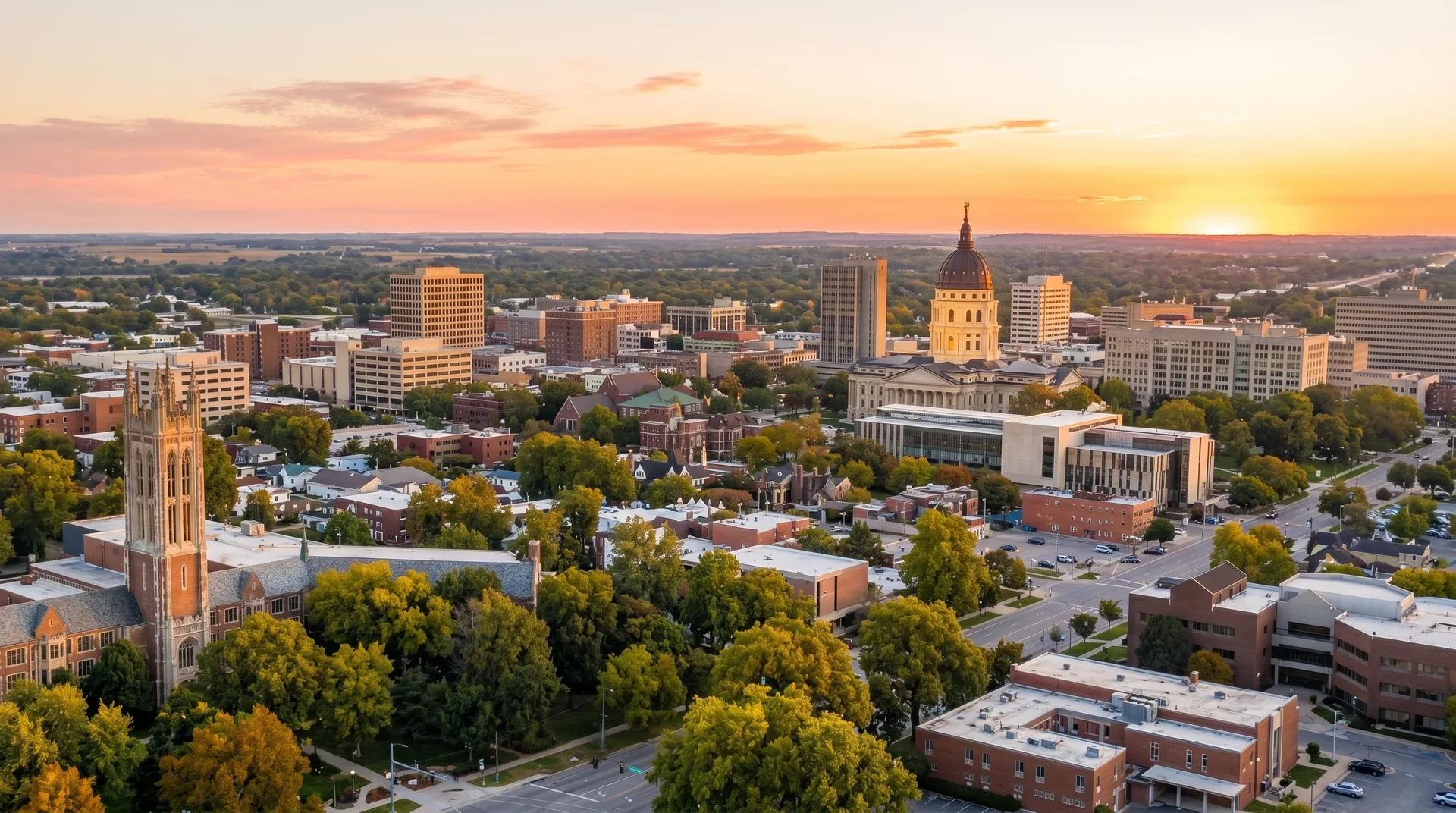
Topeka
Topeka, the capital city of Kansas, serves as a strategic logistics hub in the American Midwest. Located in the northeastern part of the state, Topeka benefits from its position near major transportation arteries, including Interstate 70, which provides direct access to both coasts. The city's logistics infrastructure includes several industrial parks, warehousing facilities, and a robust transportation network that connects to major markets across the country.
The Topeka economy is diverse, with key sectors including government services, education, healthcare, and manufacturing. The region is particularly strong in food processing and agricultural equipment manufacturing, reflecting Kansas's agricultural heritage. The city's central location within the continental United States makes it an ideal origin point for freight distribution, offering relatively equal access to both coasts and serving as a gateway to the Midwest's vast agricultural and industrial regions.
 Destination
Phoenix
Phoenix, Arizona has emerged as a major logistics and distribution center in the southwestern United States. The city's strategic location, combined with its extensive transportation infrastructure, makes it an ideal destination for freight movement. Phoenix is served by multiple interstate highways, including I-10 and I-17, providing excellent connectivity to major markets throughout the western United States and Mexico. The region's Sky Harbor International Airport and extensive warehousing facilities further enhance its logistics capabilities.
The Phoenix metropolitan area is home to a diverse economy, with strong sectors in technology, manufacturing, aerospace, and agriculture. The region's climate-controlled warehousing facilities are particularly important for industries requiring temperature-sensitive storage and distribution. Phoenix's rapid growth and strategic position as a border state hub make it a critical destination for freight transportation, serving both the local market and acting as a gateway to the broader southwestern United States and Mexico.










