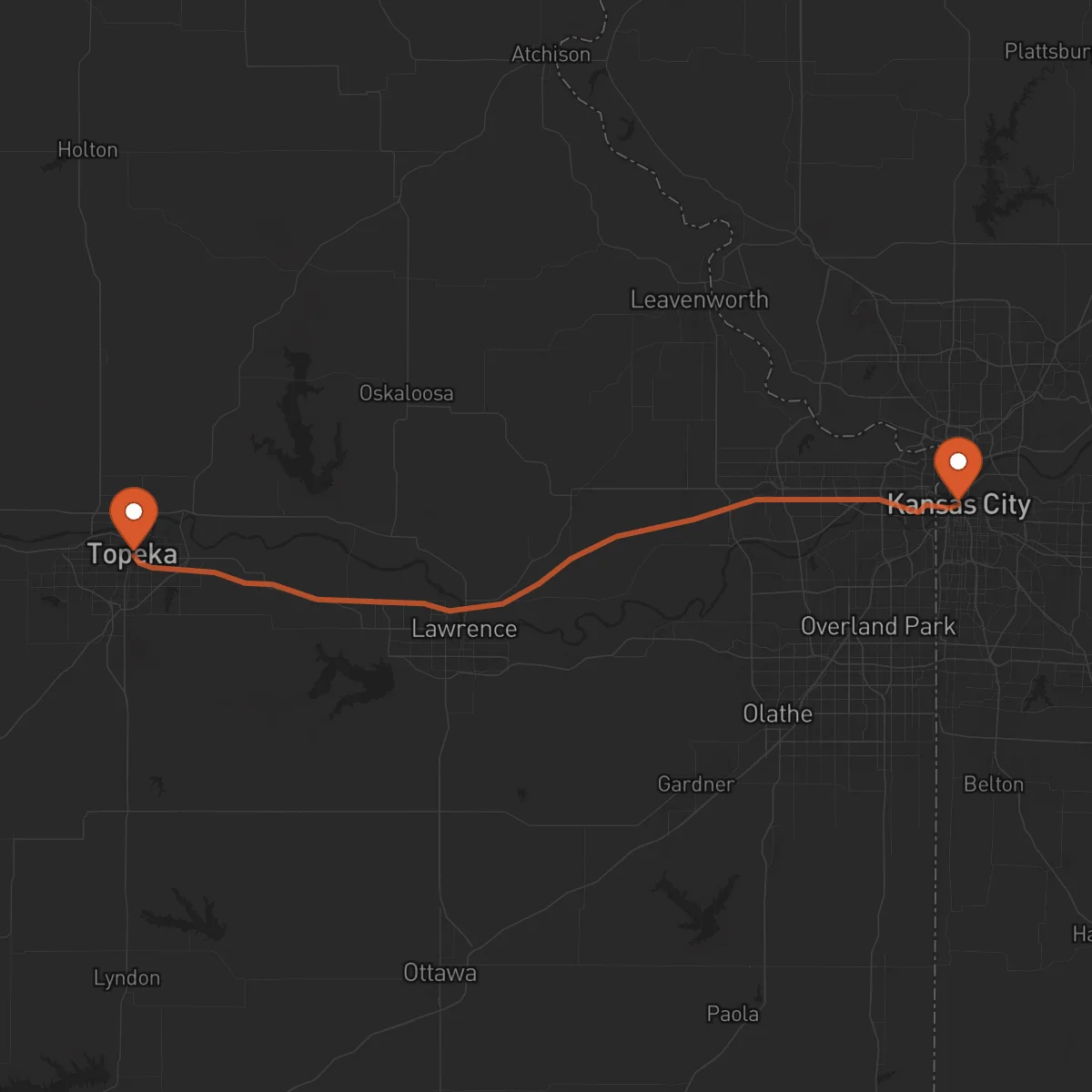
Topeka to Kansas City
Kansas City → TopekaFTL freight transportation service between Topeka and Kansas City. Reliable logistics solutions for your business.
Route Description
Everything you need to know about the corridor Topeka - Kansas City
The Topeka to Kansas City corridor represents one of the most vital domestic freight transportation routes in the Midwest United States. Spanning approximately 95 kilometers, this corridor connects two major economic hubs in Kansas and Missouri, facilitating the continuous flow of goods that powers regional commerce. This strategic route serves as a critical link between the state capital of Kansas and one of the largest metropolitan areas in the Midwest, creating an essential transportation artery for businesses throughout the region.
The economic significance of this corridor cannot be overstated. Kansas City stands as a major distribution center with one of the largest inland ports in the United States, while Topeka serves as the political and administrative center of Kansas. Together, these cities form a powerful economic engine that drives manufacturing, agriculture, and technology sectors throughout the region. The corridor benefits from Kansas City's status as a major logistics hub, featuring extensive rail connections, warehousing facilities, and one of the busiest airports for cargo in the nation.
This transportation route primarily serves industries including automotive manufacturing, food processing, agricultural products, industrial machinery, and consumer goods distribution. The corridor's efficiency directly impacts supply chains for companies operating throughout the Midwest, making reliable transportation services essential for business continuity. Control Terrestre understands the critical nature of this route and provides dedicated full truckload (FTL) services that ensure your cargo moves seamlessly between these two important economic centers.
Control Terrestre facilitates operations on this corridor through our network of certified transportation providers who understand the specific requirements of Midwest logistics. Our strategic alliance approach allows us to offer flexible, reliable full truckload services that meet the demanding schedules of businesses operating between Topeka and Kansas City. With our commitment to safety, efficiency, and customer service, we ensure that your freight moves through this vital corridor with the professionalism and reliability that modern supply chains demand.
Services for this Route
Available services for the corridor Topeka - Kansas City
 Origin
Topeka
Topeka, Kansas serves as a strategic logistics hub in the Midwest, offering unique advantages for freight transportation. Located along the I-70 corridor, Topeka provides excellent connectivity to major transportation networks across the United States. The city's central location within Kansas makes it an ideal origin point for distribution throughout the Midwest and beyond. Topeka's transportation infrastructure includes direct access to Interstate 70, which connects to I-35 and I-335, creating multiple routing options for efficient freight movement. The city also benefits from rail connections through the Union Pacific Railroad, providing intermodal transportation capabilities for businesses requiring diverse shipping options.
 Destination
Kansas City
Kansas City, Missouri stands as one of the most important logistics hubs in the United States, offering unparalleled advantages for freight transportation. The city's strategic location at the confluence of the Kansas and Missouri rivers has historically made it a natural transportation center, a role it continues to fulfill today. Kansas City boasts one of the largest rail centers in the nation, with extensive classification yards and intermodal facilities operated by major railroads. The city is also home to the Kansas City International Airport, which features significant cargo operations, and the Port of Kansas City, providing barge transportation along the Missouri River. The metropolitan area's extensive highway network includes I-70, I-35, I-29, and I-49, creating multiple efficient routes for truck freight movement throughout the region.










