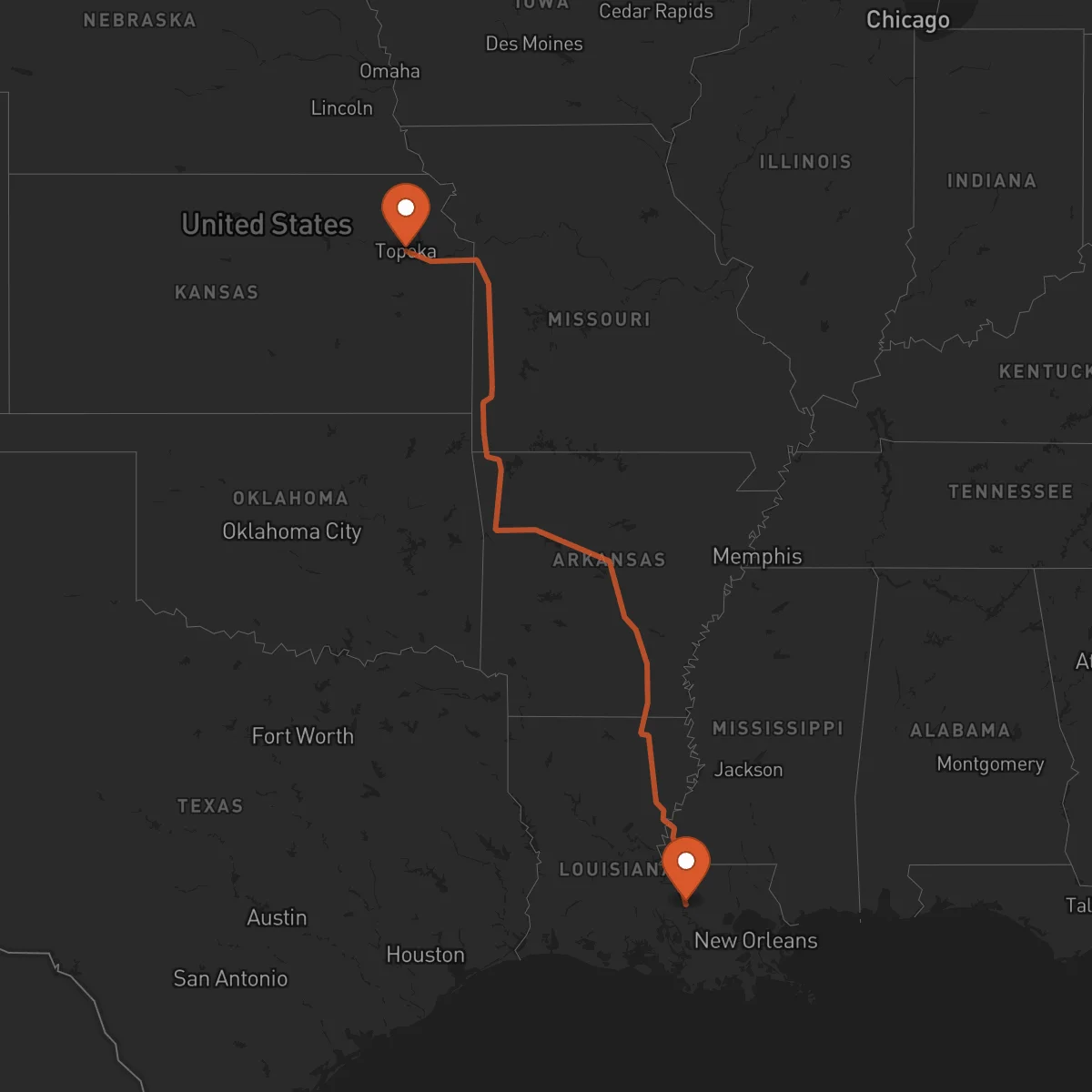
Topeka to Baton Rouge
Baton Rouge → TopekaFTL freight transportation service between Topeka and Baton Rouge. Reliable logistics solutions for your business.
Route Description
Everything you need to know about the corridor Topeka - Baton Rouge
The logistics corridor between Topeka, Kansas and Baton Rouge, Louisiana represents a crucial freight transportation route connecting the Midwest to the Gulf Coast. This 1040 km domestic corridor serves as a vital link for businesses moving goods between the central United States and the strategic port city of Baton Rouge. The route traverses diverse landscapes and connects major industrial centers, making it essential for supply chain operations across multiple sectors.
The economic significance of this corridor is substantial, facilitating the movement of agricultural products from the Midwest, industrial equipment, and manufactured goods. Topeka serves as a key distribution hub for Kansas and surrounding states, while Baton Rouge's position as a major petrochemical center and port city creates substantial outbound and inbound freight demand. This corridor experiences consistent freight volume throughout the year, driven by the agricultural cycles of the Midwest and the continuous operations of Louisiana's industrial base.
Transportation infrastructure along this route is well-developed, primarily utilizing major highways including I-70 East from Topeka, connecting to I-55 South through Missouri and Mississippi, before transitioning to I-12 and I-10 East into Baton Rouge. This multi-state route provides reliable access for full truckload (FTL) freight services, with Control Terrestre's network of certified carriers ensuring seamless door-to-door transportation. Our strategic partnerships with experienced providers along this corridor guarantee efficient transit times and professional handling of your freight, whether you're shipping agricultural commodities, industrial equipment, or consumer goods between these key economic centers.
Services for this Route
Available services for the corridor Topeka - Baton Rouge
 Origin
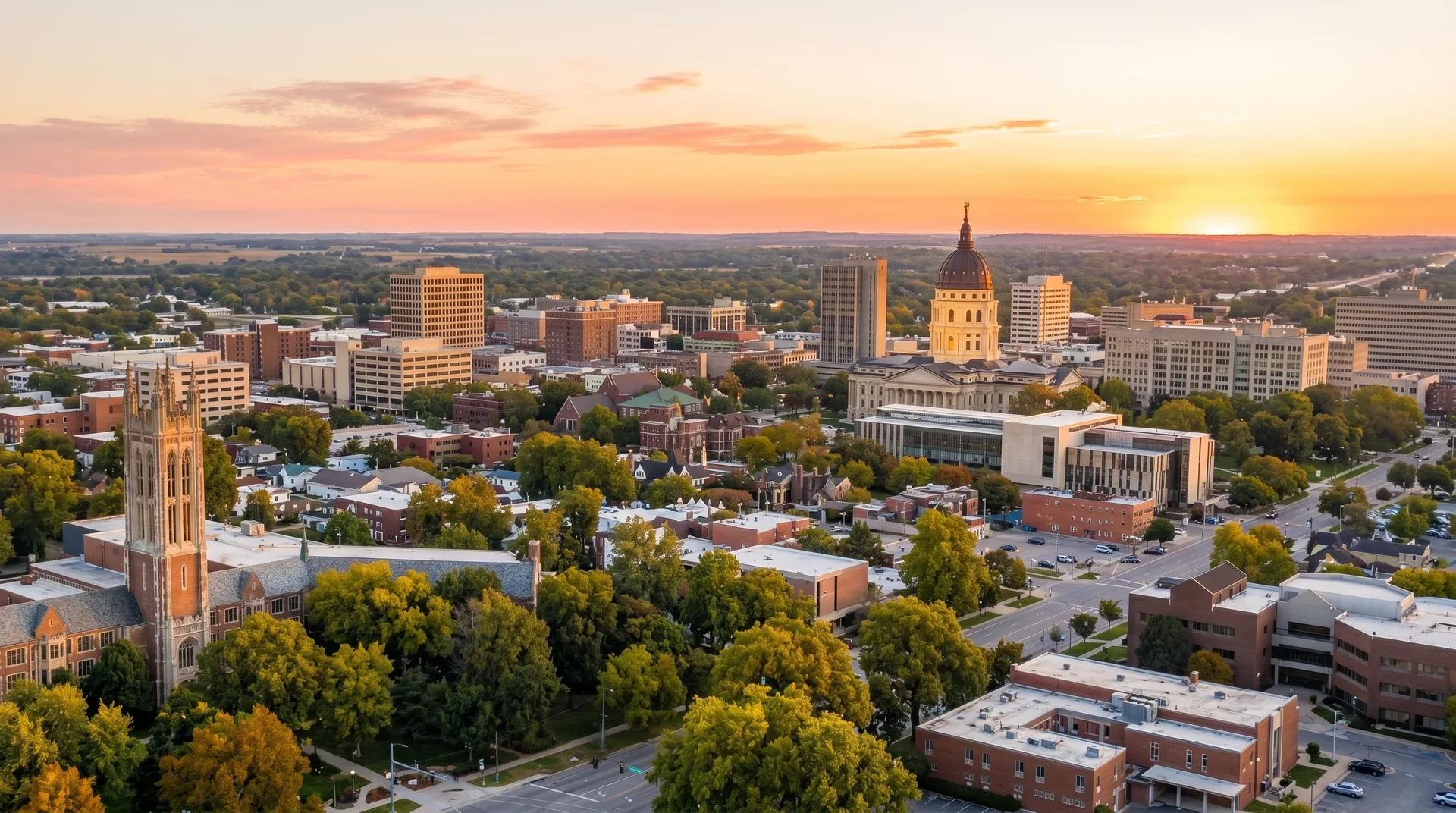
Topeka
Topeka, Kansas serves as a strategic logistics hub in the heart of the Midwest, offering excellent connectivity for freight transportation. Located along I-70, the city provides direct access to major markets in both the eastern and western United States. Topeka's central geographic position makes it an ideal origin point for freight distribution across the country, with its transportation infrastructure supporting efficient movement of goods in all directions.
The city's economy is diverse, with strong presence in manufacturing, healthcare, and education sectors. Topeka is home to several industrial parks and distribution centers that handle a wide range of products, from agricultural equipment to consumer goods. The city's manufacturing base includes food processing, machinery production, and technology components, all of which require reliable freight transportation services. With its well-developed road network and proximity to major transportation corridors, Topeka offers businesses a solid foundation for their logistics operations.
 Destination
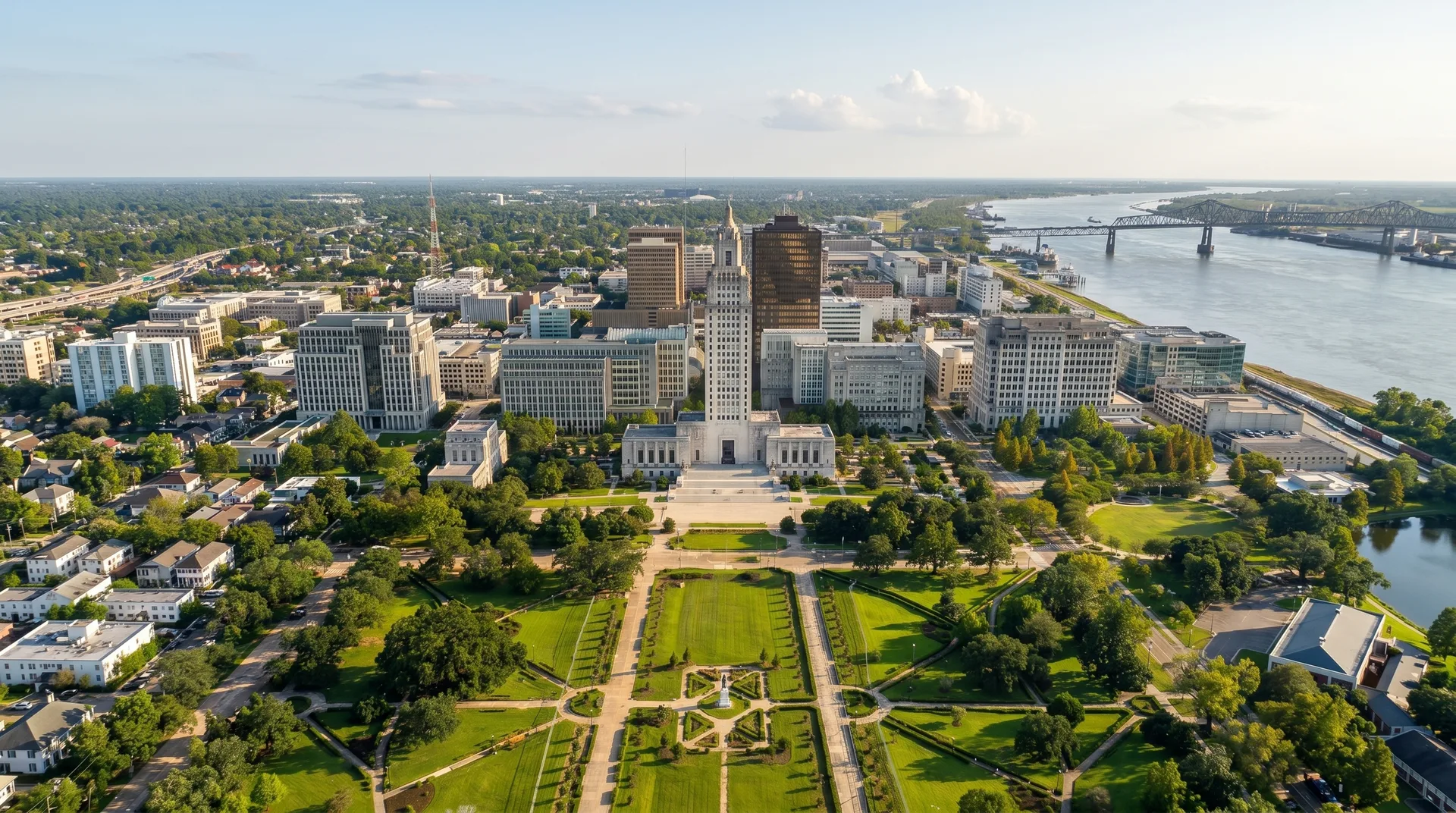
Baton Rouge
Baton Rouge, Louisiana stands as a critical logistics and industrial center on the Gulf Coast, strategically positioned along the Mississippi River. The city's location provides unique advantages for freight transportation, offering access to both inland markets and international shipping through the Port of Greater Baton Rouge. This combination of river, rail, and highway infrastructure makes Baton Rouge an essential destination for freight moving between the central United States and global markets.
The Baton Rouge area is renowned for its petrochemical industry, hosting numerous refineries and chemical plants that form the backbone of the local economy. Additionally, the region has strong agricultural processing facilities, manufacturing operations, and growing technology sectors. The city's industrial diversity creates consistent demand for freight transportation services, particularly for specialized cargo such as hazardous materials and oversized equipment. Baton Rouge's transportation infrastructure includes major highways like I-10 and I-12, extensive rail connections, and the deep-water port, providing multiple options for efficient freight movement.










