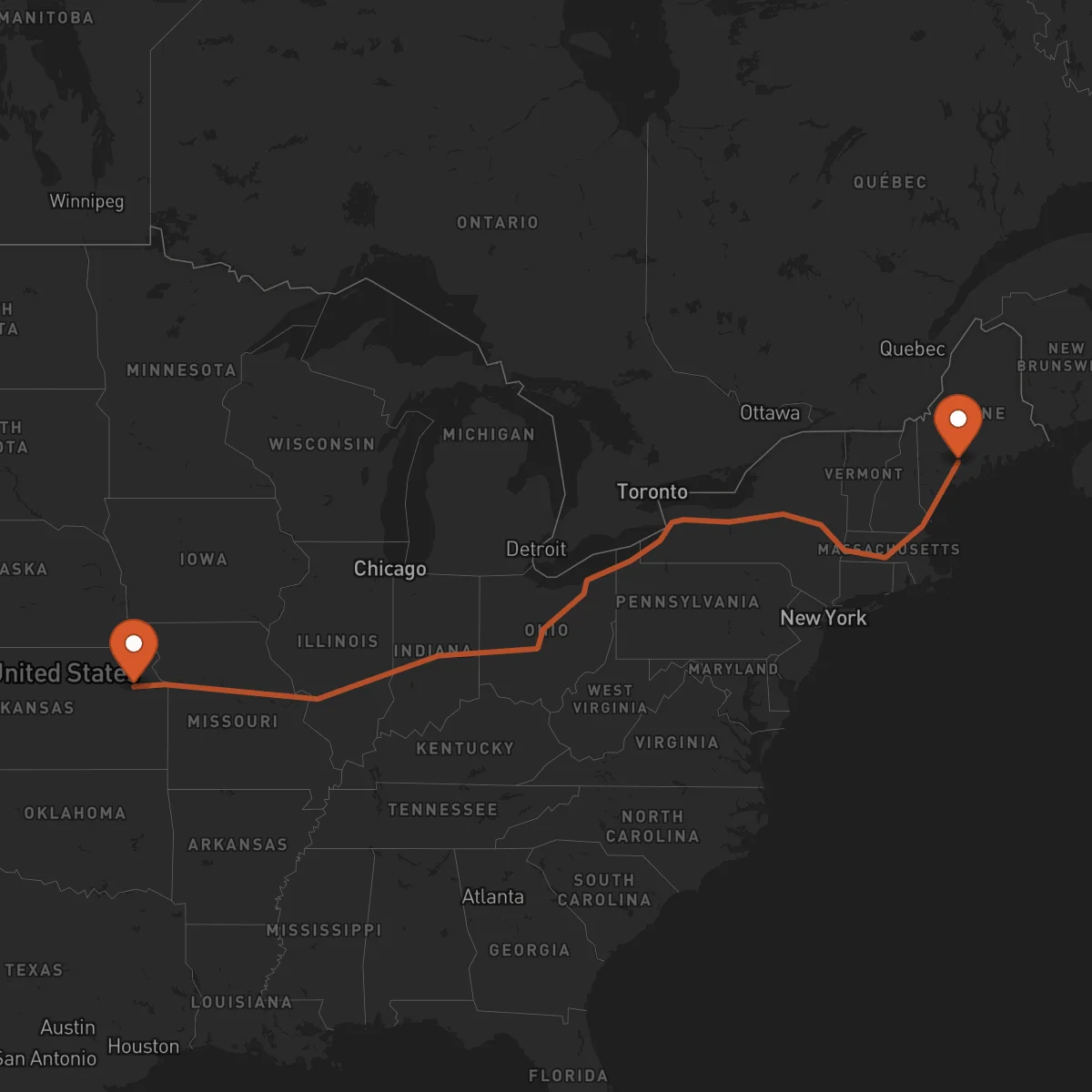
Topeka to Augusta
Augusta → TopekaFTL freight transportation service between Topeka and Augusta. Reliable logistics solutions for your business.
Route Description
Everything you need to know about the corridor Topeka - Augusta
The freight transportation corridor between Topeka, Kansas and Augusta, Maine represents a vital link across the United States, spanning approximately 2,219 kilometers through the heart of America. This east-west route connects the central plains with the northeastern seaboard, traversing diverse geographical regions and economic zones. The corridor passes through major metropolitan areas including Kansas City, St. Louis, Indianapolis, Columbus, Pittsburgh, and Boston before reaching Maine's capital. This strategic pathway facilitates the movement of goods between the agricultural and manufacturing heartland and the densely populated Northeast corridor, where major ports and distribution centers create significant freight demand.
The economic significance of this route is substantial, supporting industries ranging from automotive and manufacturing to agricultural products and consumer goods. The Midwest region around Topeka serves as a crucial distribution point for agricultural commodities, machinery, and manufactured products, while Augusta and the broader New England area represent key markets for these goods, along with specialized industries such as paper products, biotechnology, and seasonal retail distribution. The route also supports reverse logistics flows, with products moving from East Coast manufacturers back to central distribution hubs.
Control Terrestre leverages this corridor through our extensive network of certified transportation providers, offering dedicated full truckload (FTL) services that ensure your cargo moves efficiently and securely across the entire distance. Our strategic partnerships with carriers who hold C-TPAT, FAST, and other critical certifications mean your shipments benefit from priority handling and streamlined operations. We understand the unique requirements of cross-country transportation, including proper equipment selection, driver scheduling for regulatory compliance, and contingency planning for weather or traffic disruptions that commonly affect this extensive route.
Services for this Route
Available services for the corridor Topeka - Augusta
 Origin
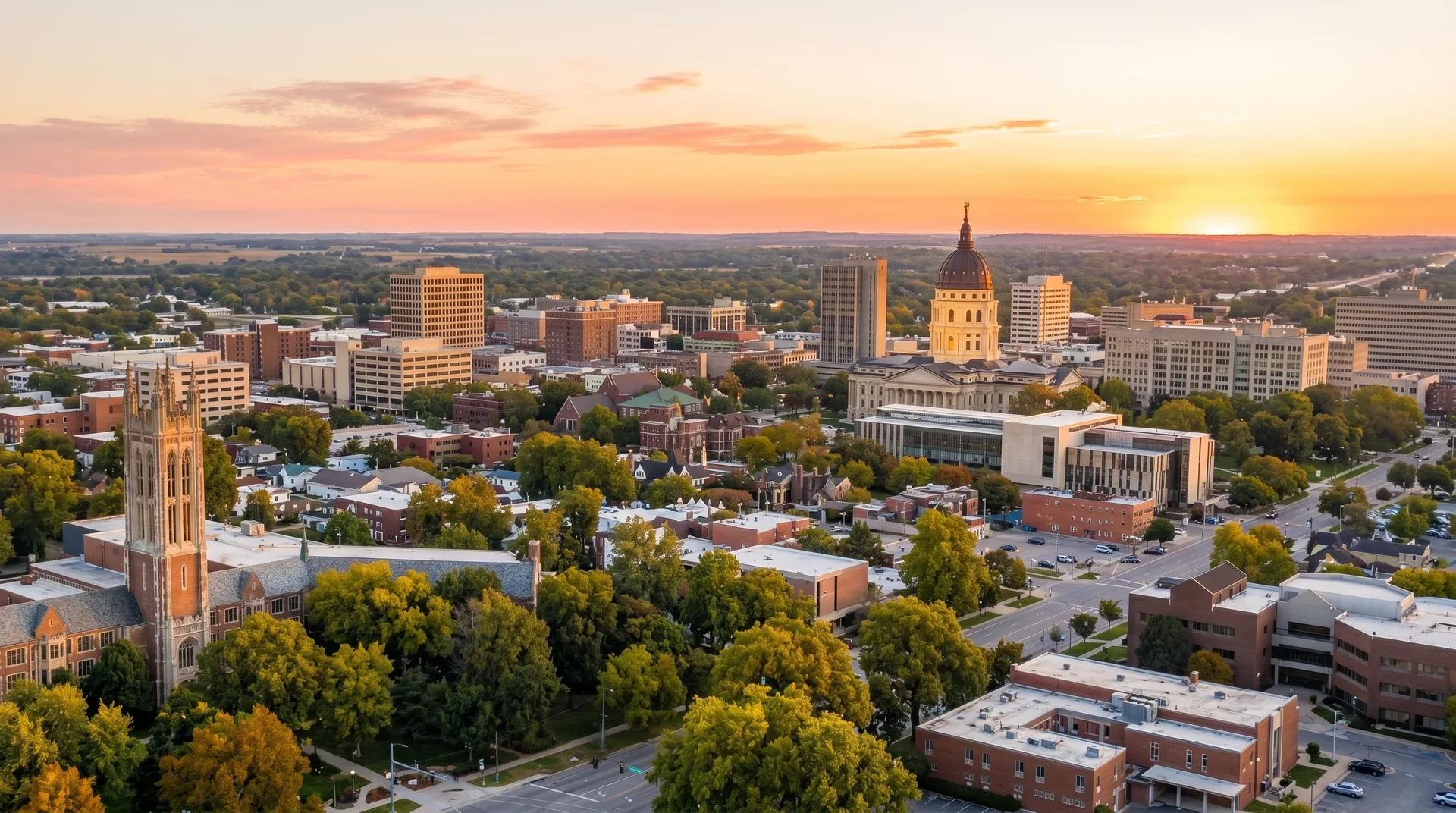
Topeka
Topeka, Kansas serves as a strategic logistics hub in the American Midwest, positioned advantageously for freight distribution across the central United States. The city's location along major transportation arteries, including Interstate 70, provides direct access to both east-west and north-south freight corridors. Topeka's economy centers around government services, education, and manufacturing, with significant activity in the food processing, machinery, and agricultural equipment sectors. The city benefits from multiple transportation options including the Topeka Regional Airport for air freight, extensive rail connections through BNSF and Union Pacific lines, and robust highway infrastructure that supports efficient truck freight operations.
The industrial base in Topeka includes food processing facilities, printing and publishing operations, and various manufacturing plants that generate substantial freight volume. The city's logistics infrastructure features modern warehousing facilities, cross-docking operations, and a network of freight forwarders and logistics providers. Topeka's central location makes it an ideal origin point for freight moving to both coasts and the Northeast, with relatively balanced inbound and outbound freight flows that help optimize transportation costs for shippers using the corridor to destinations like Augusta.
 Destination
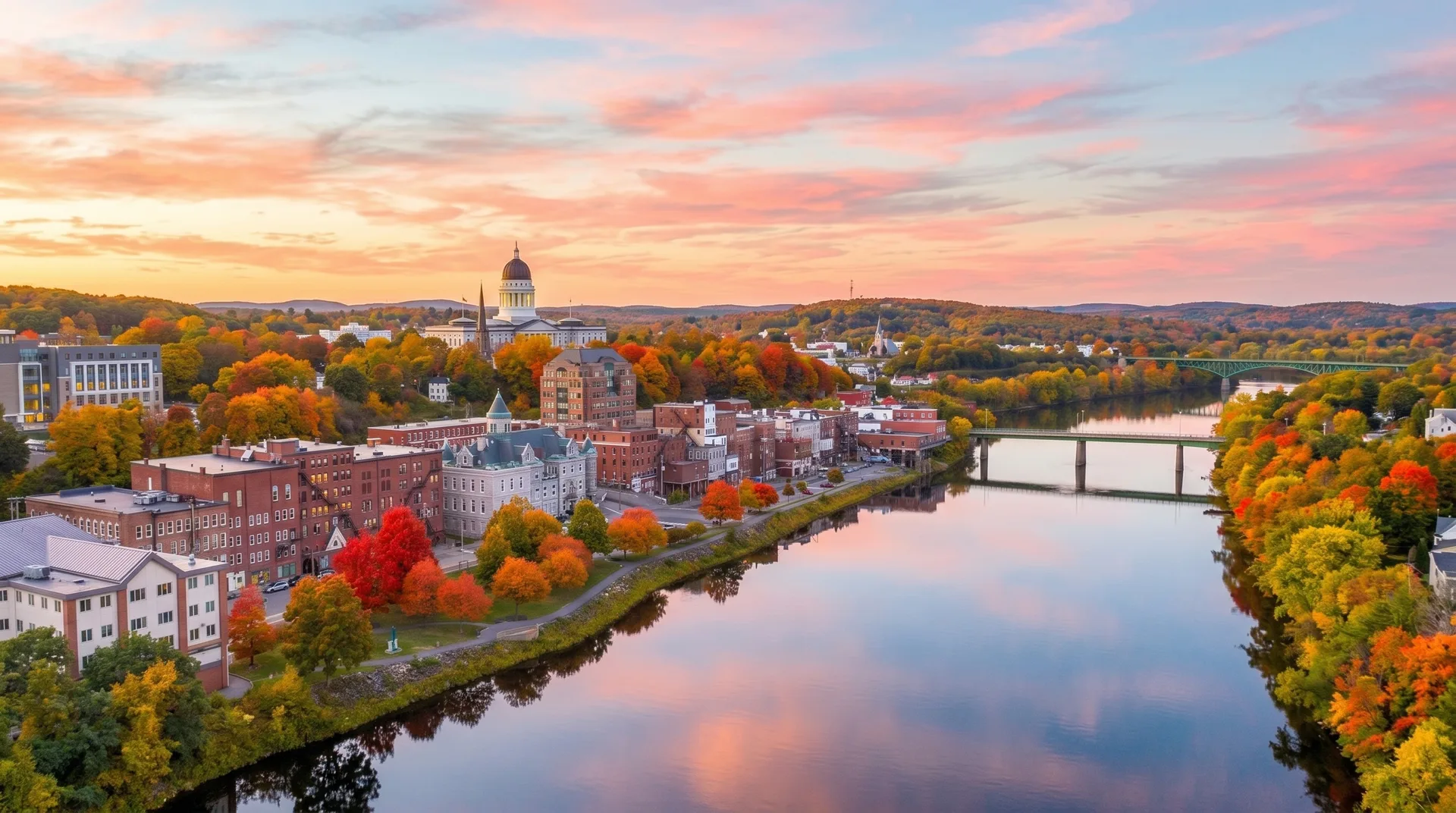
Augusta
Augusta, Maine represents a strategic endpoint for freight distribution in the northeastern United States, serving as the state capital and a key logistics node for Maine's economy. Located along the Kennebec River and connected to the broader region via Interstate 95, Augusta provides access to both coastal shipping routes and inland distribution networks. The city's economy encompasses government services, healthcare, education, and a diverse manufacturing sector including paper products, biotechnology, and specialized industrial equipment. Augusta's proximity to Portland's port facilities and Boston's extensive logistics infrastructure enhances its role in regional freight distribution.
The transportation infrastructure supporting Augusta includes the Augusta State Airport for air cargo, rail connections through Pan Am Railways, and comprehensive highway access that facilitates truck freight movement. The region's industrial base generates demand for both inbound raw materials and outbound finished products, creating consistent freight opportunities. Augusta's location in Maine, with its significant seasonal variations and specialized industries such as forest products and marine equipment manufacturing, requires logistics providers to maintain expertise in handling diverse cargo types and weather-related challenges throughout the year.










