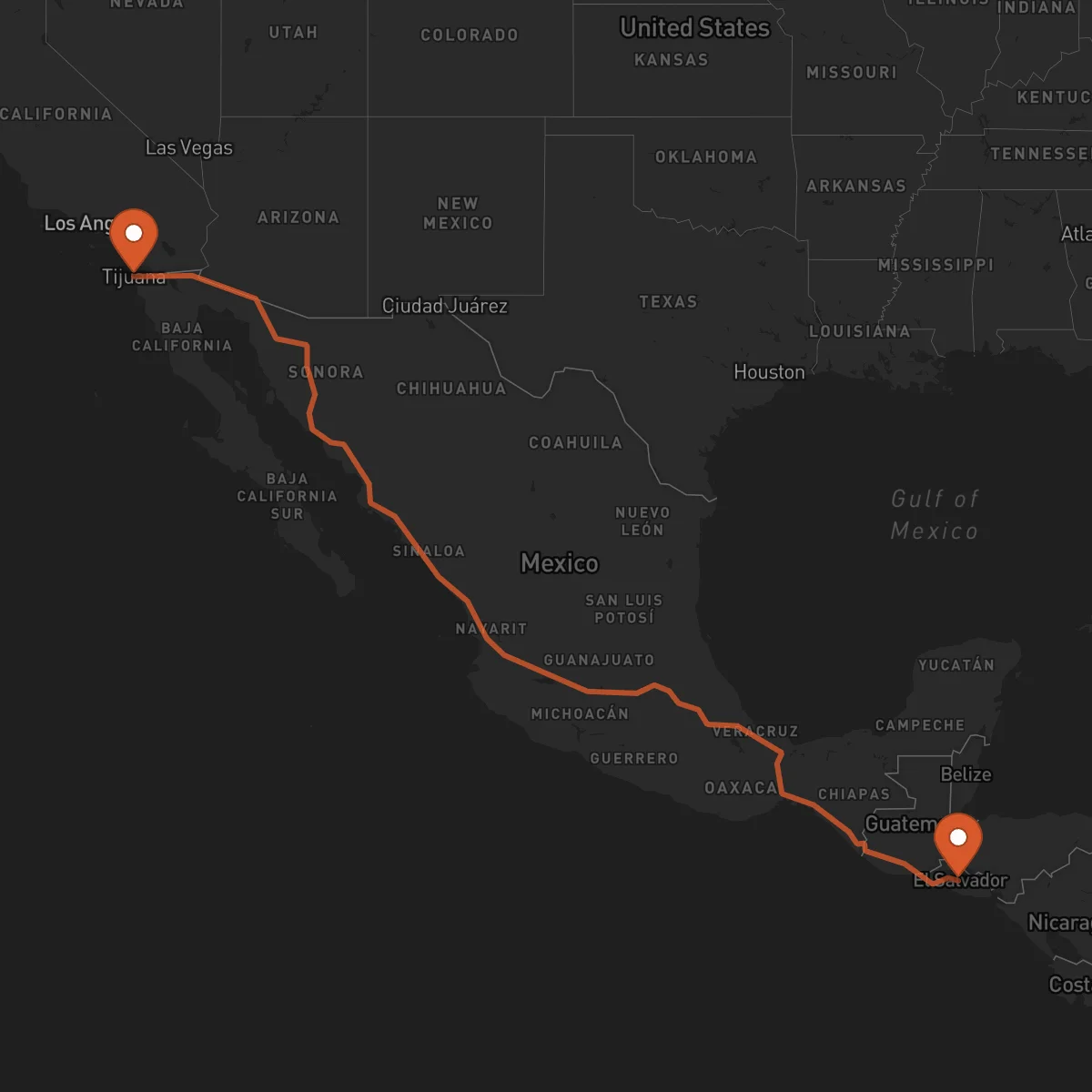
Tijuana to Cojutepeque
Cojutepeque → TijuanaFTL freight transportation service between Tijuana and Cojutepeque. Reliable logistics solutions for your business.
Route Description
Everything you need to know about the corridor Tijuana - Cojutepeque
The Tijuana to Cojutepeque corridor represents a critical north-south logistics artery connecting the industrial powerhouse of Northern Mexico with the growing markets of Central America. Stretching approximately 3,533 kilometers, this cross-border route traverses the entire length of Mexico before entering Guatemala and concluding in El Salvador, serving as a vital trade link for manufacturers and distributors across the region. Its strategic importance is underscored by the volume of goods moving between the major manufacturing hubs of Baja California and the consumer and agricultural markets of the Central American Northern Triangle.
Economically, the corridor is anchored by Tijuana's massive maquiladora industry, which produces everything from electronics and medical devices to automotive parts for global export. Southbound, the route services the demand for raw materials, intermediate goods, and finished products destined for Central America. Key industries utilizing this corridor include automotive, electronics, apparel and textiles, agricultural inputs, and consumer packaged goods. The flow is bidirectional, with Central American exports like coffee, sugar, and textiles moving northward.
The transportation infrastructure relies on a network of major highways. In Mexico, the primary artery is the toll road Mexican Federal Highway 1D (Autopista Tijuana-Ensenada) connecting to the main Federal Highway 1 corridor down the Baja California Peninsula. After crossing into mainland Mexico via ferry or the longer inland route, trucks utilize Federal Highway 15 and 160 through Sinaloa, Nayarit, and towards Mexico City, before connecting to the southern network via highways like 190 and 200 through Oaxaca and Chiapas. The final Central American segment depends on the specific destination but heavily involves the Pan-American Highway (CA-1) through Guatemala and into El Salvador. The principal international border crossing for this corridor is typically at Mexico-Guatemala, most commonly at Ciudad Hidalgo (Mexico) / Tecún Umán (Guatemala). Navigating customs here requires expertise in Mexican, Guatemalan, and Salvadoran regulations, as well as compliance with programs like C-TPAT and FAST for expedited clearance.
Control Terrestre facilitates seamless operations on this complex corridor through our robust alliance of certified transportation providers. Our partners hold key certifications including C-TPAT, FAST, and BASC, ensuring secure and compliant cross-border movements. We exclusively manage full truckload (FTL) shipments—whether standard dry vans, refrigerated units, flatbeds for oversized cargo, or tankers—providing dedicated capacity for your supply chain. Our expertise in documentation, customs coordination, and carrier selection across three countries allows us to manage the entire journey from a Tijuana factory door to a Cojutepeque distribution center, offering a single point of contact for this demanding international route.
Services for this Route
Available services for the corridor Tijuana - Cojutepeque
 Origin
Tijuana
Tijuana, Baja California, is a premier logistics origin point due to its unparalleled strategic location on the Mexico-U.S. border, directly adjacent to San Diego, California. This positioning makes it a primary gateway for goods entering and leaving North America, boasting one of the world's busiest land border crossings. The city's economy is dominated by the maquiladora (manufacturing) industry, with hundreds of factories focused on electronics, medical devices, aerospace components, and automotive parts, primarily serving U.S. and global markets. Other key sectors include tourism, agriculture (especially in the surrounding Valle de Guadalupe and San Quintín), and a growing tech and design hub.
The transportation infrastructure is world-class and multi-modal. For freight, Tijuana is served by the Tijuana International Airport (TIJ) for air cargo and the Port of Ensenada for maritime connections. Critically, it is the northern terminus of the extensive Mexican Federal Highway network, with immediate access to the toll road to Ensenada and Federal Highway 1, which runs the length of the Baja California Peninsula. The city is also directly connected to the U.S. Interstate 5 and 805 highways via the San Ysidro and Otay Mesa border crossings, facilitating rapid integration into the U.S. domestic supply chain. This concentration of manufacturing, coupled with exceptional cross-border infrastructure, makes Tijuana an indispensable origin for full truckload shipments destined for Latin America and beyond.
 Destination
Cojutepeque
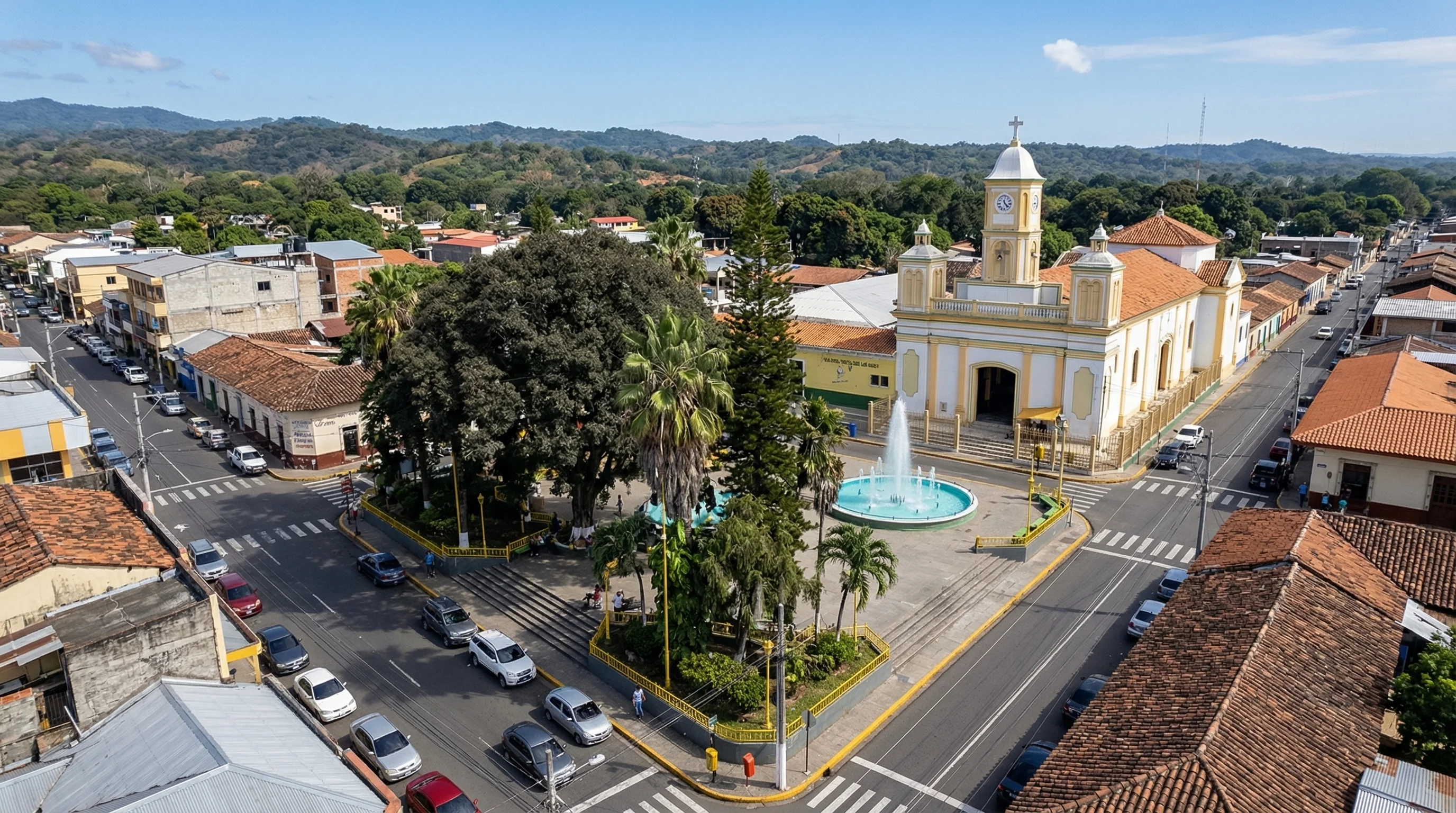
Cojutepeque, the capital of the Cuscatlán department in El Salvador, serves as a strategic logistics hub in the heart of the country, located just 45 kilometers southeast of San Salvador. Its central position provides efficient access to major metropolitan areas, the Port of La Libertad on the Pacific coast, and key agricultural regions. The local and regional economy is driven by agriculture (sugarcane, coffee, grains, and livestock), food and beverage processing (including sugar mills and distilleries), textile manufacturing, and a burgeoning services sector. It functions as a commercial and distribution center for the surrounding fertile valleys.
Transportation infrastructure is defined by its connectivity to El Salvador's primary highway network. Cojutepeque is a major junction on the Pan-American Highway (CA-1), the country's main north-south artery that connects the capital to the Guatemalan border. It is also intersected by the CA-2 highway, which runs east-west along the coast, providing direct links to the Port of La Libertad and other coastal cities. This grid position allows for efficient door-to-door delivery to destinations across El Salvador and seamless onward movement into Honduras and Nicaragua via the CA-1 corridor. For FTL freight, this means reliable road access from the Mexican border through Guatemala and into this pivotal Salvadoran distribution point, supporting the region's agricultural exports and the import of manufactured goods.


Ready to ship your cargo?
Get a personalized quote for your freight.
Quote Now Tijuana - Cojutepeque








