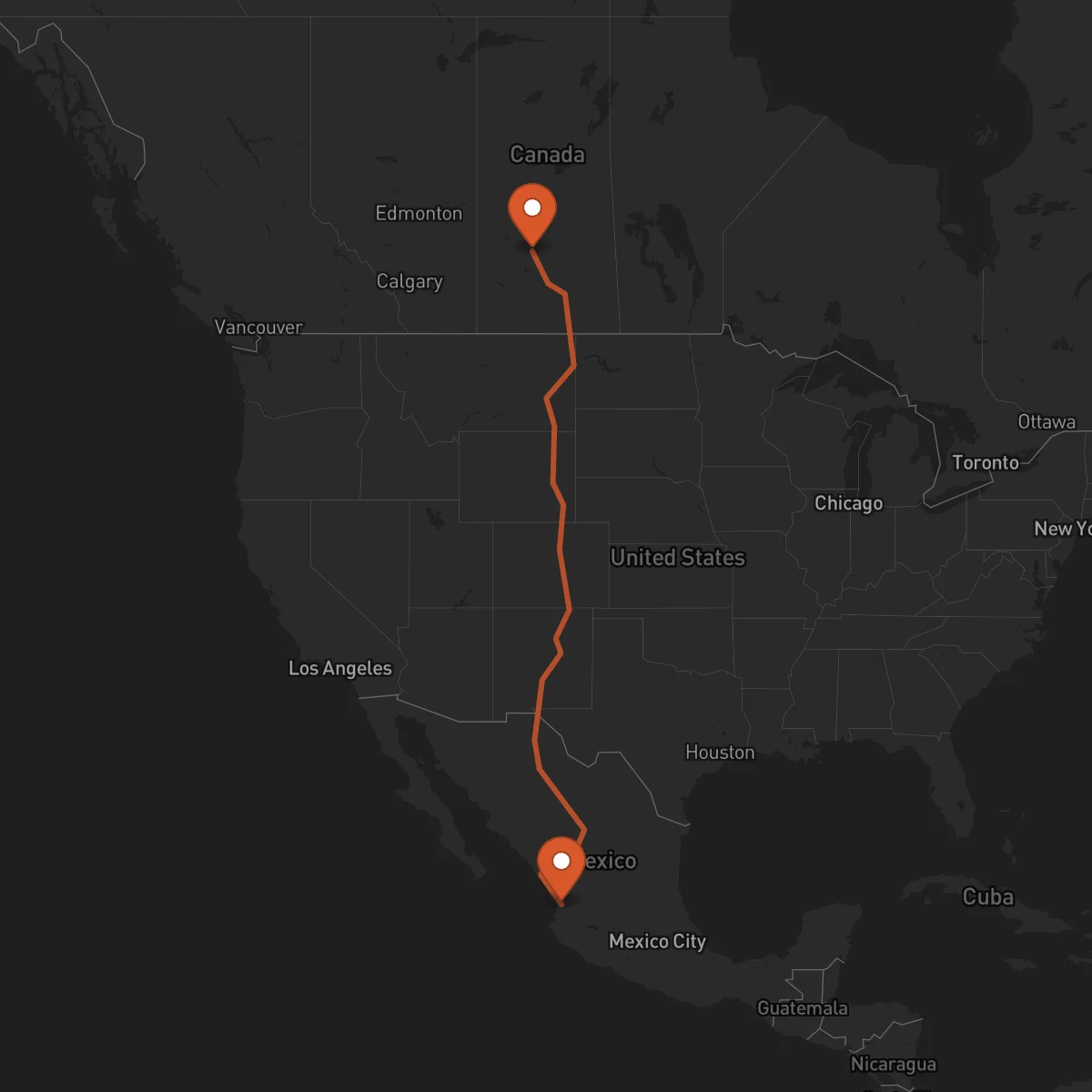
Tepic to Saskatoon
Saskatoon → TepicFTL freight transportation service between Tepic and Saskatoon. Reliable logistics solutions for your business.
Route Description
Everything you need to know about the corridor Tepic - Saskatoon
The Tepic-Saskatoon logistics corridor represents a vital cross-border connection between Mexico's Pacific coast and Canada's agricultural heartland. This 3,412 km route traverses diverse terrain and connects two regions with complementary economic strengths. The corridor passes through key Mexican states including Nayarit, Durango, and Coahuila before crossing into the United States through Laredo, continuing through the Midwest, and entering Canada via the Manitoba-Saskatchewan border.
The strategic importance of this corridor lies in its ability to link Mexico's growing manufacturing and agricultural exports with Canada's resource-based economy and sophisticated industrial sector. The route facilitates the movement of agricultural products, manufactured goods, and raw materials between North American markets. Key industries utilizing this corridor include automotive components, agricultural machinery, electronics, and food products, with particular emphasis on refrigerated cargo during harvest seasons.
Transportation infrastructure along this corridor includes major highways such as Mexican Federal Highway 15, US Interstate 35, and Canadian Highway 16. The route features several critical border crossings, with Laredo being the primary entry point into the United States, offering extensive customs facilities and processing capabilities. Control Terrestre's expertise in cross-border operations ensures seamless customs clearance and compliance with regulations at both US and Canadian borders, minimizing delays and optimizing transit times.
Control Terrestre facilitates efficient operations on this corridor through our network of certified carriers and strategic partnerships. Our C-TPAT and FAST certifications enable expedited processing at border crossings, while our experience in handling cross-border documentation ensures compliance with all regulatory requirements. We provide dedicated FTL services with real-time tracking capabilities, allowing clients to monitor their shipments throughout the journey from Tepic to Saskatoon.
Services for this Route
Available services for the corridor Tepic - Saskatoon
 Origin
Tepic, the capital of Nayarit, Mexico, serves as a strategic logistics hub on the Pacific coast. Its location provides access to major ports and industrial centers, making it an ideal origin point for cross-border freight movements. The city benefits from its proximity to the Port of San Blas and the developing industrial parks in the region, which support manufacturing and agricultural export activities.
The main industries in Tepic and surrounding Nayarit include agriculture (particularly sugarcane, corn, and tropical fruits), electronics manufacturing, and growing automotive components production. The region's economic development has been supported by investments in industrial infrastructure and transportation networks. Tepic's connectivity is enhanced by Federal Highway 15, which provides direct access to the US border and links to the broader Mexican highway system.
 Destination
Saskatoon
Saskatoon, located in central Saskatchewan, Canada, stands as a strategic logistics center in the Canadian Prairies. Its position along the South Saskatchewan River and at the intersection of major transportation routes makes it a crucial distribution point for goods moving throughout Western Canada. The city's infrastructure includes access to the Canadian National Railway and proximity to major highways connecting to other Canadian provinces and US markets.
The primary industries in Saskatoon include agriculture and agri-food processing, mining (particularly potash), biotechnology, and manufacturing. The region is known as Canada's breadbasket, with extensive grain production and food processing facilities. Saskatoon's economic strength is supported by its role as a research and education center, with the University of Saskatchewan contributing to innovation in agricultural and resource technologies. The city's logistics infrastructure is well-developed, featuring modern warehousing facilities and efficient transportation networks that facilitate both domestic and international trade.










