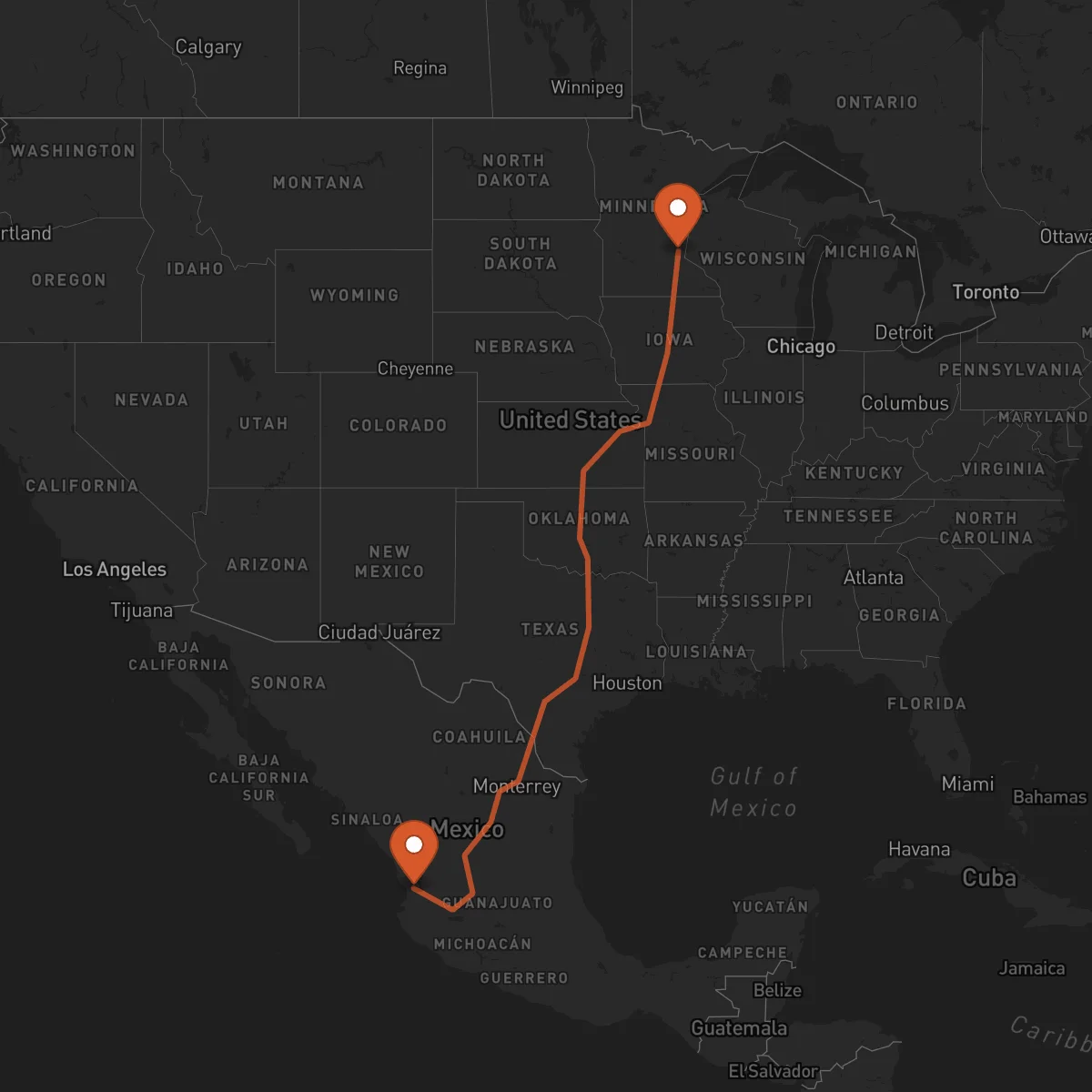
Tepic to Saint Paul
Saint Paul → TepicFTL freight transportation service between Tepic and Saint Paul. Reliable logistics solutions for your business.
Route Description
Everything you need to know about the corridor Tepic - Saint Paul
The Tepic-Saint Paul corridor represents a vital cross-border logistics connection between Mexico's western region and the economic heart of the American Midwest. This strategic route spans approximately 2,822 kilometers, linking the industrial and agricultural hub of Nayarit with Minnesota's major distribution centers and manufacturing facilities. The corridor traverses key Mexican states including Nayarit, Durango, and Coahuila before crossing at Laredo/Nuevo Laredo, one of North America's busiest commercial border crossings, and continues through Texas, Oklahoma, Kansas, and Iowa before reaching Saint Paul.
The economic significance of this corridor is substantial, facilitating the movement of diverse cargo including agricultural products from Nayarit's fertile valleys, manufactured goods from Mexico's growing industrial sector, and finished products destined for distribution throughout the central United States. The route benefits from Mexico's modern highway infrastructure, particularly the Durango-Mazatlán highway (Mexico 40D), which provides efficient connectivity to the U.S. border. Control Terrestre's expertise in cross-border operations ensures seamless customs clearance and regulatory compliance, with our C-TPAT-certified partners providing expedited processing and enhanced security measures that minimize delays and optimize transit times for our customers' full truckload shipments.
Services for this Route
Available services for the corridor Tepic - Saint Paul
 Origin
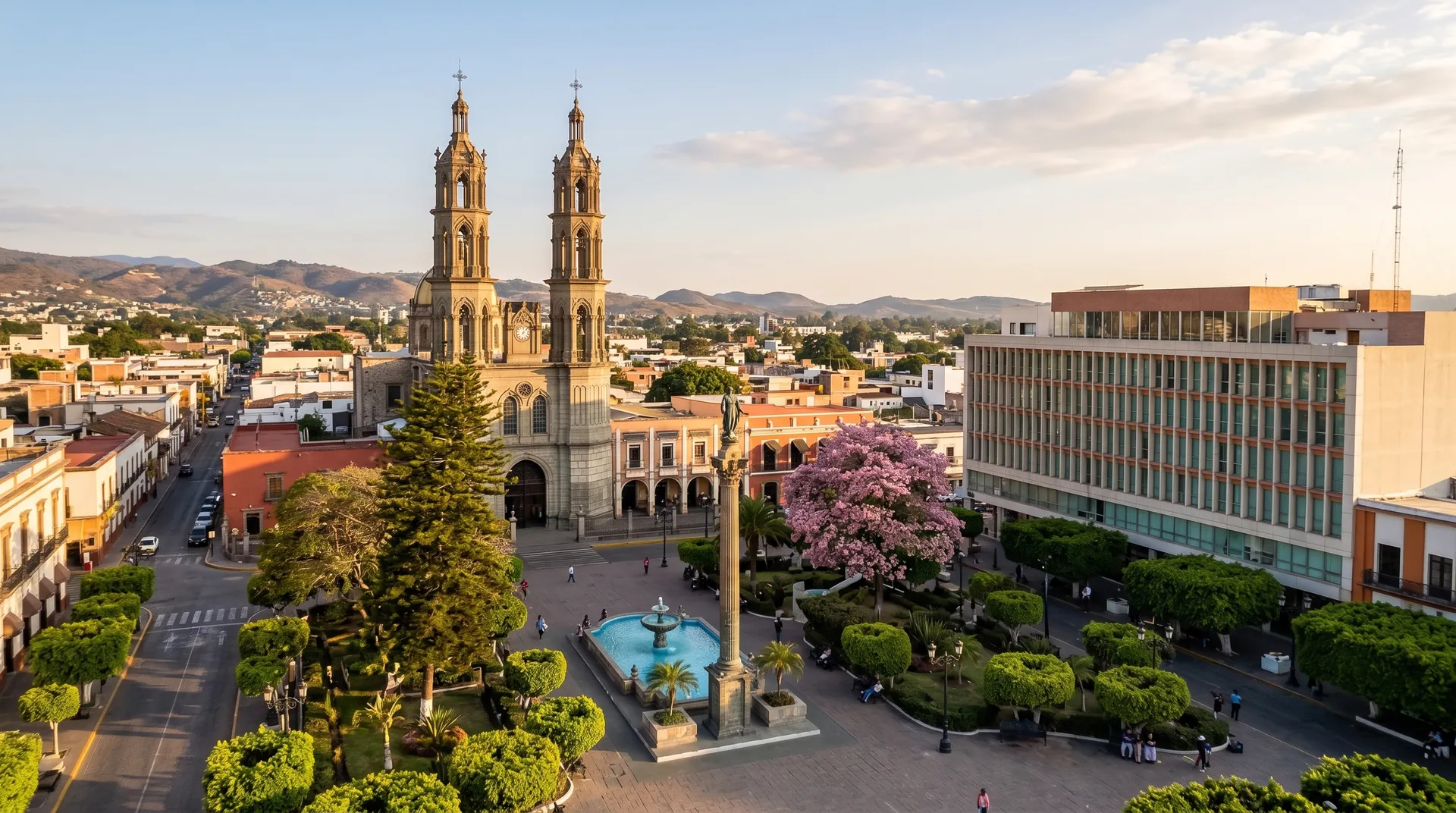
Tepic, the capital of Nayarit, serves as a strategic logistics gateway to Mexico's western Pacific region. Located in the heart of Nayarit's agricultural and industrial corridor, Tepic benefits from excellent connectivity to major ports including Puerto Vallarta and Mazatlán, as well as direct highway access to the U.S. border via Mexico's Federal Highway 15D. The city's economy is driven by diverse sectors including agriculture (particularly sugarcane, corn, and tropical fruits), electronics manufacturing, and growing industrial parks that attract both national and international investment. Tepic's transportation infrastructure includes modern highways, rail connections, and proximity to Amado Nervo International Airport, providing multimodal options for cargo consolidation and distribution. The region's strategic location makes it an ideal origin point for cross-border freight movements, with Control Terrestre offering specialized services that leverage Tepic's connectivity to major North American markets.
 Destination
Saint Paul
Saint Paul, Minnesota, forms part of the Minneapolis-Saint Paul metropolitan area, a major economic powerhouse in the American Midwest known as the Twin Cities. This strategic location offers exceptional logistics advantages, positioned at the intersection of major interstate highways including I-35, I-94, and I-494, providing direct access to Chicago, the Great Lakes region, and the broader U.S. market. The area's economy is characterized by diverse industries including food processing, medical technology, retail distribution, and advanced manufacturing. Saint Paul benefits from extensive transportation infrastructure, including the Minneapolis-Saint Paul International Airport, multiple intermodal facilities, and proximity to the Upper Mississippi River, one of the nation's most important inland waterway systems. The region's central location makes it a natural distribution hub, with Control Terrestre's services connecting Saint Paul's businesses to key markets throughout Mexico and the southwestern United States through efficient full truckload operations.










