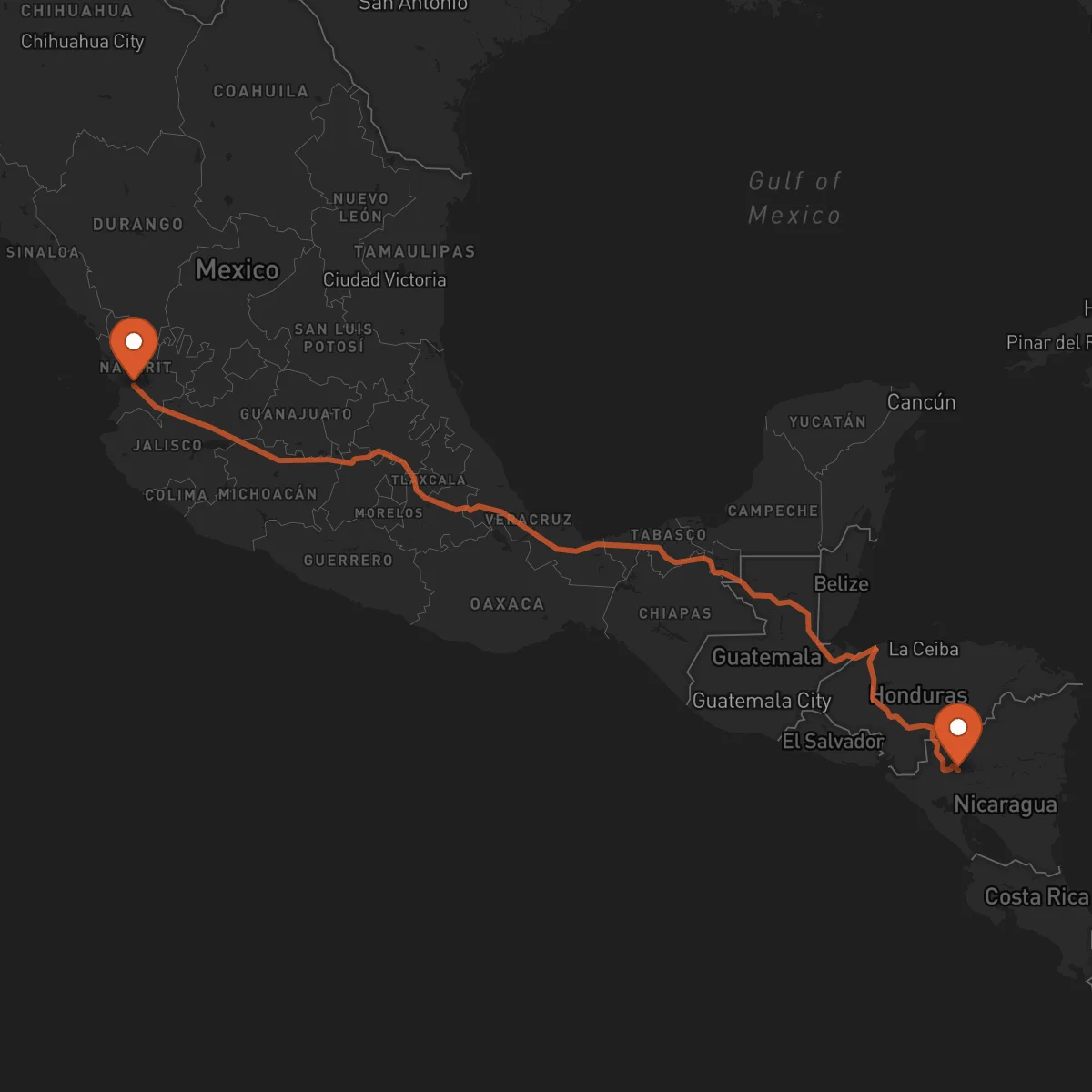
Tepic to Jinotega
Jinotega → TepicFTL freight transportation service between Tepic and Jinotega. Reliable logistics solutions for your business.
Route Description
Everything you need to know about the corridor Tepic - Jinotega
The logistics corridor connecting Tepic, Nayarit, México to Jinotega, Jinotega, Nicaragua represents a vital cross-border trade route spanning approximately 2211 km. This corridor holds significant strategic importance as it links the industrial and agricultural heartland of Western Mexico with the central highlands of Nicaragua, facilitating the movement of essential goods between the Pacific coasts of both countries. The corridor serves as a critical artery for commerce, enhancing regional integration and market access.
The economic and industrial context of the region is diverse and robust. Originating in Tepic, the corridor supports sectors such as agriculture, manufacturing, and seafood processing, leveraging Nayarit's rich natural resources. As it extends into Nicaragua, it connects with industries focused on agricultural production, textiles, and basic manufacturing in Jinotega. This flow of goods contributes to the economic vitality of both nations, supporting jobs and local development along the entire route.
Main industries utilizing this corridor include agribusiness, food products, textiles, and general manufacturing. The primary transportation infrastructure relies on a network of national highways, including Mexican Federal Highways such as Fed-15 and Fed-74, transitioning into Nicaraguan national routes. Key border crossings and customs considerations require adherence to regulations in both countries, with inspections typically occurring at official checkpoints. Control Terrestre facilitates operations on this corridor through our exclusive FTL services, leveraging our network of certified providers with C-TPAT and other compliance credentials. We manage the complexities of cross-border documentation and specialized cargo requirements, ensuring a seamless and responsible transport experience using equipment like dry vans and refrigerated units.
Services for this Route
Available services for the corridor Tepic - Jinotega
 Origin
Tepic, the capital of Nayarit, Mexico, is a strategically vital hub for logistics due to its central location within the region and access to major transport routes. Its proximity to the port of San Blas and integration with national highway systems make it an ideal starting point for freight movements. The city and its surrounding areas have a strong industrial base, with key sectors including agriculture, particularly agave and tropical fruits, manufacturing, and food processing, driving consistent freight generation. The available transportation infrastructure in Tepic is well-developed, featuring direct connections via Mexican Federal Highways like Fed-15, which provides a primary north-south corridor. This infrastructure supports efficient loading and dispatch operations, allowing Control Terrestre to effectively consolidate and initiate FTL shipments utilizing our network of certified carriers and specialized equipment, ensuring a reliable foundation for the corridor.
 Destination
Jinotega, located in the central highlands of Nicaragua, serves as a crucial logistics destination due to its role as a commercial and administrative center for the region. Its strategic position facilitates the distribution of goods throughout central and northern Nicaragua, connecting rural agricultural communities with urban markets. The main economic sectors driving demand in Jinotega include agriculture, notably coffee and cocoa production, alongside textiles and light manufacturing, creating a steady flow of inbound and outbound freight. The transportation infrastructure in Jinotega is supported by Nicaragua's national road network, including key routes that connect the city to other major population centers. This allows Control Terrestre to efficiently complete the logistics chain using our FTL services, leveraging our certified providers and specialized equipment, such as dry vans and refrigerated units, to handle the specific demands of the destination with a focus on responsible transport practices.










