Tepic to Bridgeport
Bridgeport → TepicFTL freight transportation service between Tepic and Bridgeport. Reliable logistics solutions for your business.
Route Description
Everything you need to know about the corridor Tepic - Bridgeport
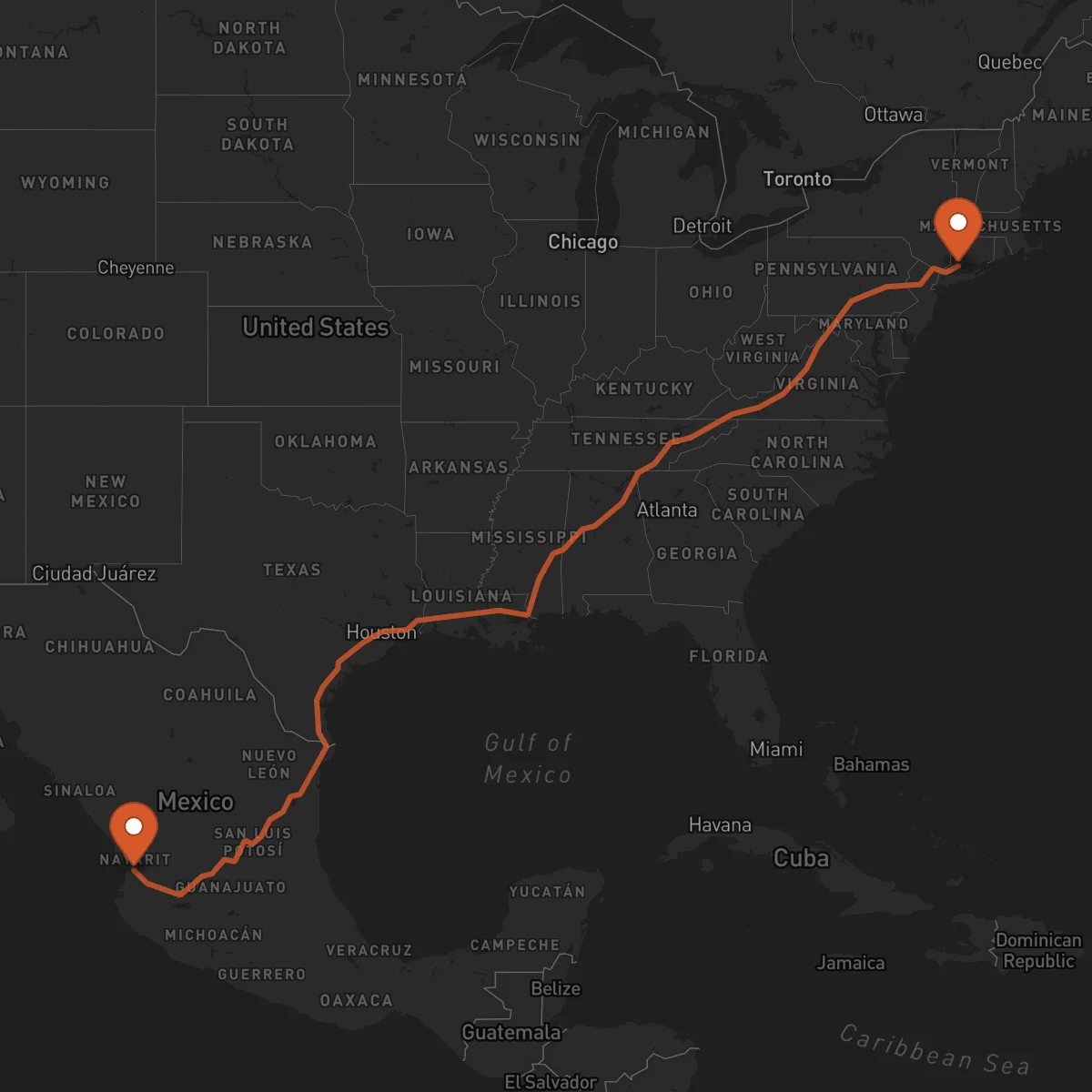
The logistics corridor connecting Tepic, Nayarit to Bridgeport, Connecticut represents a vital cross-border transportation route spanning approximately 3,687 kilometers across Mexico and the United States. This corridor serves as a strategic link between Mexico's Pacific industrial centers and the northeastern United States, facilitating the movement of diverse cargo types through major transportation hubs. The route traverses key economic regions, connecting manufacturing centers in western Mexico with distribution networks in the northeastern U.S.
The economic significance of this corridor lies in its ability to support international trade between Mexico's growing industrial sector and the robust manufacturing and distribution economy of Connecticut. Tepic serves as an important industrial hub in Nayarit, while Bridgeport functions as a critical entry point to the New York metropolitan area's extensive supply chain networks. The corridor primarily handles full truckload (FTL) shipments including automotive parts, electronics, consumer goods, and industrial equipment moving between these regions.
Transportation infrastructure along this route includes major highways such as Mexican Federal Highways 15 and 45, connecting to U.S. Interstate systems including I-35 and I-95. The corridor typically crosses through standard border crossings where C-TPAT certified carriers like Control Terrestre ensure expedited processing. Our expertise in cross-border operations, combined with our strategic partnerships and certified carrier network, enables seamless freight movement through this corridor, providing reliable FTL transportation solutions that maintain cargo integrity and delivery timelines across international boundaries.
Services for this Route
Available services for the corridor Tepic - Bridgeport
 Origin
Tepic, the capital city of Nayarit, Mexico, occupies a strategic position in western Mexico's logistics network. Located in the central-western region of Nayarit, Tepic serves as a key industrial and commercial center with excellent connectivity to major ports and manufacturing zones. The city benefits from its proximity to the Pacific coast and its integration with Mexico's federal highway system, making it an ideal origin point for cross-border freight movements. Tepic's industrial base includes food processing, electronics manufacturing, and agricultural product processing, creating consistent freight flows to U.S. markets.
The transportation infrastructure in Tepic includes access to Federal Highway 15, which connects to the broader Mexican highway network leading north toward the U.S. border. The city's industrial parks and manufacturing facilities generate substantial freight volumes, particularly in sectors such as automotive components, consumer electronics, and processed foods. Tepic's location provides efficient access to both Pacific ports for international maritime shipments and overland routes for direct cross-border transportation, making it a strategic origin for companies seeking reliable freight movement to destinations across the United States.
 Destination
Bridgeport
Bridgeport, Connecticut serves as a strategic logistics hub in the northeastern United States, offering exceptional connectivity to major metropolitan markets including New York City, Boston, and the broader New England region. Located along the Long Island Sound, Bridgeport provides access to maritime facilities while maintaining strong overland connections through Interstate 95 and the regional highway network. The city's proximity to major distribution centers, manufacturing facilities, and the Port of New York and New Jersey makes it an ideal destination for cross-border freight operations.
The economic landscape of Bridgeport encompasses diverse industries including advanced manufacturing, healthcare, education, and logistics services. The region's industrial base generates consistent demand for inbound freight, particularly in sectors such as automotive parts, industrial equipment, and consumer goods. Bridgeport's strategic location within the Northeast megalopolis provides access to over 50 million consumers within a 200-mile radius, making it a critical node in North American supply chains. The area's robust transportation infrastructure, including rail connections and proximity to major airports, enhances its capability to handle cross-border freight efficiently, supporting seamless distribution throughout the northeastern United States.










