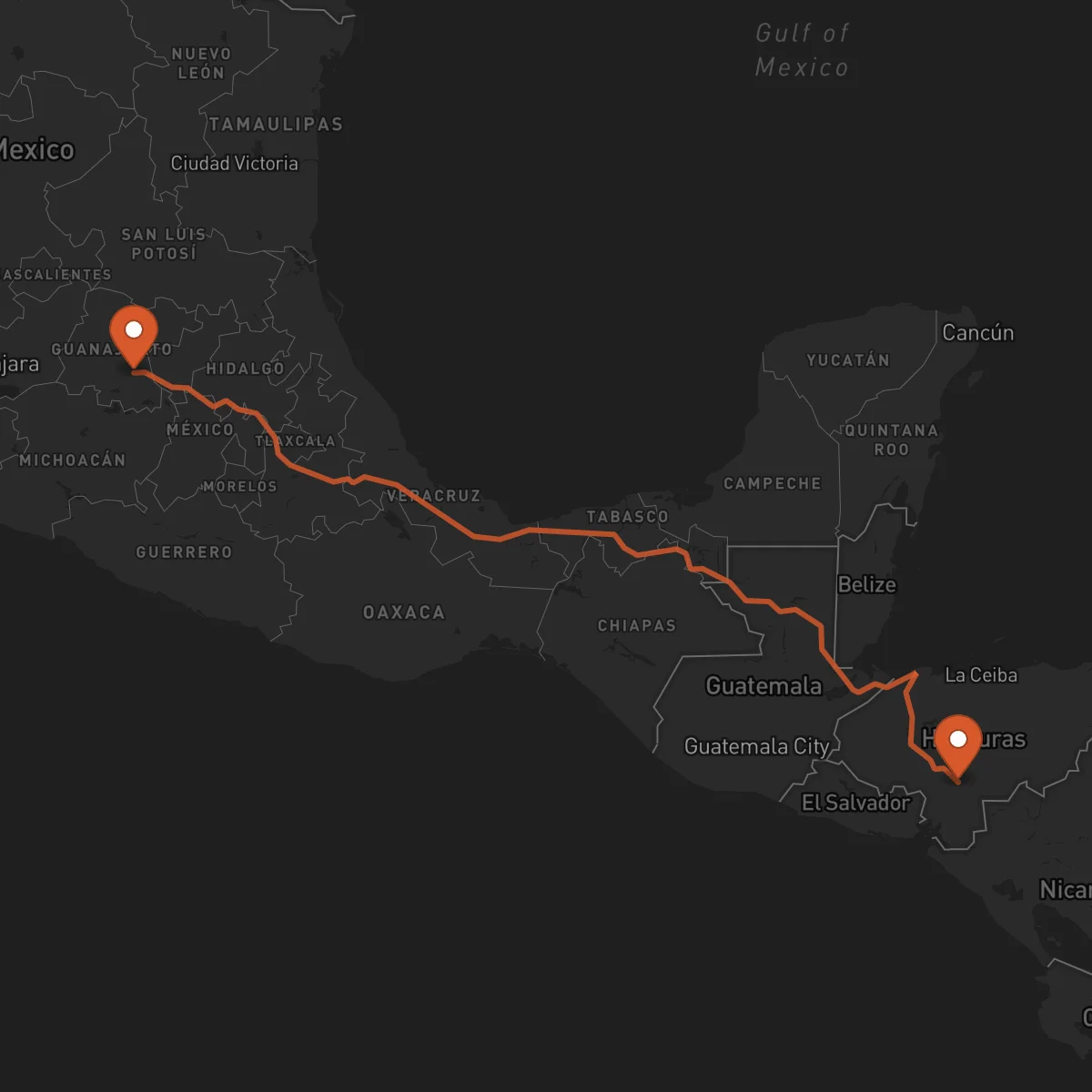
Tegucigalpa to Celaya
Celaya → TegucigalpaFTL freight transportation service between Tegucigalpa and Celaya. Reliable logistics solutions for your business.
Route Description
Everything you need to know about the corridor Tegucigalpa - Celaya
The Tegucigalpa-Celaya corridor represents a vital north-south artery connecting Central America's economic heartland with Mexico's industrial Bajío region. Spanning approximately 1,615 kilometers, this cross-border route facilitates the critical flow of goods between Honduras and one of Mexico's most dynamic manufacturing and agricultural zones. Strategically, it bridges the production capabilities of Central America with the advanced industrial supply chains of central Mexico, serving as a key conduit for regional trade integration under frameworks like USMCA.
The economic context is defined by complementary industrial strengths. Honduras, with Tegucigalpa as its primary commercial hub, exports textiles, apparel, agricultural products (coffee, melons, palm oil), and manufactured goods. Celaya and the surrounding Guanajuato state are powerhouses in Mexico's automotive industry (with major plants nearby in Silao and Apaseo el Grande), food processing, metal mechanics, and logistics services. This corridor is heavily utilized by industries requiring reliable full truckload (FTL) movement of components, finished vehicles, food products, and general manufactured goods between these production and consumption centers.
Key transportation infrastructure relies on a network of major highways. The route typically begins on Honduras' CA-5 highway, connecting Tegucigalpa to the northwestern border. After crossing into Mexico, it utilizes federal highways such as Mexican Federal Highway 190 and 57D (the Arco Norte), which provide efficient access to the Bajío region and Celaya specifically. The primary formal border crossing is at Agua Caliente (Honduras)/Ciudad Hidalgo (Chiapas, Mexico), a major port of entry with established customs facilities. Operations here require meticulous documentation and compliance with both Honduran and Mexican customs regulations, where our expertise in cross-border procedures is essential.
Control Terrestre facilitates seamless operations on this corridor through our robust alliance network of certified carriers. Our providers hold essential credentials like C-TPAT, FAST, and BASC, ensuring secure and expedited clearance processes. We exclusively manage FTL movements—dedicated, expedited, or specialized cargo—using appropriate equipment such as 53' dry vans, refrigerated units, and flatbeds as needed. Our service model focuses on coordinating the entire door-to-door journey, managing the complex border transition, and providing a single point of contact for our clients, optimizing their supply chain reliability across this challenging international route.
Services for this Route
Available services for the corridor Tegucigalpa - Celaya
 Origin
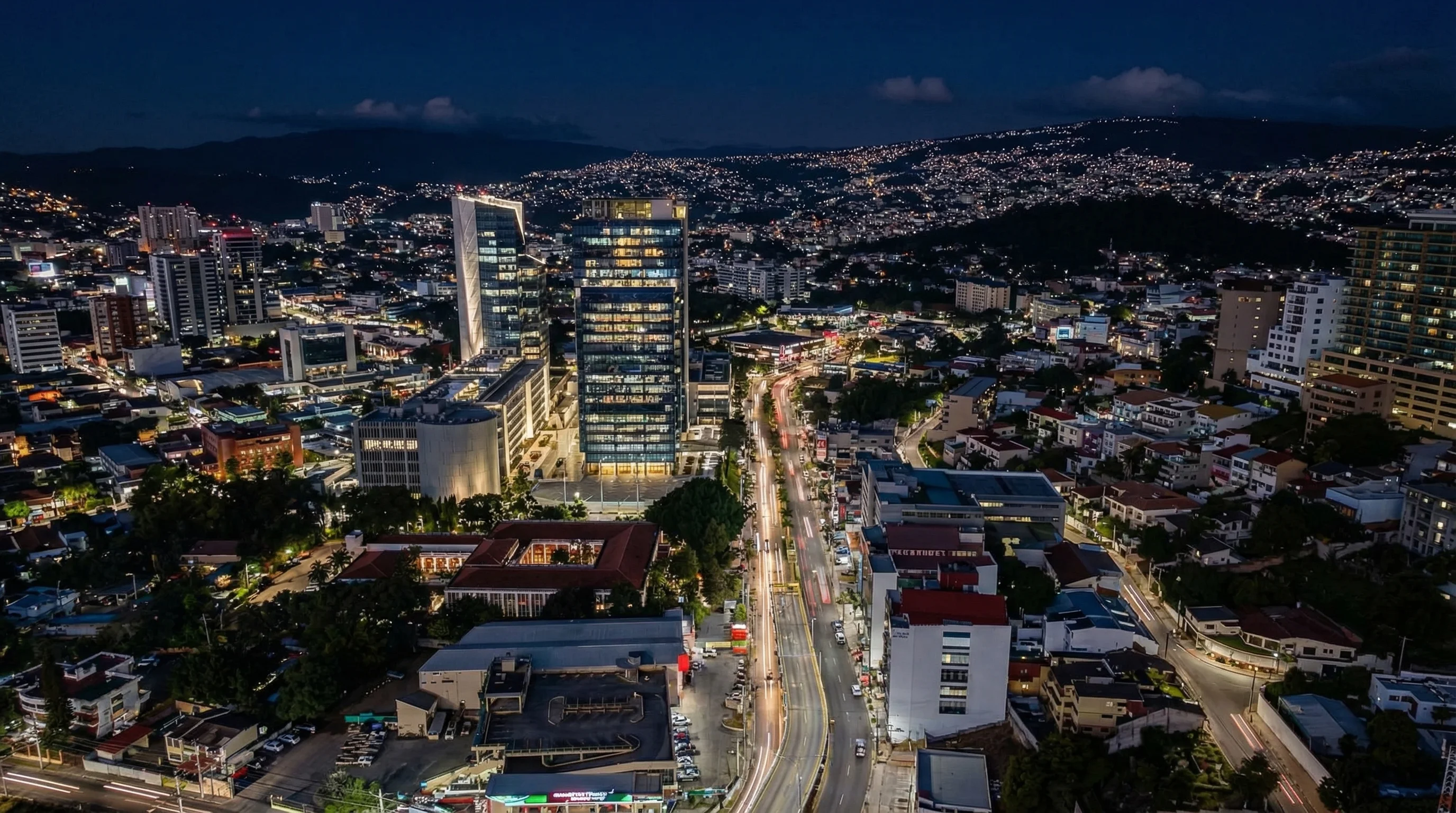
Tegucigalpa
Tegucigalpa, the capital of Honduras, serves as the nation's primary political, financial, and commercial hub, making it a strategic logistics origin point for Central America. Its location in the Francisco Morazán valley provides a central distribution node for the country's agricultural and manufacturing output. The city's economy is driven by commerce, services, and a significant manufacturing sector, particularly in textiles and apparel (maquilas), as well as food and beverage processing. Key exports originating from this region include coffee, textiles, agricultural produce, and a growing array of light industrial goods.
Logistically, Tegucigalpa is anchored by Toncontín International Airport (TGU) for air cargo, though the corridor relies predominantly on road infrastructure. The city is the terminus and origin for the crucial CA-5 highway, which runs northwest to the Guatemalan border and is the primary terrestrial artery for exporting goods from Honduras. This highway network connects Tegucigalpa to major production zones in the country's interior and northern coast. The presence of extensive warehouse and distribution facilities around the capital supports consolidation for long-haul international freight, positioning it as the indispensable starting point for northbound cargo bound for Mexico and beyond.
 Destination
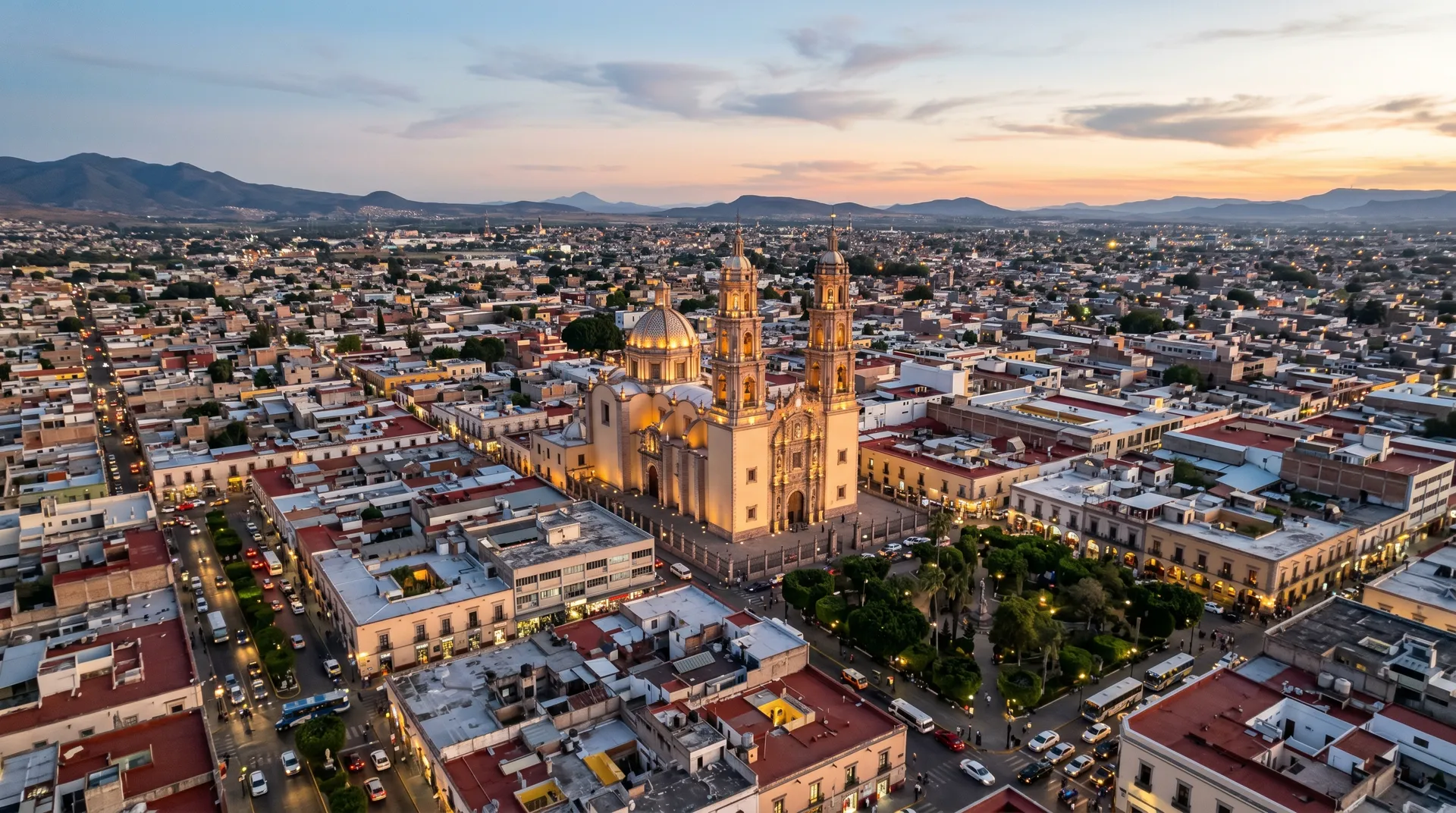
Celaya
Celaya, located in the state of Guanajuato, is a pivotal logistics and industrial city at the heart of Mexico's Bajío region, one of the country's most important economic corridors. Its strategic location provides direct access to major markets in central Mexico, including Mexico City, and to key industrial hubs in Querétaro, Silao, and León. The city is a major center for the automotive industry, hosting suppliers to the General Motors plant in Silao and the Volkswagen plant in Puebla, and is renowned for its food processing sector, particularly in baked goods and sweets. Other significant industries include metal mechanics, plastic manufacturing, and increasingly, logistics and distribution services.
Infrastructure is a key strength. Celaya is intersected by Mexican Federal Highway 57D (the Arco Norte) and Highway 90, providing high-speed, efficient connections to the rest of the country. It is also served by the Ferromex railway line. While it lacks a major commercial airport within the city, it is within a 1-2 hour drive of Querétaro Intercontinental Airport (QRO) and the León/Guanajuato Airport (BJX), facilitating multimodal options. The area features numerous industrial parks and logistics zones with modern warehouse facilities, making it an ideal destination for FTL freight requiring immediate access to manufacturing plants or regional distribution centers.










