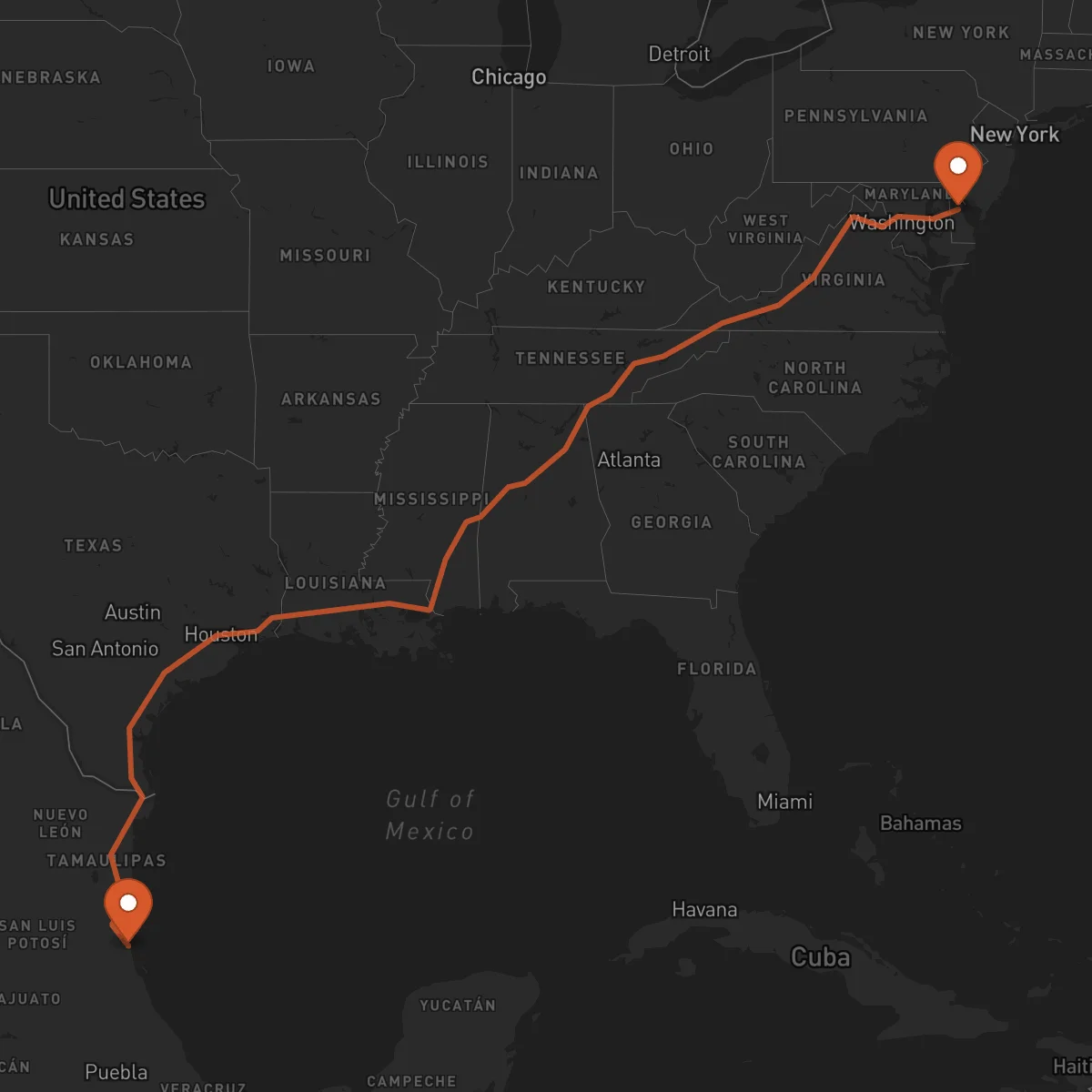
Tampico to Dover
Dover → TampicoFTL freight transportation service between Tampico and Dover. Reliable logistics solutions for your business.
Route Description
Everything you need to know about the corridor Tampico - Dover
The logistics corridor connecting Tampico, Tamaulipas, to Dover, Delaware, represents a vital cross-border transportation route spanning approximately 2,833 kilometers. This corridor serves as a crucial link between Mexico's eastern industrial hub and the northeastern United States, facilitating the movement of diverse cargo types across North America. The route traverses major transportation arteries, including Mexico's Federal Highway 180 and the United States' Interstate 95, connecting key economic regions and enabling seamless freight movement between two major markets.
The economic significance of this corridor cannot be overstated. Tampico serves as a critical gateway for Mexico's petrochemical industry, agricultural exports, and manufactured goods, while Dover represents access to the Mid-Atlantic region's manufacturing centers, distribution networks, and consumer markets. This route particularly benefits industries such as automotive parts, electronics, agricultural products, and industrial equipment, supporting the complex supply chains that characterize North American trade.
Control Terrestre specializes in managing the complexities of this cross-border corridor, ensuring efficient and compliant transportation of full truckload shipments. Our expertise encompasses navigating customs procedures, managing documentation requirements, and coordinating with trusted transportation partners along the entire route. We understand the unique challenges of cross-border logistics, including border crossing protocols at key points such as Laredo or Brownsville, and work diligently to minimize transit times while maintaining the highest standards of cargo security and regulatory compliance.
Services for this Route
Available services for the corridor Tampico - Dover
 Origin
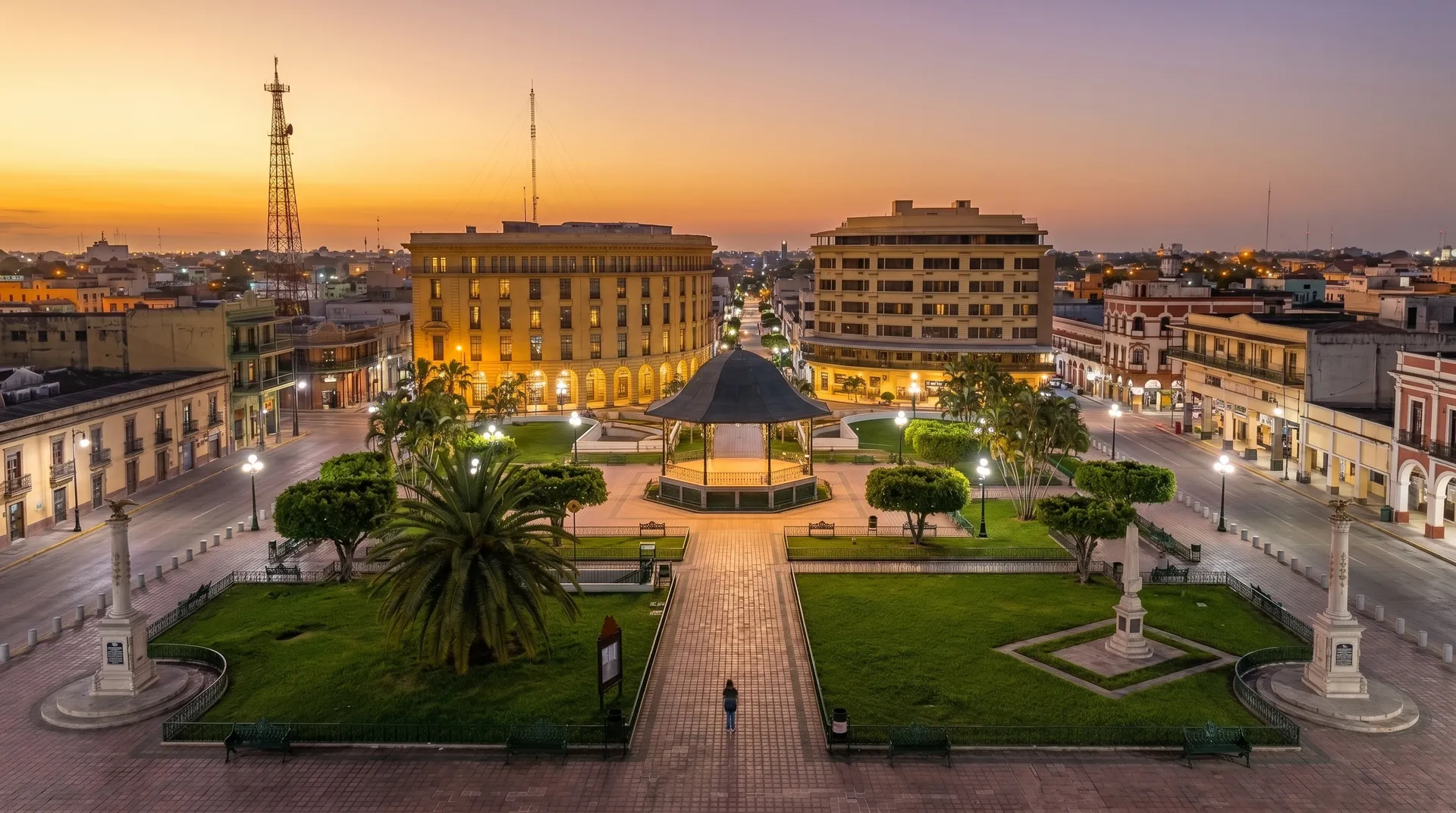
Tampico
Tampico, located in the state of Tamaulipas, Mexico, serves as a strategic logistics hub on the Gulf of Mexico. Its position as a major port city provides excellent connectivity for both maritime and ground transportation, making it an ideal origin point for cross-border freight movements. The city's industrial base includes significant petrochemical operations, agricultural processing facilities, and manufacturing plants, creating substantial freight volumes that require reliable transportation solutions to reach U.S. markets.
The transportation infrastructure in Tampico includes well-maintained highways connecting to major Mexican cities and border crossings, as well as port facilities that handle diverse cargo types. The region's economic activity spans multiple sectors, including energy, agriculture, fishing, and light manufacturing, all of which generate consistent freight demand. Control Terrestre leverages this strategic location to provide efficient ground transportation services, ensuring seamless connectivity between Tampico's industrial base and destinations throughout North America.
 Destination
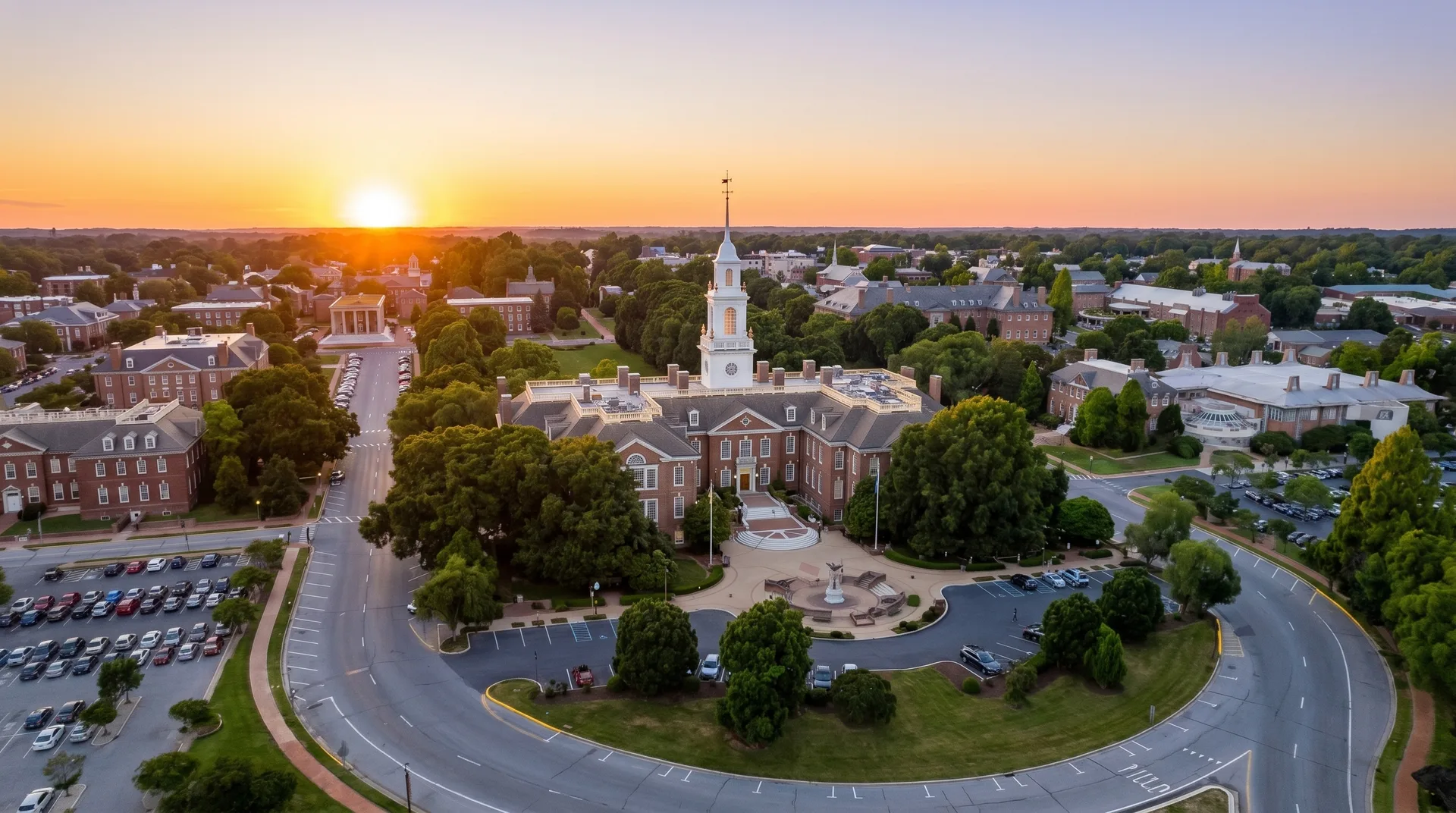
Dover
Dover, Delaware, occupies a strategic position in the northeastern United States, serving as a gateway to the Mid-Atlantic region's extensive market network. Located in close proximity to major metropolitan areas such as Philadelphia, Baltimore, and Washington D.C., Dover provides excellent distribution opportunities for freight arriving from Mexico. The region's transportation infrastructure includes access to major interstate highways, rail connections, and proximity to international airports, facilitating efficient cargo distribution throughout the northeastern United States.
The economic landscape around Dover encompasses diverse industries including aerospace, healthcare, agriculture, and advanced manufacturing. The region's strategic location near major consumer markets and industrial centers makes it an ideal destination for cross-border freight. Control Terrestre's services ensure that cargo arriving in Dover can be efficiently distributed to final destinations throughout the northeastern United States, supporting the complex supply chains that characterize this economically vibrant region.










