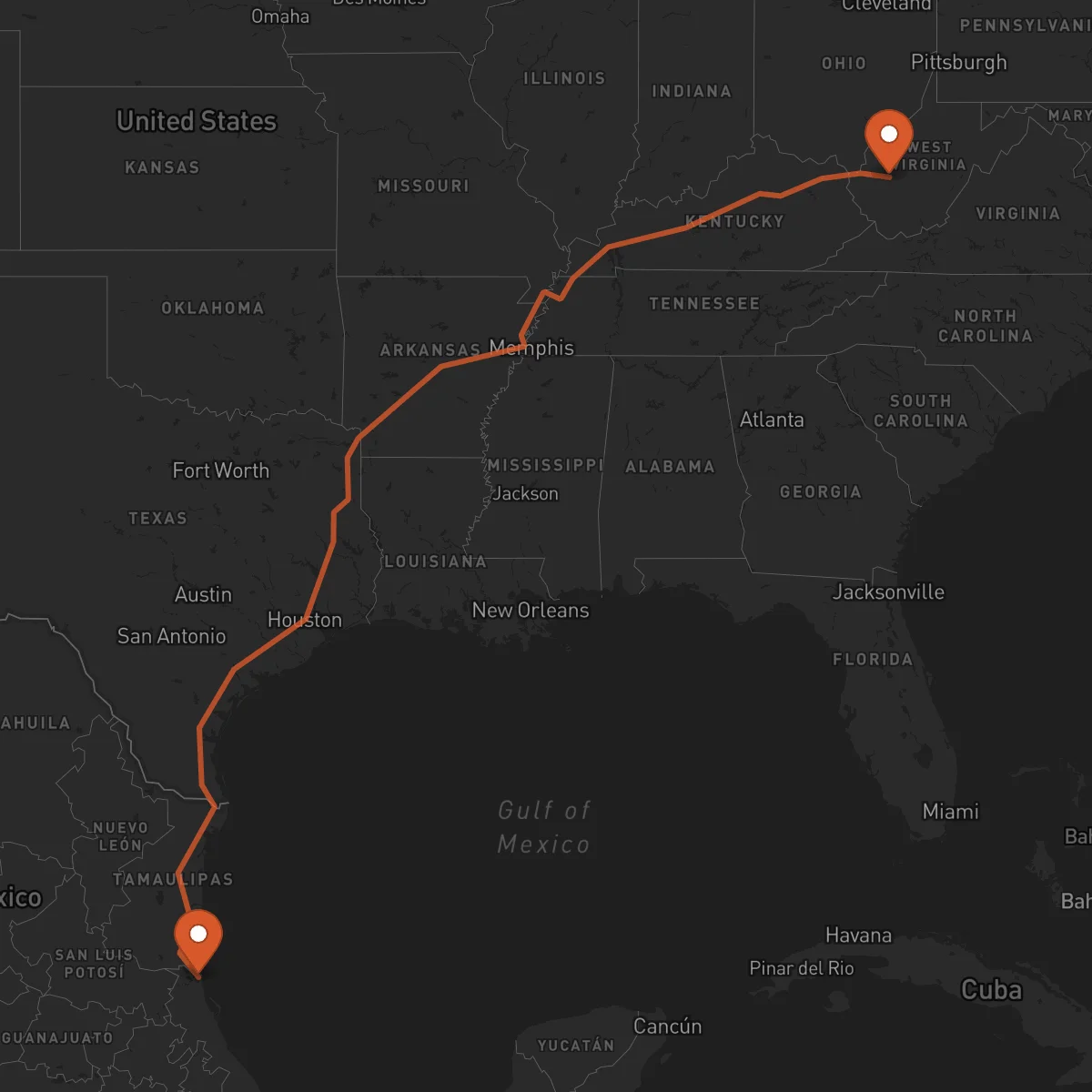
Tampico to Charleston
Charleston → TampicoFTL freight transportation service between Tampico and Charleston. Reliable logistics solutions for your business.
Route Description
Everything you need to know about the corridor Tampico - Charleston
The logistics corridor connecting Tampico, Tamaulipas, Mexico to Charleston, West Virginia, United States represents a vital cross-border freight transportation route spanning approximately 2,368 kilometers. This strategic corridor facilitates the movement of goods between Mexico's Gulf coast industrial hub and the inland markets of the southeastern United States. The route traverses diverse terrain and crosses multiple state lines, requiring expert coordination and compliance with both Mexican and U.S. customs regulations. Control Terrestre specializes in managing this complex cross-border operation, ensuring seamless freight movement through our network of certified transportation partners and our deep understanding of international logistics requirements.
Services for this Route
Available services for the corridor Tampico - Charleston
 Origin
Tampico
Tampico, located on the Gulf of Mexico in Tamaulipas, Mexico, serves as a crucial logistics gateway for northeastern Mexico. The port city features modern container terminals and industrial parks that support manufacturing, petrochemical, and agricultural exports. Its strategic coastal location provides access to both maritime shipping routes and extensive highway networks connecting to major Mexican industrial centers. The city's transportation infrastructure includes the Tampico International Airport and a comprehensive road system that links to the U.S. border and Mexico's interior.
 Destination
Charleston
Charleston, West Virginia, situated in the heart of the Appalachian region, functions as a key distribution center for the eastern United States. The city's location provides access to major population centers in the Northeast and Midwest while offering competitive transportation costs. Charleston's logistics infrastructure includes the Yeager Airport, rail connections, and proximity to major interstate highways. The region's economy is supported by energy, manufacturing, and distribution industries that rely on efficient freight transportation to maintain their supply chains.










