
Somoto to Trenton
Trenton → SomotoFTL freight transportation service between Somoto and Trenton. Reliable logistics solutions for your business.
Route Description
Everything you need to know about the corridor Somoto - Trenton
The logistics corridor connecting Somoto, Madriz, Nicaragua to Trenton, New Jersey represents a vital trade route between Central America and the northeastern United States. This extensive corridor spans approximately 3,189 kilometers, traversing multiple countries and crossing key international borders. The route serves as a critical link for businesses engaged in import-export operations between these two strategic locations, facilitating the movement of goods that support economic growth on both sides of the corridor.
The corridor's significance lies in its ability to connect Central American manufacturing and agricultural sectors with the industrial and consumer markets of the northeastern United States. Companies operating along this route benefit from access to major ports, manufacturing hubs, and distribution centers. The journey typically involves crossing through Honduras, Guatemala, and Mexico before entering the United States, requiring careful coordination of cross-border logistics and compliance with various customs regulations.
Key industries utilizing this corridor include automotive parts manufacturing, electronics, textiles, agricultural products, and consumer goods. The route passes through major transportation infrastructure including the CA-1 highway in Central America and I-95 in the United States. Control Terrestre facilitates seamless operations along this corridor through our extensive network of certified carriers, expertise in cross-border documentation, and real-time tracking capabilities that ensure transparency throughout the entire journey.
Services for this Route
Available services for the corridor Somoto - Trenton
 Origin
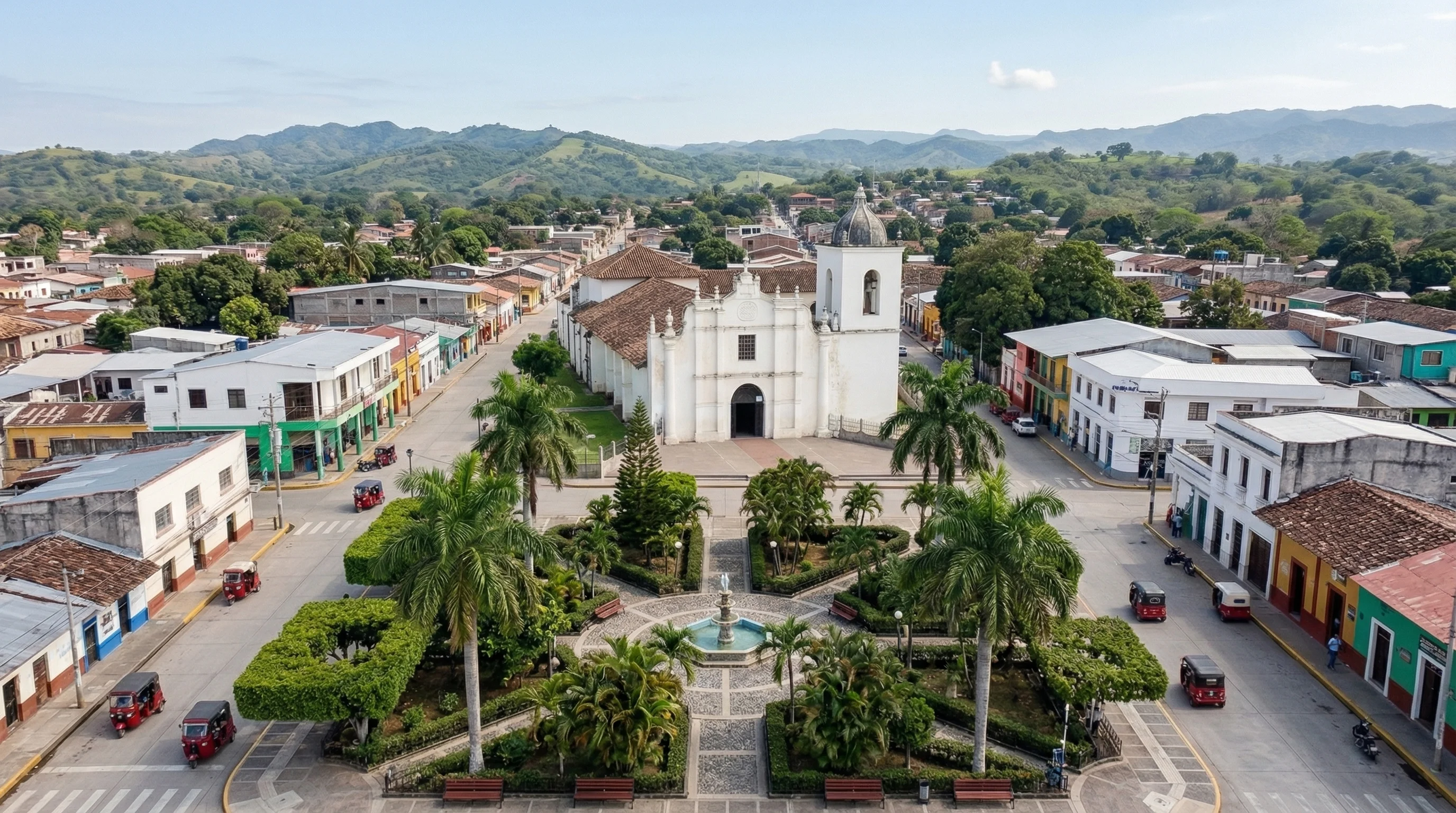
Somoto, located in the Madriz department of Nicaragua, serves as a strategic gateway for logistics operations in northern Nicaragua. The city's location provides access to both the Pacific and Atlantic corridors, making it an ideal origin point for shipments destined for North American markets. Somoto's economy is primarily driven by agriculture, including coffee production, tobacco cultivation, and cattle ranching, which generate significant export volumes. The region also has emerging manufacturing capabilities, particularly in food processing and textiles.
The transportation infrastructure in and around Somoto includes access to the Pan-American Highway (CA-1), which connects to major ports and border crossings. The city is approximately 170 kilometers from the Honduran border, providing relatively straightforward access to cross-border transportation networks. Local logistics providers offer warehousing and distribution services, though many companies rely on specialized cross-border freight forwarders like Control Terrestre to handle the complexities of international shipping from this region.
 Destination
Trenton
Trenton, the capital city of New Jersey, occupies a strategic position in the northeastern United States logistics network. Located at the intersection of major transportation corridors including I-95, I-295, and the New Jersey Turnpike, Trenton provides excellent connectivity to major markets including New York City, Philadelphia, and the broader Northeast corridor. The city's proximity to the Port of New York and New Jersey, one of the largest container ports in the United States, enhances its significance as a distribution hub.
The Trenton metropolitan area hosts diverse industries including pharmaceuticals, telecommunications, government services, and advanced manufacturing. The region benefits from a robust logistics infrastructure featuring multiple warehousing facilities, intermodal terminals, and distribution centers. Trenton's location within the Northeast megalopolis provides access to over 50 million consumers within a 250-mile radius, making it an ideal destination for goods arriving from international markets. The area's well-developed transportation network includes rail connections, trucking routes, and proximity to major airports, facilitating efficient last-mile delivery and distribution operations.










