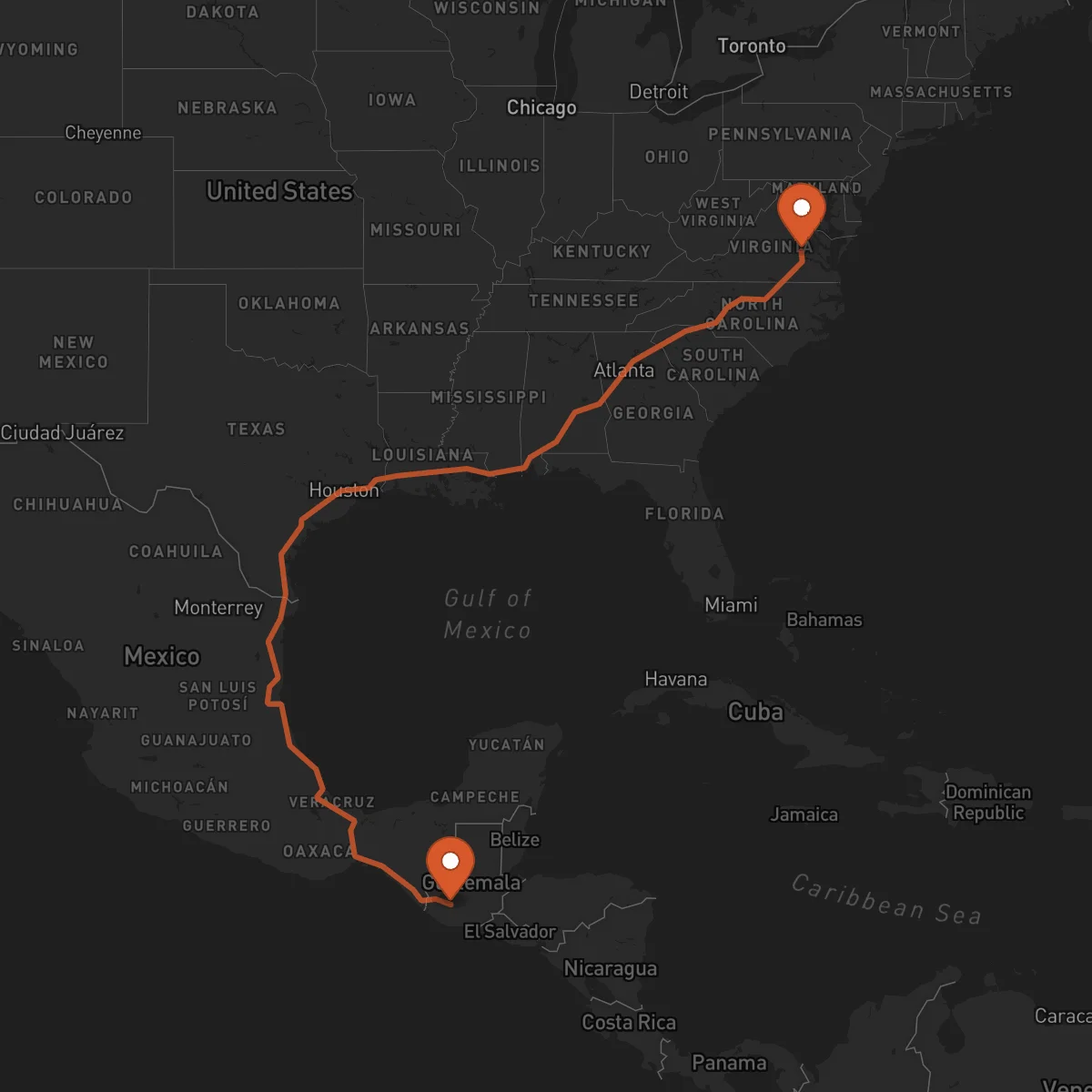
Sololá to Richmond
Richmond → SololáFTL freight transportation service between Sololá and Richmond. Reliable logistics solutions for your business.
Route Description
Everything you need to know about the corridor Sololá - Richmond
The logistics corridor connecting Sololá, Guatemala, to Richmond, Virginia, represents a critical trade artery for cross-border freight movement between Central America and the Eastern United States. Spanning approximately 2,872 kilometers, this route facilitates the flow of goods through a complex network of highways and border crossings, underpinning key economic relationships. For businesses, leveraging this corridor means accessing a streamlined pathway for full truckload (FTL) shipments, avoiding the delays and handling associated with consolidated freight.
Economically, the corridor bridges vibrant production zones with major consumption and distribution hubs. Guatemala's economy, particularly the highland regions like Sololá, is a significant exporter of agricultural products, textiles, and artisanal goods. Richmond, Virginia, serves as a strategic East Coast logistics and manufacturing center, with strong demand for imported goods and a robust infrastructure for distribution across the Southeast and Mid-Atlantic. Primary industries utilizing this route include agriculture (coffee, vegetables, fruits), textile and apparel manufacturing, and general consumer goods.
Transportation infrastructure relies on a sequence of major highways: from Sololá, the CA-1 and other regional routes connect to the Pacific coast and the primary border crossing at Tecún Umán/ Ciudad Hidalgo. After crossing into Mexico, the journey continues on the Mexican federal highway network, often integrating with the Pan-American corridor, before reaching the U.S. border at crossings like Laredo or other points along the Texas-Mexico border. In the United States, the route utilizes the interstate system, primarily I-35 and I-95, to reach Richmond. Key border considerations involve strict customs compliance, security protocols, and documentation for cross-border movements. Control Terrestre facilitates seamless operations on this corridor by leveraging our strategic alliance of carriers, all holding essential certifications like C-TPAT, FAST, and BASC. Our expertise ensures that your FTL shipments navigate border processes efficiently, with dedicated support for customs brokerage coordination and compliance, providing a single point of contact for this complex international lane.
We do not offer LTL services; our focus is exclusively on dedicated, full truckload solutions—whether standard dry van, refrigerated, specialized, or expedited cargo. This specialization allows us to maintain control and visibility from origin in Sololá to final destination in Richmond, optimizing your supply chain for reliability and reducing transit complexity.
Services for this Route
Available services for the corridor Sololá - Richmond
 Origin
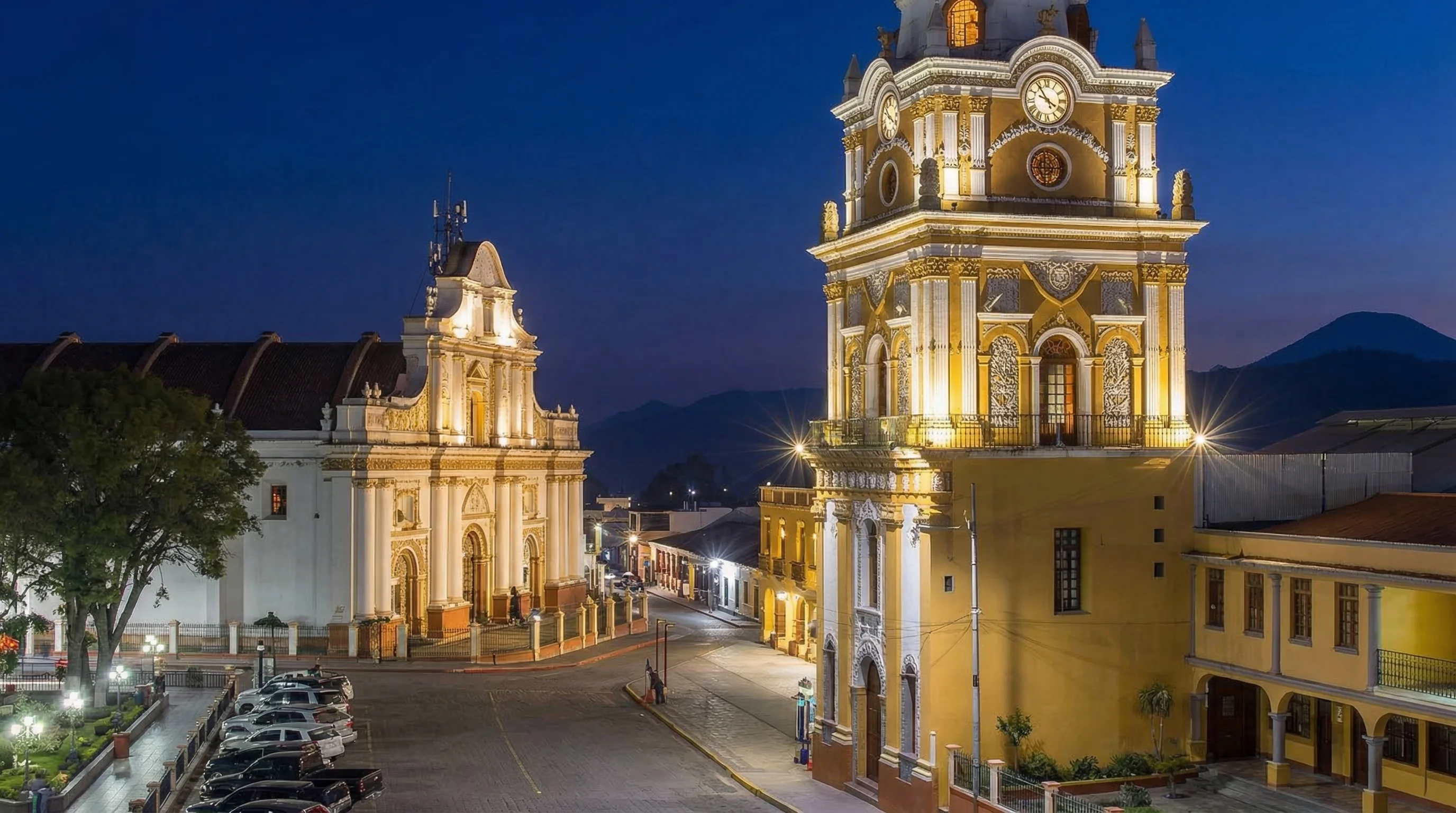
Sololá, located in the Guatemalan highlands, is a strategic logistics origin due to its concentration of key export-oriented industries. The region is globally renowned for its high-quality coffee production, with numerous fincas (farms) and processing facilities. Additionally, textile and apparel manufacturing, along with artisanal crafts, form significant economic sectors that generate consistent freight volume destined for North American markets. The available transportation infrastructure centers on road networks connecting Sololá to major Pacific ports like Puerto Quetzal, which is crucial for maritime export. For land-based cross-border freight, the primary overland route links through the Tecún Umán border crossing into Mexico, requiring well-maintained highways to support efficient FTL movement. Sololá's position provides a direct gateway from Central American production centers to the extensive Mexican and U.S. highway systems.
 Destination
Richmond
Richmond, Virginia, is a pivotal logistics destination on the U.S. East Coast, offering exceptional strategic value for distribution and manufacturing. It serves as a major hub for industries such as tobacco processing, food and beverage manufacturing, pharmaceuticals, and advanced materials. The city's infrastructure is highly developed, featuring direct access to Interstate 95—the critical north-south corridor for the Eastern Seaboard—as well as strong rail connections and proximity to the Port of Virginia in Norfolk, enabling multimodal flexibility. For freight forwarders, Richmond's location provides efficient reach into the densely populated markets of the Northeast, Southeast, and Mid-Atlantic. The area hosts numerous large distribution centers and manufacturing parks, making it a consistent endpoint for FTL shipments requiring door-to-door delivery into this active economic zone.










