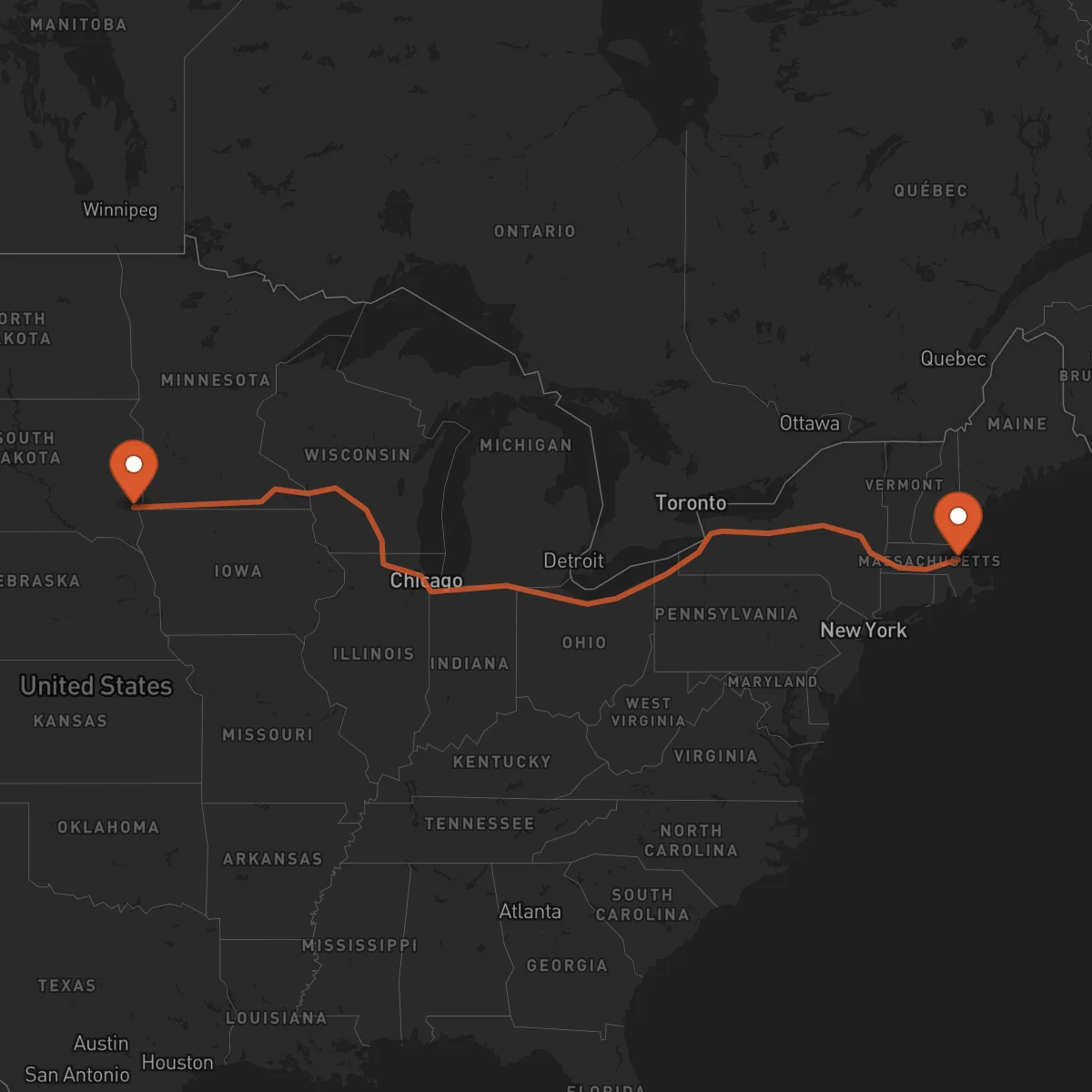
Sioux Falls to Boston
Boston → Sioux FallsFTL freight transportation service between Sioux Falls and Boston. Reliable logistics solutions for your business.
Route Description
Everything you need to know about the corridor Sioux Falls - Boston
The Sioux Falls to Boston corridor represents a vital domestic freight transportation route connecting the Midwest to the Northeast United States. This 2,085-kilometer journey traverses diverse economic regions, linking South Dakota's growing logistics hub with Massachusetts' historic industrial and technological center. The corridor serves as a critical supply chain artery for businesses requiring reliable full truckload (FTL) transportation services across America's heartland and into the bustling Northeast corridor.
The route primarily follows major interstate highways including I-90 East through Minnesota, Wisconsin, and into Illinois, then transitions to I-90/I-290 East through Indiana, Ohio, and Pennsylvania before connecting to I-90 East into Massachusetts. This well-established transportation infrastructure supports consistent transit times and multiple routing options for freight carriers. The corridor passes through key logistics centers including Chicago, Cleveland, and Albany, providing numerous strategic waypoints for potential consolidation or distribution activities.
Control Terrestre specializes in optimizing full truckload operations along this corridor, offering dedicated transportation solutions that ensure your freight moves efficiently from origin to destination. Our extensive network of certified carriers provides the capacity and reliability needed for time-sensitive shipments, while our expertise in handling specialized cargo ensures compliance with all regulatory requirements throughout the journey. We understand the unique demands of cross-country freight movement and provide the visibility and support necessary to keep your supply chain running smoothly.
Services for this Route
Available services for the corridor Sioux Falls - Boston
 Origin
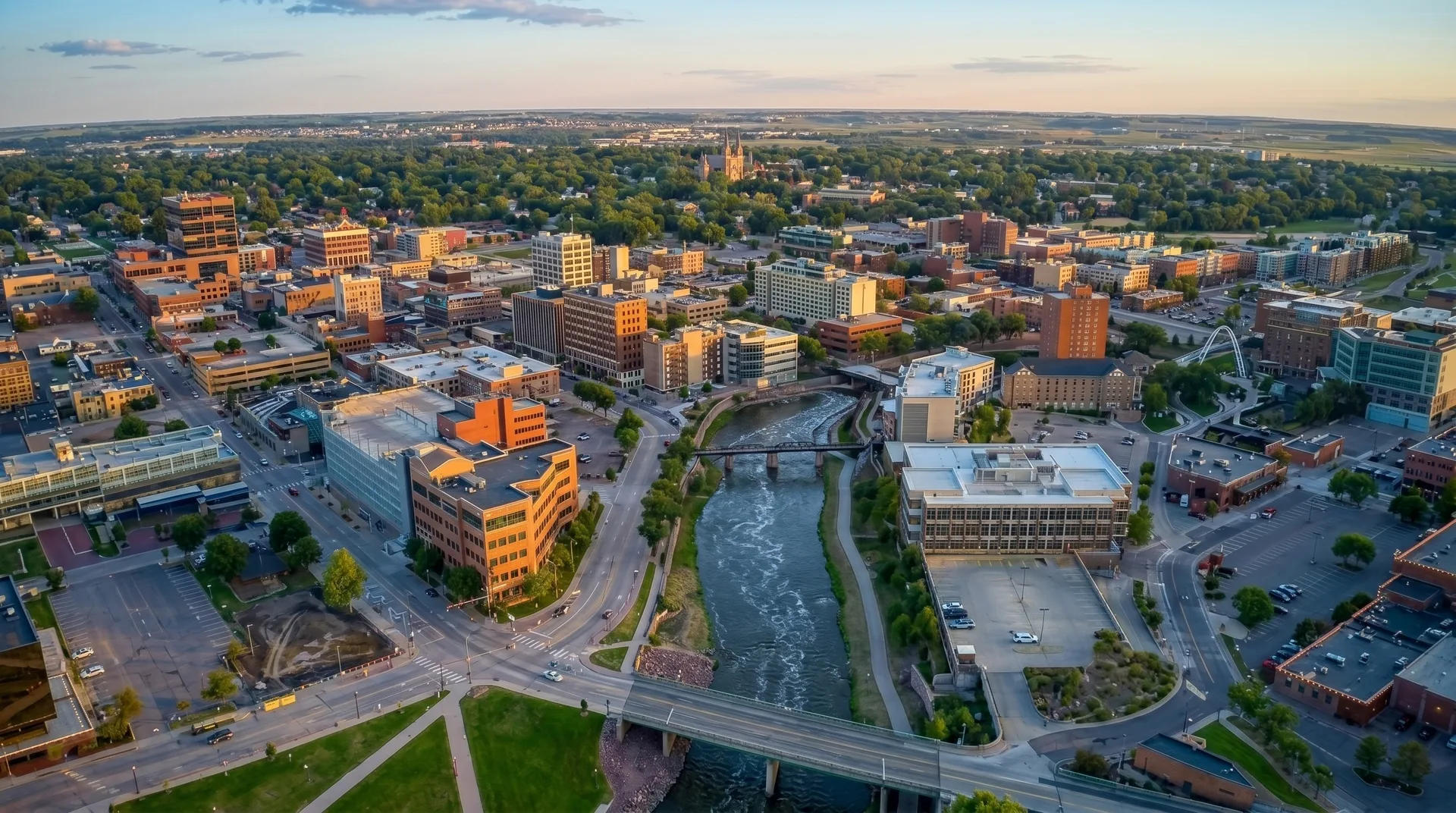
Sioux Falls
Sioux Falls, South Dakota serves as a strategic logistics hub in the Midwest, offering excellent connectivity for freight transportation across the central United States. The city's central location provides access to major transportation networks, including interstate highways I-90 and I-29, which facilitate efficient movement of goods to both coasts and southern regions. Sioux Falls has developed into a significant distribution center, supported by its robust transportation infrastructure and proximity to key manufacturing and agricultural regions.
The local economy is diverse, with strong sectors in healthcare, financial services, and retail distribution. Major employers include Sanford Health, Avera Health, and Wells Fargo, creating consistent freight demand for both inbound and outbound shipments. The city's logistics infrastructure includes multiple warehousing facilities, cross-docking operations, and a well-developed last-mile delivery network. Sioux Falls International Airport provides air cargo options, while the nearby rail connections offer intermodal transportation alternatives for freight moving through the region.
 Destination
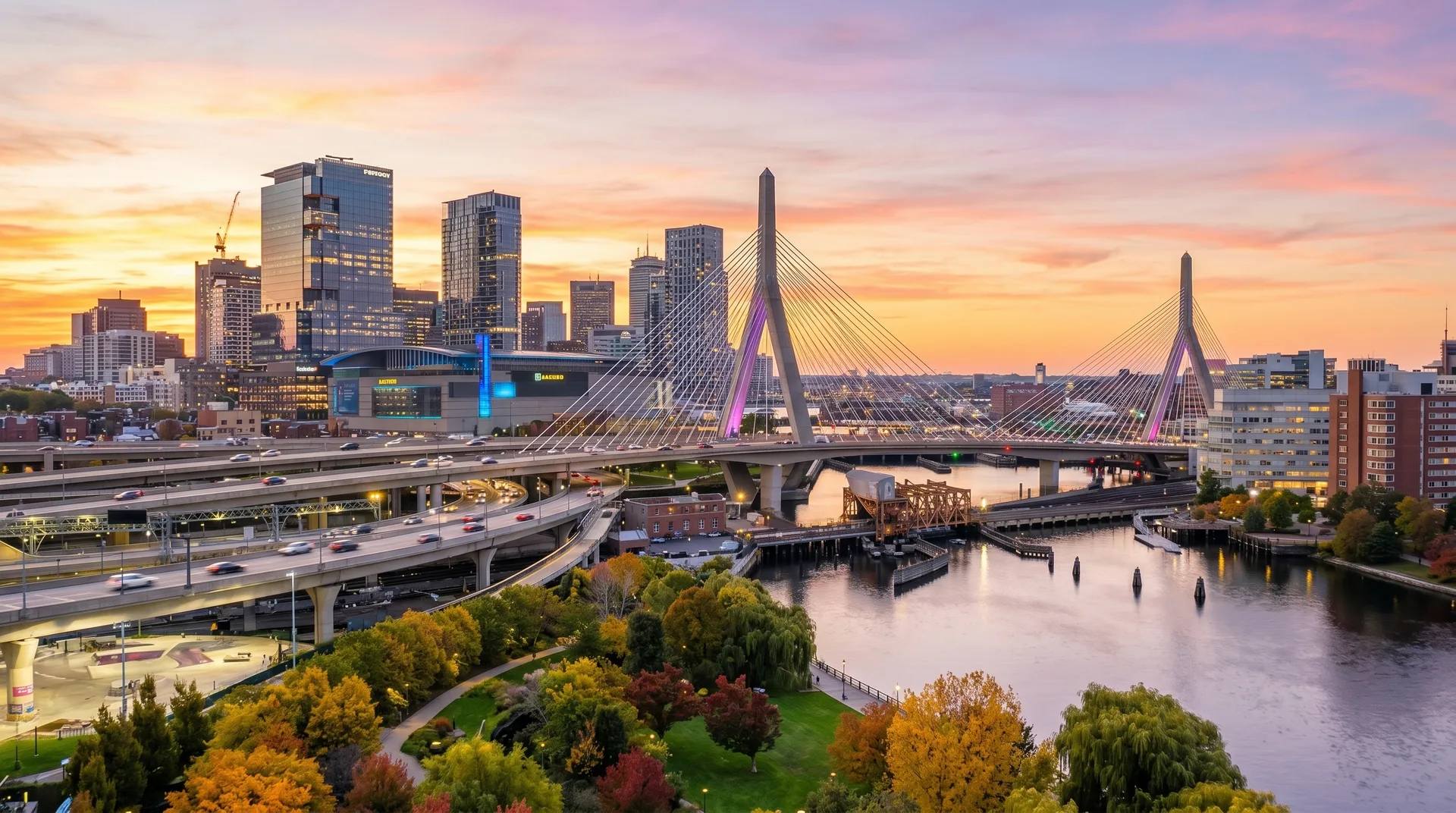
Boston
Boston, Massachusetts stands as a premier logistics destination on the East Coast, offering unparalleled access to one of America's most economically vibrant regions. The city's strategic position in New England provides connections to major metropolitan areas including New York City, Philadelphia, and Washington D.C. Boston's transportation infrastructure includes I-90 (Massachusetts Turnpike), I-93, and I-95, creating multiple efficient routing options for freight entering and exiting the metropolitan area.
The Boston metropolitan area is a global center for education, healthcare, finance, and technology, with major institutions including Harvard University, Massachusetts General Hospital, and numerous biotechnology firms driving consistent freight demand. The Port of Boston provides maritime shipping capabilities, while Logan International Airport offers extensive air cargo services. The region's strong manufacturing base, particularly in medical devices and advanced technology, creates specialized freight needs that require experienced carriers. Boston's dense urban environment also necessitates expertise in navigating complex delivery requirements and time-sensitive distribution operations.










