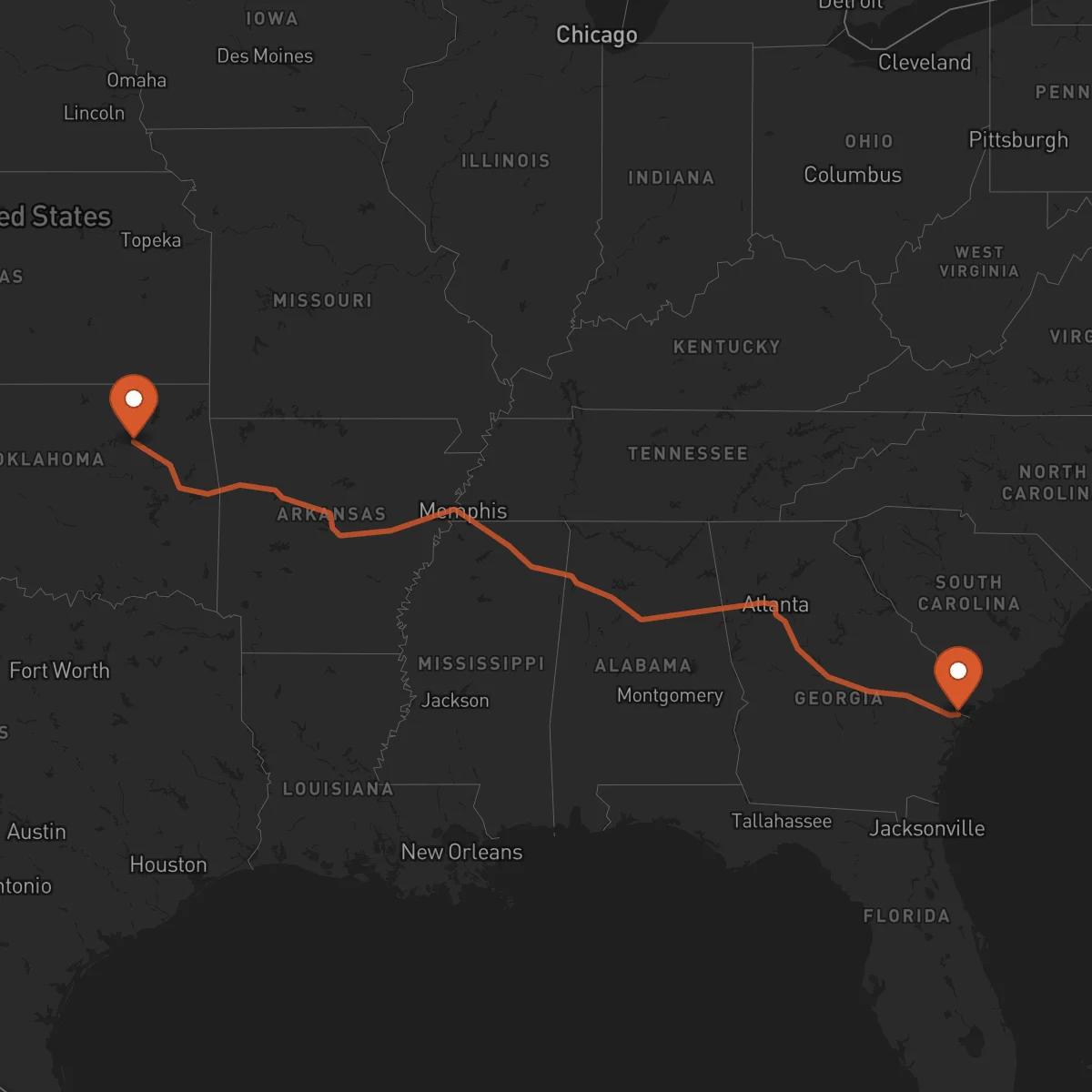
Savannah to Tulsa
Tulsa → SavannahFTL freight transportation service between Savannah and Tulsa. Reliable logistics solutions for your business.
Route Description
Everything you need to know about the corridor Savannah - Tulsa
The Savannah-Tulsa corridor represents a vital logistics connection spanning 1,443 kilometers across the southeastern and south-central United States. This strategic route links Georgia's coastal port city with Oklahoma's inland energy hub, facilitating the movement of goods between two economically significant regions. The corridor traverses multiple states including Georgia, Tennessee, Arkansas, and Oklahoma, connecting major transportation networks and industrial centers along the way.
The economic importance of this corridor cannot be overstated. Savannah serves as a major gateway for international trade, with one of the busiest ports in the United States, while Tulsa stands as a key center for the energy and aerospace industries. This route enables the efficient flow of goods between these diverse economic zones, supporting industries ranging from manufacturing and energy to agriculture and retail. The corridor's infrastructure includes major interstate highways such as I-16, I-75, I-24, and I-44, providing reliable and efficient transportation options.
Control Terrestre specializes in optimizing freight operations along this crucial corridor. Our extensive network of experienced transportation providers ensures that we can handle the unique challenges of this route, from the humid conditions of the Southeast to the varied terrain of the Midwest. We offer tailored FTL solutions that meet the specific needs of businesses operating between these two dynamic markets, ensuring timely and secure delivery of goods regardless of their nature or destination requirements.
Services for this Route
Available services for the corridor Savannah - Tulsa
 Origin
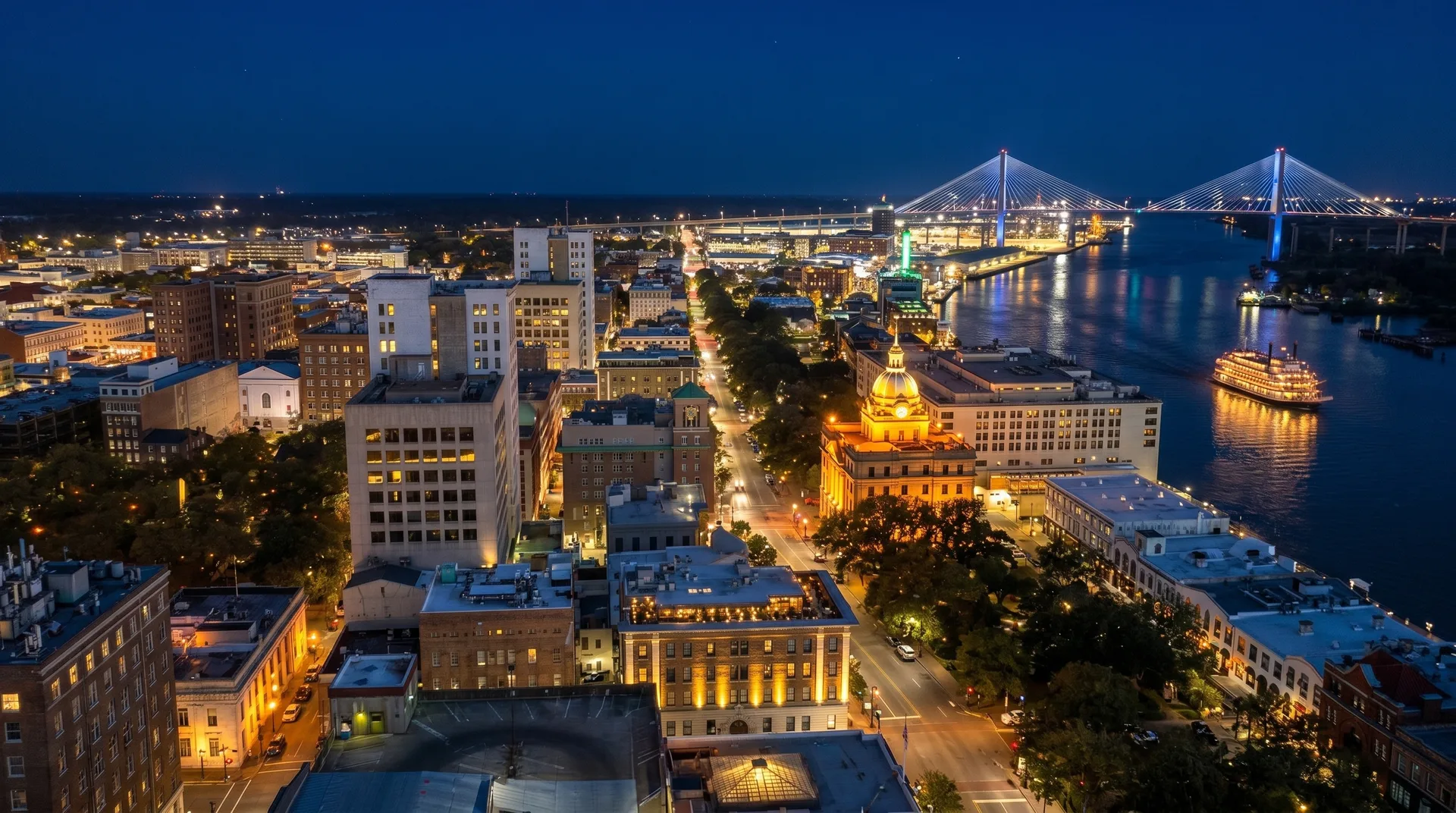
Savannah
Savannah, Georgia, stands as a strategic logistics hub on the southeastern coast of the United States. Its location at the mouth of the Savannah River provides direct access to the Atlantic Ocean, making it home to one of the fastest-growing container ports in the country. The Port of Savannah handles millions of tons of cargo annually, serving as a critical gateway for both imports and exports. The city's infrastructure includes extensive rail connections, major highways like I-16 and I-95, and a well-developed network of warehousing and distribution centers.
The economy of Savannah is diverse, with key sectors including manufacturing, aerospace, food processing, and tourism. The presence of major companies and industrial parks has established Savannah as a significant manufacturing and distribution center. The city's logistics infrastructure is further enhanced by the Savannah Airport, which offers cargo services, and the surrounding industrial areas that provide ample space for storage and distribution operations.
 Destination
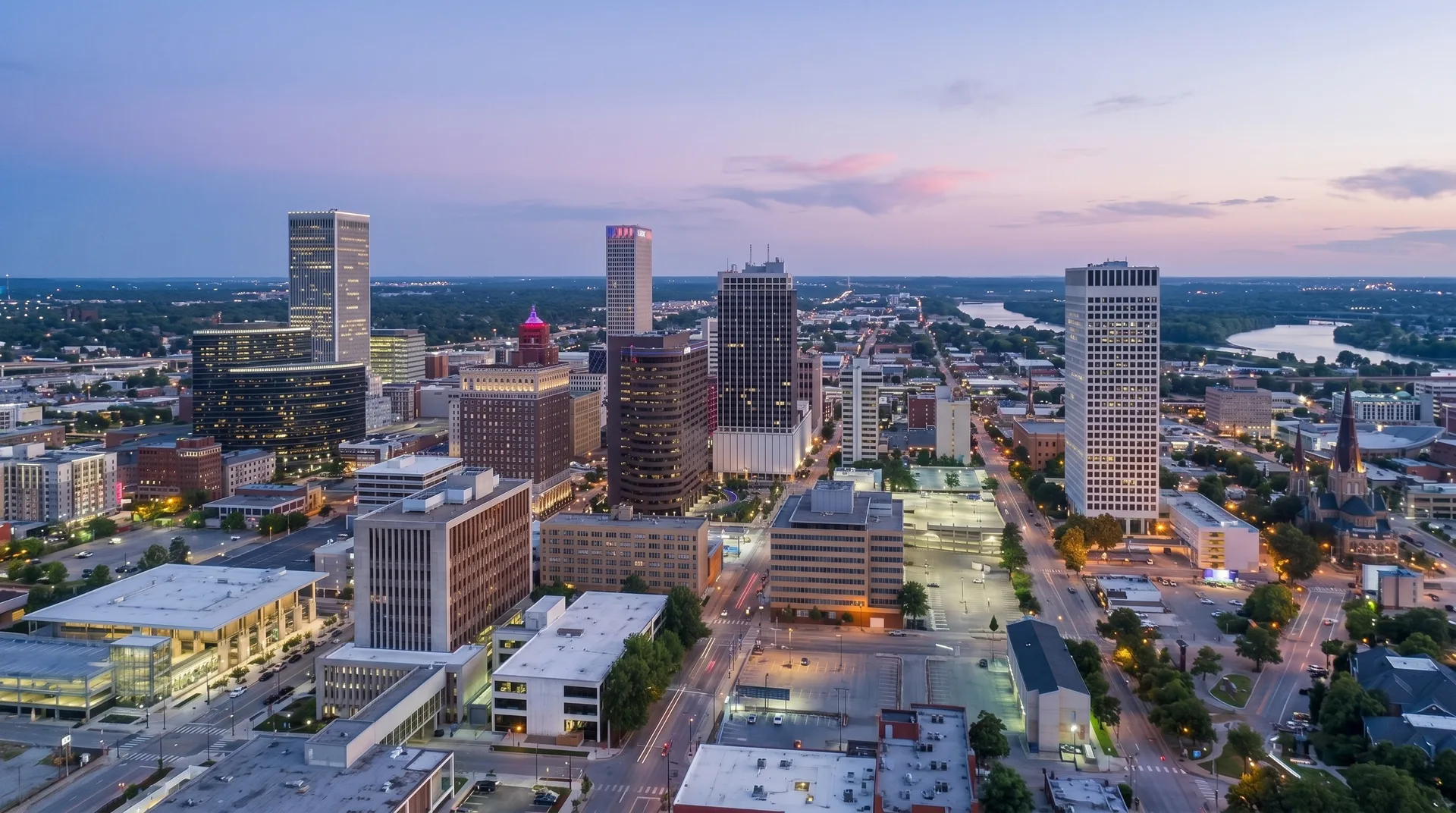
Tulsa
Tulsa, Oklahoma, serves as a strategic inland logistics center in the south-central United States. Located along the Arkansas River, Tulsa benefits from its position at the crossroads of major transportation routes, including I-44 and several important rail lines. The city's logistics infrastructure includes the Tulsa International Airport, which offers cargo services, and the Port of Catoosa, an inland seaport providing waterway access to the Mississippi River and Gulf of Mexico via the McClellan-Kerr Arkansas River Navigation System.
The economy of Tulsa is strongly influenced by the energy sector, with numerous oil and gas companies headquartered in the city. Additionally, Tulsa has developed significant presence in aerospace, manufacturing, and technology industries. The city's industrial parks and distribution centers are strategically located to serve the surrounding region, making Tulsa a key distribution point for goods moving throughout the Midwest and beyond. The combination of energy, manufacturing, and logistics sectors creates a robust demand for efficient freight transportation services.










