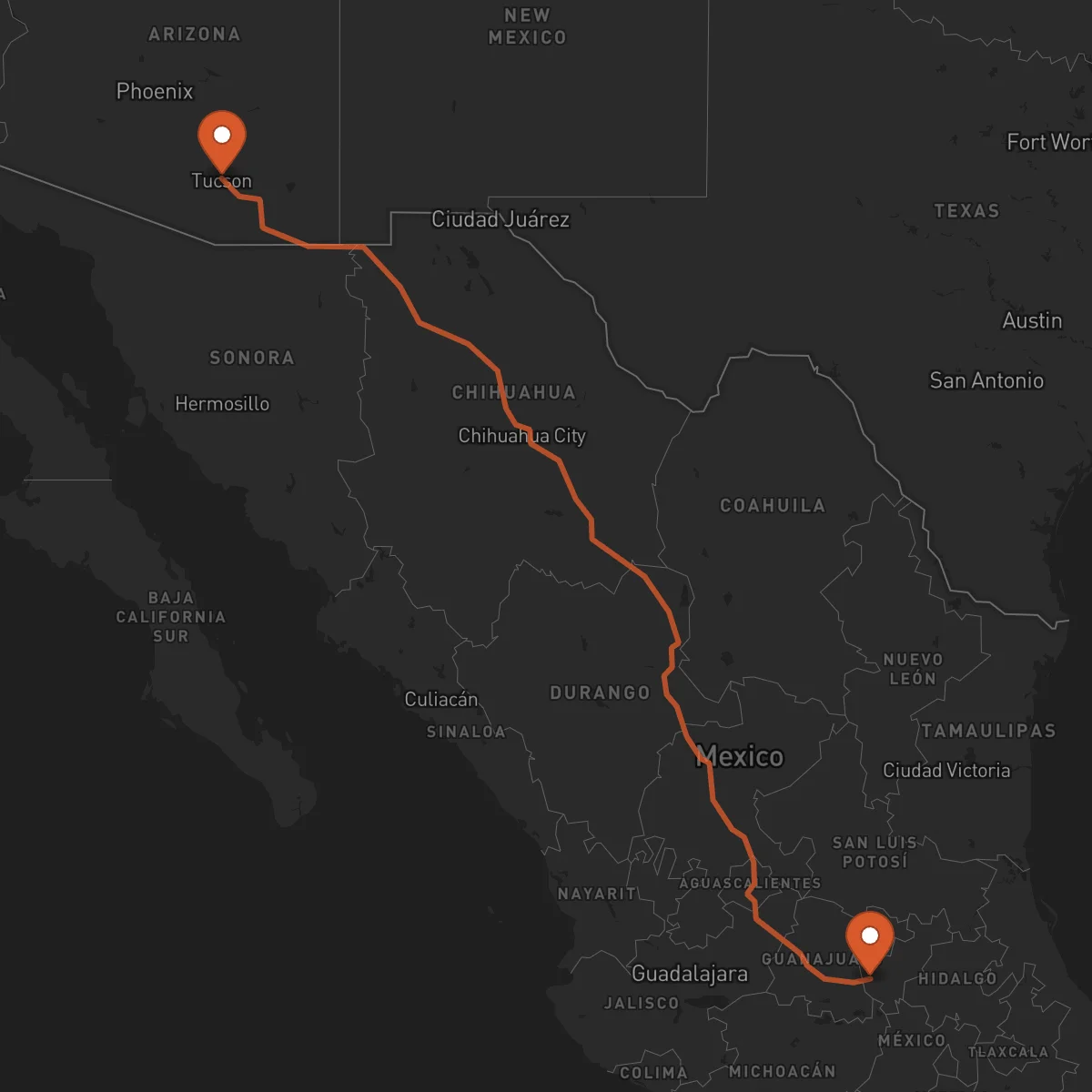
Santiago de Querétaro to Tucson
Tucson → Santiago de QuerétaroFTL freight transportation service between Santiago de Querétaro and Tucson. Reliable logistics solutions for your business.
Route Description
Everything you need to know about the corridor Santiago de Querétaro - Tucson
The cross-border logistics corridor connecting Santiago de Querétaro, México, to Tucson, Arizona, United States spans approximately 1,669 kilometers and represents a highly strategic route for trade between central Mexico and the southwestern United States. This corridor has gained increasing importance within North American supply chains, driven by the ongoing trend of nearshoring and the growing demand for efficient freight movement between key industrial hubs. Companies with manufacturing operations in central Mexico find this route particularly valuable for reaching U.S. markets through a well-established and reliable transportation network.
Santiago de Querétaro has emerged as one of Mexico's most dynamic industrial and logistics centers, hosting a thriving aerospace sector, advanced manufacturing plants, automotive assembly facilities, and a robust food and beverage industry. The city's economic diversification generates consistent freight volumes that require dependable cross-border transportation solutions. On the U.S. side, Tucson serves as a critical gateway city in southern Arizona, connecting freight flows to the broader metropolitan areas of Phoenix, Los Angeles, and beyond. Industries such as electronics, mining equipment, aerospace components, and agricultural products frequently move along this corridor.
The primary transportation infrastructure supporting this corridor includes Mexican Federal Highway 57 running north from Querétaro to the border region, connecting to Interstate 19 southbound into Tucson, Arizona. Key border crossings that facilitate this route include the Nogales-Mariposa Port of Entry and the Nogales-DeConcini crossing, both of which are among the busiest commercial ports along the U.S.-Mexico border. Companies utilizing this corridor must navigate customs regulations, compliance requirements including C-TPAT and FAST certifications, and proper documentation for cross-border freight operations.
At Control Terrestre, we facilitate seamless operations along this corridor through our alliance of experienced transportation providers and our comprehensive full truckload (FTL) services. Our fleet of 48' and 53' dry vans and refrigerated trailers, along with specialized equipment options, ensures that cargo of all types—including hazardous materials, oversized shipments, and temperature-sensitive goods—arrives safely and on schedule. We handle the complexities of cross-border logistics so our customers can focus on their core business operations.
Services for this Route
Available services for the corridor Santiago de Querétaro - Tucson
 Origin
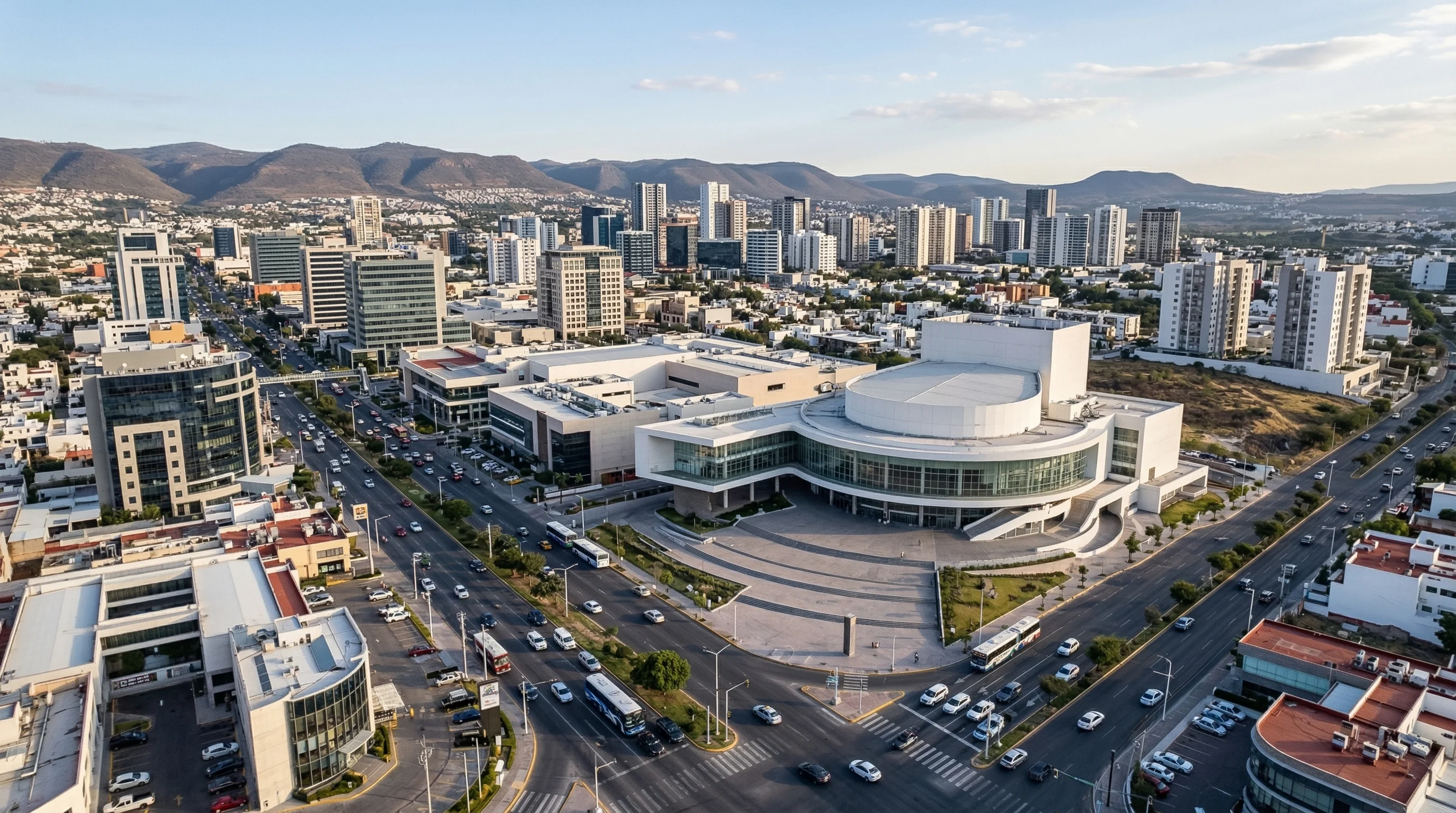
Santiadero de Querétaro occupies a privileged geographic position in central Mexico, making it one of the country's most important logistics and industrial hubs. Located approximately 220 kilometers northwest of Mexico City, the state of Querétaro sits at the intersection of major north-south and east-west transportation arteries, providing efficient connectivity to northern border crossings and Gulf of Mexico ports alike. The region hosts a highly diversified economy anchored by the aerospace industry, with multiple international manufacturers operating in the area, alongside strong automotive, electronics, food processing, and pharmaceutical sectors. Querétaro International Airport further enhances the region's multimodal capabilities. The city's modern infrastructure, skilled business environment, and proximity to major consumption markets make it an ideal origin point for cross-boundary freight operations into the United States.
 Destination
Tucson
Tucson, Arizona, serves as a vital logistics gateway in the southwestern United States, strategically positioned along Interstate 10 and Interstate 19, the primary highway corridor linking Mexico to major U.S. markets. As the second-largest city in Arizona, Tucson provides direct access to the Phoenix metropolitan area and onward connections to Los Angeles, Dallas, and other key distribution centers. The region's economy is driven by defense and aerospace industries, electronic manufacturing, mining operations, and a growing technology sector. Tucson's proximity to the Nogales border crossing—one of the most important commercial ports of entry along the U.S.-Mexico border—makes it a natural destination for freight originating from central Mexico. The city's expanding warehousing and distribution infrastructure further supports its role in cross-border supply chains.


Ready to ship your cargo?
Get a personalized quote for your freight.
Quote Now Santiago de Querétaro - Tucson








