Santa Tecla to La Paz
La Paz → Santa TeclaFTL freight transportation service between Santa Tecla and La Paz. Reliable logistics solutions for your business.
Route Description
Everything you need to know about the corridor Santa Tecla - La Paz
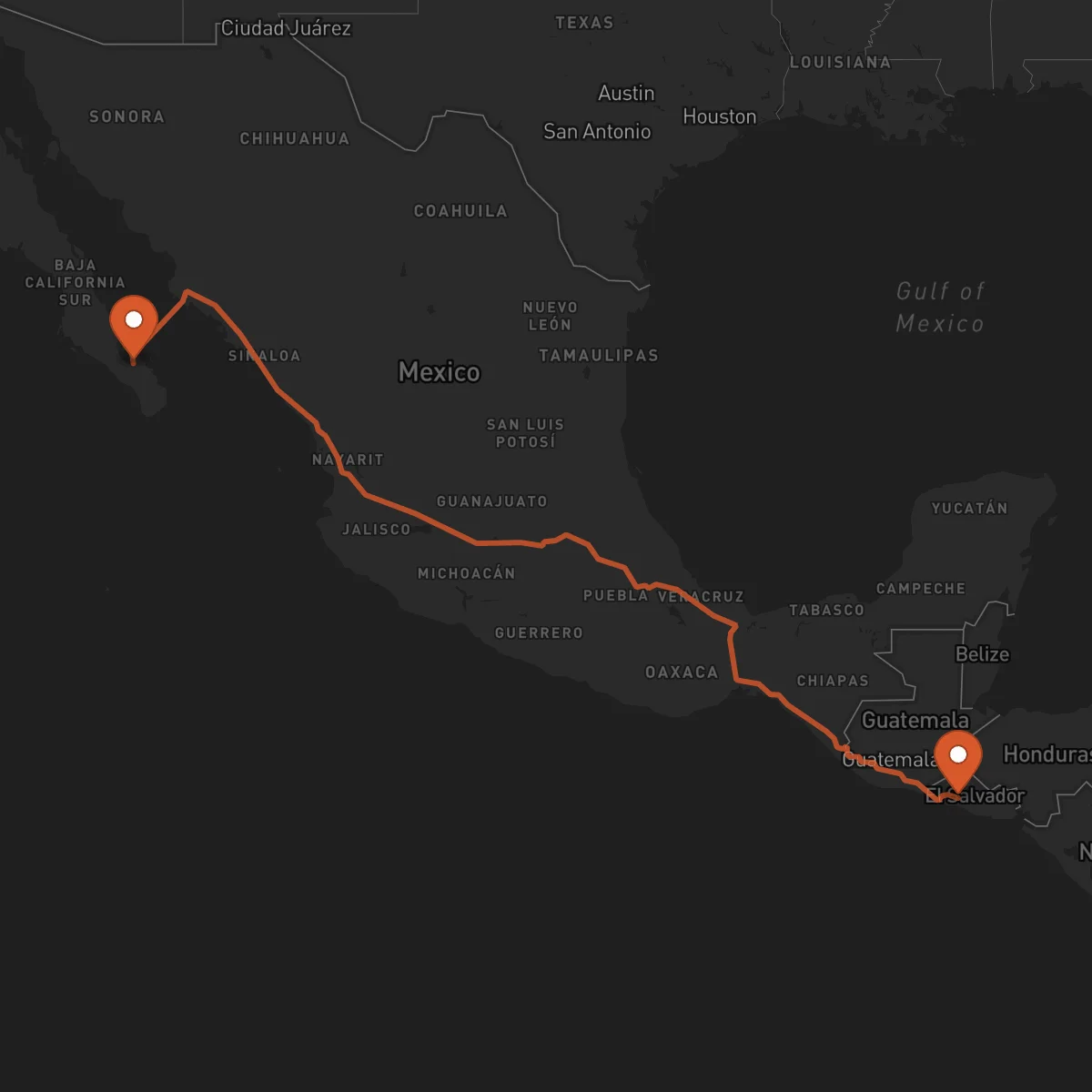
The Santa Tecla to La Paz corridor represents a vital cross-border logistics connection between El Salvador and Mexico, spanning approximately 2494 kilometers. This strategic route links the industrial heart of Central America with the growing economic hub of Baja California Sur, facilitating trade and commerce across diverse industries. The corridor traverses key transportation nodes including major highways that connect through Guatemala and Mexico, providing access to critical border crossings such as Ciudad Hidalgo and Ciudad Juárez. Control Terrestre specializes in managing this complex cross-border operation, ensuring seamless freight movement through proper customs documentation, compliance with international regulations, and coordination with trusted transportation partners who understand the nuances of cross-border logistics between these regions.
Services for this Route
Available services for the corridor Santa Tecla - La Paz
 Origin
Santa Tecla
Santa Tecla, located in the department of La Libertad, El Salvador, serves as a strategic logistics hub for the central region of the country. The city benefits from its proximity to San Salvador and access to major transportation routes including the CA-1 Pan-American Highway. Santa Tecla's economy is driven by manufacturing, textiles, electronics, and food processing industries, with numerous industrial parks and free trade zones in the surrounding area. The region's transportation infrastructure includes well-maintained highways connecting to the Port of Acajutla and the international airport in San Salvador, providing multiple options for freight consolidation and distribution throughout Central America.
 Destination
La Paz
La Paz, situated in Baja California Sur, Mexico, represents a growing logistics destination with strategic importance for the Pacific region. The city's economy is anchored by tourism, fishing, and emerging manufacturing sectors, with increasing industrial development in the surrounding areas. La Paz benefits from its coastal location with access to maritime shipping routes and proximity to the United States border. The region's transportation infrastructure includes the Transpeninsular Highway (Mexico 1), which provides reliable north-south connectivity, and the La Paz International Airport for air cargo operations. The corridor's connection to major Mexican industrial centers makes it an attractive destination for cross-border freight transportation.










