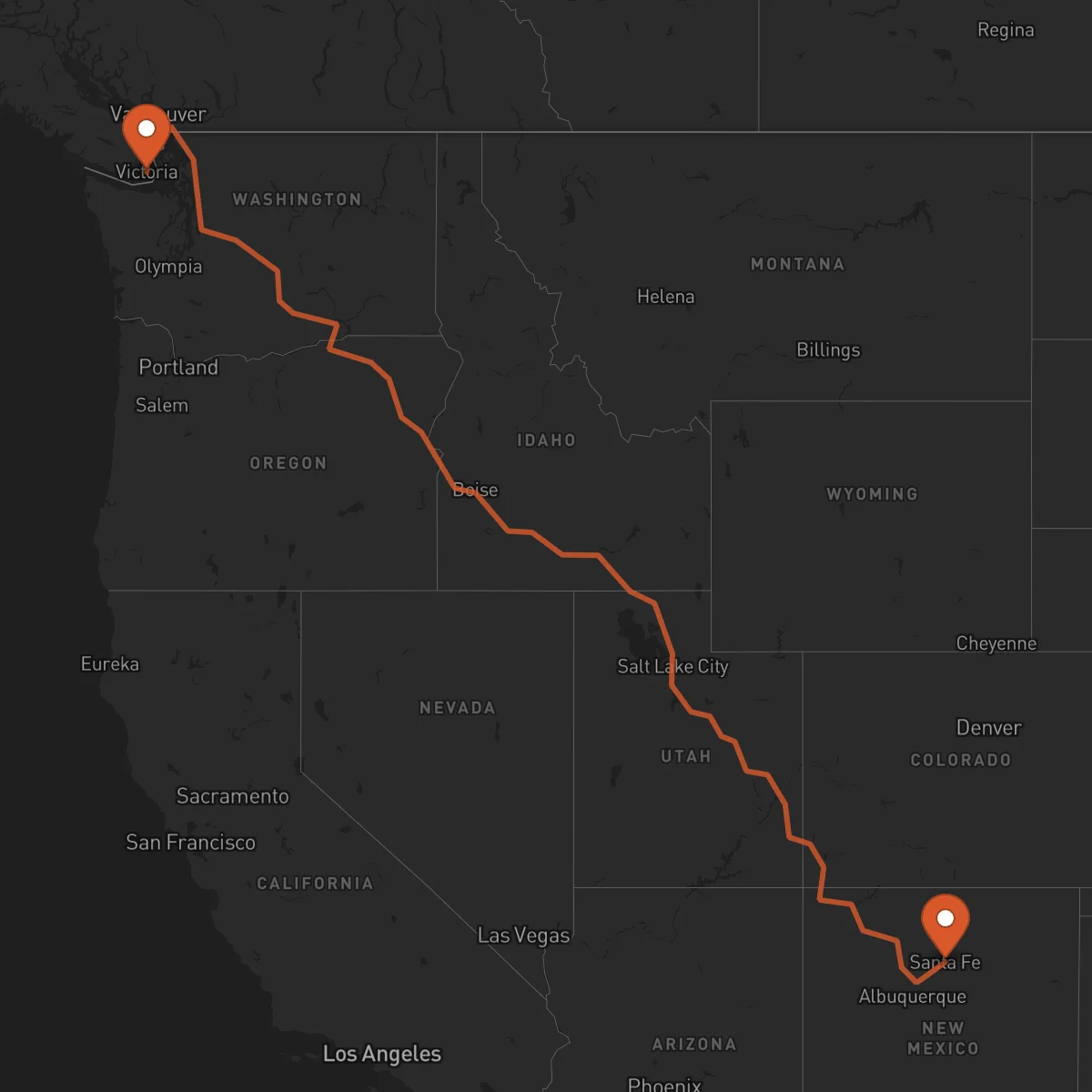
Santa Fe to Victoria
Victoria → Santa FeFTL freight transportation service between Santa Fe and Victoria. Reliable logistics solutions for your business.
Route Description
Everything you need to know about the corridor Santa Fe - Victoria
The Santa Fe to Victoria corridor represents a vital cross-border freight transportation route connecting the United States and Canada through some of North America's most dynamic economic regions. This 2,010 km corridor traverses diverse landscapes from the high desert of New Mexico through the Rocky Mountain states and into the Pacific Northwest, ultimately reaching British Columbia's capital city. The route serves as a critical link between Mexico's manufacturing sector and Canada's Pacific ports, facilitating international trade and supply chain efficiency.
The economic significance of this corridor cannot be overstated. Santa Fe serves as a gateway to Mexico's industrial heartland, while Victoria provides access to Canada's western markets and Asian trade routes. Major industries utilizing this corridor include automotive manufacturing, electronics, aerospace components, agricultural products, and consumer goods. The corridor particularly benefits from the strong manufacturing presence in both New Mexico and British Columbia, with numerous technology and aerospace companies requiring reliable freight transportation.
Transportation infrastructure along this route includes major interstate highways such as I-25, I-90, and I-5, providing efficient north-south and east-west connectivity. The corridor primarily utilizes the Peace Arch and Pacific Highway border crossings, both equipped with modern customs facilities and FAST program lanes for expedited processing. Control Terrestre's expertise in cross-border operations ensures seamless customs clearance and compliance with both US and Canadian regulations, minimizing delays and optimizing transit times for our clients' freight shipments.
Services for this Route
Available services for the corridor Santa Fe - Victoria
 Origin
Santa Fe
Santa Fe, New Mexico serves as a strategic logistics hub in the southwestern United States, offering unique advantages for freight transportation. The city's location at the intersection of major highways provides excellent connectivity to both Mexico and the broader US market. Santa Fe's economic landscape is diverse, with strong presence in aerospace manufacturing, renewable energy technology, and tourism-related industries. The region benefits from the nearby Albuquerque International Sunport and extensive rail connections, complementing its highway infrastructure.
The city's proximity to Mexico makes it an ideal origin point for cross-border freight, particularly for companies engaged in maquiladora operations or those sourcing materials from Mexican suppliers. Santa Fe's elevation and climate conditions are well-suited for various types of freight, though temperature-controlled transportation may be necessary during extreme weather periods. The area's growing technology sector and research institutions also contribute to consistent freight demand, particularly for specialized and high-value cargo shipments.
 Destination
Victoria
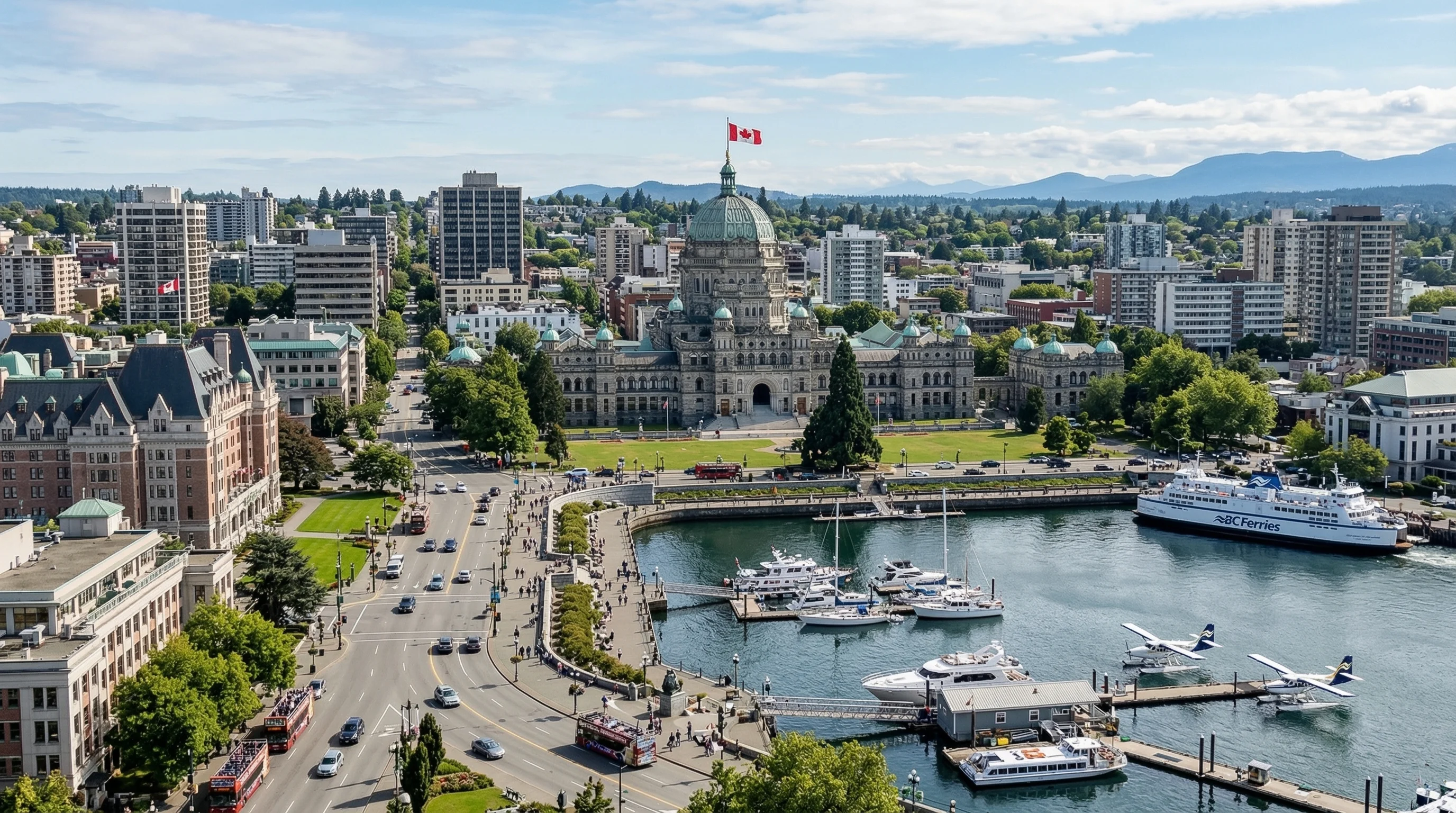
Victoria, British Columbia represents a strategic endpoint for cross-border freight operations, serving as the capital city of Canada's westernmost province. Located on Vancouver Island, Victoria provides access to Canada's Pacific trade routes and serves as a gateway to Asian markets. The city's economy is characterized by government services, tourism, technology, and a growing marine industry. Victoria's port facilities, while primarily focused on passenger and commercial shipping, complement the region's robust logistics infrastructure.
The Greater Victoria area benefits from excellent transportation connections to mainland British Columbia via ferry services and air cargo operations at Victoria International Airport. The region's strong technology sector, particularly in aerospace and marine technology, creates consistent demand for specialized freight services. Victoria's proximity to Vancouver and other major Pacific Northwest cities enhances its role in regional supply chains, making it an important destination for cross-border freight from the United States. The city's commitment to sustainability and green initiatives aligns well with modern freight transportation practices.










