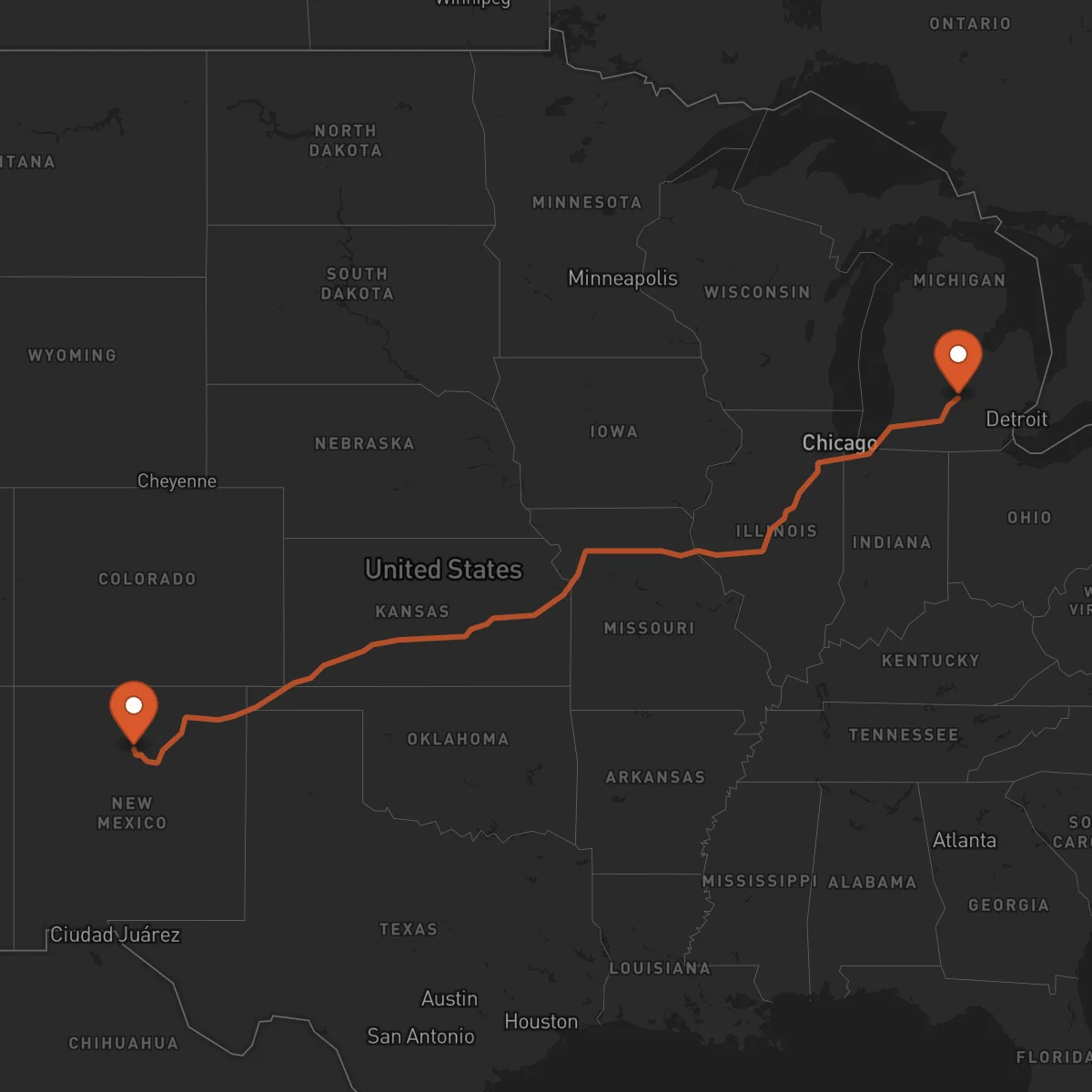
Santa Fe to Lansing
Lansing → Santa FeFTL freight transportation service between Santa Fe and Lansing. Reliable logistics solutions for your business.
Route Description
Everything you need to know about the corridor Santa Fe - Lansing
The logistics corridor connecting Santa Fe, New Mexico to Lansing, Michigan represents a vital transportation route spanning approximately 1,995 kilometers across the heart of the United States. This north-south route traverses diverse terrain and connects two economically significant regions, facilitating the movement of goods between the Southwest and the industrial Midwest. The corridor serves as a crucial link for businesses requiring efficient transportation of full truckload (FTL) freight between these distinct economic zones.
The route primarily follows major interstate highways, including I-25 northbound from Santa Fe through Colorado, connecting to I-80 eastbound across the Great Plains and into the industrial heartland of the Midwest. This well-established transportation infrastructure provides reliable transit for a wide range of cargo types, from manufactured goods to raw materials. The corridor's strategic importance is underscored by its role in supporting supply chain operations for numerous industries that depend on timely and secure freight movement between these regions.
Control Terrestre specializes in facilitating seamless FTL transportation along this corridor, leveraging our extensive network of certified carriers and our expertise in cross-country logistics. Our team understands the unique challenges of this route, including varying weather conditions and regional regulations, ensuring your cargo reaches its destination safely and on schedule. We provide dedicated support and real-time tracking throughout the journey, offering our clients peace of mind and operational efficiency.
Services for this Route
Available services for the corridor Santa Fe - Lansing
 Origin
Santa Fe
Santa Fe, New Mexico serves as a strategic logistics hub in the Southwest, positioned at the intersection of major transportation routes connecting the Mountain West and the broader Southwest region. The city's location provides access to key highways including I-25, facilitating northbound movement toward the Midwest and beyond. Santa Fe's logistics infrastructure includes modern warehousing facilities, intermodal yards, and a network of experienced freight providers equipped to handle diverse cargo types.
The region's economy is anchored by government services, tourism, and a growing technology sector, with additional strength in renewable energy and advanced manufacturing. These industries generate consistent freight demand, particularly for specialized equipment and high-value cargo. The area's proximity to major border crossings and its connection to Mexico via highway networks make it an important point for cross-border logistics operations, with many companies utilizing Santa Fe as a consolidation point for shipments destined for northern destinations.
 Destination
Lansing
Lansing, Michigan stands as a strategic logistics center in the Great Lakes region, offering exceptional connectivity to major industrial centers throughout the Midwest. The city's location provides direct access to I-96 and other key highways, creating efficient routes to Detroit, Chicago, and other major markets. Lansing's transportation infrastructure includes well-developed warehousing districts, intermodal facilities, and a robust network of carriers experienced in handling diverse freight requirements.
The Lansing area's economy is characterized by automotive manufacturing, education, and government services, with the automotive sector driving significant freight movement. The region's proximity to Detroit and other major manufacturing centers creates a dynamic logistics environment where timely delivery is critical. Lansing's location within Michigan's extensive highway network makes it an ideal destination for companies requiring reliable distribution throughout the Great Lakes region and beyond, with many businesses depending on consistent freight service to maintain their supply chains.










